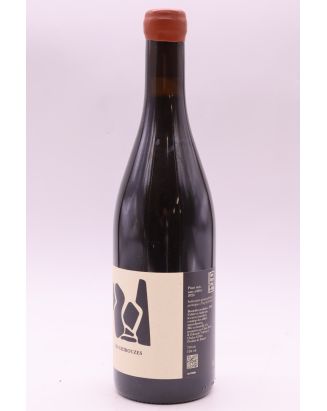
Les Terres Bariolées Les Chirouzes 2024
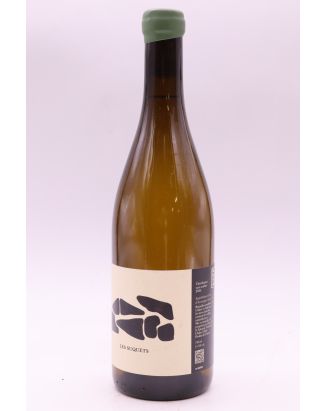
Les Terres Bariolées Les Suquets 2024 blanc
Personalise your experience
Change your country, language and currency here whenever you wish.
|
|
|
Must-See Châteaux |
|
|
|
|
|
|
Nestled at 600 metres above sea level in the Puy-de-Dôme, the domaine Les Terres Bariolées embodies a bold and authentic vision of natural wine in Auvergne. Founded in 2022 by Claire Freist and Edoardo Veltroni, this young 5-hectare estate has quickly established itself as an essential reference in the French living wine scene. On the volcanic heights of the village of Chalus, among meadows, forests and ever-changing skies, each bottle tells the story of a singular terroir, a committed viticulture and an uncompromising approach to winemaking.
The birth of Domaine Les Terres Bariolées is above all a beautiful human story — that of an encounter between two wine enthusiasts with complementary backgrounds. Edoardo Veltroni, an oenologist trained at the University of Pisa in Italy, forged his vision of wine by frequenting exceptional estates: Elisabetta Foradori in Trentino, André Beaufort in Champagne, La Vougeraie in the Côte de Nuits. Claire Freist, for her part, is a child of Burgundy, trained in Beaune and Dijon, who honed her eye in the cellars of Trapet and Bernard Moreau, two iconic houses of the Côte-d'Or.
It is among the Burgundy vineyards that their paths cross and that the shared project of creating their own domaine gradually takes shape. Driven by the same vision — producing wines of pure expression, revelatory of a terroir — they seek a land equal to their ambitions. Their choice falls on the Haute Auvergne, and more precisely on the small village of Chalus, at the gateway to the Côtes d'Auvergne Boudes appellation, to the south of Issoire. At the end of 2021, they took over 5 hectares of vines either planted or in the process of being planted, and released their first vintage in 2022.
The chosen name, Les Terres Bariolées, is a nod to the kaleidoscopic geological richness of the Auvergne soils, where basalt, red clays, limestone and sandstone sands sit side by side from one plot to the next. It also says something about the spirit of the domaine: lively, colourful, without uniformity or conformity.
All of the plots of Domaine Les Terres Bariolées are concentrated around the village of Chalus, one of the three villages of the geographical denomination Côtes d'Auvergne Boudes, alongside Boudes and Saint-Hérent. This area, located to the south of Issoire in the Puy-de-Dôme department (63), enjoys a growing reputation for the quality of its volcanic terroirs and the singular character of the wines they produce.
At 600 metres above sea level, Chalus benefits from a continental mountain climate, with dry and sunny summers, cool nights that preserve the natural acidity of the grapes, and winds that ventilate the vines and limit fungal pressure. This demanding climatic context, sometimes marked by risks of frost or drought, requires constant vigilance from the winemakers and promotes slow ripening, which is the hallmark of finesse and tension in the wines.
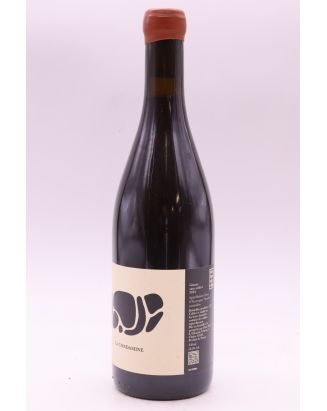
The geology of Chalus is exceptionally rich, inherited from the ancestral volcanic activity of the Chaîne des Puys. The soils vary considerably from one plot to another. At the foot of the hillside, in the lieu-dit Les Suquets, the soils are more clayey, with rich red clays that lend the Chardonnays a beautiful citrus tension and a sharp minerality. At mid-slope, on the La Condamine plots, the Gamays take root in lighter soils underpinned by basalt. At the top of the slope, the vines of the Chalenta cuvée benefit from clay-limestone soils containing basalt, which are sandier and better draining, conducive to long ageing and an exotic expression of Chardonnay. Across the estate, a few plots feature characteristic sandstone sands — an ideal mineral base for the skin-contact vinifications of Muscat Chardonnay.
The grape varieties currently cultivated are Chardonnay, Muscat Chardonnay, Gamay and Pinot Noir, with recent plantings of Syrah (1 hectare planted in 2023) and plans for Aligoté and new Muscat Chardonnays in the short term. The vineyard is gradually expanding to reach nearly 7.5 hectares in total, with a planting density of 6,000 vines per hectare for the new plantings.
Viticulture is entirely organic, with certification underway since the 2024 vintages, and is deeply inspired by biodynamic principles, without formal certification. The management of cover crops (oats in particular), the use of goat's milk as a natural adjuvant in copper-based treatments, and the attention paid to high trellis training reflect a living viticulture, conceived at the scale of each soil and each season. No herbicides, no synthetic inputs are used on these colourful lands.
At the Terres Bariolées winery, the philosophy is both simple and radical: let the grape speak. Edoardo Veltroni, drawing on his rigorous oenological training and his experience alongside winemakers as diverse as Foradori and Beaufort, orchestrates natural vinifications in which human intervention is kept to a minimum and always justified.
Harvesting is carried out by hand, plot by plot, with constant care to sort the harvest and work only with healthy, ripe grapes. Alcoholic fermentations are triggered exclusively by the indigenous yeasts present on the berries and in the winery, with no addition of active dry yeasts or nutrients. This approach, more delicate and less predictable than conventional winemaking, guarantees complex aromatic profiles and wines of total authenticity.
Work is often carried out with whole bunches, particularly for the red cuvées, in order to preserve the freshness of the aromas and to extract finer and silkier tannins through gentle infusion rather than vigorous maceration. For the white wines, pressing is slow and progressive, with the resulting juices being clear or lightly veiled depending on the cuvée.
The ageing vessels are carefully chosen according to the nature of each cuvée: stainless steel vats for wines that call for freshness and direct fruit expression, 350 to 500-litre barrels for the more ambitious cuvées requiring gradual micro-oxygenation, clay jars or sandstone amphorae for certain skin-contact vinifications that gain in fine tannins and texture. Ageing durations range from a few months to over a year depending on the vintage.
Bottling is carried out without systematic filtration, with nitrogen inerting to protect the wines. Added sulphur is absent from the vast majority of the cuvées, with rare exceptions dictated by the sanitary conditions of a given vintage.
Les Suquets: 100% Chardonnay. The Les Suquets cuvée takes its name from the eponymous lieu-dit at the foot of the eastern hillside of Chalus, where soils rich in red clays give the Chardonnay a particularly pronounced nervosity and minerality. It is the domaine's reference white cuvée, the one that most directly expresses the identity of the Auvergne terroir.
Chalenta: 100% Chardonnay, aged 14 to 16 months in barrels. If Les Suquets is the Chardonnay of taut minerality, Chalenta is that of depth and volume. Sourced from the top-of-slope plot, on clay-limestone soils with the presence of basalt, this Chardonnay benefits from longer ageing in barrels, which lends it additional texture, aromatic complexity and ageing potential.
Les Sables de Grès: 100% Muscat Chardonnay, maceration of 4 to 6 months. Les Sables de Grès is without doubt the most original and audacious cuvée of the domaine. Made from Muscat Chardonnay, a rare and aromatic variety, vinified by skin-contact maceration for several months, this orange wine from Auvergne is an invitation to reconsider what a white wine can be.
La Boudeuse: 100% Pinot Noir, whole-bunch maceration, aged in barrique for 8 months. La Boudeuse is the flagship red cuvée of Terres Bariolées, crafted from Pinot Noir grown on the domaine's schistous, marly and limestone soils. Vinification takes place with whole bunches, with a gentle maceration of around fifteen days, followed by ageing in barrique for 8 months before a period in stainless steel vats. No added sulphur.
COLLECTION NEAR PARIS & VAT REFUND FOR TOURISTS
Free collection in our warehouse near central Paris (92)