Personalise your experience
Change your country, language and currency here whenever you wish.
|
|
|
Must-See Châteaux |
|
|
|
|
|
|
A rising star of the German wine world, Tessa Maria Sprenger produces rare and under-the-radar wines in the Kraichgau, at the heart of the Baden wine region, near Heidelberg. Trained at the prestigious Weingut Keller and then during a vintage in Burgundy, this young winemaker brings to her small plots of old vines an approach that is as demanding as it is sincere, at the crossroads of classic and natural winemaking. Entirely manual work, organic viticulture, vinification in a small garage, ageing in neutral barrels and sulphur reduced to the strict minimum: each cuvée is born in tiny quantities, from Burgundian grape varieties such as Pinot Blanc, Auxerrois, Müller-Thurgau and Spätburgunder. Fresh, mineral and taut, these bottles offer a remarkable quality-to-price ratio given their rarity.
The adventure of Tessa Maria Sprenger begins in the hills near Heidelberg, where she grew up, on the lieu-dit of the Käsebrod, literally "cheese bread". Before setting out on her own, she built solid experience with the greatest: she trained at Weingut Keller, one of Germany's most renowned estates, from which she took away its rigor, spirit, and humility, then completed a vintage at the domaine Les Horées in Burgundy.
From these travels, Tessa continually returns to the parcels of her village, near the restaurant where her partner Christian works as chef. Recognizing in these soils echoes of her experiences, she decides to apply the methods of her mentors there and produces her first solo vintage in 2023, a rainy season during which she commutes between Burgundy and Baden. Her very first wines, produced in minuscule quantities, prove to be radiant, pure, and precise, the fruit of meticulous grape sorting.
The vineyard is located in the Kraichgau, the northern part of the Baden region, long known as a simple grape supplier rather than for its great wines. Tessa farms several parcels of old vines there, aged forty to seventy-five years, on soils of clay mixed with sandstone and keuper subsoils (middle keuper). The lieu-dit Käsebrod, in Dielheim, rests on limestone and sandstone soils that host auxerrois and pinot blanc, planted side by side.
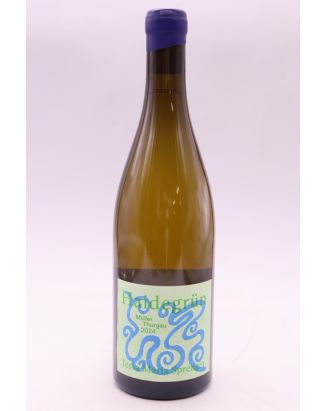
The home parcel, named Haidegrün (a reference to an idea of closeness to nature) and located in Rauenberg, is home to the estate's oldest vine, a müller-thurgau of more than seventy years old on deep red clay, left unharvested for two years before Tessa took it over. Viticulture is entirely organic and manual, with no tractor or chemicals, with grassed-over soils, pruning according to the Simonit & Sirch method, and no green harvesting, for deliberately low yields of three to seven tonnes per hectare.
Winemaking takes place in a small garage, in a minimalist and precise approach inspired by both German classicism and the natural wine spirit, in the style of those from Ganevat in the Jura that Tessa admires. The grapes are pressed directly or after a few hours of skin maceration, without the addition of sulfur during elaboration, then aged in neutral 225 or 500-liter barrels.
Aging lasts approximately ten months in the same barrel, with a single racking and no lees stirring, with malolactic fermentation permitted when it occurs naturally. Only a minimal dose of sulfur (in the order of 20 to 30 milligrams per liter) is added at bottling. The result is wines that are unfiltered yet clean, fresh, mineral, and of great length, faithful to the winemaker's philosophy.
Haidegrün Müller-Thurgau is the cuvée from the home parcel in Rauenberg, on deep red clay, from vines over seventy years old among the oldest on the estate. The grapes undergo approximately one day of skin maceration before manual pressing, then the wine is aged in neutral barrels. Lively, saline, and textured, it offers a modern and energetic reading of this historic German grape variety, in a very limited production.
Käsebrod Auxerrois comes from the lieu-dit Käsebrod in Dielheim, on limestone and sandstone soils, from vines sixty years old and above. Pressed directly and aged for around ten months in 225-liter barrels without added sulfur, it is the estate's rarest cuvée, produced in just a few hundred bottles. It captivates with its finesse, mineral tension, and purity of fruit.
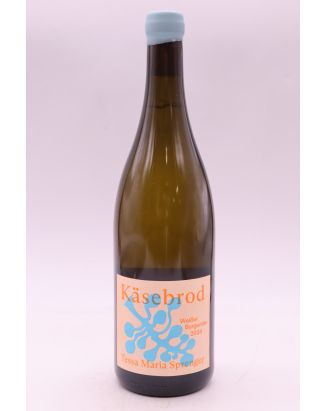
Käsebrod Weisser Burgunder, the estate's pinot blanc, also comes from the Käsebrod parcels on limestone and sandstone, with vines approximately forty to seventy years old. Pressed directly into 500-liter barrels and aged on-site for ten months, it unfolds a fresh and precise palate, both ample and taut, in the clear and pleasurable style sought by the winemaker.
Freuden Spätburgunder is the estate's red cuvée, made from pinot noir (spätburgunder) planted on the area's deep red clays. Even more confidential and only very recently added to the range, it extends Tessa Maria Sprenger's Burgundian universe with a delicate, fresh, and finely fruited red, following the same logic of gentle winemaking, aging in neutral barrels, and minimal sulfur.
COLLECTION NEAR PARIS & VAT REFUND FOR TOURISTS
Free collection in our warehouse near central Paris (92)