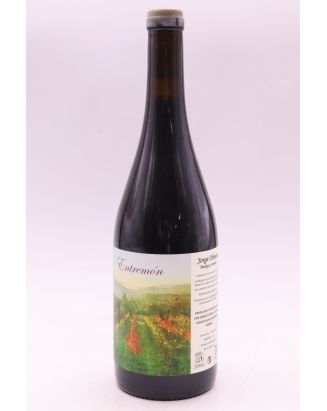
Jorge Olivera Entremon 2023
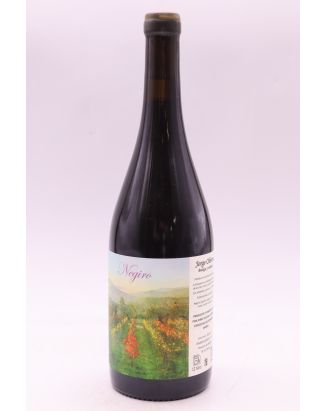
Jorge Olivera Negiro 2023
Personalise your experience
Change your country, language and currency here whenever you wish.
|
|
|
Must-See Châteaux |
|
|
|
|
|
|
Domaine Jorge Olivera embodies the renaissance of a nearly vanished vineyard at the heart of Sobrarbe, in the province of Huesca in Aragon. Established in Coscojuela de Sobrarbe, this artisanal wine estate has taken on the mission of reviving a centuries-old winemaking tradition, abandoned following the rural exodus of the mid-twentieth century. Jorge Olivera today cultivates approximately seven hectares of vines according to the principles of organic and biodynamic viticulture, outside any controlled designation of origin. His minimalist approach favours the pure expression of the grape and the Aragonese terroir, producing natural wines of remarkable freshness and great drinkability.
The history of Domaine Jorge Olivera is intimately linked to that of a forgotten wine-growing region. Until the mid-twentieth century, the village of Coscojuela de Sobrarbe, made up of barely thirty houses, produced nearly 100,000 litres of wine per year to supply the surrounding Pyrenean villages such as Bielsa, Broto and Benasque. Jorge's father, José Mari Olivera, recalls that at that time, people lived from viticulture and that every house had imposing cellars. In his own family, 18,000 litres of wine were produced each year.
Everything changed with the construction of the dams that transformed the landscape of the region. The village of Mediano was even submerged underwater, and only the tip of its church remains visible today. Most families migrated to Barbastro or Monzón, gradually abandoning their vineyards. In the 1970s, the wine industry moved to Barbastro, the capital of Somontano, where 4,000 hectares are now cultivated. In Sobrarbe, barely ten hectares of old vines remain today.
It is in this context that Jorge Olivera, a mechanical engineer by training and a wine enthusiast, decided in 2009 to plant his first vines on the family land in Coscojuela, his mother's village. His initial project was modest: to produce wine for his own consumption and that of his close ones. Inspired by the wines of Ribera, he began by planting Tempranillo and Merlot, before realising that the Bordeaux grape variety was not suited to local conditions. In 2016, he grafted his Merlot vines with Moristel, a traditional grape variety of the region.
His first winemaking dates back to 2011, carried out in a stainless steel tank exclusively for family use. Over the years, Jorge has balanced his career as an engineer in Barbastro with his winemaking project. In 2021, with the help of his father, he built a small semi-underground cellar in Coscojuela, crafted by hand to maintain stable temperatures naturally. The cellar includes a winemaking area and an underground room with stone walls that naturally filter water, creating a serene and cool atmosphere.
In 2022, after producing around 4,000 bottles per year, Jorge had the opportunity to lease a semi-abandoned vineyard in Liguerre de Cinca. He then made a bold decision: to request a five-year leave of absence from his employer in order to devote himself entirely to viticulture. Since 2023, Jorge Olivera has been a full-time winemaker, managing his own three hectares of young vines as well as seven hectares of leased vines, aged between 30 and 40 years. That year, he produced around 15,000 bottles, marking a new milestone in the evolution of the estate.
The vineyards of Domaine Jorge Olivera extend across the foothills of the Aragonese Pyrenees, in the Sobrarbe region, outside the controlled designation of origin areas. This unique geographical situation gives the wines a singular identity, free from the regulatory constraints of DOs and IGPs, allowing Jorge to fully express his creative vision of viticulture.
The soils of the plots in Coscojuela de Sobrarbe and Liguerre de Cinca are primarily loamy-limestone in nature, with a sandy component in certain areas. This particular geological composition favours the production of wines with a beautiful tension, a natural freshness and a profile that is more refined than powerful. The limestone soils bring this delicate minerality and earthy tension that are characteristic of the estate's cuvées.
The climate of the region has a continental character with a Mediterranean influence. The vines benefit from the altitude and the proximity of the Pyrenean massif, creating ideal conditions for preserving the natural acidity of the grapes and producing fresh, digestible and elegant wines. The thermal variation between day and night allows for slow and complete ripening of the berries.
The grape varieties planted at the estate reflect both the viticultural history of the region and Jorge's desire to explore different expressions of the terroir. Moristel holds a central place in his project: this traditional Aragonese grape variety, valued for its moderate alcohol, its natural acidity and its capacity to produce quality fruit when harvested early, represents Jorge's ultimate goal, as he wishes it to make up 50% of his plantings. The Moristel vines come from a massal selection carried out from neighbouring plots.
Grenache (Garnacha) constitutes another pillar of the plantings, both in red and white versions. In red, it is often blended with Moristel to balance the profile of the wines. White Grenache features in the composition of certain white cuvées, although it is only vinified in certain years when harvesting conditions are optimal.
Macabeo, a traditional white grape variety, plays an important role in the production of white wines and certain original blends combining white and red grapes. Jorge also cultivates Syrah, present in the leased vineyards, which he has learned to master in order to produce wines of character. Tempranillo and a small amount of Chardonnay complete the grape varieties planted.
Regarding Parraleta, an indigenous grape variety from Aragon, as well as the Cabernet Sauvignon present on certain plots, Jorge generally prefers to offer the latter to the village's inhabitants, as he does not particularly appreciate this grape variety and lacks the capacity to vinify it.
Jorge Olivera's winemaking philosophy rests on a fundamental principle: letting the grape make the wine, without embellishment or artifice. This minimalist approach is in keeping with the natural wine tradition, favouring the authentic expression of the terroir and grape varieties. The entire vineyard is managed under certified organic farming, with the application of biodynamic practices aimed at strengthening the vitality of the soils and plants.
In the vineyard, Jorge applies a permanent cover crop approach, promoting biodiversity and the natural balance of the viticultural ecosystem. Harvesting is exclusively manual, allowing for rigorous selection of the berries and respect for the integrity of the fruit. Human intervention is deliberately minimal throughout the entire process, from vine to bottle.
In the semi-underground cellar built in 2021, Jorge designed a functional space powered by solar energy. The underground room dedicated to wine ageing features a stone wall that naturally filters water from above, creating a natural cooling system that maintains a constant temperature. This serene and cool atmosphere is ideal for ageing wines in barrels.
Vinifications are carried out primarily in stainless steel tanks with indigenous yeasts, thereby respecting the natural flora present on the grapes and in the cellar. Depending on the cuvée, Jorge practises complete destemming or, in the case of certain Syrahs, applies carbonic maceration to achieve specific aromatic profiles. Skin macerations are adapted to each grape variety and each vintage, and can last up to fifteen days for certain cuvées.
Ageing takes place in 500-litre Stockinger barrels, a format that allows for gentle micro-oxygenation without excessively marking the wine with woody aromas. Some cuvées also benefit from ageing in French oak barrels. The ageing period generally varies between nine and twelve months depending on the wines.
Jorge adds no chemical inputs during the winemaking process. Sulphites are used sparingly, or not at all for certain cuvées. The wines are neither fined nor filtered, thus preserving their living matter and authenticity. This non-interventionist approach gives birth to digestible, fresh and vibrant wines that faithfully reflect the identity of the Aragonese terroir.
Negiro
Negiro is the estate's flagship cuvée. Its name literally means "origin in reverse" in Aragonese. This red wine blends Moristel and Grenache Noir grown on loamy-limestone soils. Vinified naturally with indigenous yeasts and then aged in Stockinger barrels, Negiro reveals an aromatic palette where vivid red fruit meets a delicate mineral note. The structure remains refined, carried by an elegant acidity that gives the wine great drinkability without heaviness.
Gorrión
Gorrión (sparrow in Spanish) represents another regular cuvée from the estate. This red wine blends Grenache and Macabeo in variable proportions depending on the vintage, with Jorge adapting the percentage of each grape variety to the profile of the year in order to maintain a vibrant and fresh style. The original blend of red and white grapes gives birth to a wine that is fleshy yet without heaviness, with a joyful and free character. The nose opens on tart red fruits before sliding towards floral and white citrus nuances, a reflection of the balance between the varieties. On the palate, the texture is supple, refreshed by a precise acidity, inviting conviviality.
As Nabatas
As Nabatas takes its name from the wooden rafts (nabatas in Aragonese) that were once used to transport tree trunks along the rivers of the region. This white wine of great finesse is one of the three cuvées that Jorge wishes to produce continuously. As Nabatas blends 90% Macabeo with 10% Chardonnay. This wine expresses the freshness and minerality of the limestone soils, offering a delicate aromatic palette and a beautiful tension on the palate.
As Forcas
As Forcas is a cuvée produced with Grenache Blanche, but only in certain years when conditions are optimal. Jorge emphasises the importance of harvesting this grape variety at the precise moment of ripeness. This irregular cuvée reflects the winemaker's exacting approach, who would rather not produce at all than make compromises on quality.
O Charraire
O Charraire is a deep red wine blending Syrah (40%), Grenache Noir (40%) and Tempranillo (20%). The Grenache and Syrah vines are around 30 years old, while the Tempranillo comes from 15-year-old plots. Each grape variety is vinified separately, with carbonic maceration applied exclusively to the Syrah. The wine benefits from an ageing period of approximately twelve months in 500-litre Stockinger barrels. On the palate, a fine texture unfolds, between ripe red fruits, gentle spices and an earthy tension drawn from the limestone soils. Its fresh and digestible profile, true to the natural spirit of the estate, makes it a wine that tells the story of its land without compromise, perfect to accompany a roasted rack of lamb.
Entremón
Entremón represents the single-variety expression of Syrah in Jorge Olivera's interpretation. Grown on limestone and sandy soils, the Syrah is vinified with fully destemmed clusters with fermentation in stainless steel tanks using indigenous yeasts, before an ageing period of approximately twelve months in 500-litre French oak barrels (François Frères). This wine reveals a Syrah with notes of garrigue and black spices, without excess. The palate remains clean and fresh, reflecting the luminous and direct style favoured by the winemaker. One finds this joyful and free character, far from overly concentrated profiles, yet with sufficient structure to stand up to rich cuisine.
Kemisió
Kemisió comes from a leased plot whose exact grape varieties remain a mystery. This original wine blends approximately 70% white grapes and 30% red grapes from vines of around 30 years old. The white and red grapes, harvested on different dates, are both destemmed. The wine undergoes a fifteen-day maceration with the skins before completing its fermentation in stainless steel tanks, where it also rests until the following August, approximately nine to ten months in total. This atypical cuvée illustrates Jorge's exploratory approach, ready to work with the unknown in order to reveal the potential of a plot.
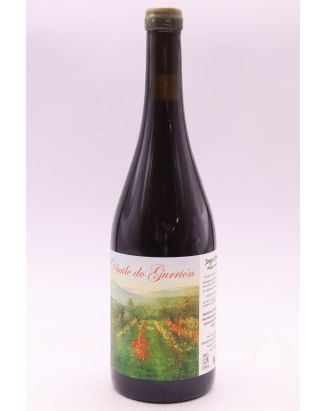
O Baile do Gurrión
O Baile do Gurrión blends Grenache Tinta, Macabeo and Grenache Blanche in an original red wine with a light step. Grown in the Aragonese soils, the sun-drenched berries are vinified with indigenous yeasts and minimal intervention. The supple texture is refreshed by a precise acidity, creating an ensemble that reads like a stroll through the valley. This wine perfectly illustrates Jorge's ability to create atypical blends that prioritise freshness and drinkability.
Carmín
Carmín is a cuvée that does not come out every year, but which was present in the 2023 vintage, the year Jorge was able to devote himself entirely to his winemaking project. Labelled as red, this wine blends 60% white grapes with 20% Moristel and 20% Grenache. This cuvée reflects a stylistic evolution towards a clean, direct thirst-quenching wine, with lightness, good acidity and crunchy fruit.
COLLECTION NEAR PARIS & VAT REFUND FOR TOURISTS
Free collection in our warehouse near central Paris (92)