Oudiette LGH Les Gras d'Huile Blanc de Blancs Extra Brut R22
Personalise your experience
Change your country, language and currency here whenever you wish.
|
|
|
Must-See Châteaux |
|
|
|
|
|
|
Domaine Maxime Oudiette is a discreet and captivating address in Champagne, nestled in Beaunay, a quiet village located about ten kilometres west of Vertus and some twenty kilometres south of Épernay, in the Coteaux du Petit Morin region. Across approximately three hectares of vines spread mainly around Beaunay (for Chardonnay and Pinot Noir) and near Celles-lès-Condé (for Meunier), Maxime crafts a handful of single-vineyard cuvées in very limited editions. His philosophy: let the terroir speak, intervene as little as possible, and tend the vines as a living ecosystem.
The history of the Maxime Oudiette estate has its roots in the early twentieth century, when Léon and Gabrielle Aubert began tending the vines of Beaunay after the Second World War. Their daughter Arlette and her husband André Oudiette devoted their lives to improving and passing on this viticultural heritage, before handing it over to their sons. It was Pascal Oudiette, the eldest, supported by his wife Sylvie, who took a decisive step by installing the first press in the early 1990s, thereby laying the foundations of a genuine grower-producer approach. Several generations of love for the Champagne terroir are thus inscribed in every bottle produced here.
In 2012, after eight years of studies in viticulture and oenology, and formative experiences at references such as Champagne Thuillier and the world-renowned Champagne Jacques Selosse (alongside Anselme Selosse himself), Maxime joined the family estate with a clear and ambitious vision: to produce terroir-driven champagnes, rooted in their original plots. It was not until 2015, after the construction of his own cellar, that he crafted his first champagnes under his own label. In 2018, the Maxime Oudiette brand was officially created, and since 2021, all of the vines have been certified in organic farming, marking a new milestone in the winemaker's commitment to respectful and sustainable viticulture.
The Maxime Oudiette estate cultivates approximately three hectares of vines spread across several emblematic lieux-dits of Beaunay and its surroundings. The terroir of this sector, located to the south of the Côte des Blancs, presents great geological diversity: the subsoil of Beaunay is primarily composed of white chalk resulting from the sedimentation of coccoliths during the Upper Campanian period, while certain plots present fossiliferous clays with iron oxide streaks and a strong presence of fossilized Gryphaea (lieu-dit Les Gras d'Huile), and others a profile of humus and brown clay over limestone (lieu-dit Les Hautes Sources Souris). The diversity of the soils is directly reflected in the distinct aromatic and textural profiles of each cuvée, which makes the signature and richness of Maxime's plot-by-plot work.
Chardonnay occupies the majority of the vineyard, complemented by a few old Meunier vines and Pinot Noir. The management of the vines is based on an ambitious agroecological approach: organic and biodynamic practices, agroforestry, permaculture, and natural cover cropping between the rows. The aim is to create a stable, self-sufficient, and resilient ecosystem, capable of adapting to climate variations while fully expressing the minerality and typicity of each plot. Biodiversity is cultivated as an asset, and each lieu-dit is harvested, pressed, and vinified separately, allowing Maxime to capture the precise influence of the soil on the wine.
For Maxime Oudiette, winemaking is a deeply personal step: a moment of encounter between human work, the memory of a climatic year, and the information carried by each lieu-dit. Convinced that 80% of the work takes place in the vineyard, he intervenes as little as possible in the cellar, in order to allow the wine to faithfully convey the terroir's characteristics. At harvest, the optimal ripeness of the grapes is carefully sought: tasting the berries, the juices, and the seeds is an indispensable step before triggering the picking. After a light settling carried out without the addition of sulfur, the musts are placed directly into barrels to allow the indigenous yeasts to slowly and naturally begin alcoholic fermentation.
All winemaking takes place in small 228-liter oak barrels, which allows the wine to gently oxygenate, breathe, and gradually assert itself. The wines then rest on their natural lees for at least eleven months, without fining, filtration, or tartrate stabilization. Sulfur is added only in small quantities after fermentation, and constitutes the only additive used at the estate. The final dosage is adapted to each cuvée and each vintage, always remaining very low (extra-brut), in order to preserve the tension, minerality, and purity of the fruit. This approach of total non-intervention places the Maxime Oudiette Champagnes in a category of their own: living, precise, deeply expressive wines.
Les Gras d'Huile (Blanc de Blancs, Extra Brut): The flagship cuvée of the estate, Champagne Les Gras d'Huile is a Blanc de Blancs sourced from 100% Chardonnay grown on the eponymous plot of Beaunay, whose first vines were planted in 1993. The soil of this plot is a fossiliferous calcareous clay crossed with iron oxide streaks, with a strong presence of fossil Gryphaea, which forms a surface crust that limits water evaporation. Each edition is crafted primarily from a single harvest, complemented by a perpetual reserve established in 2015 from this same plot. The wine is spontaneously fermented in François Frère oak barrels, aged on lees for 11 months, then bottled for a maturation of at least 30 months before disgorgement. Dosage around 1.5 g/l. The Les Gras d'Huile wines are described as long, complex, with great aging potential, and a saline and floral expression characteristic of the Champagne terroir of the Petit Morin.
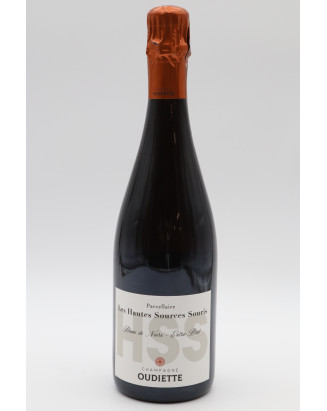
HSS Les Hautes Sources Souris (Blanc de Noirs, Extra Brut): Sourced from 100% Pinot Noir planted in 1990 on the Les Hautes Sources Souris plot in Beaunay, this Blanc de Noirs is one of the most singular expressions of the estate. The plot, fully south-facing, features a brown clay soil over limestone with two underground springs that naturally cool the terroir, lending the wine a particular freshness and tension. Fermented directly in 228-liter barrels, aged on natural lees for 11 months without topping up, then bottled in July–August for a minimum maturation of 30 months. The cuvée is complemented by a perpetual reserve begun in 2018. Dosage at 1.5 g/l. The wine offers great finesse, chiseled minerality, and remarkable length for a blanc de noirs of high precision.
Rosé d'Infusion (Extra Brut): This atypical rosé Champagne is assembled from 98% Chardonnay (Les Gras d'Huile plot) and 2% Meunier (Les Cormonts plot, vines planted in 1964). The distinctive feature of its winemaking lies in the infusion of whole Meunier grapes, added at the end of the Chardonnay fermentation — an original technique that imparts a delicate florality and a light rosy hue without resorting to extended maceration. Aged in oak barrels for 24 months on lees, disgorged and then left for 6 months in the cellar before shipment.
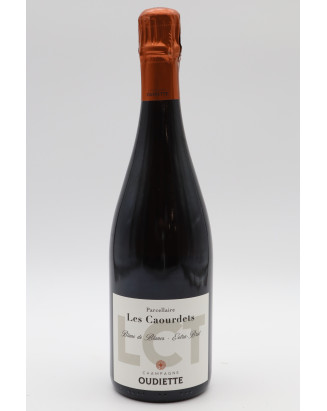
Les Caourdets (Blanc de Blancs, Extra Brut): The Les Caourdets cuvée is drawn from the eponymous plot of Beaunay, planted with Chardonnay in 1984 (rootstock 41B). The soil is worked only beneath the vine row, with the rest protected by a natural plant cover composed of local plants. As with the other cuvées, fermentation is spontaneous in barrels thanks to indigenous yeasts, and aging takes place on lees for a minimum of 11 months, without fining or filtration. The cuvée is composed primarily of a single harvest, complemented by the perpetual reserve initiated in 2015 from this same plot. It expresses a mineral and taut profile, characteristic of this sector of Beaunay.
Les Bas Vigny (Blanc de Blancs, Extra Brut): Sourced from the Les Bas Vigny plot, planted with Chardonnay in 2007 in Beaunay, this champagne benefits from soil worked exclusively at the base of the vine stocks, with the rest preserved by a spontaneous cover of local plants. Only copper, sulfur, and fermented plant extracts are used for phytosanitary protection, in strict respect of the plot's balance. The winemaking follows the same rigorous protocol as the other cuvées: spontaneous fermentation in barrels, aging on lees for a minimum of 11 months, with no additions other than a light dose of sulfur post-fermentation. The perpetual reserve begun in 2015 completes each edition.
Beaunay Rouge (Coteaux Champenois, red): A confidential and rare cuvée, the Beaunay Rouge is a Coteaux Champenois vinified in red from 100% Pinot Noir, sourced from the Les Hautes Sources Souris plot in Beaunay (vines planted in 1990). The winemaking departs from the usual protocol of the sparkling cuvées: 5 days of cold maceration, followed by 13 days of warm maceration, with 20% of the seeds removed and 10% of ripe stems retained to bring structure and complexity. The wine is then aged for 11 months in 228-liter oak barrels on natural lees. Production is extremely limited. This still wine offers finesse, length, and a certain mineral restraint, supported by tannins that are present yet integrated.
COLLECTION NEAR PARIS & VAT REFUND FOR TOURISTS
Free collection in our warehouse near central Paris (92)