Personalise your experience
Change your country, language and currency here whenever you wish.
|
|
|
Must-See Châteaux |
|
|
|
|
|
|
Les Mangeux d'Pierre is one of the most charming and promising estates in Bugey, that confidential appellation on the border of Savoie and Jura, at the foot of the Dent du Chat. Founded in 2019 by Emma Pomarel and Michaël Saux Picart, this young 5-hectare estate is located in Parves et Nattages, on the heights of the commune of Belley, in an isolated vineyard surrounded by forest, between 400 and 500 metres in altitude, with a south-east exposure on clay-limestone soils. The estate's name is a double poetic homage: "mangeux d'terre" is a nod to Gaston Couté, a 19th-century anarchist singer-songwriter chosen by Emma, and "d'Pierre" is a reference to Pierre Overnoy, the emblematic Jura winemaker of natural wine who passed on to Michaël his love of wine and his philosophical vision of the vine. Certified Organic Farming since the 2022 harvest, the estate produces wines without additives, with indigenous yeasts, without added sulphur on the vast majority of the cuvées, from a vineyard of old Pinot Noir, Chardonnay and Mondeuse vines, progressively supplemented by plantings of indigenous Savoyard grape varieties.
The story of Les Mangeux d'Pierre is that of two people who followed their convictions to the very end, challenging social and professional norms. Emma Pomarel, after working in popular education networks and then as a bookseller, relentlessly sought meaning in her professional commitment. Michaël Saux Picart, for his part, trained in natural viticulture under Pierre Overnoy, the tutelary figure of Jura natural wine, who passed on to him not only techniques but a true life philosophy of wine growing and winemaking. It is their meeting and their shared inspirations that gave birth to the Les Mangeux d'Pierre project in 2019.
They settled in Parves et Nattages, in the Bugey, where they are the only winegrowers in the village. They took over a 5-hectare vineyard of old Pinot Noir and Chardonnay vines, isolated and surrounded by forest, with a breathtaking view of the Dent du Chat and the Chartreuse massif. From the moment they arrived, they converted the vineyard to organic farming. Ecocert certification was obtained from the 2022 harvest onwards. They launched an ambitious project to plant 9,000 new vines of new grape varieties, introducing Molette, Douce Noire, Altesse, Mondeuse Noire and other Savoyard varieties to the estate, progressively moving away from monoculture towards a more ampelographic diversity that is more resilient in the face of climate change. Hazelnuts, almonds, olives and possibly pistachios are also being considered as a way to further diversify beyond monoculture.
The Les Mangeux d'Pierre vineyard is planted between 400 and 500 metres in altitude, south-east facing, on clay-limestone soils with calcareous marls, in red and white clay depending on the zones. Ground cover is spontaneous and permanent on every row, encouraging biodiversity and the microbial life of the soils. The vines are planted wide apart, with 2 to 2.5 metres between rows, facilitating easy manual work and good natural ventilation. The age of the vines ranges from 30 to 70 years for the oldest, with deliberately very low yields of 20 to 30 hl/ha on average, giving the wines a natural concentration. The vineyard is one single block, surrounded by forest, with an exceptional view of the Dent du Chat (1,400 m) and the Chartreuse massif.
The current grape variety composition consists of Pinot Noir (dominant), Chardonnay and Mondeuse Noire for the existing vines. New plantings are progressively introducing indigenous Savoyard varieties: Altesse, Molette, Douce Noire, and additional Mondeuse Noire. The objective by 2027 is to have a vineyard that is 50% old vines (Pinot Noir, Chardonnay, Mondeuse Noire) and 50% young vines of indigenous Savoyard and regional varieties, in order to reinforce the diversity and terroir identity of the estate.
The winemaking philosophy of Les Mangeux d'Pierre is directly inherited from the teachings of Pierre Overnoy: minimum intervention, maximum expression of terroir and grape variety. Harvests are done by hand in 13 kg crates to transport the grapes intact. Fermentations begin with indigenous yeasts. There are no oenological inputs, and as little handling of the juices and wines as possible. No added sulphur on the vast majority of cuvées, with a very light sulphiting at bottling only if needed for certain cuvées. Ageing takes place in stainless steel tanks, fibre tanks, or old 2,000-litre foudres depending on the cuvées and the styles sought.
For the reds, maceration is done with whole bunches for two-thirds, the remainder being destemmed, for approximately two weeks. Ageing ranges from 8 months in stainless steel tanks for the Sarabande to 20 months in old foudres for the Elzéard. For the whites, direct pressing is followed by ageing in a fibre tank for the Sentes (19 months). The wines can sometimes appear reductive upon opening in their early years, but open up quickly to reveal a seductive, aromatic and singular style, deeply marked by the calcareous terroirs of the Bugey.
Sarabande (Vin de France / AOC Bugey Rouge): The flagship red cuvée and the most accessible of the estate, sourced from a blend of three parcels of old Pinot Noir vines aged 30 to 60 years. Whole-bunch maceration for two-thirds, partial destemming for the rest, approximately two weeks of vatting. Aged for 8 months in stainless steel tanks. No added sulphur. A supple and moreish red wine, strongly fruit-forward: cherry, plum and grenadine. Light on the palate but with fine tannins, well marked by the calcareous terroir. Aromas of spices, liquorice and delicate vegetal notes. An easy-going wine of great deliciousness and a very high drinkability factor. Serve slightly chilled.
Elzéard (AOC Bugey Rouge): Prestige red cuvée, a single-parcel selection of Pinot Noir aged in old 2,000-litre foudres for 20 months before bottling. No added sulphur. A more structured and complex wine than the Sarabande, with greater depth and ageing potential. A more concentrated and serious expression of Pinot Noir on the calcareous terroirs of the Bugey. A wine for gastronomes, to be cellared for a few years to reveal its full complexity. The name Elzéard is a reference to the character in the novel "L'Homme qui plantait des arbres" by Jean Giono, echoing the estate's planting and diversification project.
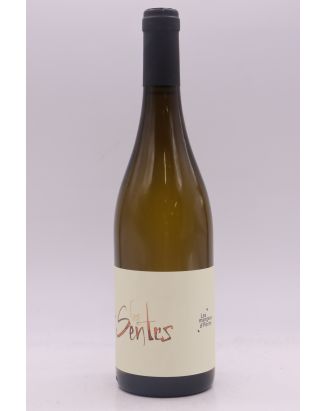
Les Sentes (AOC Bugey Blanc): White cuvée of Chardonnay, fleshy and offering a fine acidity. Dominant nose of elderflower, blackcurrant and white peach. Aged for 19 months in a fibre tank. Notably saline finish, marked by calcareous marls, very structured. A Bugey Chardonnay of remarkable minerality and tension, far from oaked and opulent Chardonnays, in a fresh and precise alpine style. To be enjoyed with lake fish or Savoyard cheeses.
Sébile (Vin de France): A confidential cuvée whose name evokes an ancestral vessel used for eating or begging, in the poetic and popular spirit of the estate. Made from Pinot Noir or a blend depending on the vintage, in a style between the Sarabande and the Elzéard. A wine of character and expression, for lovers of living and sincere wines.
Coal (Vin de France): A cuvée whose evocative name references coal-bearing soils or charcoal, whose smoky and mineral aromas perhaps echo the black clay terroirs of the estate. Red or white depending on the vintage, with a strong personality and great minerality. One of the highest-rated cuvées from the estate on Vivino (4.3), a testament to its singular quality and unique expression.
Farka (Vin de France): A red cuvée whose name is a likely reference to Malian guitarist Ali Farka Touré, in keeping with the estate's cultural and musical openness. Made from Pinot Noir or Mondeuse on the terroirs of the Bugey. A wine of character and depth, with intense aromas of dark fruits and spices. One of the most sought-after wines of the estate.
Berlance (Vin de France, Négoce): Cuvée sourced from grapes purchased outside the estate, notably Muscat and Molette from the Drôme. The name comes from 19th-century Beauce slang meaning "to be tossed about by wines", as Emma and Michaël thought they would no longer be doing négociant work and ultimately decided to continue. Aged in foudres. The wine opens with the aromatic character of Muscat, balanced by the freshness and sapidity of Molette. Vegetal and toasty notes, a precise nose and a palate combining tension and roundness, strongly marked by the clay terroirs of the Drôme Muscats. Ageing potential of 3 to 5 years.
COLLECTION NEAR PARIS & VAT REFUND FOR TOURISTS
Free collection in our warehouse near central Paris (92)