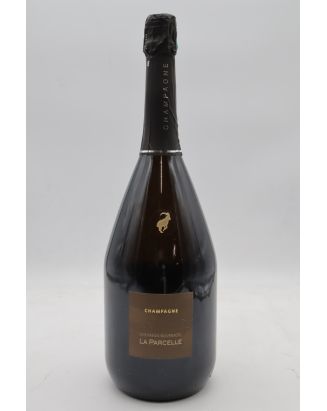
La Parcelle Connigis Brut Nature 2022 Magnum
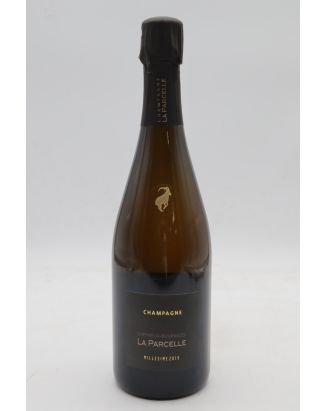
La Parcelle Extra Brut Vintage 2019
Personalise your experience
Change your country, language and currency here whenever you wish.
|
|
|
Must-See Châteaux |
|
|
|
|
|
|
|
|
Nestled in Connigis, in the western Marne Valley, a few kilometres from Château-Thierry, Champagne La Parcelle is one of the smallest and most fascinating récoltants-manipulants in the region. Stéphanie Chevreux and Julien Bournazel cultivate less than two hectares of old-vine meunier, using strict biodynamics, on the clay-limestone hillsides of Barzy-sur-Marne and Connigis. Spontaneous fermentations in old barrels, work following the lunar calendar, no fining or filtration, zero dosage or dosage performed with grape juice: everything here is the purest form of artisanship.
Before becoming winemakers under their own label, Stéphanie Chevreux and Julien Bournazel spent years cultivating other people's vines. The couple runs a viticultural services company that manages more than one hundred and fifty hectares throughout Champagne, on behalf of small and large producers alike, with a clear speciality: management in organic and biodynamic farming. Julien worked for more than twenty years in the vineyards for several négociant houses, before founding this team, which has become the reference for quality manual work in the region.
With the savings accumulated over two decades of activity, they purchased in 2012 a forty-are plot of old meunier vines planted on a steep slope of the hillside of Barzy-sur-Marne. They knew this place by heart: they had tended it for the fifteen previous years for its former owner. Thus was born Champagne La Parcelle, a champagne from a single vine, a single grape variety and a single vintage, produced at fewer than one thousand bottles per year. No glitzy tasting room or boutique: a 17th-century farmhouse, a few goats and three barrels. A second meunier plot acquired later in Connigis has almost doubled production, without ever changing scale or philosophy.
The estate is located in the western Vallée de la Marne, a sector historically known as the terroir de Condé, the home of meunier. The founding plot, on the hillside of Barzy-sur-Marne, occupies a marked slope with clay and chalk soils, while the one at Connigis rests on limestones and chalky marls. These cool and clayey terroirs are perfectly suited to meunier, a grape variety often relegated to second place in Champagne but which finds here, on largely forty-year-old vines, an unexpected depth and complexity.
The conversion to biodynamics was undertaken from the very acquisition of the first hectare, and no synthetic chemical product has touched this land since 2012. The result is plain to see: the grass cover is lush, blending wild thyme, carrots, tomatoes, fruit trees and a whole biodiversity that is rare in a region still largely conventional. The work is entirely manual, yields are deliberately low and the selection of grapes is extremely strict, an indispensable condition for vinifying without additives. The estate also raises a few goats, an assumed symbol of this human-scale farming.
In the cellar, the approach is described as homeopathic by the couple themselves. The grapes are pressed delicately, then the musts ferment spontaneously with only indigenous yeasts, without added yeasts or chaptalization. Vinification takes place entirely in old oak barrels and casks, never new, with regular lees-stirring for ten to eleven months, carried out according to the lunar phases. The wines are neither fined nor filtered, and sulphur is reduced to infinitesimal doses.
The second fermentation takes place in bottle according to the traditional method, followed by ageing on laths for at least eighteen months, often considerably more. The dosage is most often zero, and when it exists, it does not exceed a few grams and is composed exclusively of grape juice from the estate's biodynamic vines, never beet sugar. The pressing and the tirage are carried out at the Crézancy viticultural school, for lack of a press on site, which does nothing to diminish the authenticity of the approach. The result combines intensity, precision and a natural vitality that is rare in Champagne.
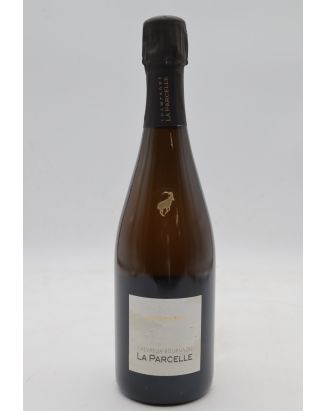
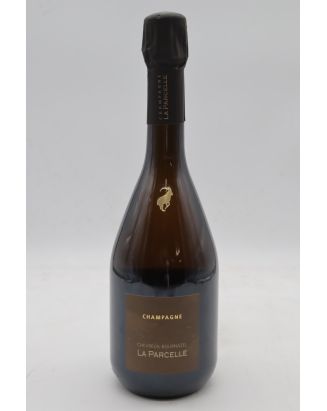
La Parcelle: the founding cuvée, the one that gave the house its name, coming exclusively from the historic plot of old meunier vines on the hillside of Barzy-sur-Marne. Vintage by nature, as it comes from a single harvest, it is vinified in old barrels, aged on lees with lees-stirring, then aged for a long time in bottle. It exists as a Brut Nature, completely undosed, and as an Extra Brut lightly dosed with biodynamic grape juice. The wine marries the richness and generosity of the meunier with a vibrant acidity and notes of citrus, white fruits and undergrowth that unfold with aeration. Fewer than one thousand bottles per vintage.
La Capella: a cuvée introduced in 2018, also from a unique lieu-dit in Barzy-sur-Marne planted with meunier vines of more than forty years of age. A full blanc de noirs, vinified in oak barrels for around eleven months with lees-stirring regulated by the lunar cycle, then bottled without any dosage. The wine seduces with its crystalline purity, its vibration and its tension, with an aromatic profile of apple, pear, toasted bread and chalk. One of the most accomplished expressions of meunier in Champagne.
Connigis: the cuvée born from the estate's second plot, on the limestone and chalk soils of the village of Connigis. Gentle pressing, fermentation in barrels, regular lees-stirring for around ten months and a minimum of eighteen months of bottle ageing. More taut and more saline than its sister from Barzy, it offers a chiselled profile, with citrus, flint and a fine final bitterness that is highly gastronomic.
Le Bouc: a playful nod to the goats that live on the estate, this confidential cuvée extends the house spirit in a more vinous and expressive register. Aged in old barrels and bottled without dosage, it plays on ripe yellow fruits, gentle spices and noble fermentation notes, with an ample texture and a well-integrated bubble.
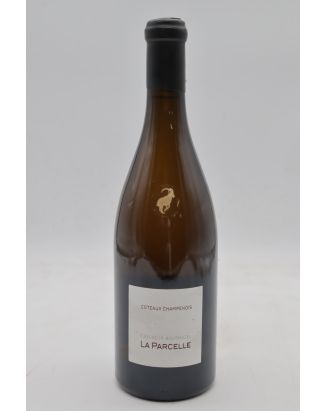
Coteaux Champenois blanc: the estate's still wine, a blend of meunier, chardonnay and pinot gris from Barzy-sur-Marne on clay and chalk soils. Gentle pressing, fermentation in barrel, lees-stirring through the winter and then two full years of ageing under wood, without fining or filtration. A dense, saline and textured white that demonstrates the potential of the Vallée de la Marne in non-sparkling wine.
Ratafia de Champagne: the region's traditional speciality, obtained by muting grape must with wine spirit, then aged for a long time in oak in the estate's small cellar. With notes of candied fruit, dried fruits, quince and gentle spices, it is served chilled as an aperitif, with foie gras or a matured cheese, and naturally rounds off a range placed entirely under the sign of craftsmanship.
COLLECTION NEAR PARIS & VAT REFUND FOR TOURISTS
Free collection in our warehouse near central Paris (92)