Bruno Clair

Among the finest Gevrey-Chambertin wines

Wines from Domaine Bruno Clair: buy at the best price

The grandson of Joseph, who founded the renowned Domaine Clair Daü in 1919 in Marsannay, Burgundy, Bruno Clair founded the wine estate bearing his name in 1979. Across 27 hectares in eight villages and 32 appellations, the Clair family cultivates a mosaic of terroirs stretching from the northern Côte de Nuits to the northern Côte de Beaune, from modest Bourgogne Aligoté to the grand crus Chambertin Clos de Bèze, Bonnes-Mares, and Corton-Charlemagne. 

Read more
See more
Filters

Price

€40.00 - €500.00

Parker WA rating

86 - 97

Burghound rating

86 - 96

Revue du Vin de France rating

No choice available on this group

Bettane & Desseauve rating

15 - 19

Prices drop

No choice available on this group

Download this list
There are 11 products.
Download this list
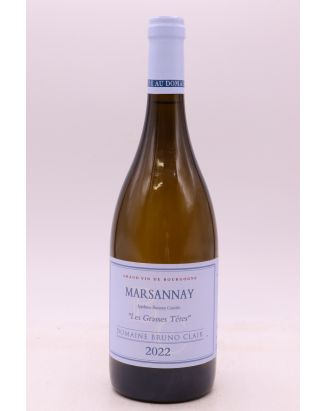
Bruno Clair Marsannay Les Grasses Têtes 2022 blanc
2 in stock
116301
White
75cl
Add to cart
Burgundy | Marsannay

Bruno Clair Marsannay Les Grasses Têtes 2022 blanc

€54.00 inc-VAT per bottle
€45.00 ex-VAT
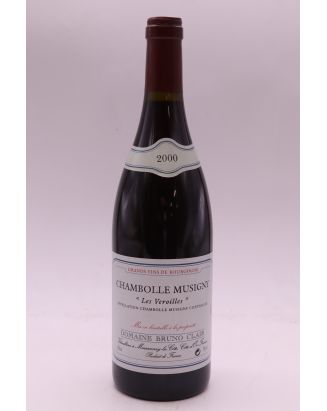
Bruno Clair Chambolle Musigny Les Véroilles 2000
17 in stock
123189
Red
75cl
89/100
Add to cart
Burgundy | Chambolle Musigny

Bruno Clair Chambolle Musigny Les Véroilles 2000

€102.00 inc-VAT per bottle
€85.00 ex-VAT
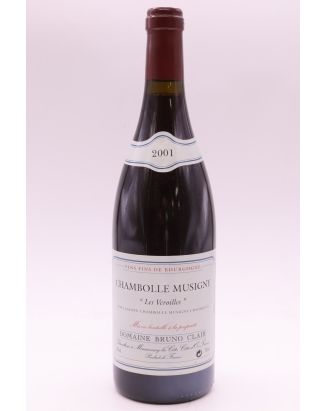
Bruno Clair Chambolle Musigny Les Véroilles 2001
10 in stock
123190
Red
75cl
86-88/100
16/20
Add to cart
Burgundy | Chambolle Musigny

Bruno Clair Chambolle Musigny Les Véroilles 2001

€114.00 inc-VAT per bottle
€95.00 ex-VAT
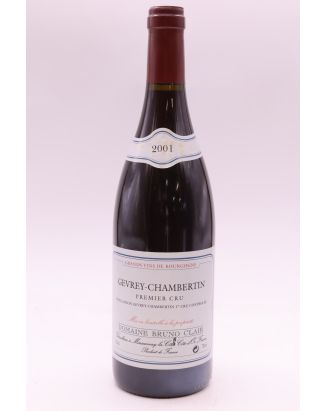
Bruno Clair Gevrey Chambertin 1er cru 2001
6 in stock
123191
Red
75cl
Add to cart
Burgundy | Gevrey Chambertin 1er cru

Bruno Clair Gevrey Chambertin 1er cru 2001

€144.00 inc-VAT per bottle
€120.00 ex-VAT
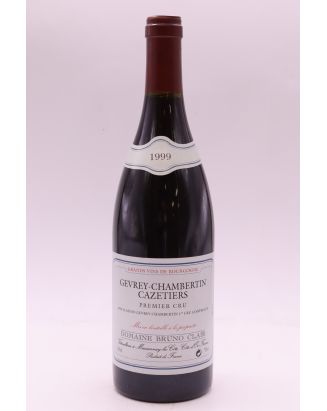
Bruno Clair Gevrey Chambertin 1er cru Les Cazetiers 1999
5 in stock
123192
Red
75cl
87-88/100
90/100
Add to cart
Burgundy | Gevrey Chambertin 1er cru

Bruno Clair Gevrey Chambertin 1er cru Les Cazetiers 1999

€192.00 inc-VAT per bottle
€160.00 ex-VAT
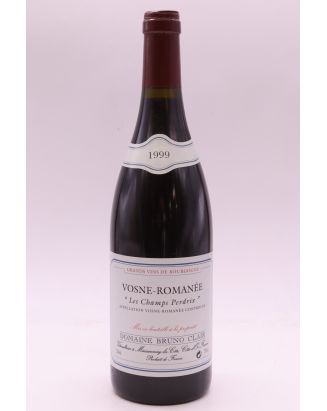
Bruno Clair Vosne Romanée Champs Perdrix 1999
5 in stock
123193
Red
75cl
Add to cart
Burgundy | Vosne Romanée

Bruno Clair Vosne Romanée Champs Perdrix 1999

€174.00 inc-VAT per bottle
€145.00 ex-VAT
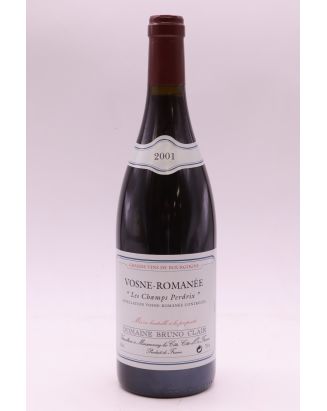
Bruno Clair Vosne Romanée Champs Perdrix 2001
9 in stock
123194
Red
75cl
85/100
85-87/100
15/20
Add to cart
Burgundy | Vosne Romanée

Bruno Clair Vosne Romanée Champs Perdrix 2001

€150.00 inc-VAT per bottle
€125.00 ex-VAT
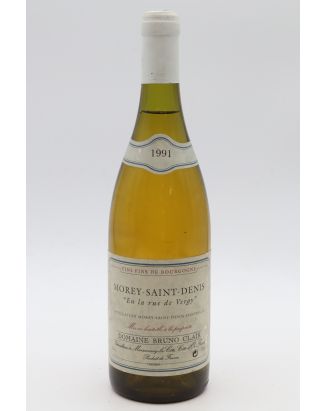
Bruno Clair Morey Saint Denis En la Rue de Vergy 1991 blanc
1 in stock
129311
White
75cl
Add to cart
Burgundy | Morey Saint Denis

Bruno Clair Morey Saint Denis En la Rue de Vergy 1991 White

€90.00 inc-VAT per bottle
€75.00 ex-VAT
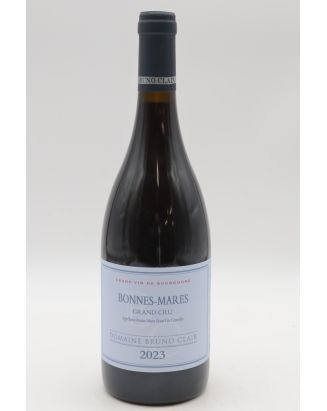
Bruno Clair Bonnes Mares 2023
4 in stock
131402
Red
75cl
94-96/100
93-96/100
Add to cart
Burgundy | Bonnes Mares

Bruno Clair Bonnes Mares 2023

€456.00 inc-VAT per bottle
€380.00 ex-VAT
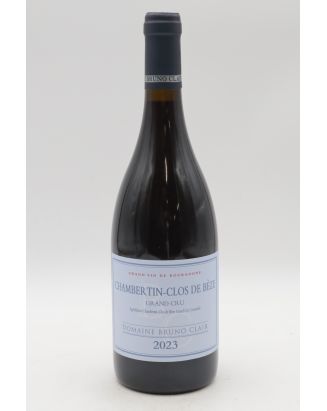
Bruno Clair Chambertin Clos de Bèze 2023
6 in stock
131403
Red
75cl
94-96/100
93-96/100
Add to cart
Burgundy | Chambertin Clos de Bèze

Bruno Clair Chambertin Clos de Bèze 2023

€498.00 inc-VAT per bottle
€415.00 ex-VAT
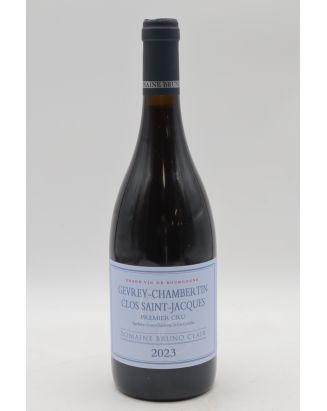
Bruno Clair Gevrey Chambertin 1er cru Clos Saint Jacques 2023
6 in stock
131404
Red
75cl
93-95/100
92-95/100
Add to cart
Burgundy | Gevrey Chambertin 1er cru

Bruno Clair Gevrey-Chambertin 1er Cru Clos Saint-Jacques 2023

€444.00 inc-VAT per bottle
€370.00 ex-VAT

History of Domaine Bruno Clair

The family’s story begins in the early 19th century, with Bruno Clair representing the sixth generation of winegrowers. The decisive turning point came in 1919, when Joseph Clair, originally from Santenay, married Marguerite Daü, who farmed vineyards in Marsannay-la-Côte. Between 1930 and 1960, Joseph acquired exceptional plots in Gevrey-Chambertin, including Chambertin Clos de Bèze and Les Cazetiers, as well as in Morey-Saint-Denis with Bonnes-Mares, and in Chambolle-Musigny. In 1954, he founded Domaine Clair-Daü with his wife, his sister-in-law and their three children. It became one of Burgundy’s most renowned estates. In the 1950s and 1960s, his son Bernard Clair and daughter-in-law Geneviève Bartet added Clos Saint-Jacques, Clos du Fonteny, vineyards in Vosne-Romanée, La Dominode in Savigny-lès-Beaune and new plots in Marsannay to these holdings.

After Joseph Clair’s death in 1971, Bernard took over the estate, but internal disagreements led to the breakup of Clair-Daü in 1985, with its vineyards divided among the partners. Bruno Clair, who had already established his own estate in Marsannay in 1979, was entrusted with Bernard and Geneviève’s share of the vineyards and expanded the operation with his brother Michel and his sisters Anne, Aleth and Agnès. From 1986, the estate comprised seventeen hectares spread across Marsannay, Gevrey-Chambertin, Morey-Saint-Denis, Vosne-Romanée and Savigny-lès-Beaune. Further opportunities followed: Chambolle-Musigny in 1990; Aloxe-Corton, including Corton-Charlemagne, and Pernand-Vergelesses in 1993; Petite Chapelle in Gevrey in 1996; Bonnes-Mares, gradually acquired from 2006 after being leased; and a plot in Chambolle-Musigny Les Charmes in 2019. Bruno’s wife Isabelle joined the estate in 2005, followed by their children Édouard in 2010, then Margaux and Arthur in 2018. Each has a defined role: Édouard in the vineyards and winemaking, Arthur in the cellar, and Margaux in shipping and the vineyards.

Terroirs and Vineyards of Domaine Bruno Clair

Diversity is the estate’s hallmark. Its terroirs extend from the northern Côte de Nuits, in Marsannay and Fixin, through Gevrey-Chambertin, Morey-Saint-Denis, Chambolle-Musigny and Vosne-Romanée, to the northern Côte de Beaune, with Aloxe-Corton, Pernand-Vergelesses and Savigny-lès-Beaune. This geographic range, rare for a family estate of this size, offers a genuine opportunity to compare Burgundy’s soils. Long underestimated, Marsannay holds a central place: Bruno Clair played a decisive role in gaining recognition for its climats by separating and vinifying lieux-dits such as Les Longeroies, Les Grasses Têtes, Les Vaudenelles and Le Charme aux Prêtres individually.

The vines are planted almost exclusively on limestone bedrock, which naturally gives the estate’s white wines a pronounced mineral character. Selecting vine stock has been a house tradition for generations: Bernard Clair was passionate about choosing low-yielding vines essential to producing great wines, particularly in late-ripening vintages. Since 2015, the entire vineyard has been pruned using the Guyot-Poussard method to preserve sap flow and vine longevity. The estate is not certified organic, a deliberate choice that allows it to intervene in the most difficult years when faced with downy mildew. In manageable vintages, however, it uses only natural products and greatly limits copper use. Chemical herbicides were abandoned as early as the 1990s, fertilizers are organic, the spaces between rows are no longer plowed, and cover crops of legumes and cereals are sown in the fall to limit erosion and enrich organic matter.

Winemaking at Domaine Bruno Clair

For the reds, the estate has significantly increased its use of whole clusters in recent years, to between 20% and 50% depending on the appellation, bringing freshness, spice and a distinctive texture. Fermentation takes place in open wooden vats for around fifteen days, with small doses of sulfur. Extraction is adjusted to the character of each cru, never pursuing power for its own sake. The wines are then aged for eighteen to twenty months in oak barrels, with up to 50% new oak for the most structured cuvées, before bottling with minimal handling.

The white wines follow a different approach: fermentation begins in stainless steel tanks without sulfur, then finishes in oak barrels or large oak casks, where the wines are aged with no more than 20% new oak. They spend sixteen to eighteen months on fine lees without any bâtonnage, preserving their tension and precision. Marsannay Rosé receives equally careful treatment: half the harvest is pressed immediately, while the other half undergoes a few days of cold maceration before pressing to extract color and aromas. The wine is then aged mainly in barrels and large oak casks for ten to twelve months. Winemaking worthy of a fine white wine explains this rosé’s unusual depth.

The Cuvées of Domaine Bruno Clair

Bourgogne Aligoté opens the range with a lively, saline white wine showing citrus and white-flower notes, made with the same care as the higher-ranked crus. A bottle to enjoy right away, perfect as an aperitif.

Marsannay blanc showcases the estate’s skill with Chardonnay. Aged for eighteen months in barrels and large oak casks, it combines generosity, complexity and appealing limestone minerality, with notes of almond, pear and white flowers.

Marsannay rouge blends fruit from several village plots to produce a vibrant, fragrant Pinot Noir, with red berries and a fresh, easy-drinking structure. One of the best introductions to the house style.

Marsannay Rosé is a true signature of the estate; Marsannay is Burgundy’s only appellation to produce wines in all three colors. Vinified and aged in barrels and large oak casks, it offers a full palate, a wine-like structure and aromas of fresh red fruit and spice—far from an ordinary rosé.

Marsannay Les Longeroies blanc comes from one of the village’s finest climats. It stands out for its tension, salinity and unexpected depth for this appellation level.

Marsannay Les Longeroies rouge is arguably Marsannay’s best-known climat. On limestone-rich soils, it produces a structured, distinctive wine with fine tannins, pronounced minerality and genuine aging potential.

Marsannay Source des Roches takes its name from the presence of water and exposed rock. These give the wine a distinctive freshness, precise fruit and a distinctly saline finish.

The name Marsannay Le Charme aux Prêtres recalls the plot’s former ownership by the Church. Located high on the slope, it produces a graceful, floral and delicate Pinot Noir with a fine structure.

Marsannay Les Grasses Têtes grows on more clay-rich soils, which lend it richness and roundness. The wine is generous, with dark fruit, sweet spice and an enveloping texture.

Marsannay Les Vaudenelles comes from a plot planted in 1976 at an elevation of around 320 meters. Ruby in color, it offers aromas of fresh red berries and spice, with a fresh, delicate palate and beautiful balance.

Fixin Champ Perdrix expresses the firmer, earthier character of this lesser-known appellation, with a dense palate, dark fruit and pronounced tannins that benefit from a few years of aging.

Village-level Gevrey-Chambertin blends fruit from several plots within the appellation to create a well-rounded wine, both fleshy and fresh, with black cherry, licorice and a hint of undergrowth.

Gevrey-Chambertin 1er Cru Les Cazetiers comes from particularly steep vineyards on the Saint-Jacques slope. It is one of the estate’s two legends: a powerful, mineral wine with a noble structure and long saline finish that needs time to unfold gracefully.

Gevrey-Chambertin 1er Cru Clos du Fonteny is an estate monopole. This small enclosed plot produces a more intimate, refined wine, with red fruit, violet and elegant chalky minerality.

Gevrey-Chambertin 1er Cru Clos Saint-Jacques is considered by many the equal of a grand cru. On this legendary southeast-facing slope, the estate makes a wine of remarkable depth and complexity, combining richness, spice and floral notes with a beautifully defined tannic structure. A bottle built for very long aging.

Gevrey-Chambertin 1er Cru Petite Chapelle, acquired in 1996, lies alongside the grand cru vineyards. It combines roundness and firmness, with ripe dark fruit and a firm mineral finish.

Chambertin Clos de Bèze Grand Cru is the family’s historic jewel, acquired by Joseph Clair. It represents the pinnacle of Gevrey-Chambertin: an imposing structure, seemingly endless aromatic complexity spanning dark fruit, spice, leather and undergrowth, a silky texture and legendary longevity. Production is inevitably very limited.

Morey-Saint-Denis En la Rue de Vergy blanc is a rarity, from a high-elevation plot on pure limestone. It reveals incisive minerality, citrus notes and a salinity that carries through the finish.

Morey-Saint-Denis En la Rue de Vergy rouge, planted high on the slope, produces a fresh, graceful Pinot Noir with tart red fruit and a firm structure, very different from Morey wines grown lower down.

Bonnes-Mares Grand Cru, leased for many years before being gradually acquired from 2006 onward, delivers the power and untamed elegance characteristic of this grand cru spanning Chambolle and Morey. Density, dark fruit, spice and exceptional mineral depth.

Chambolle-Musigny 1er Cru Les Charmes, a plot of which joined the estate in 2019, exemplifies Chambolle’s delicacy: floral notes, a velvety texture, caressing tannins and an exceptionally fine finish.

Chambolle-Musigny Les Véroilles occupies a high, cool site at the village’s northern edge. This gives the wine greater tension and lift, with precise red fruit and appealing salinity.

Vosne-Romanée 1er Cru Aux Raignots lies just above La Romanée. It combines the sensuality of Vosne with mineral firmness, offering spice, rose and dark fruit, and remarkable length.

Vosne-Romanée Les Champs Perdrix, planted high on the slope, offers a fresh, fragrant wine with an elegant structure and vibrant fruit, in a more immediately approachable style.

Aloxe-Corton brings the generosity of the Côte de Beaune, with a fleshy, spicy Pinot Noir, firm tannins and an earthy finish.

Corton-Charlemagne Grand Cru, acquired in 1993, is the estate’s flagship white. Aged on its lees in barrels and large oak casks without bâtonnage, it reveals intense minerality and notes of candied citrus, honey and toasted hazelnut, supported by a powerful structure and exceptional aging potential.

Pernand-Vergelesses rounds out the estate’s Côte de Beaune offerings with a fresh, graceful wine marked by limestone minerality and lively fruit.

Savigny-lès-Beaune 1er Cru La Dominode is one of the estate’s cult cuvées, made from very old vines planted in the early 20th century. Tiny yields, concentrated fruit, fine tannins and a complex bouquet of dark fruit, spice and undergrowth: a Savigny that rises to the level of the Côte’s finest premiers crus.

Savigny-lès-Beaune 1er Cru Les Jarrons, immediately adjacent to La Dominode, offers a softer, fruitier expression, with a silky texture and fresh finish. It can be enjoyed sooner while retaining good aging potential.

WHAT THEY SAY ABOUT US

5 good reasons to buy wines on V&M

...

EXPRESS DELIVERY

In a secure polystyrene packaging

...

INTERNATIONAL SHIPPING

Find out more about VAT-EX sale for outside EU deliveries

...

COLLECTION NEAR PARIS & VAT REFUND FOR TOURISTS

Free collection in our warehouse near central Paris (92)

...