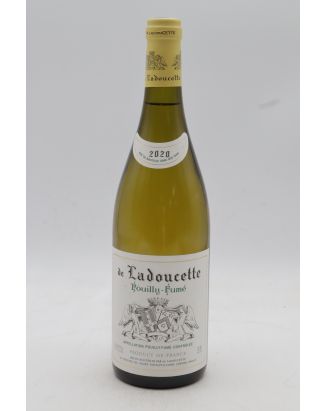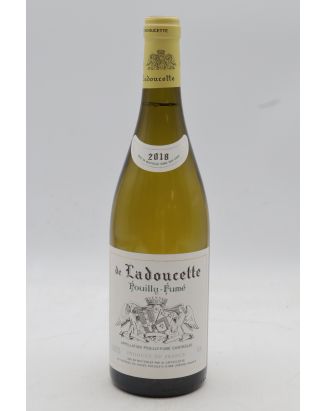
Pouilly Fumé

All wines from the Pouilly-Fumé appellation in the Loire Valley

Neighbouring Sancerre, between Burgundy and Berry, the Pouilly-Fumé vineyard covers 1,245 ha, planted exclusively with Sauvignon. Limestone soils and Kimmeridgian oyster-marl bring a flint-like mineral note to the smoky and fruity aromas of these Loire wines, and the finest white wines produced can age for several decades, thanks to their beautiful acidity. The leading producers are Alexandre Bain, Didier Dagueneau, Ladoucette (Château du Nozet), and Château de Tracy.

Read more
See more
Filters

Price

€160.00 - €360.00

Volume

Parker WA rating

89 - 95

Burghound rating

93 - 95

Revue du Vin de France rating

No choice available on this group

Bettane & Desseauve rating

15 - 19

Prices drop

No choice available on this group

Download this list
There are 5 products.
Download this list
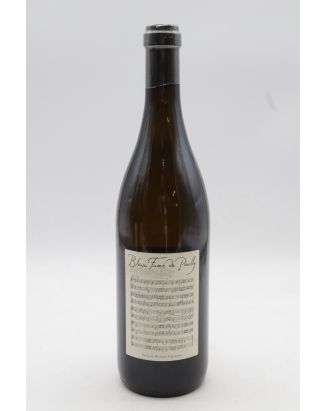
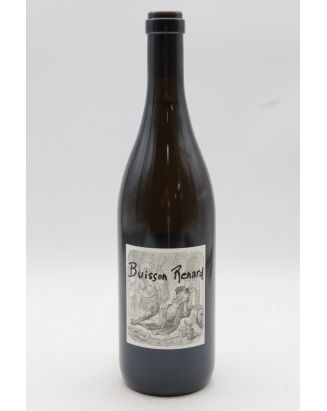
Didier Dagueneau Pouilly Fumé Buisson Renard 2005
Les Mieux Notés
2 in stock
104975
White
75cl
90/100
95/100
18/20
17/20
Add to cart
Loire | Pouilly Fumé

Didier Dagueneau Pouilly Fumé Buisson Renard 2005

€300.00 inc-VAT per bottle
€250.00 ex-VAT
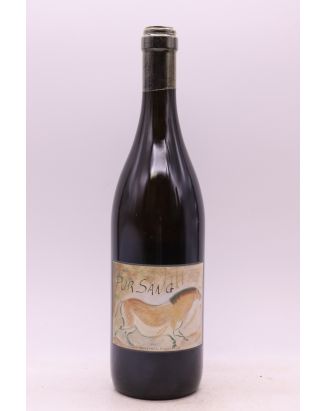
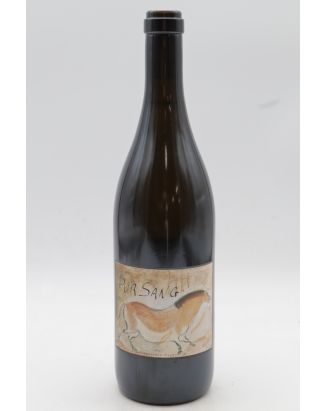
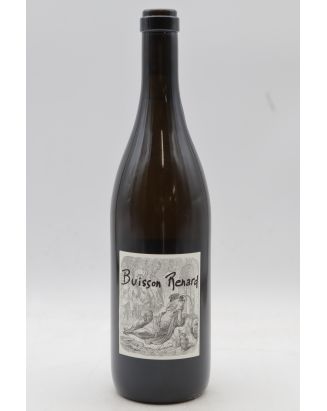
Dagueneau Pouilly Fumé Pur Sang 2004
Les Mieux Notés
2 in stock
104976
White
75cl
95/100
Add to cart
Loire | Pouilly Fumé

Dagueneau Pouilly Fumé Pur Sang 2004

€240.00 inc-VAT per bottle
€200.00 ex-VAT
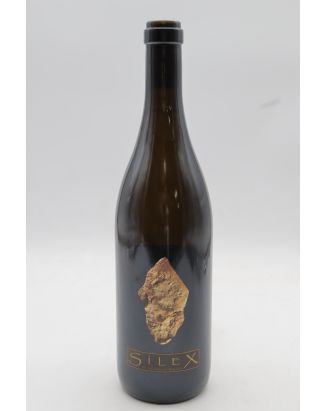
Dagueneau Pouilly Fumé Silex 2007
2 in stock
109012
White
75cl
94/100
19/20
Add to cart
Loire | Pouilly Fumé

Dagueneau Pouilly Fumé Silex 2007

€354.00 inc-VAT per bottle
€295.00 ex-VAT
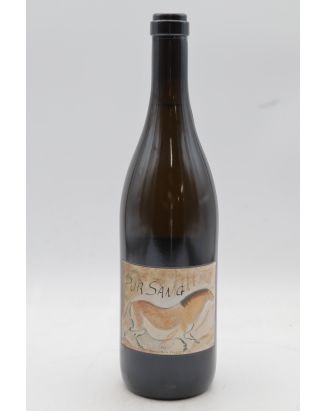
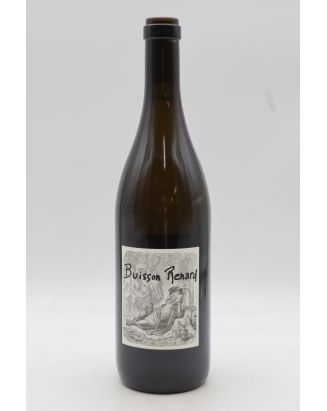
Didier Dagueneau Pouilly Fumé Pur Sang 2005
Last one !
1 in stock
111104
White
75cl
92/100
97/100
19/20
Add to cart
Loire | Pouilly Fumé

Didier Dagueneau Pouilly Fumé Pur Sang 2005

€300.00 inc-VAT per bottle
€250.00 ex-VAT
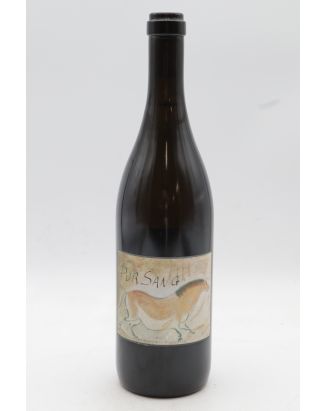
Dagueneau Pouilly Fumé Pur Sang 2011
4 in stock
116552
White
75cl
92-93/100
16.5/20
Add to cart
Loire | Pouilly Fumé

Dagueneau Pouilly Fumé Pur Sang 2011

€162.00 inc-VAT per bottle
€135.00 ex-VAT
Where is the Pouilly-Fumé appellation located?

The Pouilly-Fumé appellation is located in the Val de Loire, at the eastern end of the Loire vineyard, on the right bank of the Loire, in the département of Nièvre, approximately 200 kilometres south of Paris. It spans seven communes: Pouilly-sur-Loire, Saint-Andelain, Tracy-sur-Loire, Mesves-sur-Loire, Garchy, Saint-Martin-sur-Nohain and Saint-Laurent-l'Abbaye. The vineyard stretches over some twenty kilometres along the river, around the hill of Saint-Andelain, across gently rolling terrain, and covers approximately 1,400 hectares worked by around a hundred growers. This vineyard faces Sancerre directly across the other bank, and borders the Coteaux du Giennois to the north. It shares its area with the AOC Pouilly-sur-Loire, a tiny appellation of some twenty hectares reserved for chasselas.

History of the Pouilly-Fumé Appellation

The history of the Pouilly-Fumé appellation dates back to the Gallo-Roman era, the site being mentioned as early as the 5th century under the name Pauliacum super fluvium ligerim, in reference to the Roman road that crossed this terroir. The Benedictine monks were at the origin of its true development: the fief of Pouilly is said to have been ceded to the monks of La Charité-sur-Loire at the end of the 11th century, and a plot on the edge of the river still bears the name Loge aux Moines. In 1383, the purchase of the estate of Boisgibault by Jean III de Sancerre illustrates the longstanding proximity between this vineyard and that of Sancerre.

Trade was then organized along the Loire, and later via the Canal de Briare, which opened up the Parisian market on a grand scale. The end of the 19th century was brutal: downy mildew and then phylloxera devastated the hillsides, the vines were uprooted and only a portion of the vineyard was replanted after grafting. Official recognition came with the decree of 31 July 1937, which simultaneously consecrated the appellations Blanc Fumé de Pouilly, Pouilly-Fumé and the white wines of Pouilly-sur-Loire. Post-war modernization and, from 1982, the plot-by-plot revolution initiated by Didier Dagueneau elevated this vineyard from the status of Sancerre's discreet neighbor to that of a worldwide reference for sauvignon.

What are the terroirs of the Pouilly-Fumé appellation?

The terroirs of the Pouilly-Fumé appellation are divided into four main soil families, inherited from the south-eastern rim of the Paris Basin. The kimmeridgian marls, known as terres blanches or marnes à petites huîtres, rich in clay, slow down the vine's cycle and yield wines for ageing, initially restrained but very expressive after about ten months. The hard limestones of the Portlandian, called caillottes, encourage early ripening and produce lively, nervy whites that are immediately appealing, with notes of blackcurrant and boxwood. The flint clays, concentrated on the upper slopes of the Saint-Andelain hill, produce wines that are firm in their youth and that, after two years, unfold notes of spice and gunflint. The siliceous-clay soils, finally, yield wines that are all the more supple when sand predominates.

The climate, temperate with a slight continental tendency, plays a decisive role: the alternation of warm days and cool nights ensures steady ripening while preserving acidity and aromas, while the Loire moderates frost. Unlike other appellations, this vineyard has no official cru hierarchy, but certain lieux-dits have become references in their own right, such as Les Cornets on kimmeridgian marls, Les Champs des Billons on Portland limestone, Les Bois de Saint-Andelain on red flint clays, and La Folie.

What grape varieties are permitted in the Pouilly-Fumé appellation?

Only one grape variety is permitted in the Pouilly-Fumé appellation: sauvignon blanc, which local growers call blanc fumé. A second-epoch variety, vigorous but not very fertile, it produces conical bunches with tightly packed berries, golden yellow with green highlights, covered at maturity with a greyish bloom. Its must combines good sugar richness with sustained acidity, the condition for lasting balance in the bottle. Here it expresses aromas of citrus, grapefruit, white flowers, boxwood and exotic fruits, complemented by the smoky, mineral signature imparted by the flint soils. The specifications require a minimum density of 6,000 vines per hectare and cap the yield at 65 hectolitres per hectare. Chasselas, historically present, survives on a few hectares but falls under the neighbouring appellation Pouilly-sur-Loire.

What are the different styles of Pouilly-Fumé wines?

Pouilly-Fumé wines are exclusively dry whites, but they fall into two broad families depending on how they are made. The classic style, which predominates, relies on gentle pressing, careful settling, sometimes cold maceration to extract the aromas, then controlled fermentation between 18 and 20 degrees in stainless steel tanks. Malolactic fermentation is generally avoided in order to preserve the wine's liveliness, and ageing on fine lees lasts a few months, resulting in vibrant, aromatic wines that are ready to drink. The second style, championed by the great single-vineyard cuvées, calls on indigenous yeasts, long ageing in barrique, demi-muid or foudre, without fining or filtration, yielding denser, more textured wines built for ageing.

When it comes to food and wine pairings, these whites excel both as an aperitif and at the table. They accompany oysters, shellfish, crustaceans, sole meunière, fish terrine and smoked salmon mousse, as well as frogs' legs, fine charcuterie and cream-based poultry dishes. The pairing with goat's cheeses — crottin de Chavignol or Sainte-Maure — remains an absolute classic, the saline tension of the wine responding to the lactic freshness of the cheese.

What are the best vintages of Pouilly-Fumé?

The best Pouilly-Fumé vintages of the past thirty years follow the rhythm of a northerly vineyard, exposed to spring frosts and contrasting summers. Among the great years are 2002, 2005, 2010 and 2014, of fine classical rigour, followed by 2015, sunny and generous, and 2016, wrested from difficult conditions yet very successful. 2018 combined ripeness and volume, 2019 yielded concentrated and elegant wines, 2020 stood out for its early harvest and preserved freshness, 2022 for a profile that was both sunny and balanced despite the drought, and 2023 for a return to fruit and Loire tension.

Conversely, 2013 proved to be a late and austere vintage, 2021 returned to a lighter, more tart style after a year of frost and cool weather, and 2024 will be remembered as one of the most complex vintages in the region, marked by exceptional rainfall and considerable downy mildew pressure. Today, the tank-fermented cuvées from the three most recent vintages are drinking with pleasure, while the single-vineyard 2018, 2019, 2020 and 2022 wines still benefit from further cellaring.

What are the finest domaines de the Pouilly-Fumé appellation?

The finest estates of the Pouilly-Fumé appellation can be counted on the fingers of two hands, yet their influence extends far beyond the borders of the Val de Loire. Domaine Didier Dagueneau, founded in 1982 in Saint-Andelain, holds a singular place: the appellation's enfant terrible, Didier Dagueneau wanted to produce the world's greatest sauvignon and was among the first in the Loire to vinify by plot, work with indigenous yeasts and age his wines in wood. His cuvées Silex, from old vines at the top of the hill, Pur Sang, born from the lieu-dit La Folie, Buisson Renard and the extremely rare Astéroïde, planted on ungrafted rootstocks, have become legendary. Since 2008, his son Louis-Benjamin has continued this pursuit of excellence across twelve hectares, with the same surgical precision.

How long should a Pouilly-Fumé wine be kept?

How long a Pouilly-Fumé wine can be kept depends above all on the soil it comes from and the level of the cuvée. Caillottes wines and entry-level blends are best enjoyed in their youth, ideally between one and three years, when their aromatic expression is at its most vibrant. Wines born on flint clays, by contrast, need two years to open up and evolve well for up to eight or ten years, developing their spiced and smoky notes. The kimmeridgian marl cuvées, which are more structured, and the great single-vineyard wines aged in wood reveal themselves after three to five years and hold easily for ten to fifteen years, with the finest bottles reaching their peak beyond a decade, showing notes of honey, candied fruit and white truffle.

To preserve this potential, store the bottles on their sides, away from light and vibrations, between 11 and 13 degrees, with a humidity level of 70 to 75%. Serve at around 10 to 12 degrees, avoiding excessive cold, which would mask the minerality and texture. Decanting is not necessary for tank-fermented cuvées, but twenty to thirty minutes of aeration, or serving in a wide glass, benefits the great single-vineyard cuvées that are still closed.

WHAT THEY SAY ABOUT US

5 good reasons to buy wines on V&M

...

EXPRESS DELIVERY

In a secure polystyrene packaging

...

INTERNATIONAL SHIPPING

Find out more about VAT-EX sale for outside EU deliveries

...

COLLECTION NEAR PARIS & VAT REFUND FOR TOURISTS

Free collection in our warehouse near central Paris (92)

...