Saint Nicolas de Bourgueil

All wines from the Saint Nicolas de Bourgueil appellation in Loire

The Saint-Nicolas-de-Bourgueil appellation, an AOC since 1937, is a viticultural jewel of Indre-et-Loire, located in the commune of Saint-Nicolas-de-Bourgueil, in the Loire Valley. Spanning approximately 1,050 hectares, this vineyard produces mainly red wines (98%) and some rosés (2%), with an annual production of 57,000 hectoliters. The king grape variety, Cabernet Franc (or "Breton"), sometimes blended with 10% Cabernet Sauvignon, flourishes on sandy-gravelly and clay-limestone soils. The wines, fruity and supple on the gravels, or structured on the tuffeau, offer aromas of red and black fruits, with elegant tannins, ideal for aging 5 to 10 years. Protected by a temperate oceanic climate, this unique terroir captivates enthusiasts and connoisseurs of Loire wines.

Read more
See more
Filters

Price

€0.00 - €40.00

Color

Volume

Parker WA rating

88 - 91

Burghound rating

No choice available on this group

Revue du Vin de France rating

No choice available on this group

Bettane & Desseauve rating

No choice available on this group

Prices drop

No choice available on this group

Download this list
There are 9 products.
Download this list
Aurélien Revillot Saint Nicolas de Bourgueil Le Clos 2015
Bio
Les Mieux Notés
Biodynamie
4 in stock
102905
Red
75cl
Very slightly damaged
15/20
Add to cart
Loire | Saint Nicolas de Bourgueil

Aurélien Revillot Saint Nicolas de Bourgueil Le Clos 2015

€26.40 inc-VAT per bottle
€22.00 ex-VAT
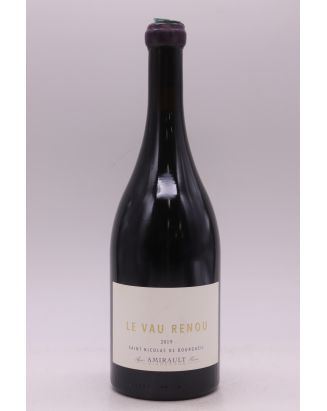
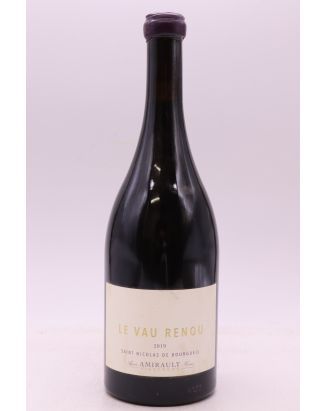
Amirault Saint Nicolas de Bourgueil Le Vau Renou 2019
Bio
Biodynamie
3 in stock
104040
Red
75cl
Add to cart
Loire | Saint Nicolas de Bourgueil

Yannick Amirault Saint Nicolas de Bourgueil Le Vau Renou 2019

€30.00 inc-VAT per bottle
€25.00 ex-VAT
YannickAmirault Saint Nicolas de Bourgueil Le Vau Renou 2020
Last one !
1 in stock
108067
Red
75cl
Add to cart
Loire | Saint Nicolas de Bourgueil

Yannick Amirault Saint Nicolas de Bourgueil Le Vau Renou 2020

€20.00 inc-VAT per bottle
€16.67 ex-VAT
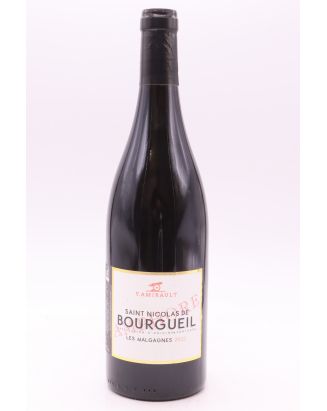
YannickAmirault Saint Nicolas de Bourgueil Les Malgagnes Amphore 2022
2 in stock
108122
Red
75cl
Add to cart
Loire | Saint Nicolas de Bourgueil

Yannick Amirault Saint Nicolas de Bourgueil Les Malgagnes Amphore 2022

€26.00 inc-VAT per bottle
€21.67 ex-VAT
Amirault Saint Nicolas de Bourgueil Le Vau Renou 2019
3 in stock
116269
Red
75cl
Add to cart
Loire | Saint Nicolas de Bourgueil

Amirault Saint Nicolas de Bourgueil Le Vau Renou 2019

€30.00 inc-VAT per bottle
€25.00 ex-VAT
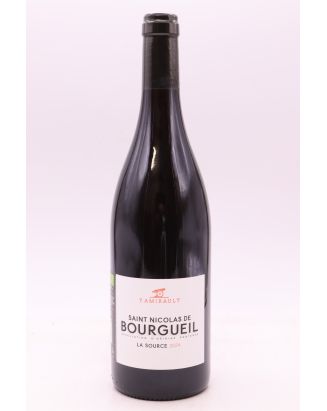
Yannick Amirault Saint Nicolas de Bourgueil La Source 2024
4 in stock
116334
Red
75cl
Add to cart
Loire | Saint Nicolas de Bourgueil

Yannick Amirault Saint Nicolas de Bourgueil La Source 2024

€13.20 inc-VAT per bottle
€11.00 ex-VAT
Yannick Amirault Saint Nicolas de Bourgueil Les Malgagnes Amphore 2022
2 in stock
116337
Red
75cl
Add to cart
Loire | Saint Nicolas de Bourgueil

Yannick Amirault Saint Nicolas de Bourgueil Les Malgagnes Amphore 2022

€26.00 inc-VAT per bottle
€21.67 ex-VAT
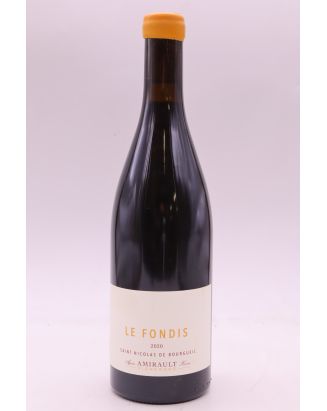
Yannick Amirault Saint Nicolas de Bourgueil Le Fondis 2020
3 in stock
123303
Red
75cl
Add to cart
Loire | Saint Nicolas de Bourgueil

Yannick Amirault Saint Nicolas de Bourgueil Le Fondis 2020

€26.40 inc-VAT per bottle
€22.00 ex-VAT
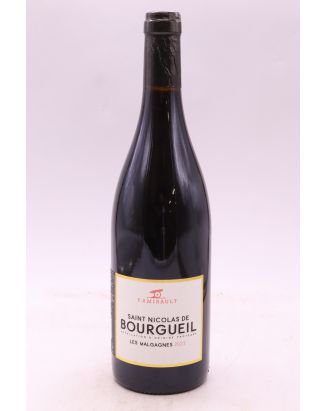
Yannick Amirault Saint Nicolas de Bourgueil Les Malgagnes 2023
5 in stock
128122
Red
75cl
Add to cart
Loire | Saint Nicolas de Bourgueil

Yannick Amirault Saint Nicolas de Bourgueil Les Malgagnes 2023

€21.00 inc-VAT per bottle
€17.50 ex-VAT

Where is the Saint-Nicolas-de-Bourgueil appellation located?

The Saint-Nicolas-de-Bourgueil appellation is located in Touraine, in the Val de Loire, on the right bank of the river, some forty kilometres west of Tours, on the borders of Anjou. It covers solely the territory of the commune of Saint-Nicolas-de-Bourgueil, in Indre-et-Loire, with vinification and ageing permitted in a few neighbouring communes. The vineyard extends over approximately 1,000 hectares, backed to the north by a forest massif that protects it from cold winds and widely open to the south onto the Loire, which is very broad at this point, near the confluence with the Vienne. Bourgueil borders this vineyard to the east, Chinon faces it on the other side of the river, and the vineyards of Saumur and Anjou begin a few kilometres further west.

History of the Saint-Nicolas-de-Bourgueil appellation

The history of this vineyard begins with the founding of the Abbaye de Bourgueil in 990, whose monks planted the vine, with Abbot Baudry praising the wine of his monastery's clos as early as 1189. The vines then spread beyond the abbey walls to the terraces and hillside, and cabernet franc, brought from Bordeaux and nicknamed breton, established itself there over the centuries. Well situated on the banks of the river, the Bourgueillois region exported early to the Flemish countries, from the 17th century onwards. After the phylloxera crisis, the ancient alluvial terraces proved more resilient than other terroirs and the destroyed parcels were quickly replanted with cabernet franc. The growers' defence syndicate was founded in March 1937, and the decree of 31 July 1937 recognised the appellation d'origine contrôlée, distinct from Bourgueil. In 1962, cabernet sauvignon was admitted, then limited to 10% of the encépagement in 1980. Since the 2000s, the massive conversion to organic and biodynamic farming has profoundly renewed the style of these wines.

What are the terroirs of the Saint-Nicolas-de-Bourgueil appellation?

The terroirs are divided into two main families, from the river towards the forest. The greater part of the vineyard occupies a broad terrace of ancient alluvial deposits, the former bed of the Loire, made up of deep sands and gravels, sometimes mixed with clay silts inherited from former islands: this is the domain of the supple, fruity wines locally known as vins de graviers. About one third of the surface area, nearly 300 hectares, extends higher up on the tuffeau hillside, Turonian chalk sometimes covered with flint clay or aeolian sands, whose former quarries now serve as troglodyte cellars. This calcareous subsoil produces wines that are more deeply coloured, more tannic and longer on the palate. The oceanic temperate climate is softened by the proximity of the river, and the forest to the north shelters the well-exposed slopes. Among the most reputed lieu-dits, often used as cuvée names, are Les Malgagnes, Les Rouillères, Les Coutures and Le Fondis.

Which grape varieties are permitted in the Saint-Nicolas-de-Bourgueil appellation?

The main grape variety is cabernet franc, which must represent at least 90% of the encépagement and the blend, cabernet sauvignon being admitted only as an accessory variety, up to a limit of 10%. In practice, the vast majority of cuvées are vinified as pure cabernet franc. Locally known as breton, it brings here a brilliant fruitiness of raspberry, redcurrant and cherry, floral notes of violet, a framework of fine tannins and a freshness that are the hallmark of the Loire style. On the sands and gravels it yields tender, aromatic wines; on the tuffeau, deeper wines with notes of dark fruit, liquorice and spice. Cabernet sauvignon, a later-ripening variety, intervenes only in small touches, for colour and structure.

What are the different styles of Saint-Nicolas-de-Bourgueil wines?

The appellation produces predominantly red wines, along with a small proportion of rosés (around 2% of production). Three registers coexist: fruit-driven reds, vinified in tank with short macerations, to be drunk in their first years; terroir cuvées from the hillside or old vines, macerated for longer and aged in large barrels, barriques or amphorae; and lively, pleasurable rosés. At the finest estates, the harvest is done by hand and extractions remain gentle, to preserve the finesse of the tannins and the brilliance of the fruit.

On the food and wine pairing side, these wines call for Touraine charcuterie (rillons, rillettes, andouillette), roast poultry, rabbit, white meats, lamb and game birds for the most structured cuvées. Cabernet franc also pairs remarkably well with the region's goat's cheeses, Sainte-Maure de Touraine or Valençay. Serve the gravel wines at around 14 to 15°C, and the hillside cuvées between 16 and 17°C.

What are the best vintages of Saint-Nicolas-de-Bourgueil?

The reference vintages of the past thirty years are 1996, 2002, 2003, 2005, 2009, 2010, 2014, 2015, 2016, 2018, 2019, 2020 and 2022, years in which cabernet franc achieved full ripeness without losing its freshness. 2005, 2010 and 2016 remain benchmarks for ageing, 2018 and 2020 offer more sun-drenched and generous wines, while 2022, following a dry summer, produced ripe and well-balanced bottles. Spring frosts hit the harvests hard in 2016, 2017 and 2021, and the cooler or rainier years (1997, 2001, 2007, 2011, 2012, 2013, 2021) require turning to the most rigorous producers for lighter wines to drink quickly. Today, the 2014 to 2019 vintages are at their peak, 2020 and 2022 still benefit from further patience for the hillside cuvées, and the most recent vintages can be enjoyed now for their fruit.

What are the best estates in the Saint-Nicolas-de-Bourgueil appellation?

The finest estates here are modest family properties, often farmed organically or biodynamically, several of which rank among the leading references for cabernet franc in France. Domaine Yannick Amirault stands as the leading name: founded in 1977 from the grandfather's vines, including the Les Malgagnes terroir, it is run with Benoît Amirault across some twenty hectares in Bourgueil and Saint-Nicolas, certified organic and then biodynamic. Parcel-by-parcel work is taken very far, from the entry-level cuvée La Source to the crus of Les Malgagnes and La Mine, sought after for their purity and ageing potential.

How long should a Saint-Nicolas-de-Bourgueil wine be kept?

A Saint-Nicolas-de-Bourgueil wine can be kept for three to twenty years depending on its terroir and vintage. The sand and gravel cuvées, supple and aromatic, are ideally drunk between three and eight years. The cuvées born on the tuffeau hillside, the old-vine selections and the great vintages hold without difficulty for eight to fifteen years, and exceed twenty years at the reference estates in the finest years. The rosés are best enjoyed within two years. The ideal cellar is kept between 11 and 14°C, with good humidity, away from light and vibrations, bottles lying on their sides. A thirty-minute to one-hour decanting benefits the younger hillside cuvées, while the gravel wines are served directly, possibly slightly chilled.

WHAT THEY SAY ABOUT US

5 good reasons to buy wines on V&M

...

EXPRESS DELIVERY

In a secure polystyrene packaging

...

INTERNATIONAL SHIPPING

Find out more about VAT-EX sale for outside EU deliveries

...

COLLECTION NEAR PARIS & VAT REFUND FOR TOURISTS

Free collection in our warehouse near central Paris (92)

...