Personalise your experience
Change your country, language and currency here whenever you wish.
|
|
|
Must-See Châteaux |
|
|
|
|
|
|
Appellation d'origine contrôlée and Grand Cru at Saint-Emilion
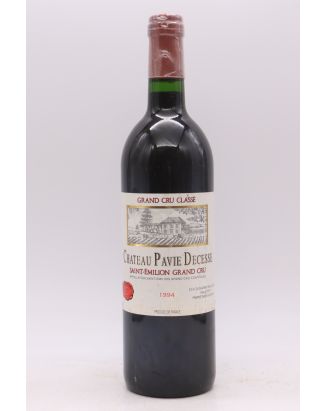
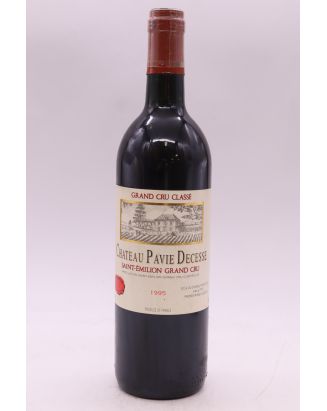
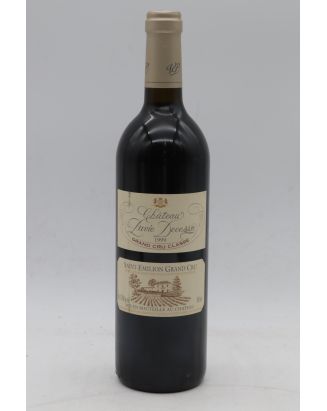
Transferred in 1997 by the Valette family to Gérard Perse, Château Pavie Décesse is a classified Grand Cru of St Emilion. The estate is located 35km to the east of the Bordeaux region (on the right bank of the Dordogne), next to the estates of Pavie, Pavie Macquin and Troplong Mondot. The 3.65-hectare vineyard, with a density of 5,500 vines/ha, is cultivated using sustainable farming methods on a clay-limestone plateau. The grape variety is predominantly Merlot (90%), complemented by Cabernet Franc. The vines have an average age of 43 years.
The history of the estate is intertwined with that of the Pavie hillside, planted with vines as early as the 4th century by the Romans. In the second half of the 19th century, Monsieur Adolphe Pigasse became the first identified owner of the plots that would form the future Château Pavie-Decesse. In 1885, Bordeaux négociant Ferdinand Bouffard purchased the surrounding land to create a 50-hectare vineyard in a single block, before voluntarily separating the "Pigasse" section and thereby giving birth to Château Pavie-Decesse. After the First World War, Albert Porte acquired the entire estate, then transferred the property in 1943 to Alexandre Valette, who undertook a thorough restructuring. The 1954 classification consecrated the estate as a Grand Cru Classé of Saint-Émilion. From 1970 onwards, management was entrusted to the Valette family, already owners of Château Pavie, who ultimately acquired Pavie-Decesse in 1990.
The decisive turning point came in 1997, when Gérard Perse, a former retail entrepreneur turned passionate winegrower, acquired the estate, a year before purchasing Château Pavie itself. Accompanied by his wife Chantal and advised by oenologist Michel Rolland, he comprehensively renovated the buildings, drastically reduced yields and elevated the property to the level of the finest estates on the plateau. In 2002, the INAO authorised the attachment of part of the vineyard to Château Pavie, reducing the surface area of Pavie-Decesse to 3.65 exceptional hectares. From the 2022 vintage onwards, the vines were reintegrated into the perimeter of Château Pavie, making 2021 the last vintage of the estate. Since the passing of Gérard Perse on 19 July 2025, his daughter Angélique and his son-in-law Henrique Da Costa have continued this work within Vignobles Perse.
The terroir of Pavie-Decesse draws its originality from its position entirely on the limestone plateau of Saint-Émilion, approximately 85 metres above the Dordogne, to the south-east of the medieval village. The clay-limestone soils rest on a bedrock of astéries limestone, this characteristic rock that imparts floral, saline and mineral notes to the wine, while the clays ensure water regulation and lend the wine excellent structure. The altitude, southerly exposure and natural ventilation of the plateau favour slow and steady ripening, a guarantee of balance in the hottest vintages as well as in cooler years.
The vineyard is planted with 90% merlot, complemented by cabernet franc, at a density of 5,500 vines per hectare. The average age of the vines exceeds forty years, a precious asset for the concentration and depth of the cuvées. Integrated pest management favours a six-spur pruning system, strict green harvesting, leaf removal in two passes (east side in late June, west side in mid-August) and strict yield control. The harvest is entirely manual, followed by rigorous hand-sorting to retain only perfectly healthy and ripe berries.
Gérard Perse equipped the property with facilities worthy of its terroir. The restored manor house contains thermoregulated wooden fermentation vats on the ground floor, exact replicas of those used at Château Pavie, while the barrel cellar has been restored to the original architecture conceived by Ferdinand Bouffard. Only three vats allow the separate vinification of the different plot-by-plot batches and the refinement of the final selection.
Vinification, adapted to the strict potential of each harvest, is based on a vatting period of approximately three weeks, with gentle extractions designed to preserve the finesse of the tannins. Malolactic fermentation takes place in barrels, as does the ageing, carried out over 18 to 24 months in French oak barrels, generally 80% new barrels and 20% one-wine barrels over the most recent vintages. Regular racking every three months ensures the natural clarification of the wine, which is bottled without excessive filtration. Since the 2010 vintage, each bottle has been fitted with a bubble code guaranteeing its authenticity.
Château Pavie-Decesse, Saint-Émilion Grand Cru Classé: the estate has always produced just one wine, its Fine Wine, the fruit of the entire 3.65-hectare plateau. Drawn from a blend dominated by merlot (approximately 90%) and complemented by cabernet franc, it presents a deep, almost opaque purple colour. The nose combines ripe black fruits (blackberry, blueberry, black cherry), blackcurrant, dark chocolate, liquorice, mocha and soft spices, over a backdrop of warm stone and smoke. The palate is ample, fleshy and vibrant, carried by a dense yet silky tannic structure, with a very characteristic chalky and saline finish typical of astéries limestone. A wine for ageing par excellence, it is ideally enjoyed between 10 and 30 years after the vintage and pairs with roasted red meats, game, lamb and aged cheeses.
Historic vintages from before 1997, notably the 1990, offer a more classic and already well-integrated style, appreciated by lovers of mature Saint-Émilion. From 1998 onwards, the first harvest fully signed by Gérard Perse, the estate changed in stature and gained spectacular concentration: 1998, 1999, 2000 and 2001 form a first benchmark series, followed by a sun-drenched 2003 with accents of chocolate and liquorice, and a monumental 2005.
The 2006, 2008, 2009 and 2010 vintages rank among the estate's finest, with the 2009 showcasing velvety generosity while the 2010 favours tension and precision. The years 2014, 2015 and 2016 bring greater freshness and aromatic definition, with the 2015 receiving particular acclaim from international critics. The 2018, 2019 and 2020 vintages continue this pursuit of balance, between density of matter and mineral energy.
Château Pavie-Decesse 2021 holds a special status: the last vintage of the estate before the vines were reintegrated into Château Pavie, it was produced in an infinitesimal quantity. Elegant and fragrant, it unfolds redcurrant, blackcurrant, flowers, sandalwood and cedarwood over a medium body with fine tannins and a chalky finish, with an estimated ageing potential through to the 2050s.
COLLECTION NEAR PARIS & VAT REFUND FOR TOURISTS
Free collection in our warehouse near central Paris (92)