Beaurenard

Domaine Beaurenard wines: buy at the best price

Domaine Beaurenard, based in Châteauneuf-du-Pape, has seen 7 generations succeed one another, paving the way for the eighth generation. The family found on a notarial deed from 1695 a mention of "Bois Renard" which over time became "Beaurenard"; Boisrenard has remained the name of the top-of-the-range cuvée. Today, brothers Daniel and Frédéric Coulon have taken over the estate and converted it to organic farming (Ecocert certification) and biodynamic practices (Demeter certification since 2011). This iconic estate of the southern Rhône Valley extends over 32 hectares of vines in Châteauneuf-du-Pape, 25 hectares in Rasteau, a Rhône Valley cru, and 6 hectares in Côtes-du-Rhône.

Read more
See more
Filters

Price

€40.00 - €80.00

Color

Volume

Parker WA rating

86 - 96

Burghound rating

No choice available on this group

Revue du Vin de France rating

No choice available on this group

Bettane & Desseauve rating

16 - 16

Prices drop

No choice available on this group

Download this list
There are 2 products.
Download this list
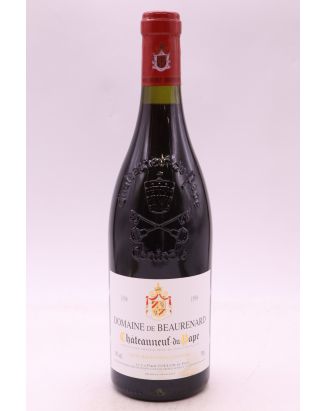
Beaurenard Châteauneuf du Pape 1998
2 in stock
128284
Red
75cl
90/100
91/100
Add to cart
Rhône | Châteauneuf du Pape

Beaurenard Châteauneuf du Pape 1998

€54.00 inc-VAT per bottle
€45.00 ex-VAT
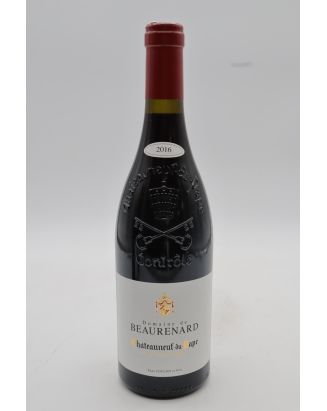
Beaurenard Châteauneuf du Pape 2016
New
4 in stock
132030
Red
75cl
93/100
16/20
Add to cart
Rhône | Châteauneuf du Pape

Beaurenard Châteauneuf-du-Pape 2016

€66.00 inc-VAT per bottle
€55.00 ex-VAT

History of Domaine de Beaurenard

The site’s history dates back to the 14th century, when the popes based in Avignon had the papal château at Châteauneuf built and developed the surrounding vineyards. As early as 1344, a report addressed to the pope named the commune’s principal vineyards, including Bois Renard alongside Blaquières, Bois de Sénéchaux, Cabrières, Carbonnières, Colombis and Mont-Redon. A notarized deed dated December 16, 1695, records this terroir’s entry into the family’s holdings under the name Bois Renard, which became Beaurenard over the centuries.

Since then, seven generations of the Coulon family have carried on with the same exacting standards. The family began bottling its wines at the property in the early 20th century, when virtually all production was sold in bulk, and played an active part in drafting the founding rules of the Châteauneuf-du-Pape appellation, France’s first appellation d’origine contrôlée. Paul Coulon expanded the estate considerably before passing it on to his sons Daniel and Frédéric, who are now joined by the next generation. The Coulons also created a museum of wine and winemaking tools. For every vintage, they keep detailed records of soil temperatures, rainfall and observations of the vines—a testament to their now-legendary perfectionism.

Terroirs and Vines of Domaine de Beaurenard

The vineyard covers approximately 32 hectares in Châteauneuf-du-Pape, spread across numerous parcels throughout the appellation, plus 25 hectares in Rasteau and 6 hectares in Côtes du Rhône. This diversity of sites is an asset: it allows the estate to draw on Châteauneuf’s four main soil types—limestone fragments, the famous rounded pebbles that absorb the day’s heat and release it at night, sandy soils known as safres, and clay. Each soil type lends its own character, from power to finesse and from structure to freshness.

What sets Beaurenard apart is its preservation of the appellation’s thirteen historic grape varieties, cultivated and often mixed-planted in old vineyards according to the traditional practice of growing varieties together, with Grenache predominating. The estate thus maintains a living repository of Rhône grape diversity. Its vineyard practices have been exemplary for more than fifty years: spreading manure, eliminating herbicides and synthetic chemicals entirely, cultivating the soil and using carefully managed ground cover. Organic certification by Ecocert and biodynamic certification by Demeter formally recognized an approach begun much earlier. In Rasteau, the estate also distinguishes among its soils, notably the blue and pink clays that give rise to dedicated single-parcel cuvées.

Winemaking at Domaine de Beaurenard

The grapes are harvested by hand and rigorously sorted. Each parcel is vinified separately to respect the character of its soil and grape varieties. Extended maceration is paired with measured extraction to preserve the finesse of the tannins and avoid harshness. The cellar philosophy is to respect the fruit: no fixed formula, but a continual response to each vintage.

Aging follows a thoroughly traditional approach. Le Boisrenard spends around eighteen months in oak barrels, mostly between one and five years old, without fining or filtration. After bottling, it rests for an extended period in the estate’s underground cellars. Depending on the cuvée, the other wines are aged in large oak casks, 600-liter barrels, concrete tanks or smaller barrels, always with the aim of letting the terroir speak rather than the oak. This patience, together with the sun-ripened character of Châteauneuf grapes, yields rich, generous yet balanced wines that can often age for more than fifteen or twenty years.

The Cuvées of Domaine de Beaurenard

Châteauneuf-du-Pape Domaine de Beaurenard Rouge: the estate’s signature wine, a masterful blend reflecting the complementary character of the appellation’s thirteen historic grape varieties across soils of limestone fragments, rounded pebbles, sand and clay. Grenache leads, complemented by Syrah, Mourvèdre and the appellation’s lesser-known varieties. The nose reveals black cherry, candied raspberry, garrigue herbs, olive tapenade, lavender and sweet spices; the palate is full, fleshy and flavorful. A complete Châteauneuf to enjoy with red meat or game.

Châteauneuf-du-Pape Domaine de Beaurenard Blanc: the white version of the signature cuvée, also made from a blend of the appellation’s historic white varieties, including Clairette, Grenache Blanc, Bourboulenc and Roussanne. White flowers, white-fleshed fruit, citrus and hints of fennel shape a full, rich wine sustained by fine mineral freshness. Superb with fish in sauce, poultry or aged cheeses.

Le Boisrenard Rouge: the estate’s iconic cuvée, from its oldest mixed-planted vines, where all thirteen varieties grow together, led by Grenache. After extended maceration, it undergoes a thoroughly traditional eighteen-month aging period in oak barrels, without fining or filtration, followed by a rest in underground cellars. Black raspberry, vanilla, licorice, crushed flowers and graphite form a remarkably intense nose, followed by a rich, concentrated palate with fine acidity and silky tannins. International critics regularly rank it among the Rhône Valley’s greatest successes.

Le Boisrenard Blanc: the white counterpart to Boisrenard, also made from old, mixed-planted vines. Denser and more complex than the classic cuvée, it combines an opulent palate with aromas of candied fruit, honey and toasted almond, and a long, saline finish. A great age-worthy white that can evolve beautifully over a decade.

Gran Partita: the estate’s first single-parcel cuvée, expressing a distinctive Châteauneuf-du-Pape site. Its musical name captures the ambition: to bring the voices of each grape variety and soil together in a harmonious composition. A remarkably precise red with a silky texture and a deeply spiced finish, produced in very limited quantities.

Beaurenard le lieu-dit: a single-parcel cuvée from the property’s historic heart, the Bois Renard site mentioned as early as 1344 and acquired by the family in 1695. It expresses the distinctive character of this hillside, balancing sun-soaked power with freshness from its soils. A wine steeped in history and terroir, worthy of a special occasion.

Pied de Baud: the estate’s third single-parcel cuvée, born of a distinctive terroir that yields a Châteauneuf-du-Pape with a pronounced character. Dense on the palate, with firm tannins and a mineral finish, it is more taut and focused than the classic blends. A limited-production cuvée that needs a few years in the cellar.

Rasteau Domaine de Beaurenard: about thirty kilometers from Châteauneuf, the estate farms twenty-five hectares in this Côtes du Rhône cru. Led by Grenache, this cuvée is warm and inviting, with ripe dark fruit, spice and garrigue herbs, and supple tannins. An excellent match for grilled meats, slow-cooked stews and full-flavored cheeses.

Rasteau Les Argiles Bleues: a single-parcel cuvée from blue clay soils that retain freshness and extend the growing season. The wine gains remarkable density and depth, with a mineral backbone that tempers Grenache’s generosity. One of the cru’s finest expressions.

Rasteau Les Argiles Roses: the counterpart to the preceding cuvée, from the estate’s pink clay soils. More sun-soaked and immediately appealing, it highlights vibrant red fruit, gentle spice and a velvety texture. A complementary expression of Rasteau’s terroir, ideal for understanding how different soils shape the same grape variety.

Rasteau Vin Doux Naturel: the estate carries on Rasteau’s historic tradition of vin doux naturel, made by adding alcohol to stop fermentation. Produced in several versions according to how they are aged, these wines offer intense aromas of candied red fruit, cocoa, prune and spice, with enveloping sweetness balanced by Grenache’s freshness. Serve with a chocolate dessert or simply at the end of a meal.

Côtes du Rhône Domaine de Beaurenard: an inviting introduction to the estate’s wines, made from six hectares farmed to the same exacting organic and biodynamic standards as its top cuvées. Fruity, supple and immediately enjoyable, with cherry, sweet spice and garrigue herbs, it is ready to drink young with charcuterie, grilled meats or Mediterranean cuisine.

WHAT THEY SAY ABOUT US

5 good reasons to buy wines on V&M

...

EXPRESS DELIVERY

In a secure polystyrene packaging

...

INTERNATIONAL SHIPPING

Find out more about VAT-EX sale for outside EU deliveries

...

COLLECTION NEAR PARIS & VAT REFUND FOR TOURISTS

Free collection in our warehouse near central Paris (92)

...