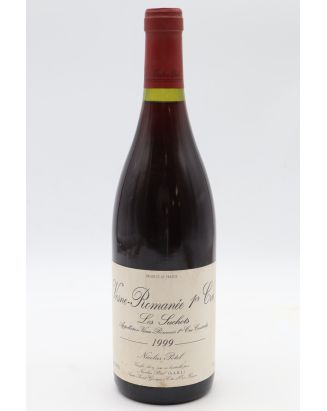
Roche de Bellene Vosne Romanée 1er Cru Les Suchots 1999
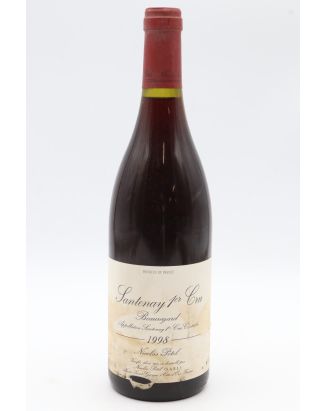
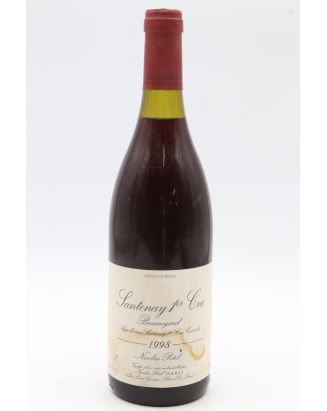
Nicolas Potel Santenay 1er Cru Beauregard 1998 - PROMO -5% !
Personalise your experience
Change your country, language and currency here whenever you wish.
|
|
|
Must-See Châteaux |
|
|
|
|
|
|
Founded in 1997 by Nicolas Potel, son of the legendary Gérard Potel of the Domaine de la Pousse d'Or, Maison Nicolas Potel has established itself over a few vintages as one of the great names in Burgundian négociant trade. Without owning any vines of its own at the outset, it built its reputation on a network of around thirty partner growers cultivating fine old-vine plots, from the Côte de Nuits to the Côte de Beaune. The portfolio is impressive: more than forty-five cuvées covering the full Burgundian hierarchy, from regional appellations to the most prestigious grands crus. Manual harvesting, meticulous sorting, low-intervention winemaking, aging on fine lees for twelve to sixteen months without racking, and sulfur kept to a minimum: the approach is unwavering.
The story begins in Volnay. In 1964, Françoise and Gérard Potel settled in Burgundy. An agricultural engineer and exacting winemaker, Gérard Potel took over the direction of the Domaine de la Pousse d'Or and passed on his passion for Pinot Noir to those around him, specialising in the vinification of premier crus. His son Nicolas grew up among the vines and barrels, then completed his training through experiences at the four corners of the world, notably in Australia at Margaret River alongside pioneer Moss Wood, before studying viticulture in Beaune.
The sudden passing of Gérard Potel in 1997 and the sale of the Pousse d'Or upended these plans. Armed with his expertise and, above all, his vast network, Nicolas Potel created his own négociant house in Nuits-Saint-Georges that same year, with the 1997 vintage as his first attempt. Success was immediate: the respect his father had enjoyed opened the doors of prestigious growers to him, and by 2002 he was producing wines from around fifty different appellations. The rapid growth nonetheless required refinancing: in 2004, Nicolas Potel sold the company and the name to the Cottin brothers, owners of Maison Labouré-Roi, founded in Nuits-Saint-Georges in 1832. He remained at the helm until 2009, before launching his own projects in Beaune. Since then, Maison Nicolas Potel has perpetuated the methods and philosophy of its founder, drawing on the same partnerships and on cellars now established in Beaune, where the grapes have been vinified and aged in-house since the 2008 vintage.
The house does not conceive of itself as a simple négociant, but as a winemaker who selects its plots with the exacting standards of a grower. Contracts are entered into on a long-term basis with attentive viticulturalists, and the specifications are strict: only vines over thirty years old are retained, some exceeding sixty years, always harvested by hand. This choice of old vines explains the natural concentration and aromatic depth of the cuvées, even in the most modest appellations.
The scope covers the heart of Burgundy. In the Côte de Nuits, the house works the brown clay-limestone soils of Marsannay, Fixin, Gevrey-Chambertin, Morey-Saint-Denis, Chambolle-Musigny, Vougeot, Vosne-Romanée and Nuits-Saint-Georges, with access to several of the world's most sought-after grands crus. In the Côte de Beaune, it operates in Savigny-lès-Beaune, Beaune, Pommard, Volnay, Monthélie, Meursault, Puligny-Montrachet, Chassagne-Montrachet and Santenay, as well as on the hill of Corton. The Hautes-Côtes de Nuits and the Hautes-Côtes de Beaune, cooler and at higher elevation, complete the palette, as do forays into the Chablisien, the Mâconnais and the Côte Chalonnaise. The grape varieties are exclusively Burgundian — Pinot Noir and Chardonnay — and the partner growers work according to environmentally respectful practices, with the biodynamic calendar followed in the cellar.
The grapes arrive at the cellar in small harvest crates, then are selected once more on a sorting table. Destemming is partial and adjusted according to the vintage and the appellation, in order to preserve a degree of relief and freshness. Fermentations take place without additives, with a minimum of interventions. The house has established a rare protocol: each cuvée is tasted two to three times a day by the oenologists during vatting, in order to follow the aromatic development as closely as possible and to adapt the extractions accordingly.
After draining the vat, pressing is very gentle, then the musts are barrelled for ageing on fine lees for twelve to sixteen months, generally in barrels of which only a portion are new. The wines undergo no racking and sulphur additions are kept to a strict minimum. At the time of bottling or blending, the work is done in the traditional manner, by drawing the wine through the broquereau, the opening made at the bottom of the barrel into which a funnel is placed. All stages follow the biodynamic calendar. The result is wines as natural as possible — dense, aromatic and very fruity, yet never lacking in elegance or finesse, with fine oak and a taut substance.
Bourgogne Pinot Noir Vieilles Vignes is the cuvée that made the house's reputation: vibrant red fruit, supple tannins, lively acidity and a substance that far exceeds its rank. Its counterpart, Bourgogne Chardonnay Vieilles Vignes, displays a pale golden-yellow colour with green highlights, a floral nose mingled with citrus, pear and a hint of honey, and an aromatic, fresh and lightly oaked palate endowed with beautiful tension. Bourgogne Hautes-Côtes de Nuits delivers a frank and structured Pinot Noir, with tannins that are present from a young age, while Bourgogne Hautes-Côtes de Beaune Vieilles Vignes bets on character and a refreshing acidity.
In the Côte de Beaune, Savigny-lès-Beaune seduces with its tangy red fruit and mineral freshness. Beaune shows a round and indulgent character, with cherry and gentle spices. Pommard brings the most structured note, with dark fruits, liquorice and a solid tannic framework. Volnay Vieilles Vignes unfolds a perfumed and delicate nose of raspberry and cherry, with the lacy finesse that has made the village's reputation. Volnay 1er Cru Santenots, from the famous red enclave in the land of Meursault whites, blends blackcurrant and blueberry with notes of undergrowth and truffle, in an elegant, ample, silky and persistent palate. Monthélie and Santenay complete the range with accessible and flavourful reds.
On the white wine side of the Côte de Beaune, Meursault offers an ample and buttery palate, with toasted hazelnut and ripe white fruits. Puligny-Montrachet responds with greater verticality, citrus and saline tension. Chassagne-Montrachet combines richness and freshness in a more sunny register. On the hill of Corton, Corton-Charlemagne Grand Cru reveals a minerality that serves as the olfactory signature of the climat, paired with fine oak, a richly tensioned substance and a woody finish, while Corton Grand Cru rouge displays power and length.
In the Côte de Nuits, Marsannay and Fixin offer two characterful entry-level wines, with dark fruits and liquorice. Gevrey-Chambertin, sourced from vines often sixty years old and harvested by hand, presents an intense ruby colour, a toasty nose and a supple, indulgent, fresh and elegant palate that is best decanted two hours before serving. Gevrey-Chambertin 1er Cru adds density, spicy complexity and a tighter tannic framework. Morey-Saint-Denis sits midway between the power of Gevrey and the finesse of Chambolle, while Chambolle-Musigny plays the card of silky texture, fresh purity and floral notes. Vougeot brings a more compact and mineral substance.
Vosne-Romanée Vieilles Vignes bears the unmistakable imprint of the village, between ripe red fruits, gentle spices and a remarkable aromatic breadth. Vosne-Romanée 1er Cru Les Gaudichots, an extremely rare climat neighbouring La Tâche, constitutes one of the most sought-after bottles of the house, of exceptional depth and breed. Nuits-Saint-Georges delivers an ample wine, with ripe fruits that envelop the structure and a beautiful length, while Nuits-Saint-Georges 1er Cru Les Chaignots adds deep flesh, very pure fruit and more precisely defined tannins.
The grands crus form the pinnacle of the collection. Charmes-Chambertin reveals itself as well concentrated, with a nose of raspberry and blackcurrant underscored by spices and undergrowth, and a voluptuous palate combining power and persistence. Chambertin-Clos de Bèze impresses with its masterful architecture and its ageing potential of several decades. Clos de la Roche unfolds a mineral depth and truffle notes characteristic of Morey. Bonnes-Mares combines power and laciness in a dense and spicy wine. Clos de Vougeot stands out for its amplitude and compact substance, with candied dark fruits and leather. Echezeaux offers a silky texture and a ripe fruitiness of great elegance. Finally, Romanée-Saint-Vivant, the absolute jewel of Vosne-Romanée, embodies the quintessence of Burgundian Pinot Noir: an entrancing floral perfume, tannins of extreme finesse, a saline length and a complexity that unfolds over more than twenty-five years.
COLLECTION NEAR PARIS & VAT REFUND FOR TOURISTS
Free collection in our warehouse near central Paris (92)