Personalise your experience
Change your country, language and currency here whenever you wish.
|
|
|
Must-See Châteaux |
|
|
|
|
|
|
|
|
The 1958 vintage belongs as much to history as to the tasting glass. Caught between the devastating frost of 1956 and the great 1959 vintage, it was long considered a modest year in France: Bordeaux had a small harvest and produced rather light wines, while Burgundy had an uneven year. Yet a few exceptional terroirs managed to stand out, notably in the Rhône Valley and among certain Bordeaux grands crus. Beyond France, 1958 favored Piedmont, where the Barolos are of very high quality, as well as Port, for which a vintage was declared by some producers. Today, 1958 wines are collector’s rarities, sought after to celebrate a milestone birthday.
The 1958 vintage arose under unusual circumstances: in February 1956, exceptionally severe frost had destroyed a significant part of the Bordeaux vineyards, forcing many châteaux to pull out and replant their vines. In 1958, many vines were therefore still young or being re-established, which largely explains the small harvest. The growing season passed without extremes, in a moderate climate that did not allow grapes to reach high levels of ripeness in most French regions.
The harvest was late: in Bordeaux, all the châteaux began picking the small amount of ripe fruit available on October 6 or later. The small harvest produced wines that were light but pleasant in their youth. In the Rhône Valley, the great terroirs better withstood the challenging weather, while in northern Italy, Piedmont enjoyed a favorable season conducive to long-lived wines.
The vast majority of 1958 wines were consumed long ago, and most of that year's Bordeaux wines, lacking substantial structure, have declined. The surviving bottles are highly evolved wines whose appeal lies in their rarity and the emotion they evoke. The 1958 Barolos, known for their longevity, and the year's vintage ports, by contrast, are among the wines most likely to remain in good condition. For a wine of this age, the bottle's condition matters more than its reputation: a high fill level, a sound cork and known provenance offer the best assurances.
For tasting, stand the bottle upright for several days to allow the sediment to settle completely, then open it with an Ah-So corkscrew suited to fragile corks. Decant gently at the last moment and drink promptly, as a very old wine can fade quickly on contact with air. Serve reds at around 16°C and ports at 16–18°C. For pairing, choose simple, fine food, or enjoy the wine on its own to appreciate its full complexity.
Giving a 1958 wine means celebrating an exceptional birthday with a bottle from the year France's Fifth Republic was founded; its constitution was approved by referendum in the fall of 1958. Soccer fans also remember the World Cup in Sweden, where Just Fontaine scored 13 goals—a record never equaled in a single tournament—while Brussels hosted the World's Fair and its famous Atomium. For a gift, a Barolo, a vintage port or a 1958 vintage Armagnac often offers a better bet than a French still wine from that year.
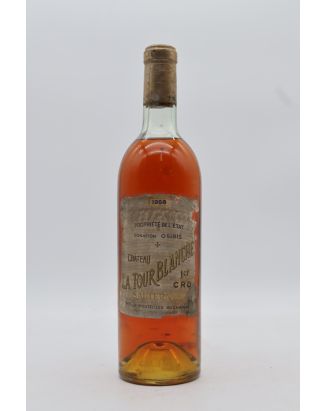
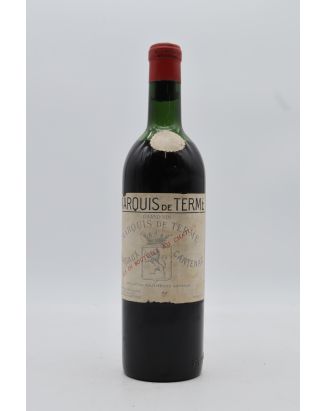
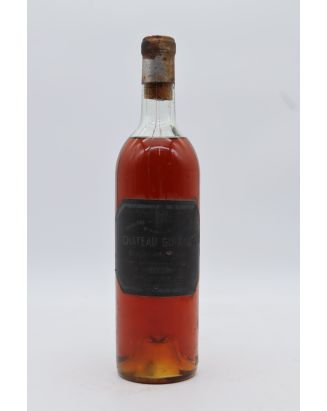
Bordeaux: an uneven vintage marked by a very small harvest due to replanting after the 1956 frost. Light and pleasant in their youth, the wines were not made for long aging. A few grands crus nevertheless stood out, including Haut-Brion and La Mission Haut-Brion in the Graves, Latour in Pauillac, and Figeac in Saint-Émilion. The 1958 Sauternes may still offer interesting tasting experiences.
Burgundy: a year generally considered weak for reds. As often happens in difficult vintages, the best terroirs made the difference, and some white grands crus have proved surprisingly resilient with age.
Champagne: 1958 is not remembered as a great Champagne vintage, falling between the much more renowned years of 1955 and 1959. The year's vintage champagnes are therefore particularly rare.
Rhône Valley: one of the French regions that fared best. Despite challenging weather, the grands crus—both red and white—had a successful vintage, and the year's Châteauneuf-du-Pape wines rank among France's notable successes of 1958.
Loire: 1958 was not a great vintage in the Loire. Only Chenin Blancs from the best terroirs of Vouvray, Savennières or Anjou, renowned for their extraordinary longevity, may still offer a worthwhile tasting experience.
Alsace: the moderate weather did not allow great age-worthy wines to be made, and Alsace bottles from 1958 are now extremely rare.
Languedoc-Roussillon: at the time, the region mainly produced everyday wines. Vintage vins doux naturels from Roussillon—Rivesaltes, Maury or Banyuls—are the best way to celebrate 1958 with a wine from the region, their oxidative aging giving them remarkable longevity.
Provence: Provence wines from 1958 have long since disappeared from cellars. A handful of exceptionally rare bottles of Bandol or Palette may remain, but they are chiefly collectors' curiosities.
Southwest France: still wines from this period are virtually impossible to find, but vintage 1958 Armagnacs are an ideal alternative. Once bottled, the spirit's development is effectively halted, making it a gift in excellent condition.
Beaujolais: made to be drunk young, 1958 Beaujolais wines are virtually impossible to find today, apart from a few rare bottles of Moulin-à-Vent kept by collectors.
Jura: vins jaunes and Château-Chalon, aged for many years under a veil of yeast, are among the few French wines capable of lasting more than six decades. A well-preserved 1958 bottle remains a treasure for wine lovers.
Savoie: Savoie wines from 1958, made primarily for local consumption while young, are no longer found today.
Italy: 1958 was a very good vintage in Piedmont, where the full-bodied, velvety and balanced Barolos were built to last. Tuscany also had a successful year, producing age-worthy Brunello di Montalcino. Today, these are among the most recommendable red wines from 1958.
Portugal: although 1958 was not a universally declared vintage, several of the most respected port houses bottled a vintage port. These ports, now very mature, have developed greater softness and complexity and are among the safest choices for a 1958 gift.
COLLECTION NEAR PARIS & VAT REFUND FOR TOURISTS
Free collection in our warehouse near central Paris (92)