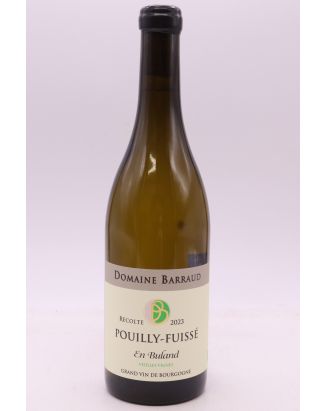
Barraud Pouilly Fuissé En Buland 2023
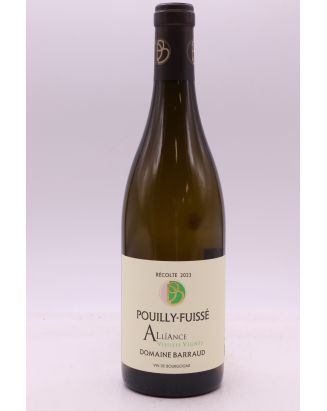
Barraud Pouilly Fuissé Alliance Vieilles Vignes 2023
Personalise your experience
Change your country, language and currency here whenever you wish.
|
|
|
Must-See Châteaux |
|
|
|
|
|
|
|
|
Nestled at the foot of the Roche de Vergisson, Domaine Daniel Barraud stands as an absolute reference for chardonnay from southern Burgundy. Five generations of winegrowers have shaped an estate of around ten hectares, entirely devoted to white wines, spread across Pouilly-Fuissé, Saint-Véran and the Mâcon Villages. Old vines planted on the calcareous scree of the great rocks, parcel-by-parcel ploughing, controlled yields and precise winemaking give rise to luminous, taut cuvées of rare minerality. Now led by Julien and Anaïs Barraud, the estate offers a clear range spanning from the approachable Mâcon to the great single-vineyard cellar wines, with a quality-to-price ratio that remains one of the most compelling in the region.
The family story begins in 1905, when Jean-Marie Barraud settled in Vergisson as a sharecropper. Able to read and keep accounts, he saved enough to purchase the estate’s first plots with his wife Marie in 1912. Ten years later, Joseph and Marguerite Barraud took over. A visionary entrepreneur, Joseph identified the best meadows for planting vines, developed direct sales to cafés and restaurants, and became one of the first in the village to bottle wine at the property in the late 1930s. The first Les Crays cuvée appeared in 1947, and the plot has remained the house’s benchmark among its Burgundy wines ever since.
In 1959, Henri Barraud joined the family operation with his wife Monique, a native of Fuissé. The estate’s motto, “Work well and you save time,” is hers. The creation of the Saint-Véran AOC in 1971 opened a new chapter, with the Les Pommards plot bottled separately from 1978. The fourth generation took over in 1979: Daniel and Martine Barraud began selling Mâcon-Vergisson and Saint-Véran En Crèches by the bottle, then purchased the house and Clos de la Verchère in 1990, when the DB initials first appeared on the labels. Daniel then raised the property to the top tier of the Mâconnais. Julien joined him in 2006 and took charge of winemaking; his sister Anaïs followed in 2015.
The vineyard covers around ten hectares planted entirely to Chardonnay, mainly around Vergisson, with additional plots in Davayé, Fuissé and Chaintré. Its soils tell the story of the area’s striking geology: steep limestone scree at the foot of the Roche de Vergisson, high-altitude white limestone, flinty limestone near Fuissé, alternating calcareous marls in Clos de la Verchère, variegated Triassic clays in the En France climat, and clay-sandstone and siliceous soils in Chaintré. This diversity explains the breadth of the range and calls for plot-by-plot vinification in Pouilly-Fuissé.
The age of the vines is another major asset: they often average more than forty years old, and several plots are over half a century old. En Buland was planted in 1934, and La Verchère between 1947 and 1969. The work is hands-on: every plot is plowed, grass cover is carefully managed, herbicides are avoided, buds and leaves are meticulously thinned, and the grapes are harvested and sorted by hand. The slopes of Vergisson are difficult to work with machinery and demand constant precision. In Davayé, limestone terroirs produce generous Saint-Véran wines, while four of the estate’s climats in Vergisson were awarded premier cru status in the 2020 classification.
Each plot is pressed and vinified separately to preserve the identity of its climat. Depending on the cuvée, fermentation takes place in tanks, 228- or 300-liter barrels, 600-liter barrels or large oak casks. The proportion of new oak is deliberately restrained, most often between 10 and 35%. Native yeasts drive fermentation, and Julien Barraud has extended the aging period for the top cuvées to build complexity and depth.
Aging generally lasts twelve months on fine lees, followed by another two to three months in tanks after racking, a step that brings cohesion and freshness before bottling. Lees stirring is restrained to avoid weighing down the wine, and the goal is always saline tension rather than overt richness. The result is crystalline white Burgundy wines, already delicious in their youth yet endowed with real aging potential, like the best Burgundy premiers crus.
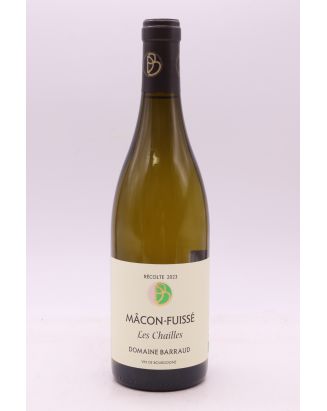
Mâcon-Chaintré Les Pierres Polies comes from vines planted in 1990 at the foot of the Chaintré slopes, on clay-sandstone and siliceous soils. Vinified three-quarters in large oak casks and one-quarter in tanks, it charms with crisp fruit, suppleness and immediate drinkability. Mâcon-Fuissé comes from a high-altitude, southeast-facing plot on flinty limestone, planted in 1985. Vinified in tanks and 600-liter barrels, it combines roundness and minerality with a refreshing hint of citrus. Mâcon-Vergisson La Roche, from plots at an altitude of 380 meters on white limestone, is aged in 300-liter barrels, 10% of them new, and stands out for its lemon notes and finely etched character. Mâcon Les Chailles rounds out this entry-level range with a focused, saline and remarkably approachable Chardonnay.
In Saint-Véran, Arpège blends two plots of twenty- to twenty-five-year-old vines, vinified half in barrels and half in tanks, giving it a smooth, fruity palate lifted by a mineral finish. Southeast-facing Saint-Véran En Crèches lies in a warm, sheltered hollow on white limestone. Aged 70% in barrels and the rest in 600-liter barrels, with 10% new oak, it is floral, full of white fruit and thoroughly enjoyable. Saint-Véran Les Pommards, planted on limestone above a former quarry and facing northeast, comes from vines around forty years old. Aged twelve months in 300-liter barrels, 20% of them new, then two months in tanks, it is rich, full-bodied and concentrated, with remarkable length for the appellation.
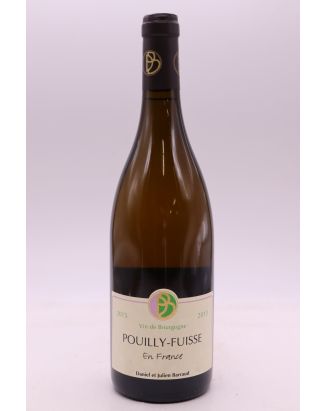
Pouilly-Fuissé Alliance, often offered as Vieilles Vignes, blends several plots of limestone scree, fossil-rich limestone and clay-limestone planted forty to sixty years ago. It is vinified one-third in barrels, one-third in 600-liter barrels and one-third in tanks. Mineral and fruity, it drinks well young but can also spend seven years in the cellar. Pouilly-Fuissé Les Chataigniers comes from a sixty-year-old, high-altitude plot in Fuissé on flinty limestone. It is aged one-third in barrels and two-thirds in 600-liter barrels, with 15% new oak; the palate is round and supple, with a lemony finish. Pouilly-Fuissé En France, bordering Château de France on limestone covered by variegated Triassic clays, brings together vines planted in 1972 and 1984. Aged in barrels with 20% new oak, it offers power, length, fresh fruit and a pronounced saline finish. Pouilly-Fuissé La Verchère comes from an enclosed, due-south-facing vineyard beside the house, where limestone scree alternates with calcareous marl. Its vines were planted between 1947 and 1969; twelve months in barrels with 20% new oak, followed by two months in tanks, yield a wine of citrus and stone, delicious young and destined to age beautifully. Pouilly-Fuissé La Roche, from a small plot perched at 350 meters on white limestone, combines richness, fruit and superb minerality after twelve months in barrels, 20% of them new. Pouilly-Fuissé Les Crays clings to a steep slope of limestone scree on the Roche de Vergisson. It demands extreme precision and reveals minerality, delicacy and a silky texture, with three months in tanks after racking. Finally, Pouilly-Fuissé En Buland, on the northeast-facing slope of the Roche de Solutré and planted in 1934, is aged twelve months in barrels, 35% of them new, then three months in tanks. Powerful, complex and subtle, with exceptional minerality, it is the estate’s great wine for aging.
COLLECTION NEAR PARIS & VAT REFUND FOR TOURISTS
Free collection in our warehouse near central Paris (92)