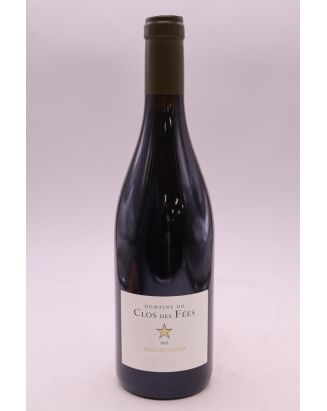
Clos des Fées

Domaine Clos des Fées wines: buy at the best price

After attracting media attention in the late 1990s, Domaine du Clos des Fées established itself as one of the leading estates in Roussillon. Behind this estate, perched on the limestone cirque of Vingrau, is the energetic Hervé Bizeul, a former sommelier and food critic. An unconventional figure, he began making wine for his friends and took his Clos des Fées to the top! 

Read more
See more
Filters

Price

€0.00 - €240.00

Color

Volume

Parker WA rating

90 - 97

Burghound rating

No choice available on this group

Revue du Vin de France rating

No choice available on this group

Bettane & Desseauve rating

17 - 18

Prices drop

No choice available on this group

Download this list
Clos des Fées Côtes du Roussillon Villages La Petite Sibérie 2018
Last one !
1 in stock
105594
Red
75cl
Add to cart
Languedoc Roussillon | Côtes du Roussillon

Clos des Fées Côtes du Roussillon Villages La Petite Sibérie 2018

€228.00 inc-VAT per bottle
€190.00 ex-VAT
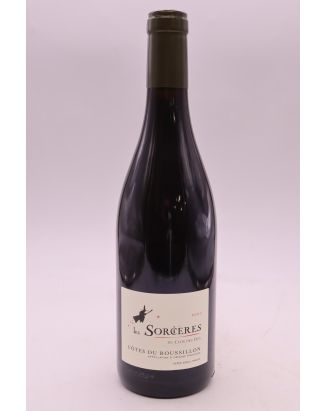
Clos des Fées Côtes du Roussillon Les Sorcières 2025
45 in stock
124462
Red
75cl
Add to cart
Languedoc Roussillon | Côtes du Roussillon

Clos des Fées Côtes du Roussillon Les Sorcières 2025

€14.40 inc-VAT per bottle
€12.00 ex-VAT
Clos des Fées Côtes du Roussillon Villages Vieilles Vignes 2022
23 in stock
124463
Red
75cl
Add to cart
Languedoc Roussillon | Côtes du Roussillon Villages

Clos des Fées Côtes du Roussillon Villages Vieilles Vignes 2022

€28.80 inc-VAT per bottle
€24.00 ex-VAT

The history of Clos des Fées

Born in Perpignan, Hervé Bizeul was not destined to become a winemaker. First a sommelier, then a restaurateur and later a journalist for the food and wine press, he gained an intimate knowledge of the world’s great wines before deciding to make one himself. In the late 1990s, he placed an ad seeking vines and discovered an isolated, wild and romantic plot in a remote corner of the Agly Valley. He gave it the name that would become the estate’s: a place where fairies would live, if they existed. The first vintage was produced in 1998, made with almost no equipment in a garage lent by a friend.

Success came quickly. As skilled a communicator as he is a winemaker, Hervé Bizeul attracted the attention of wine lovers and critics early on, even while Roussillon remained little regarded. La Petite Sibérie, born of a single plot of old Grenache vines, became a cult cuvée and drew attention from the international press, from Wine Spectator to Figaro Magazine. The estate then grew through successive acquisitions of remarkable sites, sometimes planted using pickaxes, and the creation of ever more new cuvées. Bizeul has never stopped exploring: Tempranillo planted in 2005, top-grafted Sémillon, Cabernet Franc from massal selection, Pinot Noir taken on as a challenge, and a cellar excavated for future sparkling wines. Le Clos des Fées now unquestionably ranks among Roussillon’s elite.

The terroirs and vines of Clos des Fées

The estate’s strength lies in the deliberate spread of its vineyards across seven very different terroirs in several communes of the Agly Valley and its foothills. These include Vingrau’s limestone cirque and clay-limestone slopes; the fully decomposed, powdery black marly schists of Espira de l’Agly; the reddish-black schists and mica schists, exceptionally rich in iron, of the La Petite Sibérie plot; the weathered granite sands of Lesquerde at an altitude of 600 meters, rich in quartz, mica and altered feldspar; and the red and black clays of the Cabrils site in Tautavel. Elevations range from 200 to 600 meters, with northern and western exposures often sought to preserve acidity.

This patchwork of poor, well-drained soils, combined with an extreme Mediterranean climate swept by an almost constant tramontane wind and cooled at night, allows for widely varying ripening times and a range of flavors no single terroir could offer. The vines are among the region’s oldest, from 40 to more than 100 years old for the Grenache and Carignan, supplemented by recent high-density plantings of 6,800 to 7,000 vines per hectare. They are trained as bush vines on individual stakes or in the Cordon de Royat system, often from massal selections. Canopy work is intensive: bud thinning, removal of secondary shoots, crop-load management and leaf removal. Around the plots, the estate maintains an extensive protective ecosystem of scrubland, woods, hedges and fallow land to support biodiversity, and avoids synthetic chemicals except when absolutely necessary.

Winemaking at Clos des Fées

Harvesting is by hand, often in the morning, with sorting in the vineyard and again after destemming. Grapes are transported in refrigerated trucks or vibrating trailers to preserve the fruit’s integrity. Harvest dates are chosen with balance rather than power in mind: full phenolic ripeness for the top cuvées, and earlier picking for fruit-forward wines to retain acidity and moderate alcohol levels. For the reds, cold pre-fermentation maceration precedes fifteen to twenty-five days on the skins, with gentle punch-downs, daily pump-overs, slow extraction and temperature control. For the whites, whole clusters are pressed gently over several hours, with light settling to retain the lees needed for autolysis.

Aging varies dramatically according to the ambitions of each cuvée. Fruit-forward wines spend five to eight months in tanks on fine lees, with minimal sulfur and early bottling to capture their aromatic brightness. Single-site wines spend twelve months in once- and twice-used barrels, supplemented by concrete tanks. Le Clos des Fées, meanwhile, is drawn off while warm into new five-hectoliter demi-muids, then aged on its lees for eighteen months in new barrels. Every operation is carried out by hand, without pumping, and the wine is bottled without filtration. Indigenous yeasts are favored for many cuvées; La Petite Sibérie is topped up with a Mourvèdre and Syrah blend; and sulfur is used sparingly.

The wines of Clos des Fées

Les Sorcières rouge is the estate’s signature fruit-forward cuvée, an AOP Côtes du Roussillon. It blends 50% Syrah from young vines, 30% Grenache and 20% Carignan from old vines aged 40 to 80 years, grown on clay-limestone terroirs. After cold pre-fermentation maceration and fifteen to twenty-one days on the skins, it spends eight months in tanks on fine lees. The result is a medium-bodied wine with deliberately restrained concentration, exuberant black fruit, delicate tannins and a silky palate. Delicious as soon as it is bottled, it can improve over two to three years.

Les Sorcières blanc brings together young Vermentino and Roussanne vines planted at high density in 2011 and old Macabeu from the Lou Bac site, planted in 1945. Direct whole-cluster pressing over five hours, low-temperature fermentation with indigenous yeasts, aging on fine lees and early bottling in February produce a taut but not austere white: ripe and fresh, with a fruity, airy opening and a thirst-quenching finish, made for Mediterranean cuisine.

L’Apprentie Sorcière is the estate’s rosé, an IGP Côtes Catalanes. It combines Grenache Noir from young vines and old Carignan grown on the powdery black schists of Espira de l’Agly, Syrah from Vingrau, and bush-trained Mourvèdre from the Mas Farines terroir in Opoul. Direct pressing at low temperature keeps color extraction to a minimum, while a long fermentation and lees stirring on fine lees yield a pale wine with aromas of red fruit, lychee and pink grapefruit. The palate is round and smooth, with a spicy, taut finish. The estate also offers Œil de Perdrix, a Côtes Catalanes cuvée in a light-colored, appealing style.

Modeste lives up to its name without compromising the house’s exacting standards. Grenache and Syrah from the decomposed black schists of Espira de l’Agly, 35-year-old Cinsault from very stony clay-limestone soils, and selected Mourvèdre grapes make up a very pale red, almost transparent, that could be mistaken for Pinot Noir in a blind tasting. Short maceration, rapid fermentation with indigenous yeasts and bottling as early as January preserve its brightness: aromas of fresh fruit, faded rose and red currant, a pure, flowing palate and exceptionally fine tannins, thanks to a deliberately low alcohol level. Serve chilled, at white-wine temperature.

Vieilles Vignes blanc is made from the property’s oldest vines, more than a century old, in the Mas Farines area: 90% Grenache Blanc and 10% Grenache Gris, grown at elevations of 200 to 400 meters with northern and western exposures. Fermentation is split between stainless-steel tanks and old barrels with lees stirring, followed by five to eight months of aging on the lees. The wine is rich and powerful, with an exceptional impression of sweetness in its texture despite being dry, and truly comes into its own three to six years after harvest.

Vieilles Vignes rouge, a Côtes du Roussillon Villages, is perhaps the estate’s most representative wine. It brings together the oldest plots, whose vines are 50 to 100 years old: 50% Grenache and Lladoner Pelut, 35% Carignan and 15% Syrah, grown on clay-limestone slopes. Maceration lasts twenty to twenty-five days, with gentle extraction, followed by twelve months of aging without racking in once- and twice-used barrels and concrete tanks. Naturally concentrated but not excessive, and highly aromatic with notes of black fruit, licorice and spices, it appeals immediately with its silky tannins but reveals its true potential only after three years. Its ideal aging window is five to ten years.

Le Clos des Fées, the namesake cuvée and one of the estate’s most ambitious, comes from selected old-vine plots on clay-limestone slopes. It blends equal parts Syrah, Mourvèdre, Grenache and Carignan. Partly vinified in new five-hectoliter demi-muids, with the wine drawn off while warm and malolactic fermentation in new barrels, it is aged on its lees for eighteen months before bottling without filtration. Powerful and concentrated, with a remarkable creamy texture yet always fresh and taut, it often closes down in its second year before slowly gaining finesse. It has aging potential of eight to fifteen years. Post Scriptum, also a Côtes du Roussillon Villages, extends this pursuit in a limited-production, highly sought-after expression of the house’s great red wine.

La Petite Sibérie is Roussillon’s cult cuvée. It comes from a single 2.32-hectare plot of old, bush-trained Grenache Noir vines, on a clay-limestone base overlaid with a seam of reddish-black schist and mica schist exceptionally rich in iron. An icy northwesterly wind blows through the site more than two hundred days a year, hence its paradoxical name. Maceration lasts twenty days with gentle punch-downs, followed by transfer to new barrels and aging on the lees without sulfur until malolactic fermentation is complete. The barrels are topped up regularly with a Mourvèdre and Syrah blend, and the wine is bottled without filtration. It has impressive length and tightly knit, memorably velvety tannins. It evolves in the glass for hours, reaching maturity at around ten years, with a stated aging potential of thirty years.

Among the single-plot wines, De battre mon cœur s’est arrêté is a pure Syrah from a south- to southeast-facing slope of weathered granite sand at an altitude of 600 meters in the commune of Lesquerde. Thirty-year-old bush vines have been put back on stakes and pruned severely, with the aim of achieving technological rather than phenolic ripeness to preserve fresh-fruit character. Twenty days on the skins, five to six months of aging in tanks and bottling in April or May produce a dense, refined, spicy wine without heaviness.

Images dérisoires comes from a tiny 7,000-square-meter plot planted in 2005 with genuine Tempranillo, known as Tinto Fino, from massal selection and trained on stakes, complemented by high-altitude Carignan planted after the war at 450 meters. The first harvest came in 2011. Pre-fermentation maceration and a slow, two-week fermentation are followed by aging in tanks on the lees. The wine is dark and dense, with a compact palate that is both velvety and rustic, intriguing and endearing: a unique cuvée with no equivalent in the region.

Un faune avec son fifre rouge is based primarily on Cabernet Franc from a high-quality massal selection, planted at 6,800 vines per hectare at the western foot of a limestone cliff with northern exposure, complemented by Merlot from the Le Clos des Fées site. The varieties are vinified together, aged partly in new barrels and then in tanks, and bottled early. The wine has a dark garnet color, aromas of ripe red fruit and roasted red pepper, and a long, silky, distinguished palate that immediately calls to mind the word “classic.” The label changes with each vintage, as the faun evolves with the wine.

Un faune avec son fifre blanc, sometimes released under the name Sous les oliviers sauvages, is a pure Sémillon from a half-hectare plot top-grafted by the estate in 2006. Long, pneumatic whole-cluster pressing is followed by transfer to new 500-liter demi-muids, six weeks of fermentation with native yeasts, twelve months on the full lees with monthly stirring, then six months of rest in tanks and at least twenty-four months in bottle at the estate. Liquid gold in color, it has aromas of beeswax, saffron, apricot jam and Bourbon vanilla, and a powerful, dense palate with an endless finish. A touch of controlled oxidation evokes great old-school white wines.

Aimer, rêver, prier, se taire… is a pure Pinot Noir planted on an arid, steep, due-north-facing slope at the Cabrils site in Tautavel, on red and black clays. An exceptional massal selection supplemented by two fine clones, very early harvesting between August 15 and 25 to preserve acidity, a short cold maceration, fermentation with indigenous yeasts and eight to ten months of aging in Burgundy barrels produce a translucent ruby wine. It has aromas of crisp red fruit and herbal notes, and a dense, refined palate with exceptionally fine-grained tannins and an unexpected ability to age in this climate. The estate also makes 100 Phrases pour Éventails, another Pinot Noir vinified without sulfur in collaboration with Jean-Yves Bizot, as well as two limited-production cuvées for discerning wine lovers, Le Chat du Marquis and Kepler, the latter sold as Vin de France.

WHAT THEY SAY ABOUT US

5 good reasons to buy wines on V&M

...

EXPRESS DELIVERY

In a secure polystyrene packaging

...

INTERNATIONAL SHIPPING

Find out more about VAT-EX sale for outside EU deliveries

...

COLLECTION NEAR PARIS & VAT REFUND FOR TOURISTS

Free collection in our warehouse near central Paris (92)

...