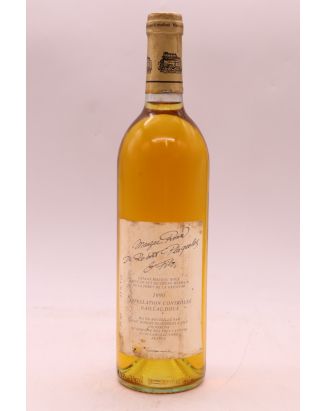
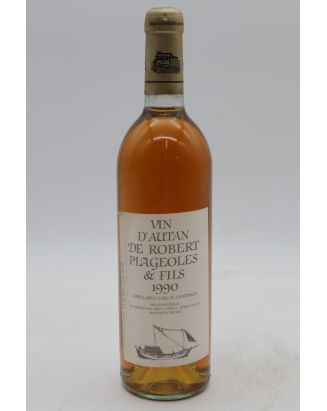
Robert Plageoles Gaillac Mauzac Doux 1990
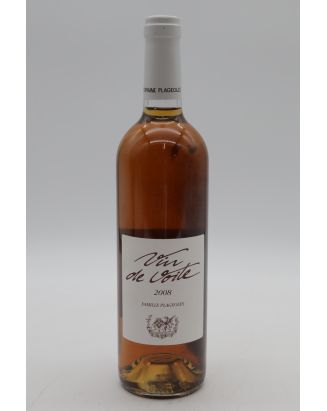
Plageoles Gaillac Vin de Voile 2008
Personalise your experience
Change your country, language and currency here whenever you wish.
|
|
|
Must-See Châteaux |
|
|
|
|
|
|
|
|
This family estate in the South-West of France, located north of the Tarn in the Gaillac appellation area, came into being during the 19th century. At that time, Jules Plageoles, an agricultural worker, cultivated vines as well as fruit trees and cereals. In 1970, the estate took a new turn with the opening of the Gaillac appellation to red wines. Autochthonous grape varieties were then planted, in keeping with the estate's philosophy of cultivating local varieties in order to highlight the heritage of Gaillac. Due to his originality, Robert Plageoles found himself excluded from the Gaillac AOC syndicate.
It all began in the early 19th century with Jules Plageoles, a farmworker who gradually bought land in Cahuzac-sur-Vère and built a mixed farm of vines, fruit trees and grain crops. Protected by deep clay-limestone soils, the family’s vines partly escaped the ravages of phylloxera. In 1970, when the Gaillac appellation opened to red wines, Marcel Plageoles set a new course by replanting native varieties such as Duras, then almost extinct in the region.
His son Robert wrote the next great chapter. Passionate about ampelography, he rejected the fashion for international grape varieties and set out to find the forgotten varieties of the Gaillac area, either among local winegrowers or at the Marseillan grape collection in Languedoc when a variety had disappeared entirely, as with Verdanel and Mauzac Noir. He saved Prunelart from a friend who was about to pull it out, had its identity confirmed by INRA and replanted it. A 1909 treatise by Victor Sébastian inspired him to revive wine made from vine-dried Ondenc. He replanted two hectares of the grape starting in 1985, ultimately producing the renowned Vin d’Autan. His unconventional approach led to his exclusion for a time from the Gaillac AOC growers’ association. His son Bernard joined him in 1983, planted Ondenc, Loin de l’Œil and Mauzac, began the conversion to organic farming and made the wines through the 2015 vintage. Today, Bernard’s sons Florent and Romain continue the family’s work with the same independence of spirit.
The vineyards cover roughly 20 to 30 hectares across two properties: Domaine des Très Cantous, the family’s historic property in Cahuzac-sur-Vère on the road up to Cordes-sur-Ciel, and Domaine de Roucou-Cantemerle in Castelnau-de-Montmiral. The deep clay-limestone hillsides provide a valuable water reserve and give the wines their mineral precision. Plots of each grape variety sit side by side, and each yields its own wine: at Plageoles, the aim is never to blend, but to capture the pure expression of a single variety.
The fourteen historic grape varieties of the Gaillac area are brought together here: the various forms of Mauzac (Vert, Roux, Rose, Blanc and Noir), Ondenc, Verdanel, Loin de l’Œil and Muscadelle for the whites, and Duras, Braucol and Prunelart for the reds. The vines are bush-pruned without trellising, giving the bunches natural shade on the hottest summer days. Vines are replaced exclusively through massal selection, using plants chosen from the vineyard. The soils are cultivated mechanically, without herbicides, chemical fertilizers or synthetic products. Certified organic and inspired by biodynamics, the estate has also used the Cousinié method for some twenty years, strengthening the vines’ defenses through applications of trace elements.
The cellar carries this philosophy of purity forward. Grapes are harvested by hand, spontaneous fermentations rely exclusively on native yeasts, and the estate rules out both chaptalization and winemaking additives. The reds are destemmed and macerated briefly, for eight to ten days, with a few pump-overs early in fermentation to oxygenate the yeasts. They then age for around six months in concrete tanks before being bottled without filtration. The goal is always the same: to preserve the grape variety’s identity rather than impose a style on it.
Cuvées that call for it continue to be aged traditionally in 600-liter oak demi-muids. Above all, the estate has revived old techniques uncovered through Robert Plageoles’s research: the ancestral Gaillac method, in which the wine develops its bubbles naturally in the bottle using only the grapes’ sugars; seven years of aging under a veil of yeast without topping up; and drying grapes on the vine by pinching the stalk to stop the flow of sap, then letting the Autan wind dry the berries. Each of these practices makes every bottle a piece of winegrowing history.
Mauzac Vert: the estate’s signature dry white, from Gaillac Premières Côtes, with strikingly lively acidity. Green apple, pear, citrus and a hint of refined herbal character create a focused, saline wine that is remarkably refreshing.
Mauzac Roux: a riper, more golden expression of the grape, producing a fuller, rounder dry white. Quince, baked apple and a touch of honey mingle with a freshness that keeps it from feeling heavy.
Mauzac Nature: a sparkling wine made using the ancestral Gaillac method, with no added liqueur or other additions; its bubbles develop in the bottle using only the grapes’ sugars. Fine bubbles, notes of fresh apple and a hint of sweetness make this a benchmark for fresh, thirst-quenching wine.
Ondenc Sec: a medieval grape variety from the Tarn Valley, rescued from obscurity by the family and made here as a dry wine. The wine charms with its vibrant acidity, notes of citrus, white flowers and fresh almond, and a remarkably precise mineral finish.
Verdanel: one of the rarest white grape varieties of the Gaillac area, rediscovered at the Marseillan grape collection. It makes a distinctive dry white, with subtle aromas of white fruit, boxwood and herbs, vibrant acidity and a pleasing bitter note on the finish.
Verdanel Tendre: a sweet expression of the same variety, with restrained sweetness seamlessly integrated into the wine. Candied yellow fruit and white flowers are balanced by an acidity that makes it surprisingly light on the palate.
Loin de l’Œil: a historic Gaillac grape variety named for its long stalk, which holds the bunch away from the bud. It makes a floral, appealing dry white with notes of peach and linden blossom, a supple texture and welcome freshness.
Muscadelle: vinified on its own as a dry wine, it reveals its full aromatic range of muscat grape, acacia blossom and citrus zest. A fragrant yet dry white, far removed from the anonymous Muscadelles lost in blends.
Ondenc Doux: a sweet expression of this rare variety, made from grapes harvested at high ripeness. The wine unfolds aromas of quince, dried apricot and honey, with a luscious palate held in balance by lively acidity.
Vin d’Autan: the estate’s legendary cuvée, made from Ondenc grapes dried on the vine by the Autan wind after their stalks are pinched to stop the flow of sap. Pressed and then aged for a year, this sweet wine achieves rare concentration and complexity, with notes of candied fruit, saffron and spice. It regularly scores around 98 out of 100 from La Revue du Vin de France.
Vin de Voile: a tribute to Gaillac’s historic oxidative wines, made from Mauzac aged for seven years under a veil of yeast without topping up. Green walnut, curry, toasted almond and candied zest come together in a wine of exceptional saline intensity, superb with food and a match for the great vins jaunes.
Duras: a native red grape variety replanted by the family starting in 1970, hand-harvested, destemmed and fermented in concrete tanks with a short maceration. Red fruit, gently spicy notes and soft, supple tannins make for a fine, elegant, fresh red that is especially enjoyable lightly chilled.
Braucol: the local name for Fer Servadou, producing a more structured, wilder red with notes of blackcurrant, ripe bell pepper and spice. The palate is direct and juicy, with well-defined tannins and lovely freshness.
Prunelart: rescued just in time by Robert Plageoles, this ancestor of Malbec yields a deep, velvety red. Plum, blackberry and violet dominate its appealing nose, while the palate combines richness with silky tannins. One of the house’s great successes.
Prunelart Doux: a little-known sweet expression of this rare grape, made from dried grapes. Candied dark fruit, cocoa and spice combine in an indulgent, distinctive wine to serve with a chocolate dessert.
Mauzac Noir: a red grape variety that has nearly disappeared and is grown by very few winegrowers worldwide. It makes a pale, light red, highly aromatic with notes of red berries and gentle spice, and disarmingly easy to drink.
Syrah: the estate’s only concession to a grape variety from elsewhere, though it is perfectly adapted to the hillsides of the Gaillac area. It yields a peppery, floral red with fine tannins, in the vibrant, easy-drinking style that characterizes the house.
Terroirist range: a collection of exploratory cuvées, including Terroirist Orange, made by fermenting white grapes on their skins; Terroirist Climatique, reflecting the estate’s adaptation to new vintage conditions; and the lighter, more immediately approachable Terroirist de Printemps. Each takes the family’s experimentation in a new direction.
Contre-Pied range: unconventional cuvées in red and white, including an early-release wine named Contre-Pied de Soif. Made with minimal intervention, they emphasize freshness, juicy fruit and immediate pleasure, departing from the appellation’s expected style.
Marc brandy: the result of a collaboration with distiller Laurent Cazottes in Villeneuve-sur-Vère, made from the finest grape pomace from the Vin d’Autan cuvée. Delicate, fragrant and remarkably pure, it carries the spirit of the estate into an after-dinner drink.
COLLECTION NEAR PARIS & VAT REFUND FOR TOURISTS
Free collection in our warehouse near central Paris (92)