Personalise your experience
Change your country, language and currency here whenever you wish.
|
|
|
Must-See Châteaux |
|
|
|
|
|
|
A legendary name in Italian wine, the Gaja house has been based in Barbaresco, in Piedmont, since 1859. Under Angelo Gaja's leadership, it revolutionized the Langhe by introducing single-vineyard wines, barrel aging and grape varieties new to the region, elevating Nebbiolo to the ranks of the world's greatest wines. Barbaresco, single-vineyard crus, exceptional Barolo, great Chardonnay whites, and estates in Tuscany and Sicily.
The story begins in 1859, when Giovanni Gaja founded a small winery in Barbaresco that sold its wine both bottled and in bulk to local inns. Over the generations, the family acquired the village's finest slopes and built its reputation around Nebbiolo. Angelo's grandmother, Clotilde Rey, played a decisive role by insisting on the high standards of quality that would become the house's hallmark.
Angelo Gaja joined the estate in the early 1960s and upended Piedmont's conventions. He launched Barbaresco's first single-cru wines (Sorì San Lorenzo in 1967, Sorì Tildìn in 1970, Costa Russi in 1978), introduced French barriques, temperature control, and malolactic fermentation, then dared to plant Cabernet Sauvignon, Chardonnay, and Sauvignon Blanc on land reserved for Nebbiolo. In the 1990s, the family expanded into Barolo, then Tuscany, in Montalcino and Bolgheri, and more recently onto Mount Etna. Today, his children Gaia, Rossana, and Giovanni represent the fifth generation.
The heart of the estate lies in the Langhe, around Barbaresco and Treiso, where the family owns some of the appellation's finest slopes, including the celebrated Roncagliette hillside, home to Sorì Tildìn and Costa Russi. In Barolo, Gaja cultivates the Sperss vineyard in Serralunga d'Alba, renowned for its power, as well as the more elegant Conteisa and Gromis in La Morra. The Langhe's marl-limestone soils, rich in clay and sand, give Nebbiolo remarkable tannic structure and aromatic complexity.
The family also grows Chardonnay and Sauvignon Blanc in the Langhe and owns Pieve Santa Restituta in Montalcino and Ca' Marcanda in Bolgheri, as well as the Idda project on Mount Etna's volcanic slopes. Everywhere, vineyard work is meticulous: green harvesting, cover crops, natural compost, and efforts to foster biodiversity that helps the vines withstand climate change.
A pioneer of modern methods in Piedmont, Gaja has combined innovation with respect for terroir. Each plot is harvested by hand and vinified separately, with fermentation in temperature-controlled tanks and maceration tailored to Nebbiolo. The wines are first aged in French oak barriques, then refined in large casks, combining the precision of new oak with the mellow character imparted by traditional large vessels. The Barbaresco is thus blended from around fifteen individually vinified plots. To preserve quality, the house does not hesitate to declassify certain wines or refrain from producing them in difficult vintages.
Barbaresco: the wine that founded the legend in 1859, blended from around fifteen plots in Barbaresco and Treiso. Floral and deep, it combines cherry, rose, spice, and licorice with fine tannins. A classic wine for aging.
Barbaresco Sorì San Lorenzo: the house's first cru, from a steep hillside near the Tanaro. Dense, dark, and powerful, it offers black fruit, undergrowth, and earthy notes, with immense aging potential.
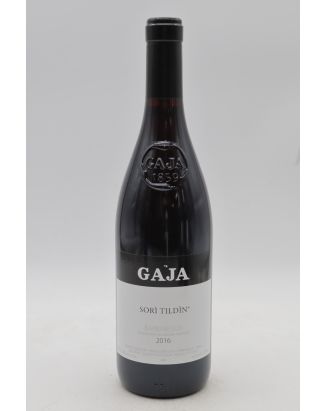
Barbaresco Sorì Tildìn: named in honor of Clotilde Rey, this cru at the top of Roncagliette combines concentration, refinement, and depth. A majestic Nebbiolo with aromas of rose, black cherry, and spice.
Barbaresco Costa Russi: from the lower part of the Roncagliette hillside, this cru is often the most charming and fruit-forward of the three, with a silky texture and bright red fruit. Like its two siblings, it has carried the Barbaresco appellation again since the 2013 vintage.
Barolo Sperss: the first vineyard the family acquired in Barolo, in Serralunga d'Alba, in 1988. Its name means “nostalgia” in Piedmontese. Powerful, mineral, and structured, it expresses tar, rose, black fruit, and spice.
Barolo Conteisa: from the Cerequio cru in La Morra, its name recalls a long-running dispute between the villages of La Morra and Barolo. It marries power and elegance, with floral notes and ripe red fruit.
Barolo Dagromis: blending fruit from the Gromis vineyard in La Morra and plots in Serralunga, it combines the finesse of one with the structure of the other. A fine introduction to the house's Barolos.
Sito Moresco: a Nebbiolo-based Langhe red blended with other varieties, including Barbera. Fruity, spicy, and elegant, it is approachable at a younger age than the great crus.
Darmagi: the first Cabernet Sauvignon planted in the Langhe, on a plot formerly devoted to Nebbiolo. Its name, meaning “what a shame,” echoes an expression used by Angelo's father. A dense red with notes of blackcurrant, cedar, and spice.
Gaia & Rey: a Chardonnay planted in 1979 and named in honor of Gaia Gaja and Clotilde Rey. The first Italian white aged in barriques, it reveals yellow fruit, hazelnut, and minerality, with remarkable aging potential.
Rossj-Bass: a Chardonnay with a touch of Sauvignon Blanc, dedicated to Rossana Gaja. Fresh, floral, and vibrant, it offers a more immediate introduction to the house's white-wine style.
Alteni di Brassica: a Langhe Sauvignon Blanc whose name evokes the stone walls and yellow flowers surrounding the vines. Aromatic and textured, it combines citrus, exotic fruit, and freshness.
Pieve Santa Restituta Brunello di Montalcino: Sangiovese from the family's Tuscan estate in Montalcino. An elegant, deep Brunello with notes of cherry, tobacco, and Mediterranean herbs.
Pieve Santa Restituta Rennina: a Brunello sourced from a selection of several plots, fuller and more sun-drenched, with aromas of ripe fruit and spice.
Pieve Santa Restituta Sugarille: a single-vineyard Brunello, powerful, structured, and built for long aging.
Ca' Marcanda Camarcanda: a fine wine from the Bolgheri estate, a Bordeaux-style blend of Merlot, Cabernet Sauvignon, and Cabernet Franc. Deep, velvety, and exceptionally refined.
Ca' Marcanda Magari: Bolgheri's second red, made from Merlot and Cabernet, fleshy, generous, and spicy.
Ca' Marcanda Promis: a fruity, sun-drenched blend of Merlot, Syrah, and Sangiovese, perfect for exploring Gaja's Tuscan wines.
Ca' Marcanda Vistamare: a Bolgheri white blending Vermentino and Viognier, with floral and saline notes inspired by the nearby sea.
Idda Rosso: the fruit of a partnership with winemaker Alberto Graci on Mount Etna, this Nerello Mascalese from volcanic soils stands out for its freshness, red-fruit notes, and smoky minerality.
Idda Bianco: a taut, vibrant Carricante from Mount Etna, with aromas of citrus, white flowers, and volcanic stone.
COLLECTION NEAR PARIS & VAT REFUND FOR TOURISTS
Free collection in our warehouse near central Paris (92)