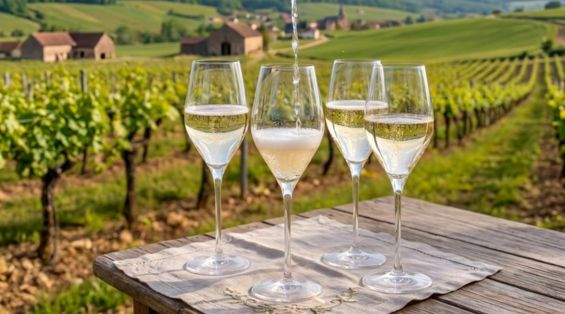
Benoit Lahaye Blanc de Blancs
Benoît Lahaye Blanc de Blancs Brut Nature
Personalise your experience
Change your country, language and currency here whenever you wish.
|
|
|
Must-See Châteaux |
|
|
|
|
|
|
|
|
An essential reference in the world of grower champagne
At the heart of the Montagne de Reims, on the exceptional terroir of the Grand Cru de Bouzy, Domaine Benoît Lahaye embodies a radically uncompromising vision of Champagne. In contrast to the major houses and their standardized production, this small domaine de less than 5 hectares, farmed with certified biodynamic practices, produces Champagnes of rare purity and intensity, crafted with absolute respect for living nature. Here, every cuvée is first and foremost a wine of terroir: a faithful expression of the Champagne soil, the energy of the vine, and the singular talent of an extraordinary winegrower. Named Winegrower of the Year 2022 by the Gault & Millau Guide and the holder of three stars in the Guide Vert of the Revue du Vin de France, Benoît Lahaye has established himself as one of the absolute benchmarks of Champagne winemaking.
The story of Domaine Benoît Lahaye has been rooted in Bouzy since 1930, when the Lahaye family began making wine from its first parcels in this exceptional Champagne region. His grandfather’s contagious passion for the vines inspired young Benoît, who trained at the Avize viticulture school, to take over the family estate in the late 1980s. In 1993, supported by his wife Valérie, he officially took the reins of the operation, which until then had delivered most of its harvest to the local cooperative winery.
That collaboration ended in 1996: faced with the poor quality of grapes supplied by other growers, Benoît Lahaye decided to vinify his entire harvest himself. It was the defining turning point. From then on, the estate committed itself wholeheartedly to pioneering organic farming: plowing the soils, planting ground cover, making compost on-site and gradually replacing mechanized work with horse-drawn cultivation. Official organic certification came in 2007, followed by the adoption of biodynamic practices in 2009, influenced in particular by specialist Pierre Masson. In 2010, the estate obtained biodynamic certification.
Today, Benoît and Valérie Lahaye are joined by their two sons, Étienne and Valentin, who carry on this meticulous work in the vineyard and cellar with the same rigor and passion. The estate also relies on Tamise, a draft mare whose gentle passage between the rows preserves the soil’s structure and life. This family story is deeply rooted in Champagne’s soil and has earned the estate some of the most prestigious distinctions: 4 stars in the Bettane+Desseauve guide, 3 stars in the RVF Guide Vert, and growing international recognition among leading enthusiasts of natural wines and grower champagnes.
The vineyards of Domaine Benoît Lahaye cover approximately 4.5 to 5 hectares across three emblematic villages of the Montagne de Reims, all classified as Grand Cru or Premier Cru: Bouzy (approximately 3 hectares), Ambonnay (1.5 hectares) and Tauxières (0.6 hectares). Each terroir makes a valuable, complementary contribution to the cuvée blends.
Bouzy, a Grand Cru village of the Montagne de Reims, is the heart of the estate. With predominantly southern and southeastern exposures, it enjoys remarkable sunshine and pure chalk bedrock covered by a thin layer of clay and limestone topsoil. Bouzy gives its wines a robust structure, remarkable fruit intensity and characteristic length on the palate. The estate’s most emblematic parcels are here, including the renowned lieu-dit “Le Jardin de la Grosse Pierre” and “Les Juliennes.”
Neighboring Ambonnay, also classified as Grand Cru, is a welcome complement to the wines’ aromatic and structural profile: its slightly different soils and varied exposures give the grapes lively acidity and appealing suppleness, balancing the generosity and density of Bouzy.
Tauxières, a Premier Cru village, is home to parcels bordering Bouzy on extremely shallow chalk soils, sometimes just 30 to 35 centimeters deep before reaching the chalk bedrock. These exceptional sites, particularly well suited to Chardonnay, yield healthy grapes with consistent ripeness and finely etched minerality.
The estate is planted predominantly with Pinot Noir, the signature grape of the Montagne de Reims, with vines averaging between 35 and 50 years of age, depending on the parcel. Since 1995, all rows have been planted with ground cover to encourage soil biodiversity and limit excess moisture. Vine treatments are restricted to biodynamic preparations, herbal infusions, copper and sulfur in minute quantities, and essential oils. The entire vineyard is carefully worked with Tamise, the estate’s draft mare, whose passage preserves soil structure and stimulates microbial life. Massal selection also allows the vineyards to be renewed while preserving the grape varieties’ genetic diversity.
Benoît Lahaye’s winemaking philosophy is guided by a single focus: revealing the true identity of Champagne’s terroir, without artifice or unnecessary intervention. All the estate’s cuvées are fermented in 228-liter oak barrels with native yeasts, allowing a slow, natural fermentation that develops aromatic complexity stainless-steel tanks cannot match. Malolactic fermentation is always completed, giving the champagnes remarkable roundness and integration.
The still wines spend at least 10 months on fine lees before blending and bottling. Time spent aging in bottle has gradually increased over the years, reaching up to 9 years for some exceptional vintages, to develop greater harmony, complexity and depth. A portion of the perpetual reserves is incorporated into the non-vintage cuvées, serving as the estate’s living memory.
Sulfur management is one of the most distinctive aspects of Benoît Lahaye’s work. Total sulfur levels across the range average no more than 15 mg/L, and several cuvées are made without any sulfur added at any stage of winemaking. The renowned Violaine cuvée exemplifies this uncompromising approach. Dosage is kept to an absolute minimum: nearly all the cuvées are disgorged as Brut Nature (zero dosage) or Extra Brut, allowing the fruit and soil to speak without disguise.
Champagne Brut Nature Grand Cru
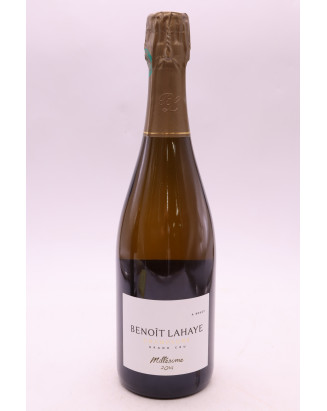
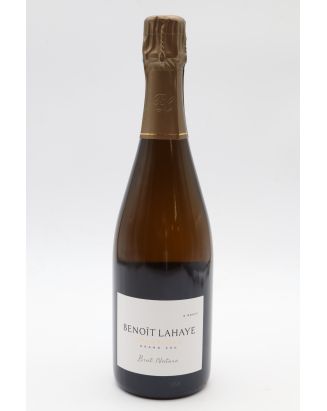
Paradoxically, the entry-level cuvée in the Lahaye range is also one of its most representative. A blend of approximately 90% Pinot Noir and 10% Chardonnay from the Grand Cru villages of Bouzy and Ambonnay, this Brut Nature includes a portion of perpetual reserve wine, ensuring continuity and consistency of style from year to year. Fermented in oak barrels with native yeasts and aged on fine lees for at least 24 months in bottle, it is disgorged without dosage for a frank, direct expression of the terroir. In the glass, it is luminous gold; the nose reveals aromas of yellow-fleshed fruit, citrus zest and brioche, lifted by a characteristic chalky mineral note. The palate opens with lively precision, followed by fine, elegant bubbles, a generous structure and a long, saline finish. A food-lover’s champagne, ideal with fines de claire oysters, tuna tataki or herb-roasted free-range chicken.
Champagne Blanc de Noirs Extra Brut Grand Cru
An absolute expression of Pinot Noir at its purest and most luminous, this Blanc de Noirs comes from old vines in Bouzy, primarily parcels at the heart of the terroir. Its beautiful golden color and bright highlights suggest the fruit’s ripeness and density. The complex, deep nose unfolds aromas of ripe yellow fruit—peach and mirabelle plum—buttery brioche, gentle spices and fine chalky minerality. On the palate, the opening is generous and lively, with remarkably fine bubbles. The structure is generous, supported by appealing freshness and a long, saline, lightly spiced finish. Fermented with native yeasts in oak barrels and aged on fine lees, this champagne is a masterful, intense yet subtle interpretation of Pinot Noir grown in Bouzy’s sunny, complex terroir. Ideal pairings: scallop carpaccio, pink duck breast and Comté aged for 36 months.
Champagne Rosé de Macération Extra Brut
One of the most expressive rosé champagnes, and one of the most deeply rooted in its Champagne terroir. Made exclusively from Pinot Noir grown on vines more than 40 years old in the “Les Juliennes” lieu-dit in Bouzy, this Rosé de Saignée undergoes a short maceration of whole grapes—approximately 30 hours—for a natural, harmonious extraction of color, aromas and tannic structure. Half is vinified in amphorae and half in 300-liter barrels, a combination that gives the wine rare depth. With a dosage below 3 g/L, this cuvée falls within the Extra Brut style. Its deep pink color has ruby highlights and fine, persistent bubbles. The nose is enticing and precise, with raspberry, fresh cherry and red currant, lifted by spicy notes and a subtle floral touch. The palate opens broadly and vibrantly, with remarkable vinous character and a long, saline, lightly spiced finish. A champagne made for the table, to pair with tuna tartare, langoustine ravioli or citrus sea bream ceviche.
Champagne Violaine Brut Nature (No Added Sulfur)
An emblematic cuvée born of a firm conviction, Violaine was the first cuvée made without added sulfur at any stage of winemaking. First tried in 2008, this approach has since become a defining feature of the estate. A blend of equal parts Chardonnay from the “Les Argentières” parcel in Tauxières and Pinot Noir from “Monts des Tours” in Bouzy—two adjoining parcels on opposite sides of the village boundary—Violaine is fermented with native yeasts, aged in oak barrels and amphorae, left on its lees until July without racking, then bottled unfiltered, without dosage or added sulfur. Soils approximately 30 to 35 cm deep over chalk bedrock give this cuvée crystalline minerality and electrifying energy. On the palate, the wine is silky, complex and airy, with remarkable saline tension and an impressively long finish. Notes of citrus, flint, yellow rose and spice. A cuvée that challenges assumptions and demonstrates compellingly that sulfur is not essential to producing a great champagne.
Champagne Le Jardin de la Grosse Pierre Brut Nature Grand Cru
The jewel of the estate, a collector’s cuvée produced in very limited quantities, Le Jardin de la Grosse Pierre is undoubtedly one of the most fascinating and distinctive champagnes in all of Champagne. From a single parcel in Bouzy Grand Cru, the lieu-dit of the same name planted beginning in 1923 by Benoît Lahaye’s great-grandfather, this champagne is the product of an extraordinarily diverse field blend: Pinot Noir, Chardonnay, Meunier, Pinot Blanc, Arbanne, Petit Meslier and Fromenteau, alongside old grape varieties such as Chasselas, Teinturier and Gros Plant—every variety authorized in Champagne, and even more. The richness of this grape diversity, combined with the exceptional age of the vines, gives this champagne aromatic complexity and depth that defy comparison. The grapes are harvested in a single day, fermented in barrels, aged in bottle for at least 32 months, then disgorged without dosage.
Champagne Blanc de Blancs Brut Nature (Limited-Production Cuvée)
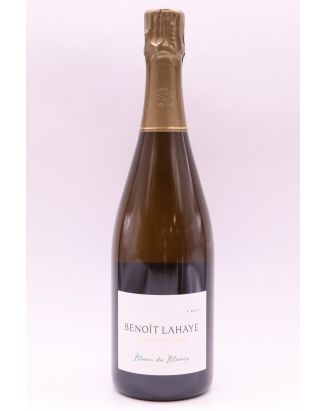
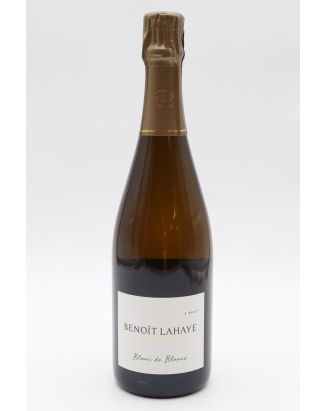
The newest and most discreet wine in the range, this limited-production cuvée comes from a tiny 0.12-hectare Chardonnay parcel in Voipreux on the Côte des Blancs, between Le Mesnil-sur-Oger and Vertus, away from the estate’s main vineyards. The vines, approximately 60 years old, grow in shallow clay and limestone soils over chalk subsoil, giving them consistently ripe, exceptionally healthy fruit. Worked by horse since 2010, they are vinified with the same rigorous no-added-sulfur approach as the Violaine cuvée: oak-barrel aging, a blend of two successive vintages, no dosage and no added sulfur. On the palate, this Blanc de Blancs is focused and finely drawn, with dazzling nobility and grace, a floral bouquet of rare elegance, persistent mineral tension and a long, invigorating finish. Produced only in outstanding years, this cuvée will not be released every vintage. A must for collectors and lovers of champagnes that vividly express their terroir.
COLLECTION NEAR PARIS & VAT REFUND FOR TOURISTS
Free collection in our warehouse near central Paris (92)