Sorry for the inconvenience.
Personalise your experience
Change your country, language and currency here whenever you wish.
|
|
|
Must-See Châteaux |
|
|
|
|
|
|
Based in Santenay, at the southern tip of the Côte de Beaune, Domaine Jean-Marc Vincent has established itself as one of the most admired and most discreet addresses in contemporary Burgundy. Across barely six hectares of meticulously tended vines, Jean-Marc Vincent and his wife Anne-Marie craft cuvées of rare precision and emotion, celebrated by the Revue du Vin de France as well as the Wine Advocate. High-density plantings, high trellising, manual harvesting and bespoke winemaking: everything is designed to reveal the purest expression of the terroirs of Santenay, Auxey-Duresses and Puligny-Montrachet. The wines of Domaine Jean-Marc Vincent now rank among the most sought-after whites and reds of the Côte d'Or.
Sorry for the inconvenience.
The adventure of Domaine Jean-Marc Vincent begins in 1997, when Jean-Marc Vincent, a newly qualified oenologist, and his wife Anne-Marie decided to take over the family vines planted in the 1950s by Jean-Marc's maternal grandfather, Henri Bardolet. Coming from a family with roots in Santenay spanning centuries, the couple set about a patient work of reconquest, gradually recovering plots leased out as sharecropping and restructuring a vineyard that had been left on the margins of the Burgundian négociant trade.
Driven by a desire to restore Santenay's noble reputation — long overshadowed by its prestigious neighbours of Chassagne and Puligny-Montrachet — Jean-Marc Vincent is spearheading a true qualitative revolution at the estate. Inspired by winemakers such as Hubert Lamy and Bruno Lorenzon, he experiments, exchanges ideas and constantly challenges himself. Today, Domaine Jean-Marc Vincent is considered one of Burgundy's great living legends, awarded two stars in the Revue du Vin de France green guide, and its wines are sought after the world over.
The estate's vineyard spans approximately six hectares spread across Santenay, Auxey-Duresses, Puligny-Montrachet and a few complementary plots. The clay-limestone and marl-limestone soils of the Côte de Beaune, set on steep hillsides, offer an exceptional terroir for Burgundy's two great varieties: pinot noir and chardonnay, complemented by a little aligoté for the eponymous cuvée. Some plots are home to vines aged 70 to 85 years — precious legacies from the grandfather winemaker.
From the mid-2000s, Jean-Marc Vincent embarked on a bold restructuring of the vineyard, planting at very high density (up to 14,000 to 15,000 vines per hectare) using fine massale selections, and practising high trellising and cane-weaving in place of trimming. This precision viticulture allows maximum root exploration of the soil, controlled yields and natural concentration of the grapes. Although without an official certification, the approach has been close to organic farming since 2003, with manual ploughing, reasoned grass cover and deep respect for soil life.
In the cellar, winemaking at Jean-Marc Vincent is deliberately low-interventionist, dedicated to purity of fruit and faithfulness to terroir. The grapes are harvested by hand, carefully sorted and swiftly brought to the estate's historic cellars, some of which date back to the fourteenth century. The whites are gently pressed, then fermented and aged in oak barrels, with a controlled proportion of new wood so as never to mask the chardonnay's mineral signature. Fermentations are conducted by indigenous yeasts.
For the reds, the pinot noirs are partly destemmed and partly kept as whole bunches depending on the vintage and the plot. Macerations are long but gentle, without excessive extraction, in order to preserve aromatic finesse and freshness. Ageing takes place over twelve to eighteen months in barrels, followed by bottling with minimum racking, little or no fining, and light filtration only when necessary. The result: dense, vibrant and chiselled wines in which the terroir's signature expresses itself with admirable precision.
Bourgogne Aligoté Soler'Al is a wine of character, made from old aligoté vines. Vinified with the same exacting standards as the estate's finest chardonnays, this white offers crystalline freshness, beautiful depth and a saline finish that lifts it far above the appellation standard.
Bourgogne Blanc is crafted from declassified young chardonnay vines and plots neighbouring Santenay. Pure, energetic and luminous, this wine delivers vibrant fruit and remarkable saline tension — a true calling card for the house style at a very accessible price.
Auxey-Duresses Les Hautés Blanc comes from the estate's oldest plot, planted over 80 years ago on marl-limestone soils ideal for chardonnay. This mineral, taut and refined white rivals the finest neighbouring Meursault wines and embodies the winemaker's talent for magnifying so-called secondary appellations.
Santenay Les Hâtes Blanc et Rouge is an emblematic plot of the estate. The white wine captivates with its saline directness and purity of fruit, while the red offers a fine structure, crunchy fruit and a freshness typical of this upper part of the Santenay vineyard.
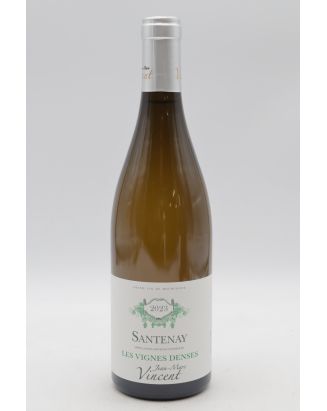
Santenay Les Vignes Denses Blanc comes from a plot planted at very high density (14,000 vines per hectare) using fine massale selection. Concentrated, chiselled and vibrant, this chardonnay of assertive character reveals a spectacular mineral intensity reminiscent of the great Hubert Lamy style.
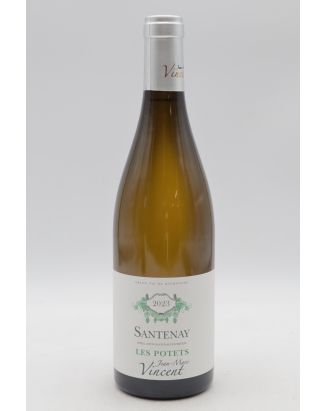
Santenay Les Potets Rouge is a pinot noir of great finesse, sourced from old vines on limestone soils. The wine stands out for its pure fruit, elegant and silky palate, and a fresh finish — a fully accomplished expression of the Santenay terroir in red.
Santenay Gravité is a confidential single-plot cuvée, crafted from a specific terroir within the village. A wine of great personality, it plays on depth, substance and tension — a testament to the winemaker's meticulous care for each climat.
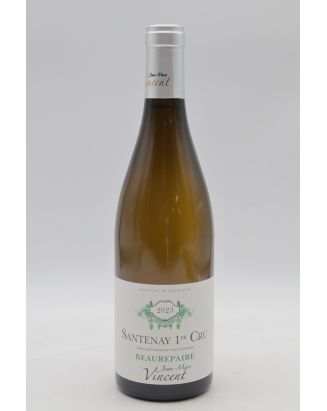
Santenay 1er Cru Beaurepaire Rouge, situated on the upper slopes of the hillsides, offers remarkable freshness and exceptional refinement. Deep ruby colour, aromas of cherry, raspberry and delicate undergrowth, a silky palate with chiselled tannins and a long, saline finish: a great fine wine for ageing.
Santenay 1er Cru Passetemps Rouge comes from a half-hectare plot planted with fine pinot noir vines of over 60 years on clay-limestone soil at high density. This premier cru stands out for its texture, aromatic depth and balanced structure, built for long cellaring.
Santenay 1er Cru Passetemps Blanc is an absolute rarity, sourced from young massale-selection chardonnay vines planted at 14,000 vines per hectare. This white combines substance, energy and saline minerality, demonstrating the unsuspected potential of Santenay's great white climats.
Santenay 1er Cru Gravières Rouge is crafted from the estate's oldest pinot noir plot, planted 70 years ago by Jean-Marc's grandfather on 1.2 hectares of ideally exposed marl-limestone soils. A deep, dense and thoroughbred wine, it is one of the pinnacles of the range.
Santenay 1er Cru Gravières Blanc is a confidential cuvée produced in very small quantities, as this climat is predominantly planted in red. The white reveals a sharp minerality, a taut and saline palate, and excellent ageing potential.
Puligny-Montrachet Corvée des Vignes is one of the estate's finest expressions at the village appellation level. This Puligny chardonnay combines the aromatic nobility intrinsic to the appellation with the estate's signature chiselled, energetic and saline style, resulting in a white of sovereign elegance.
Montagny 1er Cru Blanc is sourced from an assemblage of two plots of very old vines in the premier cru climats L'Épaule and Creux de Beauchamp, planted on limestone and clay soils. A wine of great purity, fresh, precise and mineral, it testifies to the estate's ability to transcend every appellation it touches.
COLLECTION NEAR PARIS & VAT REFUND FOR TOURISTS
Free collection in our warehouse near central Paris (92)