
 Personalise your experience




 Sign in
 Cart
0
Cart
0


The Champagne Method & Visit to Maison Louis Roederer

In this article, you will find the complete traditional méthode champenoise explained, from vine to bottle, as well as our visit to Maison Louis Roederer, including a cellar tour and an estate tasting, followed by our fabulous lunch at the Roederer family's private mansion, with our entire team!
The Traditional Method: The Secret Behind the Elaboration of Champagne
Champagne, the iconic sparkling wine, is the result of a unique and rigorous craft known as the traditional method or méthode champenoise. This production technique, characterized by a second fermentation in the bottle, lies at the heart of the quality and prestige of great Champagnes. Let us explore in detail the key steps that give birth to this world-renowned wine.
1. The Harvest: The Selection of Grapes
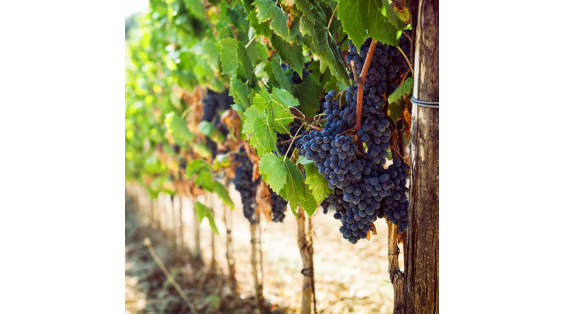
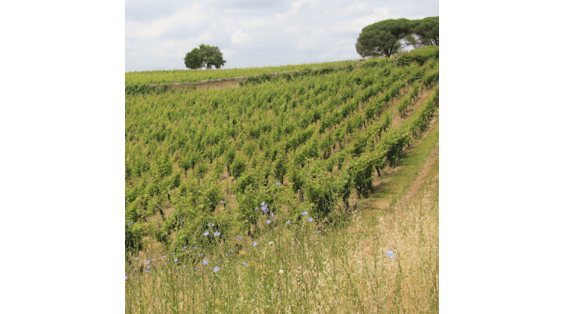
The elaboration of Champagne begins with the harvest of the grapes, carried out exclusively by hand to preserve the integrity of the bunches. The grape varieties used are mainly:
Chardonnay, which contributes finesse and elegance,
Pinot Noir, which lends structure and power,
Pinot Meunier, offering roundness and fruitiness.
This hand-picking is essential to prevent any premature oxidation or alteration of the bunches before their transformation.
2. Pressing: Extracting a Delicate Juice
After the harvest, the grapes are immediately pressed. The pressing is gentle and controlled, in order to obtain a juice of great finesse. This juice, called must, is then separated into different fractions, the finest being the cœur de cuvée, reserved for the production of the most prestigious Champagnes.
The must is then clarified to remove impurities before being transferred to tanks for fermentation.
3. The First Fermentation: The Birth of the Still Wine
The must undergoes a first alcoholic fermentation, typically in stainless steel tanks or oak barrels, where yeasts transform the grape sugars into alcohol. At this stage, the result is a still wine (without bubbles), known as base wine. This wine is often acidic and light, laying the groundwork for the subsequent steps.
4. The Blending: The Art of Balance
A key step in the méthode champenoise is the blending. The winemakers, true artists of wine, taste and blend base wines from different plots, grape varieties, and even multiple vintages. This step creates the harmony and balance that will define the character of the Champagne.
Vintage Champagnes, for their part, come from a single exceptional year, whereas non-vintage ones are blends of wines from multiple harvests, thus ensuring consistency in taste from one year to the next.
5. The Prise de Mousse: The Second Fermentation in the Bottle
The next step, crucial to obtaining the characteristic bubbles of Champagne, is the prise de mousse. The base wine is bottled with the addition of the liqueur de tirage, a blend of sugar and yeasts. This additional sugar feeds the yeasts, triggering a second alcoholic fermentation directly inside the bottle. This fermentation creates carbon dioxide, which remains trapped in the bottle and gives the Champagne its effervescence.
The bottles are then sealed with a temporary crown cap and stored horizontally in the cellars for a long maturation process.
6. Aging: The Evolution of the Wine on Lees
After the prise de mousse, the bottles are stored in cool cellars, where they rest for a minimum of 15 months for non-vintage Champagnes and three years or more for vintage ones. During this period, the dead yeasts, known as lees, play a crucial role in developing the complex aromas of the Champagne, contributing notes of brioche, hazelnut, and dried fruits.
7. Riddling: Preparing for Disgorgement
After aging, a meticulous step known as riddling is carried out. It consists of gradually tilting the bottles and turning them regularly in order to slide the lees deposits towards the neck. Traditionally done by hand, riddling is today often mechanized.
At the end of this step, the bottles are placed in an upright position, ready for the next stage.
8. Disgorgement: Removing the Deposits
Disgorgement consists of removing the sediment deposits accumulated in the neck of the bottle. To do this, the neck of the bottle is submerged in a very cold solution, freezing the deposits. When the crown cap is removed, the pressure inside the bottle expels the ice plug containing the sediment, leaving behind a clear Champagne.
9. Dosage: The Addition of the Liqueur d'Expédition
Once disgorgement is complete, one final step remains before permanent corking: the addition of the dosage, a blend of wine and sugar, which determines the sweetness level of the Champagne. Depending on the amount of sugar added, different types of Champagne are obtained:
Brut Nature (no added sugar),
Brut (less than 12 g of sugar per litre),
Demi-sec (between 32 and 50 g of sugar per litre),
Sec, etc.
This step makes it possible to adjust the balance of the Champagne before sealing it with its famous cork and dressing it with its muselet.
10. Corking and Commercial Release
Once the dosage has been added, the bottles are sealed with a cork held in place by a muselet, a wire cage designed to withstand the pressure inside the bottle (approximately 6 bars). The bottles are then ready for a further period of rest before being released to market.
The traditional method, used to produce Champagne, is a long and meticulous process in which every step is essential to creating a sparkling wine of unmatched quality and finesse. From the pressing of the grapes to the blending, through riddling and disgorgement, every gesture is guided by the pursuit of excellence. It is this attention to detail and patience that make Champagne a wine apart, synonymous with celebration, refinement, and prestige throughout the world.
Now, let us turn to our visit to this magnificent Grande Maison de Champagne!
Our Visit to Louis Roederer
For our team seminar, we all went together at the end of September to Champagne to visit the Maison Louis Roederer!
After a morning breakfast among the vines, we visited the cellars!
We were able to see the locations of the various steps, as you can see in the photos:
%20.png)
- the first fermentation in tanks and barrels (step 3)
- the "bottle stack" where the wines age on lees (step 6)
- the cellars where bottles and large formats are stored for riddling (step 7)
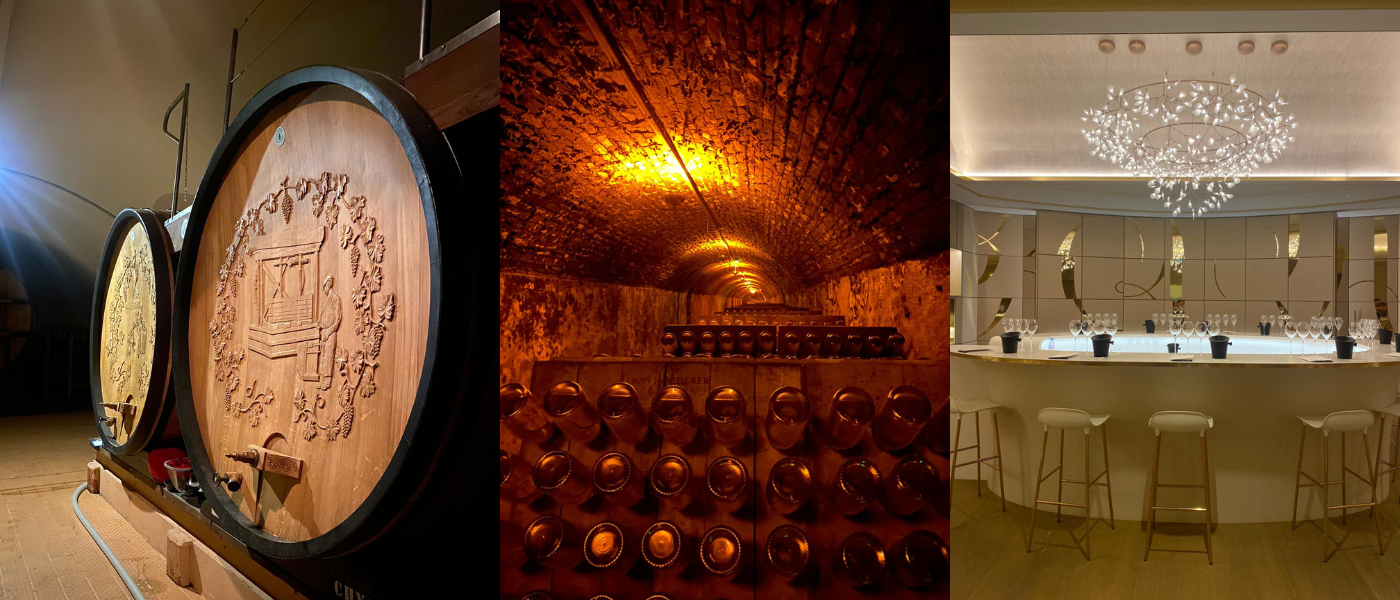
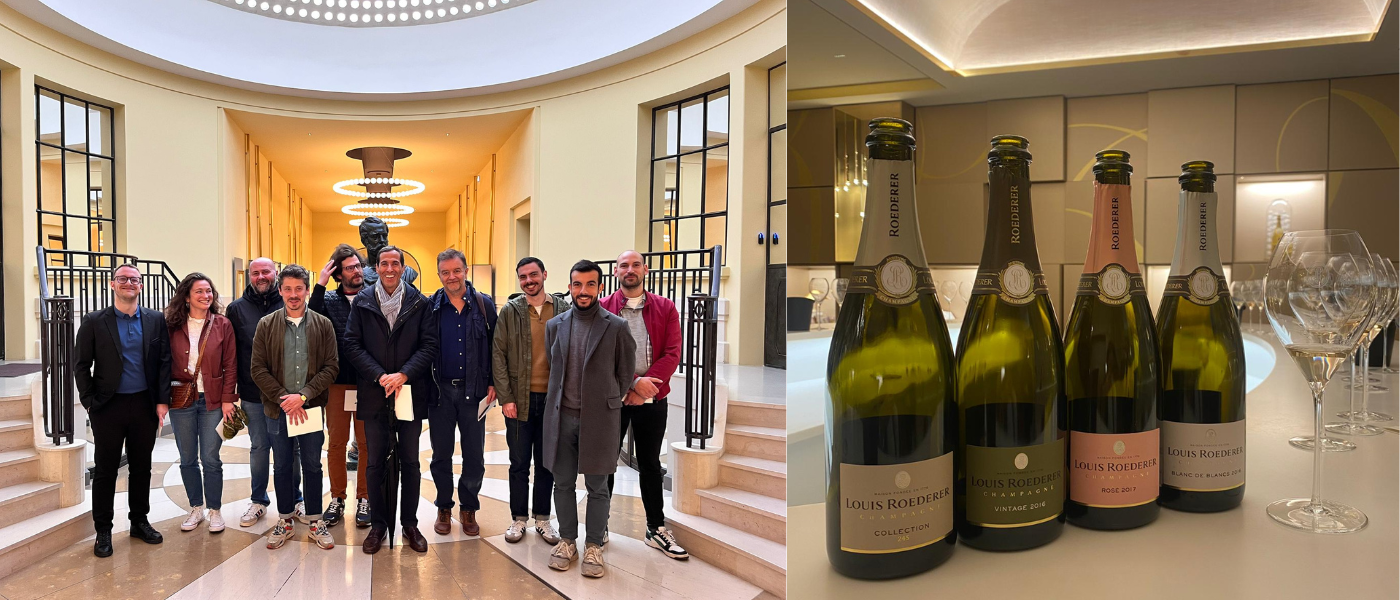
At the end of the cellar tour, and after a visit to their small museum to learn more about the history of the house, we were invited into the magnificent Roederer lobby to taste 4 Champagnes:
Collection 245
Vintage 2016
Rosé 2017
Blanc de Blancs 2016
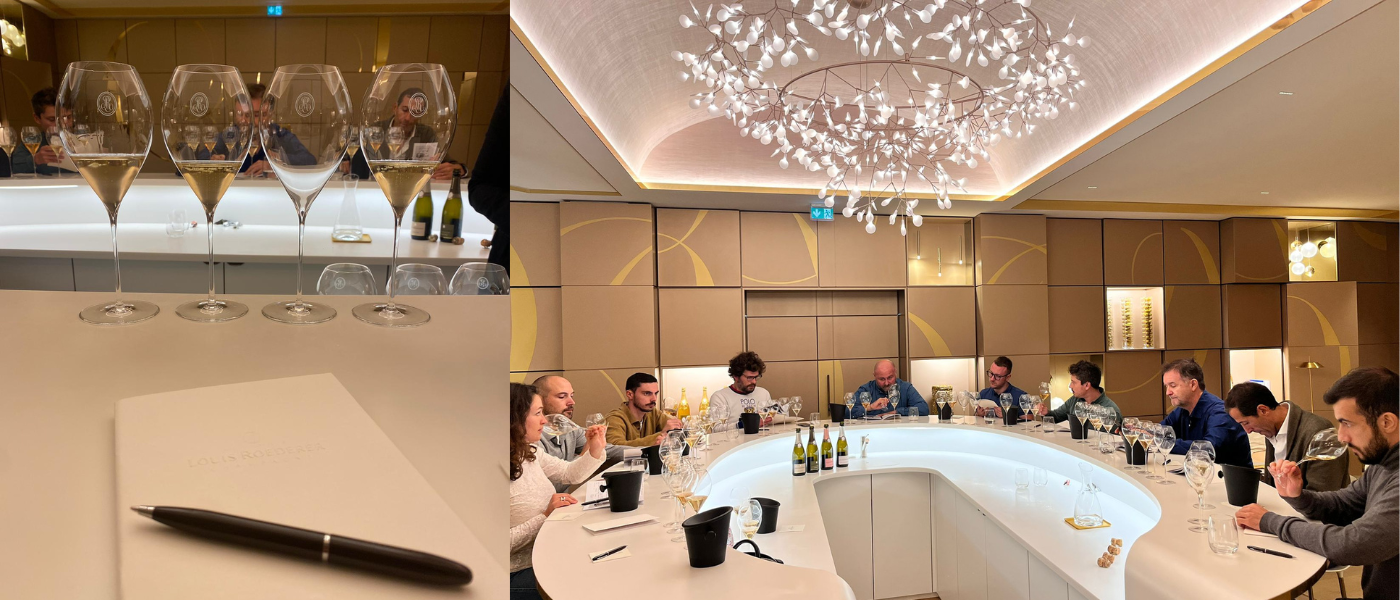
Our Lunch at the Roederer Private Mansion
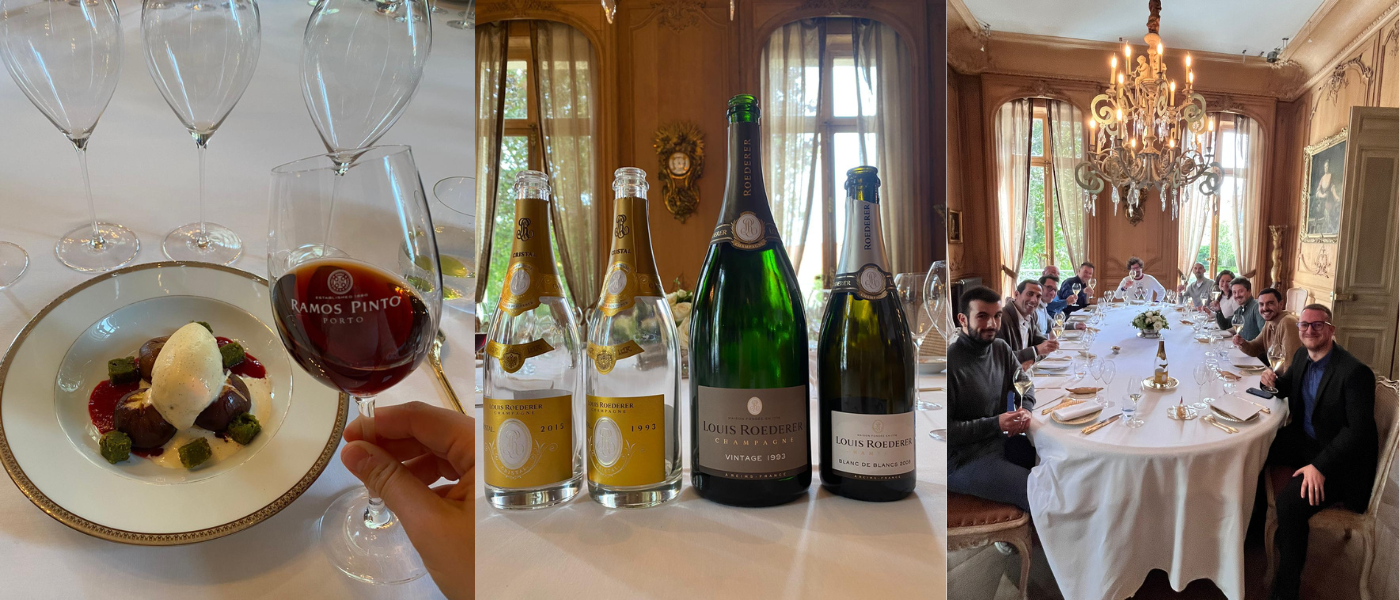
Since we were on a roll, our bosses invited us to lunch at the Maison Roederer's private mansion.
A true feast for the eyes and the palate!
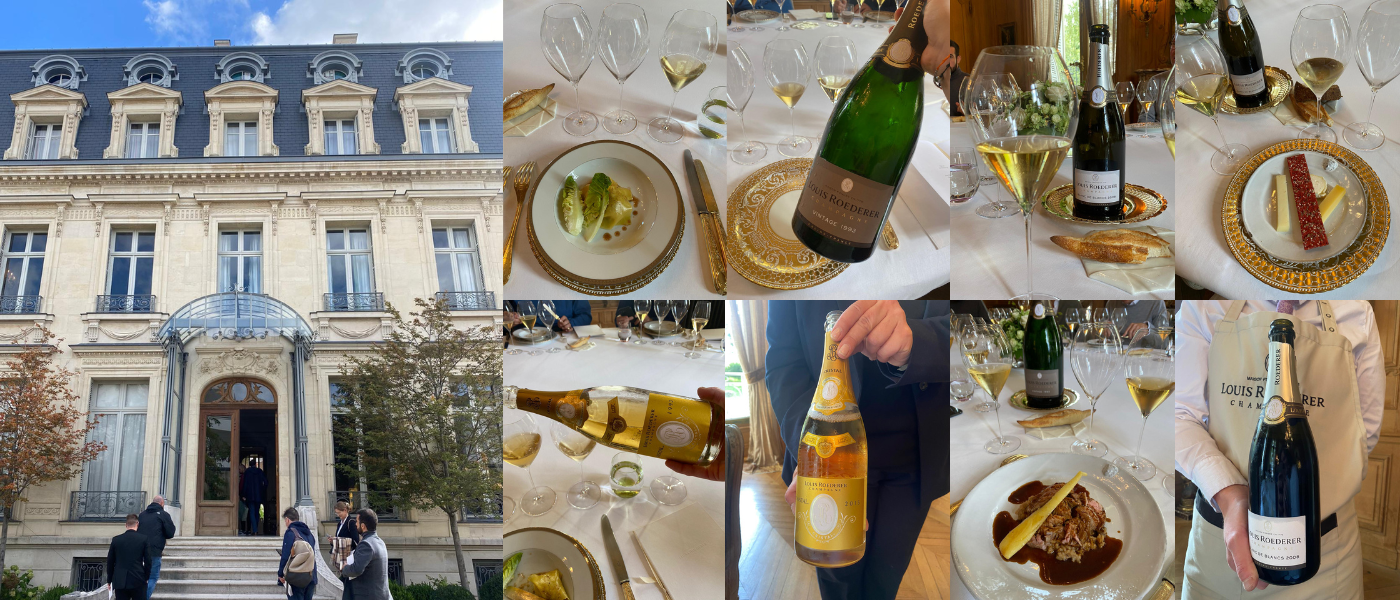
We had aperitifs in a magnificent reception room: petit fours and Collection 243 in Magnum — and that was just the beginning.
On to the dining room to begin the meal:
As a starter, crab lasagna with mint and grapefruit paired with Cristal 2015
As a main course, milk-fed veal fillet, porcini mushroom risotto paired with Cristal 1993, followed by a comparison with the 1993 vintage.
Cheeses: Compostelle secret, Comté aged 24 months and Deux-Sèves log, paired with Roederer Blanc de Blancs 2008.
To finish, roasted figs with vanilla ice cream, complemented by a 20-year-old Tawny port.
A magnificent moment with the ENTIRE team (even though there are 10 of us, it doesn't happen every day) that we will all remember!
Many thanks again to the entire Roederer team for the visit and to the staff for the impeccable lunch service!
Already looking forward to the next seminar…


COLLECTION NEAR PARIS & VAT REFUND FOR TOURISTS
Free collection in our warehouse near central Paris (92)