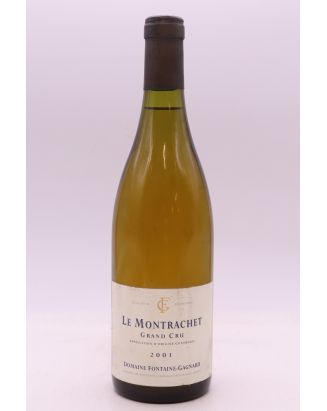
Fontaine Gagnard Montrachet 2001
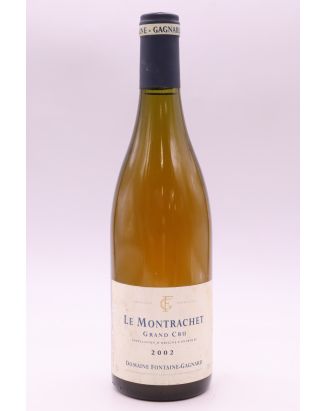
Fontaine Gagnard Montrachet 2002
Personalise your experience

Change your country, language and currency here whenever you wish.
|
|
|
Must-See Châteaux |
|
|
|
|
|
|
|
|
Located in the heart of Chassagne-Montrachet, Domaine Fontaine-Gagnard ranks among the most complete and most respected producers in the village. Across just twelve hectares, it produces twenty-two appellations spread across Chassagne-Montrachet, Volnay and Pommard, with around ten premier crus and above all three legendary grand crus: Criots-Bâtard-Montrachet, Bâtard-Montrachet and Le Montrachet itself. Founded in 1985 by Laurence Gagnard and Richard Fontaine, it has been run since 2007 by their daughter Céline Fontaine. Traditional vinifications with indigenous yeasts, ageing in bespoke barrels, sustainable farming and systematic ploughing yield wines that are intense, deep and complex — approachable young yet built to age with grace.
The family has tended vines in Chassagne-Montrachet for several centuries, but the estate as we know it was founded in 1985. It was established by Laurence Gagnard, daughter of Jacques and Marie-Josèphe Gagnard, and her husband Richard Fontaine, following his career in the air force. The original four hectares came mainly from the Gagnard-Delagrange holdings in Chassagne, supplemented by a few parcels from the Delagrange family in Pommard. Céline’s grandfather had the foresight to buy premier and grand cru vineyards in the 1970s that no one wanted at the time, including a share of Montrachet acquired from Fleurot.
The estate has continued to grow ever since, expanding from four to twelve hectares, chiefly by bringing together vineyards owned by different branches of the close-knit Gagnard family, whose members often still work together in the vines. Céline Fontaine joined her parents in 2007 and gradually took charge of both viticulture and winemaking, bringing fresh energy without departing from the family’s values. In 2018, Frédéric Robert joined her after working at Domaine Armand Rousseau from 2006 to 2017.
Most of the parcels lie in Chassagne-Montrachet, which the estate represents with rare breadth. Its clay-limestone soils vary considerably by position on the slope: deeper, more clay-rich marl lower down near Morgeot and La Boudriotte, and stony, highly chalky soils higher up for Les Caillerets, La Romanée and La Grande Montagne. The last is a tiny climat nestled at the heart of the village’s finest band of premiers crus, alongside Virondot and Grandes Ruchottes.
The village Chassagne itself comes from five or six named sites spread across the appellation, with different soils and exposures from north to south, giving it rare complexity for a village wine. The estate also holds one of the largest shares of Criots-Bâtard-Montrachet, the smallest grand cru in the Côte de Beaune, as well as small parcels in Bâtard-Montrachet and Le Montrachet. A few hectares farther north, in Volnay and Pommard, complete the holdings. Work in the vineyards continues year-round, with thorough plowing, soil analysis and responsible farming, all with one aim: to obtain grapes in impeccable health, rich in substance and exceptionally pure.
The methods are deliberately traditional and, above all, the same for every cuvée, allowing each terroir’s character to speak rather than the winemaker’s hand. The grapes are harvested by hand, the whites gently pressed and then carefully settled, and all fermentations rely solely on indigenous yeasts, without unnecessary additives.
The wines are aged in oak barrels for twelve to eighteen months: about a year for the whites and eighteen months for the reds. The proportion of new oak remains moderate, around fifteen to twenty percent for village appellations and thirty to forty percent for premiers and grands crus. Since the late 1980s, the estate has purchased its own French oak through a timber broker, who seasons it for two years before passing it to a local cooper to craft custom barrels. This attention to the barrels goes a long way toward explaining the wines’ remarkable integration of oak and depth of texture.
Chassagne-Montrachet Village Blanc: drawn from five or six named sites across the appellation, with varied soils and exposures, it achieves rare complexity for a village wine. Rich, fruity and long, it can be enjoyed young or aged for five to ten years. A great classic produced in limited quantities.
Chassagne-Montrachet Village Rouge: a basket of red fruit—wild strawberry, blackcurrant and raspberry—with supple tannins and fine length. Substantial and surprisingly age-worthy, it recalls that Chassagne was long a land of Pinot Noir.
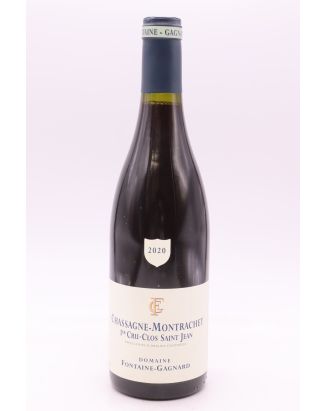
Chassagne-Montrachet 1er Cru Clos Saint-Jean: consistently the most approachable of the estate’s premiers crus, it charms from a young age with its generous fruit and roundness. Highly sought after for restaurant wine lists for this reason, it nevertheless offers a clear expression of its terroir.
Chassagne-Montrachet 1er Cru La Maltroie: more structured than Clos Saint-Jean, it combines ripe white fruit, almond and chalky minerality on a firm backbone. In great vintages, it can age for fifteen to twenty years without losing its vigor.
Chassagne-Montrachet 1er Cru Les Chenevottes: situated toward Puligny, this climat produces an elegant, taut wine with notes of citrus, acacia blossom and flint. The palate is precise, focused and saline.
Chassagne-Montrachet 1er Cru Les Vergers: a bright nose of yellow plum, white peach and sea spray that opens beautifully with air. The palate is balanced and intense, with a little more body than the other cuvées and a lingering saline finish.
Chassagne-Montrachet 1er Cru Clos des Murées (Monopole): exclusive to the estate, this walled vineyard offers a particularly complete expression, balancing generous fruit, notes of hazelnut and fresh butter, and a distinct mineral backbone. An exceptionally rare wine in the range.
Chassagne-Montrachet 1er Cru Morgeot: from the extensive area whose history reaches back to the Abbey of Morgeot, destroyed during the Revolution. The well-defined bouquet combines honeysuckle and beeswax; the palate opens fresh, then broadens, showing complexity that takes time to reveal itself.
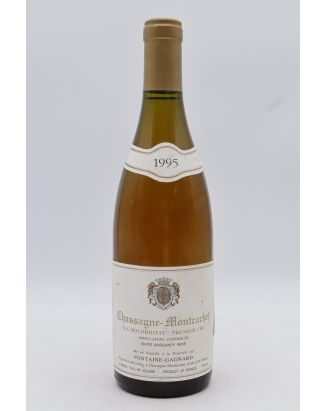
Chassagne-Montrachet 1er Cru La Boudriotte: neighboring Morgeot lower on the slope, on more clay-rich soils, it produces a fleshy, generous wine with aromas of ripe yellow fruit and sweet spices, supported by fine acidity that helps it age well.
Chassagne-Montrachet 1er Cru La Grande Montagne: a rare holding in a tiny climat high on the slope, at the heart of the village’s finest band of premiers crus. The wine draws remarkable tension, sharply defined minerality and a length that places it among the greats.
Chassagne-Montrachet 1er Cru Les Caillerets: exceptionally chalky soils regularly produce the estate’s most age-worthy premier cru. Crystalline, focused and profoundly saline, it calls for patience but amply rewards the wait.
Chassagne-Montrachet 1er Cru La Romanée: spectacular and consistently superb, this climat perched high on the slope combines restrained power, aromatic complexity and striking mineral tension. Alongside Les Caillerets, it stands at the pinnacle of the house’s premiers crus.
Chassagne-Montrachet 1er Cru Clos Saint-Jean Rouge and Morgeot Rouge: the estate’s two red premiers crus from the village. Clos Saint-Jean emphasizes supple texture and vibrant red fruit, while Morgeot is denser and more structured, with dark fruit, spice and tannins built for aging.
Criots-Bâtard-Montrachet Grand Cru: the estate holds one of the largest shares of the smallest grand cru in the Côte de Beaune. The wine combines floral finesse, candied citrus and chalky minerality of rare elegance, with a finely etched, long palate. Produced in minute quantities.
Bâtard-Montrachet Grand Cru: more powerful and opulent than its smaller neighbor, it offers a generous palate and aromas of fresh butter, toasted hazelnut and ripe yellow fruit, lifted by fine acidity. A majestic grand cru that deserves at least eight to ten years of aging.
Le Montrachet Grand Cru: the pinnacle of the range, acquired in the 1970s by Céline Fontaine’s grandfather. Produced in tiny quantities, it brings together power, depth and refinement, with extraordinary richness and a saline freshness that extends the finish seemingly without end. A collector’s wine.
Volnay 1er Cru Clos des Chênes: one of Volnay’s finest climats, high on the slope on stony soil. Regularly praised for its finesse, it reveals violet, raspberry and spice over a silky texture and delicate tannins, with an elegant finish.
Pommard 1er Cru Les Rugiens: the house’s standout red, from Pommard’s most renowned climat, whose iron-rich soils give it its name. Powerful and full-bodied, it combines deep dark fruit, licorice and iron notes with firm yet polished tannins and a beautifully persistent finish. A wine for very long aging, best reserved for robust dishes and game.
COLLECTION NEAR PARIS & VAT REFUND FOR TOURISTS
Free collection in our warehouse near central Paris (92)