Personalise your experience
Change your country, language and currency here whenever you wish.
|
|
|
Must-See Châteaux |
|
|
|
|
|
|
Hervé Villemade is one of the key figures in natural viticulture in the Cheverny region, in Loir-et-Cher. Based in the commune of Cellettes, at the heart of the Cheverny and Cour-Cheverny appellations, he took over in 1995 the family estate founded by his grandfather Désiré in the 1930s, and gradually transformed it into a national reference for natural wine. A pioneer of organic conversion in his region, having converted from 2000, and a member of the Association des Vins Naturels, Hervé produces wines of remarkable richness and purity across approximately 22 certified organic hectares. His speciality is Romorantin, a native white grape variety from Loir-et-Cher so singular that it has its own appellation — Cour-Cheverny — for which he crafts two benchmark single-vineyard cuvées.
The history of the estate begins in the 1930s, when Désiré and Gilberte Villemade settled in Cellettes, in Loir-et-Cher. Their son Henri took over the farm, developing it to 45 hectares of mixed farming (asparagus, cereals, livestock) and 8 hectares of vines. In 1995, Hervé, the youngest of the siblings, trained at the viticulture school in Amboise, took over and made a clear break: he put an end to the livestock and négociant activities, created the estate as we know it today, planted 4 hectares of new vines and decided to sell the entire production in bottles. His sister Isabelle joined him in 1999.
Around 1997, a twofold revelation transformed his vision of wine: the discovery of Marcel Lapierre's wines and the Clos du Tue-Boeuf opened his eyes to natural winemaking, and a severe sulphur allergy forced him to completely rethink his approach in the cellar. He understood then that to make wine without sulphur, grapes of the highest quality were absolutely essential, and he initiated the estate's organic conversion from 2000, certified from 2012 for the entirety of the vineyard and cellar. In 2009, he acquired an additional 8 hectares on the Fougères plateau. Since 2008, he has also been producing varietal wines through a négociant structure sourcing grapes from Loir-et-Cher, allowing him to broaden his creative range.
The vineyard of the Hervé Villemade estate is essentially concentrated on the commune of Cellettes and its surroundings, at the heart of the Cheverny appellation. A major characteristic of the terroir: the parcels are largely surrounded by woodland forming a natural boundary that protects the vineyard from surrounding chemical inputs and encourages plant and animal biodiversity. These woods also allow natural ventilation through the westerly winds that pass through the forests, cooling the vines during the intense summer heatwaves that have become increasingly frequent since the 2000s. The soils vary depending on the lieu-dit: heavy clay, sand and flint for the Cheverny blanc parcels (La Bodice), sandy and clayey soils for the Fougères plateau, and sand, flint and clay for the Romorantin parcels in Cour-Cheverny.
The grape varieties are representative of the local Loire tradition: Sauvignon blanc (dominant in Cheverny whites), Chardonnay, Menu Pineau, Romorantin (for Cour-Cheverny), Pinot noir and Gamay (for reds and rosés). Hervé also has old Pinot noir vines planted by his grandfather Désiré, which are bottled exclusively in magnum format. The entire vineyard is certified Organic Agriculture.
Hervé Villemade's cellar philosophy is that of the natural winemaker in its most authentic form: no additives, no exogenous yeasts, no sulphur except for a minimal dose at bottling for certain cuvées. Harvesting is done by hand, with grapes pressed directly. For the whites, fermentations begin on indigenous yeasts, and ageing is carried out in stainless steel tanks, concrete or old oak demi-muids depending on the cuvée. For Romorantin, the vinification respects the naturally rich and ample character of the grape variety: direct pressing, cold settling, fermentation in stainless steel or concrete tanks, ageing on lees, with a light filtration before bottling for certain cuvées.
For the reds, vinification takes place entirely in concrete tanks, without added sulphur, producing wines that are juicy, honest and vibrant. Hervé Villemade's approach has been profoundly influenced by the philosophy of Marcel Lapierre and the Clos du Tue-Boeuf: allowing the fruit and the terroir to express themselves without artifice, with living soils as a fundamental starting point. As he himself summarises it: having living soils is the foundation for obtaining beautiful grapes.
Cheverny Blanc: The estate's main blended cuvée, sourced from the historic parcels of Cellettes in Sauvignon blanc and Chardonnay, on clay, sand and flint soils. Vinified in tanks, without added sulphur except for a minimal dose at bottling. A fresh and expressive nose of citrus and white flowers, a lively and mineral palate, saline finish. A characterful Cheverny blanc, a faithful and delicious introduction to the world of the estate.
Cheverny Blanc La Bodice: A single-parcel cuvée from the lieu-dit La Bodice, a blend of Sauvignon blanc (80%), Chardonnay and Menu Pineau, on heavy clay, sand and flint soils. Vinified by direct pressing, fermented and aged in demi-muids and old oak barrels. A more structured and complex wine than the generic cuvée, with a dense texture and beautiful richness, notes of angelica, fern and fennel, an elegant palate and a long finish. Built for the table, it pairs willingly with poultry or fish in a creamy sauce.
Cheverny Rouge: A blended red cuvée made from Gamay and Pinot noir, vinified entirely in concrete tanks without added sulphur. A juicy and luminous wine, with aromas of fresh red fruits (cherry, raspberry), with enough earthy character to balance the generosity. Accessible and easy-drinking, it is a red for immediate pleasure, perfect with simple and generous cuisine.
Cheverny Rouge Les Ardilles: A single-parcel red cuvée sourced from a selection of old Pinot noir vines on the lieu-dit Les Ardilles, produced in vintages that allow it. More structured and concentrated than the generic cuvée, with aromas of black fruits, spices and a saline minerality characteristic of the clay terroirs of Cellettes. A wine for ageing, to be decanted or left to mature for a few years in the cellar.
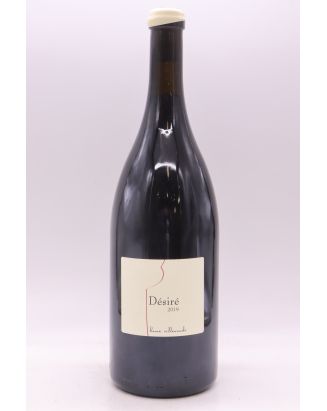
Désiré (magnum only): Tribute cuvée to the founding grandfather Désiré Villemade, made from the very old Pinot noir vines he planted, available exclusively in magnum format. This rare and elusive wine expresses the depth and complexity of old vines on the terroirs of Cellettes: intense aromas of black fruits, undergrowth and spices, a concentrated and velvety palate, long and mineral finish. A collector's piece for lovers of great Loire Pinot noirs.
Cheverny Rosé: A light and festive rosé made from a blend of Gamay and Pinot noir. A vivid pink colour, aromas of fresh red fruits and flowers, a fresh and generous palate. A perfect thirst-quenching rosé for summer, vinified without added sulphur, in keeping with the estate's natural philosophy.
What's Up Rosé: An ultra-brut natural sparkling rosé, without added sulphur, made from a blend of Pineau d'Aunis, Grolleau and Menu Pineau, vinified by direct pressing and fermentation started in tanks. A lively, fresh and original sparkling rosé, embodying the playful and creative spirit of Hervé Villemade.
Cour-Cheverny Les Châtaigniers: The first single-parcel cuvée in Romorantin, sourced from parcels bearing the evocative name of the surrounding chestnut trees. The exclusive grape variety of the Cour-Cheverny appellation, Romorantin here yields a dry white that is both powerful and aromatic, with notes of white fruits, fresh walnut and a beautiful siliceous minerality. An expressive and fruity Cour-Cheverny, in a slightly more accessible style than Les Acacias.
Cour-Cheverny Les Acacias: The flagship cuvée and pinnacle of the range in Romorantin, sourced from the two oldest parcels of the estate in this variety, on sand, flint and clay soils. Vinified by direct pressing, fermented in stainless steel and concrete tanks on indigenous yeasts, aged on lees. A wine of great power and incomparable breed: complex aromas of warm stones, dried nectarine, sea salt, flowers and a long, saline finish. A wine for ageing, capable of developing over five years and beyond, it perfectly embodies the singularity of Romorantin and the identity of the Cellettes terroir.
Cour-Cheverny Les Saules: A Romorantin cuvée sourced from grapes purchased from trusted local growers within the framework of the estate's négociant licence. It faithfully expresses the aromatic and mineral character of the grape variety, in a style slightly different from the estate cuvées, offering a complementary vision of Romorantin within the Cour-Cheverny appellation.
Bovin (IGP): Cuvée sourced from grapes purchased from trusted local growers in Loir-et-Cher, within the framework of the négociant structure created in 2008. A varietal wine, crafted in the same natural spirit as the estate's cuvées: no additives, no added sulphur. A generous and approachable cuvée, a sincere expression of Loire terroirs worked according to Hervé Villemade's convictions.
Sauvignon IGP Val de Loire: Sauvignon cuvée made from grapes purchased from local growers in Loir-et-Cher, vinified according to the estate's natural philosophy. An expressive and lively Sauvignon, with aromas of citrus and white-fleshed fruits, a fresh and mineral palate, ideal as an aperitif or with seafood and goat's cheeses from the Val de Loire.
COLLECTION NEAR PARIS & VAT REFUND FOR TOURISTS
Free collection in our warehouse near central Paris (92)