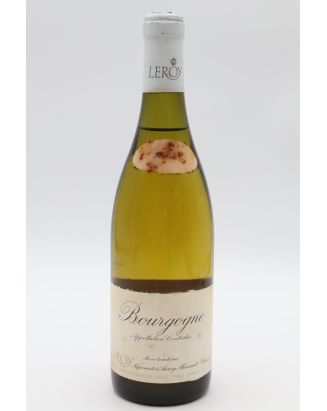
Leroy SA Bourgogne 2000 White
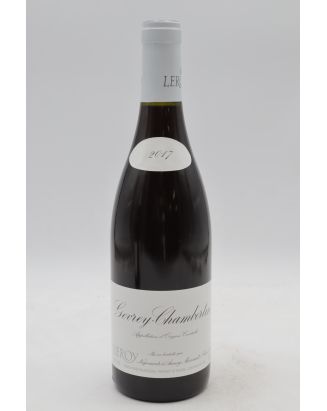
Leroy SA Gevrey Chambertin 2017
Personalise your experience
Change your country, language and currency here whenever you wish.
|
|
|
Must-See Châteaux |
|
|
|
|
|
|
|
|
A haute couture Burgundian négociant with a remarkable selection of old vintages
Founded in 1868 in Auxey-Duresses, Maison Leroy SA is one of the oldest and most respected négociant houses in Burgundy. Led since 1955 by Lalou Bize-Leroy, a legendary figure of the Burgundian wine world and owner of Domaine Leroy and Domaine d'Auvenay, it is built on a simple and uncompromising principle: to select only exceptional wines, to age them for as long as necessary, and to release them only once they are ready to drink. This philosophy has established the reputation of a house capable of offering, from generic Bourgogne to the greatest grands crus of the Côte d'Or, wines of rare maturity and depth, often impossible to find elsewhere.
It all began with François Leroy, a winemaker based in Auxey-Duresses who owned vines in his village as well as in Pommard, Volnay and Meursault, and even in the grands crus Chambertin, Clos de Vougeot, Musigny and Richebourg. Already selling his wines through the Comptoir des Propriétaires de la Côte d'Or by the mid-19th century, he founded a wine-trading business in 1868 to expand his activities. His son Joseph, working with his wife Louise Curteley, greatly developed the house in the late 19th century, adding brandies to its offerings and winning medals and grand prizes in France and Belgium.
The third generation marked a decisive turning point. Henri Leroy joined the business in 1919 and drove its spectacular growth. In 1942, during a difficult period for Burgundy, he acquired half the shares in Domaine de la Romanée-Conti, helping to establish it as the world’s most prestigious estate. In 1955, his daughter Marcelle, known as Lalou, took the reins of the house at age 23, assuming full leadership in 1971. She redefined its identity: complete independence, uncompromising selection and a very long-term vision. In 1988, seeing that winemakers were increasingly bottling their own wines, she secured her supplies by creating Domaine Leroy, later joined by Domaine d'Auvenay. Maison Leroy SA remains the cornerstone of this family enterprise, still based on rue du Pont Boillot in Auxey-Duresses.
Maison Leroy SA is not an estate in the traditional sense: it buys finished wines, after malolactic fermentation, from carefully selected brokers and winemakers. Its terroir therefore spans all of Burgundy, from Gevrey-Chambertin to Maranges, with a longstanding preference for the great terroirs of the Côte de Nuits and Côte de Beaune. Auxey-Duresses remains the family’s home village, at the junction of Meursault, Monthélie and Saint-Romain, where the slopes’ marl and limestone produce taut whites and reds with crisp fruit.
The selections thus span the deep clay-limestone soils of Pommard and Volnay, the stony soils of Meursault and Puligny-Montrachet, the white marl of the Chardonnay grands crus, the red, iron-rich slopes of Gevrey-Chambertin, and the fine gravel of Vosne-Romanée and Nuits-Saint-Georges. Each year, Lalou Bize-Leroy tastes hundreds of wines blind, knowing neither the producer nor the appellation nor the estate’s reputation. Only those that meet her standards bear the Leroy label, and often no new wine is selected from a given appellation. The selected vineyards are almost always old vines farmed for low yields, which she considers the first requirement for a faithful expression of terroir.
It is worth remembering, however, that before Domaine Leroy was created in 1988, the family’s own vineyards were also bottled under the Maison Leroy label. Some older bottles, particularly Auxey-Duresses or Meursault Les Narvaux, are therefore actually estate wines.
The house’s originality lies more in how it ages its wines than in winemaking itself. The wines are purchased young, based on samples, then brought into the cool, deep cellars of Auxey-Duresses, where they begin a long aging process guided by patience that has become legendary. With the exception of the Bourgogne Rouge, all the reds finish aging in barrels previously used at Domaine Leroy, regardless of appellation. Likewise, all the whites except the Bourgogne Blanc are aged in barrels from Domaine d'Auvenay.
This approach sets aside the hierarchy of appellations: each wine is treated according to its potential rather than its classification, explaining the range’s remarkable consistency from village wine to grand cru. Racking is infrequent, handling is kept to a minimum, and fining and filtration are avoided wherever possible. Bottling takes place only when the time is judged right, with release coming later still, sometimes after a decade or more resting in the cellar. That is why Maison Leroy SA wines reach wine lovers already expressive, complex and fully integrated, while retaining considerable aging potential.
Bourgogne Blanc: the true heart of the range, this Chardonnay comes from declassified plots in Auxey-Duresses and Puligny-Montrachet, purchased from selected winemakers. Rich, textured and saline, it offers ripe apple, pear, citrus and white flowers over an energetic mineral finish. Long considered one of the best values for drinking pleasure among white Burgundies.
Bourgogne Rouge: a blend from several plots and producers, aged in the house’s cellars. The Pinot Noir is pure and easy-drinking, with cherry and raspberry notes, a supple structure and a freshness that reflect the house style. A regional-appellation wine that regularly holds its own among village wines.
Auxey-Duresses white and red: emblematic cuvées from the family’s home village. The white, from an area neighboring Meursault and Puligny, is both creamy and taut, marked by citrus, toasted sesame and lively acidity. The red charms with its bright red fruit, sweet spice and easy-drinking character.
Auxey-Duresses 1er Cru Les Duresses: the appellation’s most renowned climat, on a well-exposed slope. The wine gains density and structure here, with a more concentrated palate, fine tannins and a persistent mineral finish. A cuvée that ages remarkably well.
Meursault: aged in barrels from Domaine d'Auvenay, this village wine expresses all the appellation’s generosity, with fresh butter, hazelnut and white fruit, followed by a saline finish. The house style gives it a tension and length that clearly set it apart.
Meursault 1er Cru Les Perrières: Meursault’s most prestigious climat, often considered an unofficial grand cru. Crystalline and mineral, it combines power and precision, with aromas of preserved lemon, flint and almond. A white with exceptional aging potential.
Meursault 1er Cru Les Charmes: rounder and fuller-bodied than Les Perrières, this premier cru has immediate appeal, with notes of white peach, honey and fresh hazelnut. Its enveloping texture is supported by lovely freshness on the finish.
Puligny-Montrachet 1er Cru Les Folatières: one of the village’s greatest premiers crus, planted on pale marl high on the slope. The wine is graceful, floral and delicately spiced, with pronounced salinity and remarkable length. The Leroy signature adds density and maturity.
Chassagne-Montrachet 1er Cru Morgeot: from Chassagne’s largest and sunniest climat, this white has a broad, powerful palate, with yellow fruit, spice and a buttery touch. Its aging potential is particularly long.
Chassagne-Montrachet 1er Cru Les Chenevottes: neighboring the grands crus, this climat produces a finer, more precise wine, with citrus, acacia blossom and chalky minerality. An example of the balance the house seeks between richness and tension.
Savigny-lès-Beaune 1er Cru Les Guettes: from the stony slopes in the north of the appellation, this red stands out for its spiced dark fruit, freshness and firm tannins. A characterful cuvée, often underestimated and aged particularly well at Leroy.
Aloxe-Corton 1er Cru and Maranges: two expressions from opposite ends of the Côte de Beaune. The Aloxe-Corton offers power, spice and notes of undergrowth over a solid structure, while the Maranges, more rustic in its youth, becomes generous and flavorful after a few years in the cellar.
Pommard Les Vignots and Pommard 1er Cru Les Chaponnières: two cuvées that embody Pommard’s power. Les Vignots, from above the village, yields a dense, distinguished wine, while Les Chaponnières, on deep clay soils near Les Rugiens, develops an imposing tannic structure and aromas of dark fruit, licorice and leather, promising long aging potential.
Volnay 1er Cru Champans: Volnay’s great climat, renowned for combining finesse and substance. The wine offers aromas of violet, cherry and sweet spice, with a silky texture and an elegant, lingering finish. It is one of the most alluring reds in the catalog.
Nuits-Saint-Georges and Nuits-Saint-Georges 1er Cru Les Poulettes: the village wine displays the appellation’s characteristic robustness and dark fruit. The lesser-known premier cru Les Poulettes brings a mineral backbone, firm tannins and a saline finish that call for patience.
Vosne-Romanée 1er Cru Aux Brûlées: situated high on the slope, immediately next to Richebourg, this premier cru offers all the sensuality of Vosne. Spice, rose, black cherry and undergrowth mingle in a deep, velvety wine of great aromatic complexity.
Gevrey-Chambertin and Gevrey-Chambertin 1er Cru Les Cazetiers: the village wine expresses the appellation’s power and dark fruit, with a fine structure. Les Cazetiers, on the Lavaux combe, adds minerality, tension and almost grand cru depth, in a style both wild and refined.
Charmes-Chambertin Grand Cru: among Gevrey’s most alluring grands crus, it combines generous fruit with aromas of candied red berries, undergrowth and spice. After the house’s long aging process, it is smooth, harmonious and remarkably persistent.
Corton Renardes Grand Cru: from the red, iron-rich soils of the Renardes side of the Corton hill, this wine is powerful, earthy and structured, with black cherry, pepper and elegant animal notes. A demanding bottle that rewards long cellaring.
Musigny Grand Cru: the pinnacle of the catalog and one of Burgundy’s most distinguished terroirs. The wine combines airy finesse with restrained intensity, offering a bouquet of rose, violet, small red berries and spice, a delicate, lace-like texture and an exceptionally long finish. The older vintages offered by the house are among the rarest and most sought-after bottles in the wine world.
COLLECTION NEAR PARIS & VAT REFUND FOR TOURISTS
Free collection in our warehouse near central Paris (92)