Personalise your experience
Change your country, language and currency here whenever you wish.
|
|
|
Must-See Châteaux |
|
|
|
|
|
|
|
|
Champagne Veuve Clicquot: a truly great house with an immense reputation
Founded in Reims in 1772 by Philippe Clicquot-Muiron, Maison Veuve Clicquot Ponsardin owes its legend to a woman: Barbe-Nicole Ponsardin, widowed at twenty-seven in 1805, who single-handedly took the reins of the family business and became one of the first female entrepreneurs of modern times. We owe her three innovations that shaped champagne as we know it: the commercialization of the first vintage champagne in 1810, the invention of the riddling rack in 1816, and the creation of the first blended rosé in 1818, obtained by incorporating red wine from Bouzy. Her motto, one quality only, the very finest, still guides today a house whose style rests on the dominance of pinot noir, a source of structure and vinosity, and on one of the largest collections of reserve wines in Champagne.
Born into a family of bankers and textile merchants who already owned vineyards, Philippe Clicquot founded a wine trading business under the Clicquot name in 1772. From the outset, the house had a clear ambition: to cross borders and export. In 1798, his son François married Barbe-Nicole Ponsardin, born in Reims in 1777 and herself the daughter of a textile manufacturer. Everything changed in 1805 when François died suddenly. His young widow, aged twenty-seven, decided to take charge of the business—an audacious choice at a time when women almost never held leadership positions. Determined to depend on no one, she transformed a modest wine business into one of the world’s leading exporting houses, notably through a legendary shipment to Russia in 1814, undertaken with her representative Louis Bohne.
Her inventive spirit left an enduring mark on Champagne. In 1810, she brought to market the first known vintage champagne, recognizing the distinct character of each year. In 1816, tired of seeing bottles shaken by hand to remove sediment, she had holes drilled in a table in her kitchen so the bottles could be tilted upside down: the riddling table was born. The technique was quickly adopted throughout the region and remains in use today. In 1818, when the custom was to color white wine with an elderberry preparation, she added red wine from her Bouzy vineyards and invented blended rosé. Edouard Werlé, who joined the house in 1820, became her business partner and carried on her work. The yellow label, a bold color chosen to distinguish the bottles, was officially registered in 1877. Nicknamed the Grande Dame of Champagne, Barbe-Nicole died in 1866, having also founded schools, a relief fund and a retirement home in Reims. Eleven cellar masters have served since the house was founded; Didier Mariotti holds the position today. The house joined the LVMH group in the late 1980s.
The house’s own vineyards extend over approximately 390 hectares, among the region’s finest holdings, with a very high average rating on the cru scale. They span twelve Grand Cru villages and around twenty Premier Cru villages, with a remarkable concentration on the Montagne de Reims, prime territory for pinot noir. Madame Clicquot herself began acquiring vineyards in the key crus of Verzy, Bouzy and Ambonnay in the 1810s, convinced that their black grapes produced the finest white wines. That conviction remains the backbone of the house style: pinot noir provides structure, body and vinous character; chardonnay from Avize, Oger and Le Mesnil-sur-Oger brings freshness and finesse; and meunier from the Vallée de la Marne contributes roundness and fruitiness.
Among these parcels, one holds a special place: Clos Colin, a small named vineyard site of approximately 1.3 hectares halfway up the slope in the heart of the Bouzy Grand Cru, owned by the Clicquot family since 1741, even before the house was founded. This clos produces the pinot noir red wine that gives the prestige rosé cuvées their color and depth, and the quality of its harvest alone determines whether they can be made in a given year. The Campanian chalk subsoil, which stores water and regulates temperature, lends the wines their salinity and tension. In Reims, the house has several dozen kilometers of Gallo-Roman chalk cellars carved into the chalk and listed as a UNESCO World Heritage Site. Their constant temperature and ideal humidity allow for long, steady aging.
Vinification takes place parcel by parcel and cru by cru in temperature-controlled stainless steel tanks, preserving the identity of each terroir before blending. Only the finest juice is selected, and malolactic fermentation is carried out to bring suppleness and stability. But the house’s true treasure lies elsewhere: in its collection of reserve wines, one of the largest and most varied in Champagne, with four to five hundred wines kept over a period of more than fifteen years. This exceptional library allows every Carte Jaune to include 30 to 45% reserve wines from numerous vintages, ensuring a remarkably consistent style for production on this scale.
The art of blending brings together fifty to sixty crus each year for the signature cuvée. For its rosés, the house remains faithful to the method invented in 1818: adding still pinot noir red wine, generally from Bouzy, rather than using maceration, a technique considered less predictable. Some cuvées undergo two stages of maturation, first in tanks on fine lees for several years, then again in the cellars after bottling. This method gives the Extra Brut Extra Old collection its distinctive texture and complexity. Aging on racks in the chalk cellars ranges from around three years for nonvintage cuvées to eight or ten years, or even longer, for vintage and prestige cuvées. Dosage varies according to the intended style, from zero-dosage wines to deliberately generous cuvées designed for mixology.
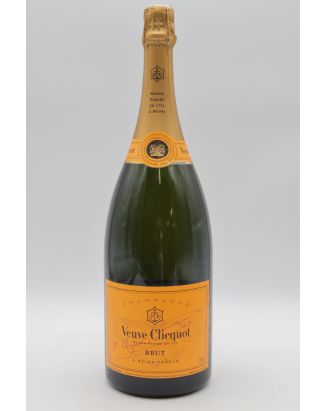
Brut Carte Jaune: the house’s signature champagne, instantly recognizable by its yellow label registered in 1877, and one of the world’s best-selling bruts. It blends some fifty to sixty crus, with a predominance of pinot noir (around 50 to 55%) providing structure, complemented by chardonnay for finesse and meunier for roundness, as well as 30 to 45% reserve wines. Its color is brilliant gold; the bouquet offers pear, peach, citrus, pastries and nuts brought by aging on the lees; and the palate is powerful yet elegant, both vinous and fresh. A radiant champagne, perfect as an aperitif or with sushi, sashimi or roast poultry.
Veuve Clicquot Rosé: a direct descendant of the 1818 invention, it carries on the blended rosé method. Built on the same foundation as Carte Jaune, it includes approximately 12% pinot noir red wine from the house’s finest crus, particularly Bouzy, for an overall blend of around 45% pinot noir, 33% chardonnay and 20% meunier. Its color is a deep, luminous pink; the bouquet bursts with wild strawberry, raspberry, cherry and red currant; and the palate combines liveliness, generous fruit and fine structure. Ideal with fine charcuterie, fresh red berries and savory petits fours.
Demi-Sec: designed for sweet courses, this cuvée retains the house’s signature pinot noir structure while offering a more generous, seamlessly integrated dosage. Aromas of candied fruit, honey, vanilla and pastry are balanced by preserved acidity. An excellent match for fruit desserts, layered desserts and foie gras.
Rich and Rich Rosé: cuvées with deliberately higher dosage, created for mixology and enjoyment over ice with selected ingredients such as pineapple, celery, grapefruit zest, cucumber or tea. Served well chilled, Rich reveals a full, fruity character that stands up to these pairings, while Rich Rosé adds notes of red fruit. A relaxed, creative approach to champagne, in the daring spirit so dear to Madame Clicquot.
Extra Brut Extra Old: an exclusive collection made entirely from reserve wines, with no wine from the current harvest—a first in the history of Champagne. Each release blends a selection of prestigious vintages; the third, for example, brings together eight years spanning 1990 to 2014. These wines undergo two stages of maturation: several years in tanks on fine lees, followed by another three years in the cellars before disgorgement. With a low dosage, the blend reveals aromas of white flowers, citrus, white fruit, bread dough and orange peel, with remarkable precision and tension on the palate. A champagne for connoisseurs, superb with oysters and fish tartare.
Vintage Brut: continuing the tradition begun by Madame Clicquot in 1810, this vintage cuvée is made only in years deemed worthy, exclusively from Premier Cru and Grand Cru grapes. The predominance of pinot noir gives it structure and aging potential, while chardonnay brings tension and brightness. After several years in the chalk cellars, it offers a complex bouquet of ripe fruit, brioche, nuts and toasted notes, with a dense, vinous and lingering palate.
Vintage Rosé: the rosé version of the vintage cuvée, made by adding approximately 13% still pinot noir red wine from Bouzy. It combines the depth of a great vintage with the fruit intensity of a blended rosé, offering a copper-tinged color, aromas of candied red fruit, sweet spices and toasted notes, and a structured, flavorful, lingering palate. A gastronomic rosé, outstanding with white meats and fine fish.
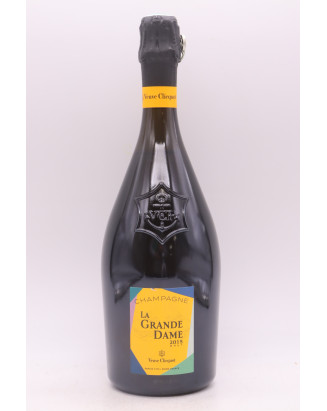
La Grande Dame: the prestige cuvée, created in 1972 for the house’s bicentenary using the 1962 vintage, in tribute to Barbe-Nicole Ponsardin. It comes from an exclusive selection of eight historic crus particularly dear to Madame Clicquot, with an overwhelming predominance of pinot noir, generally around 90%, complemented by chardonnay. Aged for a long time, often eight to ten years in the cellars, it offers a deep golden color, a highly complex bouquet combining ripe yellow fruit, candied citrus, flowers, spices and roasted notes, and a palate that is at once powerful, mineral and finely sculpted. It elevates lobster, turbot with beurre blanc and foie gras, and can be cellared for ten to fifteen years or longer.
La Grande Dame Rosé: the rosé version of the prestige cuvée, first produced from the 1988 vintage and released only about ten times since. Its rarity rests on a singular condition: only pinot noir red wine from Clos Colin in Bouzy may be used in its blend, and the quality of this tiny parcel determines each year whether it can be produced. Approximately 13% of this red wine is added to a base composed of 90% pinot noir. Its color is salmon pink with copper highlights; the bouquet evolves from floral notes toward spicy, peppery accents; and the palate opens with directness before becoming silky, deep and remarkably long.
Parcelle Clos Colin: an exclusive single-parcel cuvée from Clos Colin alone, a 1.3-hectare named vineyard site in Bouzy that entered the family’s holdings in 1741. It offers a new, intimate expression of this historic pinot noir terroir, with fruit intensity, depth and a chalky texture that explain the central role it has always played in the house’s great rosé cuvées. Produced in tiny quantities, it is intended for the most discerning enthusiasts.
Cave Privée: a collection of exceptionally rare bottles from the house’s wine library—older vintages aged on racks for decades in the chalk cellars, then disgorged late to be released to the public. Available as white and rosé wines from legendary years, these bottles offer strikingly deep tertiary character, with notes of candied fruit, wax, coffee, forest floor and truffle, while retaining an undiminished freshness that attests to the quality of aging in the chalk of Reims.
COLLECTION NEAR PARIS & VAT REFUND FOR TOURISTS
Free collection in our warehouse near central Paris (92)