Hauvette

Wines from Domaine Hauvette: buy at the best price

Upon her arrival in the Alpilles at Saint-Rémy-de-Provence, Dominique Hauvette gave her name to the estate. In 1988, advised by Eloi Dürrbach of the domaine de Trevallon, she carried out her first harvest on just 2 ha of the estate's vines. From the very beginning, she produced wines she wanted to be of quality and worthy of cellaring. 30 years after settling there, the winemaker still follows her instincts, working in biodynamics and vinifying without added sulfur, in cement amphorae for the red wines, across what are now nearly 17 ha of vineyard at domaine Hauvette, perfectly maintained and situated on clay-limestone soils.

Read more
See more
Filters

Price

€20.00 - €80.00

Volume

Parker WA rating

No choice available on this group

Burghound rating

No choice available on this group

Revue du Vin de France rating

No choice available on this group

Bettane & Desseauve rating

15 - 16

Prices drop

No choice available on this group

Download this list
There are 2 products.
Download this list
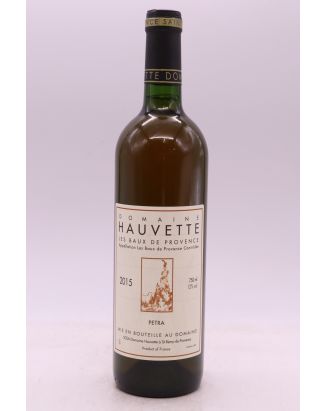
Hauvette Baux de Provence Petra 2015 Rosé
6 in stock
119732
Rosé
75cl
Add to cart
Provence | Baux de Provence

Hauvette Baux de Provence Petra 2015 Rosé

€72.00 inc-VAT per bottle
€60.00 ex-VAT
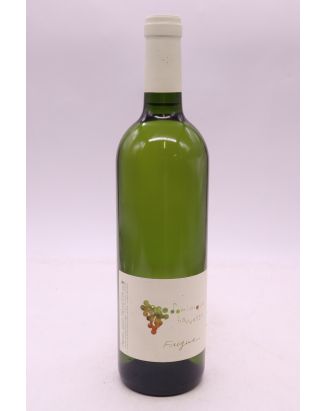
Hauvette Fugue 2020
1 in stock
127704
White
75cl
Add to cart
Provence | Alpilles IGP

Hauvette Fugue 2020

€27.60 inc-VAT per bottle
€23.00 ex-VAT

History of Domaine Hauvette

The estate’s story begins with a deliberate change of course. A former lawyer and then ski instructor with a passion for endurance riding, Dominique Hauvette left Savoie in the late 1980s to settle in Saint Rémy de Provence, in the heart of the Alpilles. She acquired two hectares of vines and brought in her first harvest in 1988. She had no formal training in viticulture, but her intuition and exacting standards immediately impressed those around her. Éloi Dürrbach of Domaine de Trevallon, followed by Laurent Vaillé of La Grange des Pères, supported her early efforts and encouraged her to follow her own path.

The vineyard gradually grew to around 15 hectares across the Les Baux de Provence appellation and the IGP Alpilles. In 2003, after years of organic farming, the estate took a decisive step by converting to biodynamics. Since the 2018 vintage, most cuvées have been labeled IGP Alpilles, a choice that gives the estate the freedom to move beyond the appellation’s blending requirements and express each plot and grape variety without compromise. Recognition has come without fanfare: three stars in the Guide des meilleurs vins de France, four stars from Bettane and Desseauve, and the title of Winemaker of the Year 2020. Domaine Hauvette is now considered one of the leading names in Provençal wine.

Terroirs and Vineyards of Domaine Hauvette

The vineyard lies on the northern slope of the Alpilles massif, an aspect that makes all the difference in this Mediterranean climate: it preserves acidity, slows ripening, and gives the wines the freshness that defines the estate’s style. The clay-limestone soils are often lean, rocky, and steep, scattered with fragments of quartz, including the orange-hued carnelian that gave the flagship cuvée its name. A Vermentino plot, however, lies on the limestone plateau of Eyragues, offering another expression of the Alpilles terroir. Cool nights and the mistral reduce disease pressure and naturally concentrate the grapes.

The vineyard is planted with roughly 70% red varieties (Grenache Noir, Syrah, Cabernet Sauvignon, Cinsault, and Carignan) and 30% white varieties (predominantly Roussanne, along with Marsanne, Clairette, and Vermentino). Some plots are mixed-planted, with varieties growing together in the same row—an old practice that helps bring balance to the blend from the vineyard onward. Biodynamic farming involves shallow tillage, plant-based preparations, respect for lunar cycles, and no synthetic products whatsoever. Yields are deliberately low, and all grapes are harvested by hand, with an initial selection on the vine followed by a second sorting at the winery.

Winemaking at Domaine Hauvette

In the winery, the philosophy is to intervene as little as possible. The red grapes are fully destemmed and handled with a gentle infusion approach, without punch-downs or heavy extraction, to preserve fine tannins and clear fruit expression. Fermentation begins with native yeasts alone, without added yeast or aggressive temperature control. The whites are gently whole-cluster pressed without skin contact, then aged on fine lees to gain texture and depth.

Aging is the estate’s true hallmark. Dominique Hauvette was among the first in Provence to adopt concrete eggs, cast without metal reinforcement, in which the wine circulates naturally and gains roundness without ever taking on an oaky character. These vessels are complemented by tapered tanks, old large oak casks, and a few barrels, chosen according to the cuvée and vintage. Sulfur use is kept to an absolute minimum and is sometimes eliminated entirely, even at bottling. The wines are neither fined nor filtered and are released several years after bottling—a deliberate patience that accounts for their maturity when tasted.

The Cuvées of Domaine Hauvette

Dolia is the estate’s flagship white cuvée, a blend of Marsanne, Roussanne, and Clairette from mixed-planted vines. Its name refers to doliae, the ancient jars used to store wine, echoing its extended aging on the lees in concrete eggs. Full-bodied, saline, and lightly smoky, it offers notes of fennel, linden flower tea, aromatic herbs, and pineapple, with a refined bitterness on the finish. A white wine of rare complexity in Provence, built to age.

Jaspe is a single-varietal Roussanne grown on the rockiest clay-limestone slopes. More immediately approachable than Dolia but just as well structured, it combines the lushness of white-fleshed fruit with mineral tension and a slightly bitter, lingering finish. An elegant, balanced white, perfect as an aperitif or with Mediterranean fish.

Clairette showcases, as a single-varietal wine, the old Clairette vines that usually go into the Dolia blend. Whole-cluster pressed without maceration, then fermented and aged in concrete eggs without sulfur, this cuvée seeks the purest possible expression of its origins, with strikingly crisp fruit and freshness. A bright, distinctive interpretation of an often underestimated grape variety.

Fugue is the estate’s most recent creation, a 100% Vermentino from the limestone plateau of Eyragues. Direct pressing, nine months on the lees in stainless steel tanks, and vinification without added sulfites produce an easy-drinking wine with notes of hawthorn, almond, tropical fruit, and sweet spices, plus a pleasant bitterness on the finish.

Pétra is the estate’s rosé, predominantly Cinsault with Syrah and Grenache. Far from the usual Provençal style, it is a true food-friendly rosé: structured and vibrant, with notes of raspberry, wild berries, flowers, and a hint of white pepper. It pairs equally well with Mediterranean cuisine and fish in sauce.

Roucas is an introduction to the world of Hauvette, a blend of Grenache and Syrah with Cabernet Sauvignon and Cinsault, often sourced from the youngest vines. Generous and fruity, with the scent of garrigue herbs, it is immediately enjoyable while retaining the estate’s characteristic precision and freshness.

Cornaline is the estate’s signature red, historically produced under the Les Baux de Provence appellation. A blend dominated by Grenache, with Syrah and Cabernet Sauvignon, it takes its name from a variety of quartz found in small quantities on the plateau. Depending on the vintage, it is aged in concrete eggs, tapered tanks, and old large oak casks. Its aromas of cherry, prune, black olive, garrigue herbs, and truffle, fleshy texture, and fresh, almost minty finish make it compelling. A powerful, distinguished wine to decant and give a few years in the cellar.

Améthyste is the flagship age-worthy cuvée, made predominantly from Cinsault with Carignan and Grenache, and aged for about a year in concrete eggs. The result is a floral, fragrant red with notes of rose, crushed strawberry, cherry, and fresh herbs, remarkably fine tannins, and an energy that endures across vintages. Rare and highly sought after.

Cinsault was born after the frost of 2021, when Dominique Hauvette selected a few surviving Cinsault vines to make a separate cuvée. Spontaneous fermentation with native yeasts and aging in egg-shaped concrete tanks yield a wine with luscious fruit, exceptional clarity of expression, and a deep yet remarkably easy-drinking structure. Many tasters consider it one of the finest recent wines from the Les Baux de Provence area.

WHAT THEY SAY ABOUT US

5 good reasons to buy wines on V&M

...

EXPRESS DELIVERY

In a secure polystyrene packaging

...

INTERNATIONAL SHIPPING

Find out more about VAT-EX sale for outside EU deliveries

...

COLLECTION NEAR PARIS & VAT REFUND FOR TOURISTS

Free collection in our warehouse near central Paris (92)

...