Personalise your experience
Change your country, language and currency here whenever you wish.
|
|
|
Must-See Châteaux |
|
|
|
|
|
|
|
|
The wines of Domaine Eric Morgat, beautiful white wines from the Loire
Located in Savennières, on the right bank of the Loire, Domaine Eric Morgat has established itself in a single generation as one of the leading names in chenin blanc in Anjou. Six hectares planted entirely with chenin, spread across the finest schist slopes of the appellation and a plot of volcanic spilite in the Coteaux du Layon, give rise to a tight range of dry white wines of remarkable precision. Certified in organic farming since 2007 and practicing biodynamics since the 2012 vintage, the vineyard works at very low yields, between 20 and 30 hectoliters per hectare.
Eric Morgat comes from a family that has cultivated Anjou’s terroirs for more than two centuries near Beaulieu-sur-Layon, where his grandfather acquired Château du Breuil in 1959. The expected path would have been to take over the family property in the Coteaux du Layon. Instead, in 1995, at age 25, he crossed the Loire and established his own estate in the heart of the Savennières appellation—a bold gamble in an appellation then bound by convention. He assembled the entire vineyard by buying uncultivated land and abandoned plots, selected solely for the quality of their terroir, even when that meant clearing and replanting everything.
The early years brought constant work: clearing brambles, restoring stone walls, replanting and patiently seeking out historic Chenin varieties. Clos Serteaux, a magnificent southeast-facing hillside overlooking the Loire that had lain neglected for more than a century, was cleared in 2001, restored to the Savennières AOC and replanted in 2005. The estate, known for a time as Domaine de la Monnaie, later took the winemaker’s name. In 2012, Eric Morgat made a decisive change: he discontinued his historic L’Enclos cuvée in favor of Fidès, a blend of his best schist plots, and adopted a more focused style with less oak influence. Since then, critics have regularly hailed the estate as one of the leading names in dry Loire Chenin.
Anjou’s gentle reputation conceals a far more austere reality here. The vines grow on the foothills of the Armorican Massif, in schist and volcanic rock soils without limestone or clay, unable to retain moisture through the summer. This water stress, combined with very low yields, forces Chenin roots deep into the ground and produces grapes of rare concentration. The vineyard comprises four major plots in Savennières: L’Enclos (2 hectares), the first vineyard Eric Morgat planted in 1995, on windblown sands over slightly weathered schist; Clos Ferrard (1.3 hectares), surrounding the family home, on particularly dry, warm schist soil; Roche aux Moines (0.5 hectares), one of the appellation’s great historic terroirs; and Clos Serteaux (1 hectare), a southeast-facing hillside overlooking the Loire, just above the Pierre Bécherelle painted by William Turner in 1826.
There is also a one-hectare plot of volcanic spilite near Pierre-Bise in the Coteaux du Layon. Its character and minerality differ completely from Savennières, and it produces the Anjou Blanc Litus. Clos Ferrard is also a living repository for the grape variety: no fewer than 37 expressions of Chenin grow side by side there, providing the basis for massal selections that the winemaker studies row by row before deciding which to replant on each terroir. The soils are worked and sometimes enriched with flowers sown between the rows. Certified organic farming, practiced since 2007, gave way to biodynamic methods in 2012.
Winemaking aims for simplicity. Grapes are harvested by hand at optimal ripeness and in successive passes when the vintage requires it, yielding ripe but perfectly healthy fruit destined exclusively for dry wines. Each plot is pressed, fermented and aged separately, using native yeasts, without technological intervention or any pursuit of winemaking showmanship.
All the cuvées are aged for around 22 months: twelve months in 228-liter barrels, plot by plot, followed by several more months in tank after blending. Eric Morgat seeks neither reductive aromas nor conspicuous oak, but regular exposure to oxygen that integrates the tannins and reveals the identity of each terroir. His handling of bitterness, an inherent feature of Chenin, is one of the estate’s signatures: here it is refined, mouthwatering and persistent, never harsh. Sulfur additions remain minimal, and bottling follows a long period of patient aging. This helps explain the impressive aging potential of these whites, austere and almost monastic in their youth before gradually developing aromatic nuances after a few years in the cellar.
Savennières Fidès is the estate’s flagship cuvée, first produced in the 2012 vintage. Going against the trend for multiple single-plot cuvées, Eric Morgat chose to bring together the fruit of his four great schist terroirs (L’Enclos, Clos Ferrard, Pierre Bécherelle and Roche aux Moines) in one wine that captures all their nuances. Each plot is vinified and aged separately in barrels before blending, for a total aging period of around 22 months. The ripe, complex nose evokes chamomile, acacia, violet and pollen, candied quince, pear and citrus, complemented by struck stone, flint, salted butter, fresh almond and flower honey. The palate combines density, purity and salinity with an impressively long finish carried by harmonious acidity. Produced in quantities of 12,000 to 18,000 bottles depending on the year, this great Savennières can age for around twenty years and pairs with lobster, chicken in cream sauce or aged Comté.
Savennières Clos Serteaux is the estate’s rare cuvée, made only in exceptional years and limited to around a thousand bottles. It comes from a one-hectare southeast-facing hillside on pure schist overlooking the Loire. Left uncultivated for more than a century, the site was cleared in 2001 and replanted in 2005. Also aged for around 22 months, the wine offers a precise, crystalline expression of Chenin, with striking mineral tension, refined bitterness and an exceptionally long saline finish. It is a collector’s wine, to reserve for fine dining and extended cellaring.
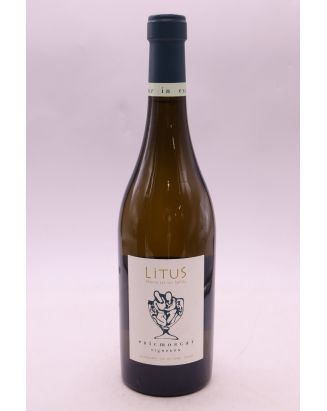
Anjou Blanc Litus reflects Eric Morgat’s conviction that Anjou has great terroirs beyond Savennières. Sourced from one hectare of volcanic spilite planted in the Coteaux du Layon, this dry Chenin cuvée is fruitier, sunnier and more immediately appealing than the estate’s Savennières wines, without sacrificing precision. Yields of 20 to 30 hectoliters per hectare, 22 months of aging and production limited to 2,500 to 4,000 bottles result in a wine with concentrated aromas of ripe fruit, citrus and flowers over a distinctive volcanic mineral backbone. It can age for around fifteen years and shines alongside seafood dishes, scallops or exotic flavors.
Savennières L’Enclos is the estate’s historic cuvée, produced through the 2011 vintage before being incorporated into Fidès. From the original plot planted in 1995 on windblown sands and schist, it embodied a fuller style with a more pronounced oak influence, showing notes of baked apple, quince, warm butter, saffron and honey. These bottles, still available in older vintages from wine merchants and at auction, develop a pronounced minerality and a long finish with age, offering a measure of how far the winemaker has come.
COLLECTION NEAR PARIS & VAT REFUND FOR TOURISTS
Free collection in our warehouse near central Paris (92)