|
|
|
Must-See Châteaux |
|
|
|
|
|
|
|
|
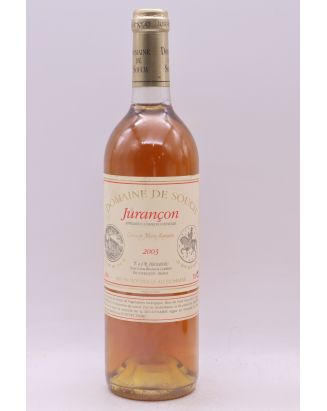
In Laroin, just 6 kilometres from Pau, in the Pyrénées-Atlantiques, Domaine de Souch is the passionate work of a legendary figure of South-West viticulture, Yvonne Hégoburu (1928-2023). Widowed at 60 in 1986, she decided to plant vines in memory of her husband René on the land of an old farm dating from 1807, situated on the site of a historic vineyard that belonged in the 17th century to Jean de Souch. A pioneer of biodynamics in Jurançon from 1994 onwards, she elevated her 6.8-hectare estate (facing the Pyrenees range and the Pic du Midi d'Ossau) to the status of an absolute reference for the appellation. Today, her son Jean-René carries on her work alongside Emmanuel Jecker, crafting dry, medium-sweet and sweet Jurançon wines of remarkable purity and identity (Sec, Cuvée Marie Kattalin, Mary, Manon).
The history of Domaine de Souch is one of the most moving in French viticulture. In 1963, René and Yvonne Hégoburu purchased an old farmhouse dating from 1807, located just 6 kilometres from Pau, which they renovated together to make their family home. They were unaware at the time that this property stood on the land of a historic vineyard planted in the 17th century, once the property of a certain Jean de Souch, whose name would later give the estate its name. The couple had long dreamed of planting their own vines, but René passed away before this project could become a reality. It was alone, past the age of 60, that Yvonne decided to honour her husband's memory by planting.
With the help of Abel Pirès, her vineyard manager, Yvonne undertook titanic works: terraces created by bulldozer on vertiginous slopes, planting of 20,000 stakes to trellis her 6 hectares of vines, purchase of all winemaking equipment, construction of cellars. The first vintage was released in 1990 and immediately won a prize in Paris. Buoyed by this success, Yvonne discovered biodynamics by reading a publication at a railway station and switched to biodynamics as early as 1994, becoming a pioneer in the appellation. The estate quickly gained the reputation of one of the finest Jurançon producers, indeed THE finest, as the great lady liked to say. Yvonne, whose radiant personality shines through in every cuvée, appeared in the celebrated documentary Mondovino. She passed away in 2023 at the age of 95, having handed the estate over to her son Jean-René in 2014, who perpetuates her work with Emmanuel Jecker in the same absolute philosophy of respect for living things.
The vineyard extends over 6.8 hectares (sometimes 7) in the commune of Laroin, in the northern part of the Jurançon appellation, at the foot of the Pyrenees. The vines are arranged in terraces on vertiginous slopes, at approximately 300 to 350 metres altitude, facing the majestic Pyrenean mountain range with the Pic du Midi d'Ossau in the line of sight. This exceptional exposure, combined with a microclimate marked by southerly winds (the famous foehn wind) that dry the berries in the late season, is one of the secrets behind the quality of the estate's sweet Jurançon wines.
The soils are characteristic of the northern part of the appellation: clay-limestone composed of Jurançon pudding stones (silico-clay) and, for a small portion, red clays rich in iron oxide. This geological mosaic, perched at 332 metres, gives the wines a unique mineral and tangy signature. The grape varieties are traditional to Jurançon: 60% Gros Manseng, 30% Petit Manseng and 10% Petit Courbu, the emblematic varieties of the appellation. The estate has been farmed organically and biodynamically since 1994, with rigorous soil work, meticulous manual harvesting through successive selective pickings and intentionally very low yields, guaranteeing remarkable aromatic concentration and purity.
In the cellar, the philosophy of Yvonne Hégoburu, perpetuated today by her son Jean-René and Emmanuel Jecker, is one of minimal intervention. Yvonne liked to say that she "let Mother Nature do her work." No chaptalization (addition of sugar) is practised, in strict respect of the grape and the vintage. Fermentations are conducted solely with the indigenous yeasts native to the grapes, without any addition of selected yeasts, allowing each cuvée to fully express the singularity of its terroir and its year.
For the Jurançon Sec, ageing is carried out half in barrel with regular lees stirring and half in temperature-controlled stainless steel tank, then blended one month before bottling. This dual approach brings the wine the complexity of wood and the freshness of stainless steel, in perfect balance. For the sweet and luscious Jurançon wines, the grapes are harvested very late, through successive selective pickings, when the foehn wind and natural drying on the vine have concentrated the sugars to their maximum. Long fermentation at low temperature, without any additions, ageing in barrels. The wines are neither fined nor excessively filtered, in an approach of absolute transparency. The result is a recognisable signature: Jurançon wines of mineral purity, strong identity and perfect balance, among the most sought-after in the appellation.
Jurançon Sec: the estate's emblematic white wine in AOC Jurançon, crafted from a blend of Gros Manseng (60%), Petit Manseng (30%) and Petit Courbu (10%) sourced from 3 hectares of vines planted on silico-clay pudding stones at 332 metres altitude. Ageing half in barrel with lees stirring, half in stainless steel tank, then blended. Straw-yellow colour with golden highlights, expressive nose with notes of apricot, passion fruit and citrus. Palate with remarkable acidity (despite completed malolactic fermentation), a light bitterness that adds complexity, perfect balance. Ideal as an aperitif or with delicate fish dishes with lemon.
Jurançon Moelleux Cuvée de Souch: the estate's classic sweet wine, crafted from Petit Manseng and Gros Manseng harvested late through successive selective pickings on the clay-limestone hillsides. Brilliant golden colour, expressive nose with notes of exotic fruits, mango, candied apricot and white flowers. Silky and indulgent palate, with sweetness perfectly balanced by a great acidity, long and fresh finish. An absolute reference for sweet Jurançon.
Jurançon Cuvée Marie Kattalin: the estate's flagship sweet wine, crafted from Petit Manseng sourced from late selective pickings. Deep golden colour, complex and enchanting nose with notes of exotic fruits, honey, dried flowers and candied citrus peel. Dense palate with great tension that admirably balances the richness. A cuvée with a strong identity, fresh and incredibly well-balanced, beloved by wine enthusiasts and Michelin-starred chefs alike (notably Bertrand Delanoë, former Mayor of Paris).
Jurançon Cuvée Mary: a sweet cuvée in feminine homage, crafted from Petit Manseng harvested very late. An even more concentrated expression than the Cuvée de Souch, revealing the full aromatic richness of the variety: candied fruits, honey and dried flowers, accompanied by a great acid tension that prevents any heaviness. A refined cuvée, ideal with foie gras or fruit-based desserts.
Jurançon Cuvée Manon: an exceptional and confidential luscious wine from the estate, produced only in the greatest vintages from Petit Manseng harvested late, when the berries dry naturally under the effect of the foehn wind. Deep golden colour, sumptuous nose of grilled pineapple, candied apricot, honey and gentle spices. Palate of great concentration, silky and long, balanced by the estate's characteristic acid signature. A great sweet wine from Jurançon, for exceptional moments.
COLLECTION NEAR PARIS & VAT REFUND FOR TOURISTS
Free collection in our warehouse near central Paris (92)