Personalise your experience
Change your country, language and currency here whenever you wish.
|
|
|
Must-See Châteaux |
|
|
|
|
|
|
Innovation and modernity under the Lurton family - Pessac-Léognan
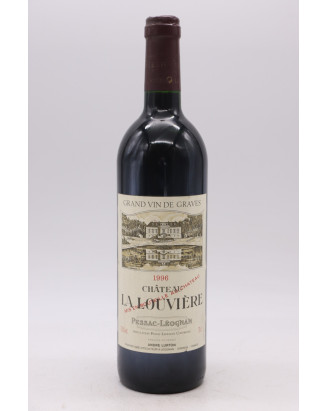
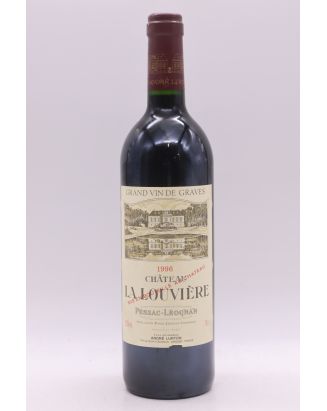
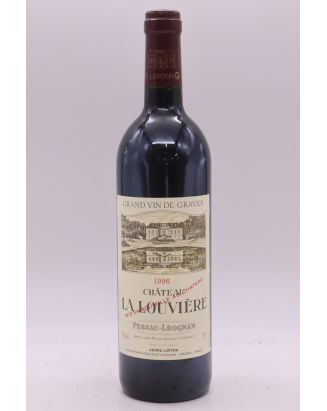
Château La Louvière is an emblematic estate in the Pessac-Léognan appellation, embodying the elegance and refinement of Bordeaux viticulture. Nestled in the heart of the Graves region, not far from the prestigious châteaux of Haut-Bailly and Carbonnieux, La Louvière captivates with the quality of its wines and the beauty of its neo-classical architecture dating from the 18th century. With a vineyard spread across a mosaic of diverse soils, it produces full-bodied red wines and whites of great finesse, synonymous with a centuries-old tradition perpetuated with passion.
The origins of Château La Louvière date back to the early 14th century, when the Bordeaux region was still under English rule. In 1310, a modest residence known as "La Lobeyra" appeared in the records of the English administration. It was between the 15th and 16th centuries that Pierre de Guilloche and his son Jean, members of an influential family of Bordeaux parliamentarians, developed the estate's first vines. In 1620, the estate was ceded to the Chartreux de la Miséricorde de Bordeaux, who brought their expertise in winemaking, elevating La Louvière's wines to the rank of crus highly prized by English and Flemish merchants.
At the French Revolution, ecclesiastical properties were seized, and the estate was auctioned off in 1791. Jean-Baptiste Mareilhac, a wealthy Bordeaux merchant, became its owner and undertook the construction of the magnificent château that stands today. Entrusted to the architect François Lhote, this classic, sober, and elegant building was completed with frescoes and paintings by the Flemish artist François-Louis Lonsing.
In the following years, La Louvière remained a prestigious property, but decline set in during the 20th century. It was not until 1965, when the visionary André Lurton acquired the estate, that La Louvière regained its former glory. André Lurton, a key figure in Bordeaux viticulture, modernised the facilities and enhanced the vineyard, thus securing La Louvière's place among the great crus of Pessac-Léognan.
Château La Louvière benefits from an exceptional and varied terroir, spanning 48 hectares of soils rich in gravel, sand, and limestone. These gravelly soils are characteristic of the Pessac-Léognan appellation and provide the vines with natural drainage, thus promoting the concentration of aromas and the finesse of tannins. The geographical layout, with gentle slopes and deep soils, allows for optimal ripeness of the grapes, contributing to balanced, powerful, and complex wines.
The vineyard is divided into two parts: 13 hectares devoted to white grape varieties (85% Sauvignon Blanc and 15% Sémillon) and 65 hectares dedicated to red grape varieties. The red varieties consist primarily of Cabernet Sauvignon (55%) and Merlot (45%), whose roots reach deep into the gravel soils, bringing structure and finesse to the wines. With an average age of 21 years, the vines benefit from a dense planting of 7,500 vines per hectare, which encourages qualitative and rigorous production.
Winemaking at Château La Louvière combines respect for traditional methods with the use of modern techniques. For the red wines, the harvest is done by hand, and the grapes are fermented in temperature-controlled cement and stainless steel vats. This process allows for precise extraction of aromas and tannins, lending the wines an intense and structured character. Malolactic fermentation takes place in vat, then the wine is aged for 15 months in French oak barrels, approximately 50% of which are new.
The estate's white wines, for their part, are the result of a specific winemaking process aimed at preserving their freshness and vivacity. The Sauvignon and Sémillon grapes are pressed in whole bunches, without maceration. Fermentation begins in vat and finishes in oak barrels (45% new), where the wine is aged on lees for nearly 9 months, depending on the vintage. This method yields elegant, complex whites with fruity and floral aromas and a beautiful liveliness.
The estate also benefits from the expertise of renowned consultants. Michel Rolland works on the red wines, bringing his knowledge of blending, while the white wines are overseen by Valérie Lavigne, who ensures a precise vinification that respects the grape varieties.
Château La Louvière offers a range of red and white wines that perfectly express the richness and diversity of its terroirs.
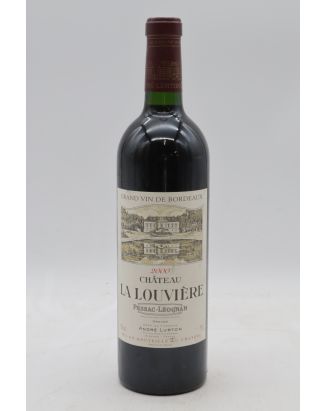
Château La Louvière Rouge
This main cuvée, composed predominantly of Cabernet Sauvignon and Merlot, is a complex and structured wine. As it ages, it develops aromas of dark fruits, spices, and undergrowth, offering a beautiful length on the palate. Ideal for lovers of powerful wines, it pairs perfectly with red meat or game dishes.
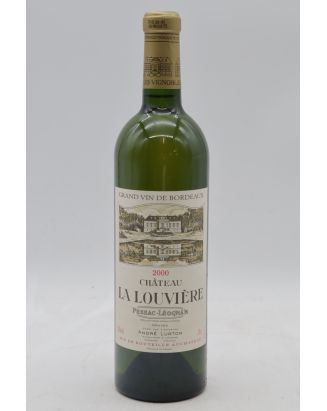
Château La Louvière Blanc
This dry white wine, made from Sauvignon Blanc and Sémillon, is of great elegance and freshness. Its aromas of citrus and exotic fruits blend with floral and mineral notes. On the palate, it is lively and balanced, perfect to accompany fish, seafood, or refined vegetarian dishes.
L de La Louvière Rouge
This second red wine is crafted using the same grape varieties as the main cuvée, but offers a more approachable profile. Light and fruity, it lends itself to more convivial tasting while retaining the estate's distinctive characteristics. It is ideal with charcuterie, poultry, or aged cheeses.
L de La Louvière Blanc
This second white wine, made primarily from Sauvignon Blanc, offers a beautiful expression of freshness and fruitiness. Less complex than the fine wine, it proves perfect as an aperitif or with light dishes. Its aromas of lemon and green apple make it a pleasant and refreshing wine.
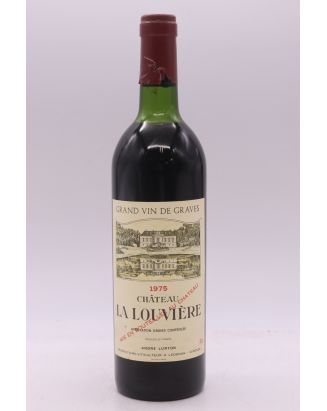
The vintages of Graves and Pessac-Léognan, two appellations of Bordeaux, stand out for their consistent quality. The years 1975, 1982, 1983, 1985, 1986, 1988, 1989 and 1990 are particularly appreciated for their finesse and balance. The vintages 1998, 2000, 2005, 2008, 2009 and 2010 are also remarkable for their structure and ageing potential. More recently, the vintages 2012, 2014, 2015, 2016, 2017, 2018, 2019 and 2020 confirm the continuation of this excellence, with wines offering both elegance and longevity.
Explore the full range of Grands Crus Classés of Graves, an appellation renowned for the diversity and quality of its wines. At the top of the list, the Premier Grand Cru Classé of 1855, Château Haut-Brion of Pessac-Léognan, is a historic reference. For red and white wines, estates such as Château Bouscaut, Château Carbonnieux, Château Malartic-Lagravière, Château Olivier, Château Latour-Martillac and Domaine de Chevalier offer interesting cuvées. On the red side, you will discover the wines of Château Fieuzal, Château Haut-Bailly, Château Latour Haut-Brion, Château La Mission Haut-Brion, Château Pape-Clément and Château Smith-Haut-Lafitte. White wine lovers may turn to the productions of Château Couhins, Château Couhins Lurton and Château Laville Haut-Brion. These estates offer you a wide range of wines to discover at the heart of the Graves region.
Château La Louvière represents a perfect fusion of history, terroir, and winemaking expertise. For more than seven centuries, this estate, with its majestic architecture and diverse vineyard, has produced exceptional wines that illustrate the very best of the Pessac-Léognan appellation. Today, under the direction of Jacques Lurton and Mathilde de Caix-Lurton, La Louvière continues to captivate lovers of great Bordeaux wines.
COLLECTION NEAR PARIS & VAT REFUND FOR TOURISTS
Free collection in our warehouse near central Paris (92)