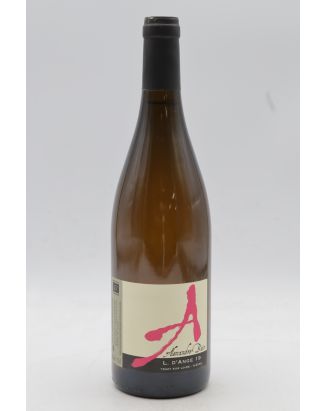
Alexandre Bain L. d'Ange 2019
Personalise your experience
Change your country, language and currency here whenever you wish.
|
|
|
Must-See Châteaux |
|
|
|
|
|
|
|
|
Alexandre Bain wines: outstanding biodynamic wines from Pouilly-Fumé in the Loire.
A leading name in natural Loire wines, Domaine Alexandre Bain cultivates some 10 hectares of Sauvignon Blanc in Tracy-sur-Loire, at the heart of the Pouilly-Fumé appellation, just a few miles from Sancerre. Based in the Boisfleury locality since 2007, this winemaker farms his vineyard organically and biodynamically, plows his most fragile plots with his Percheron horse Phénomène, and hand-harvests grapes at optimal ripeness. Fermented solely with native yeasts, without chaptalization, fining or filtration, and most often without added sulfites, his wines offer a radically personal interpretation of Pouilly terroir.
A native of Pouilly, Alexandre Bain does not come from a winemaking family: it was his grandfather, a farmer, who passed on his love of the land and living things. At eighteen, he enrolled at the viticulture school in Beaune, then trained at several estates before bringing together five hectares of vines in 2007 at the Boisfleury lieu-dit in Tracy-sur-Loire. From his first vintage, his signature style stood apart in an appellation accustomed to crisp, standardized Sauvignons: his wines are golden and generous, shaped by grape ripeness rather than the varietal aromas of blackcurrant bud.
This distinctive style led to a prolonged dispute with the appellation authorities, who denied him the use of the Pouilly-Fumé name starting in 2014. Part of his production was then sold as Vin de France, but demand did not wane—quite the opposite. With the support of his lawyer Éric Morain, a well-known advocate for natural winemakers, Alexandre Bain eventually regained the right to use his original appellation. The estate has since grown to around eleven hectares, certified biodynamic, and his wife Caroline now makes her own cuvées in the same low-intervention spirit.
The vineyard, planted entirely to Sauvignon Blanc, spans two main soil types that shape the entire range. Eight hectares lie on Portlandian limestone, some 135 million years old: very stony, warm, sunlit ground with almost no workable clay, giving the wines roundness, generosity and a sun-ripened character. The rest of the estate sits on Kimmeridgian limestone, the famous marl with tiny oyster fossils also found in Chablis. Richer and harder to work, it can bring structure, finesse and length. A few seams of flint and clay-limestone, along with parcels at around 200 meters in elevation, complete this mosaic of terroirs.
Tending the vines is a demanding craft. No synthetic chemicals are used in the vineyard: biodynamic preparations, herbal infusions, mechanical soil cultivation and horse plowing in the most delicate areas. Yields are deliberately low, pruning respects the flow of sap, and harvesting is entirely by hand—a rarity in an appellation where mechanization is widespread. Some parcels contain vines around fifty years old, whose deep roots produce concentrated juice capable of expressing the nuances of each vintage and the identity of each lieu-dit.
In the cellar, the philosophy remains constant: guide the grapes rather than correct them. Picked at full ripeness, the grapes are gently pressed or fermented as whole clusters, depending on the cuvée, then ferment solely with the native yeasts present on their skins. No winemaking additives, inoculated yeasts, chaptalization or acidification: the wines are made without fining or filtration to preserve all their substance and fine lees. This approach demands time, impeccable hygiene and daily monitoring of the tanks.
Aging then extends over a period unusual for the region—twelve to thirty-six months, depending on the cuvée—in tanks, barrels or old oak casks, on fine lees. Sulfites are either absent altogether or added in tiny amounts just before bottling, with the share of wines made without added sulfur increasing from vintage to vintage. The wines benefit greatly from decanting and can withstand long cellar aging. The winemaker complements this production with a small négociant operation, vinifying red grape varieties he does not grow himself, always sourced from hand-harvested organic or biodynamic vineyards.
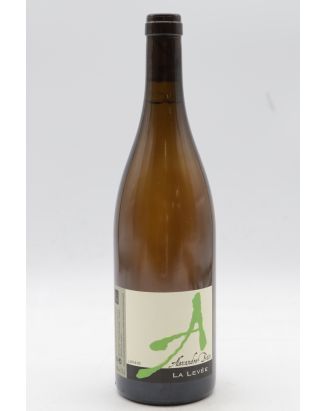
La Levée is the ideal introduction to the estate’s wines. From stony Portlandian soils, this cuvée replaced the former Spring cuvée and stands out for its immediate freshness, citrus and white-fruit notes, and easy-drinking, slightly saline palate. Made without added sulfites, it is delicious young with seafood or Loire river fish fried to a crisp.
Terre d'Obus takes its name from the history of a vineyard parcel and offers a vibrant, tauter Sauvignon, with aromas of citrus zest, pear and warm stone. On the palate, appealing density leads to a mineral, slightly bitter finish that is highly characteristic of the house style. A food-friendly wine that benefits from airing before serving.
Pierre Précieuse is one of the estate’s signature cuvées. Born of Portlandian limestone, it lives up to its name with a crystalline nose of citrus, exotic and candied fruit, sometimes lifted by a touch of honey and flint. The palate balances richness and acidity perfectly before a long finish carried by appealing bitter notes and delicate salinity. It pairs beautifully with river fish in beurre blanc, roasted turbot or crispy sweetbreads.
Les Grandes Hâtes is a sought-after, rarer single-vineyard cuvée with a taut, refined character. The Sauvignon takes on greater focus, with a pronounced mineral backbone and a persistent saline finish. Its aging potential makes it a wine to cellar and enjoy over several years.
Champ Couturier is the estate’s top single-vineyard wine. Made from a highly selective harvest of old vines and aged for an extended period, this Sauvignon impresses with its depth, almost tactile texture and aromatic complexity (ripe fruit, dried flowers, sweet spices and iodine notes). Produced in very small quantities, it is among the most sought-after bottles from Pouilly.
Mademoiselle M remains Alexandre Bain’s flagship cuvée. It comes exclusively from Kimmeridgian marl with tiny oyster fossils, a terroir that lends greater structure, and is aged for about eighteen months in old oak casks, with no added sulfites. The richly aromatic nose reveals citrus, mirabelle plum, apple, lychee and candied fruit, while the palate combines finesse, breadth and finely etched minerality through to a remarkably long saline finish. It is also available in magnum, an ideal format for cellaring.
L d'Ange is a tribute cuvée from a single vineyard, made from roughly fifty-year-old vines planted at around 200 meters in elevation on limestone, marl and flint. Direct pressing and twenty-four to thirty-six months of aging in oak casks yield a Sauvignon that is austere in its youth and built to age, with a golden color that hints at its full texture. Peach, pear, candied citrus, floral, iodine and spice notes play off one another through a remarkably persistent finish.
Coeur Vaillant is made by Caroline Bain and carries the family’s approach forward on the terroirs of Pouilly-Fumé. This natural Sauvignon, made without added sulfites, charms with its expressive fruit, supple texture and disarming drinkability. A wine to share, served cool but not ice-cold.
Contre Coeur, also made by Caroline Bain, has a brighter, more direct profile, with citrus and white-flower notes and a clean, saline finish. Made in the same low-intervention spirit, it offers an excellent introduction to the house’s natural wines.
N°58 showcases the estate’s négociant activity: a biodynamically grown Pinot Noir from the Nièvre, fermented with native yeasts and made without filtration or added sulfites. Its bright, light ruby color leads to an airy nose of sour cherry, raspberry, redcurrant, dried flowers and mild pepper. Fluid and precise on the palate, with fresh acidity and integrated tannins, it finishes with lively fruit and a slight salinity—perfect as an aperitif, with fine charcuterie or with light summer dishes.
07 takes its name from the French department where its grapes originate: an Ardèche Gamay from organically grown vines, harvested by hand and brought to the cellar in Pouilly. Semi-carbonic fermentation preserves all the variety’s freshness, without sulfur, fining or filtration. Its deep ruby color and intense red-fruit nose lead into a generous, immediately appealing palate, best enjoyed for its fruit.
N°69 follows the same approach, using Gamay from the Pierres Dorées area of Beaujolais. Made at the estate without additives, it emphasizes lively fruit and easy drinkability, with aromas of cherry, raspberry and mild spice. A refined, thirst-quenching red to serve slightly chilled with a charcuterie board or roast poultry.
COLLECTION NEAR PARIS & VAT REFUND FOR TOURISTS
Free collection in our warehouse near central Paris (92)