François Rousset Martin

Wines from Domaine François Rousset Martin in the Jura: wines crafted with an artist’s touch for lovers of white Jura wines made from savagnin

Buy Domaine Francois Rousset Martin wines at the best price

Based in Nevy-sur-Seille, at the foot of the hilltop village of Château-Chalon, Domaine François Rousset-Martin has established itself over some fifteen years as one of the Jura’s leading names, regularly mentioned alongside Ganevat, Tissot and Labet. Across roughly ten hectares spanning some of the finest terroirs of the Côtes du Jura and Château-Chalon, this savagnin virtuoso crafts exclusively single-parcel cuvées, vinified without added sulfur, fining or filtration, then aged with extraordinary patience—sometimes for five, six or seven years.

Read more
See more
Filters

Price

€40.00 - €100.00

Region

Color

Vintage

Volume

Parker WA rating

90 - 93

Burghound rating

No choice available on this group

Revue du Vin de France rating

No choice available on this group

Bettane & Desseauve rating

No choice available on this group

Prices drop

No choice available on this group

Download this list
There are 2 products.
Download this list
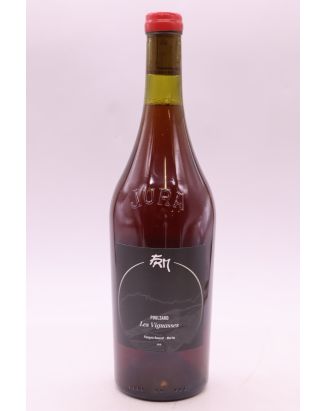
François Rousset Martin Côtes du Jura Poulsard Les Vignasses 2024
Bio
4 in stock
123952
Red
75cl
Add to cart
Jura | Côtes du Jura

François Rousset Martin Côtes du Jura Poulsard Les Vignasses 2024

€84.00 inc-VAT per bottle
€70.00 ex-VAT
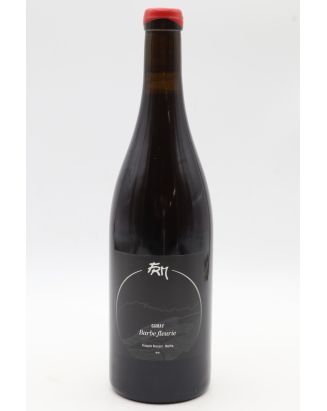
François Rousset Martin Gamay Barbe Fleurie 2024
Bio
9 in stock
129502
Red
75cl
Add to cart
Jura | Vin de France

François Rousset Martin Gamay Barbe Fleurie 2024

€48.00 inc-VAT per bottle
€40.00 ex-VAT

History of Domaine François Rousset-Martin

François Rousset-Martin’s story is one of returning to his roots. Originally from the Jura, he grew up in Beaune, where his father was a biologist and professor at the University of Dijon while also working with the Hospices de Beaune. His passion for wine began early, nurtured by visits to Burgundy’s finest vineyards and childhood stays in the Jura. There, his grandfather tended a few family parcels, and his father continued to vinify a few barrels for the family to drink.

With degrees in biology and enology from the University of Dijon, François Rousset-Martin seized the opportunity in 2007 to take over half a hectare of family vines and settled in Nevy-sur-Seille, a few miles south of Château-Chalon. He initially rented parcels, then gradually bought others, building up the ten hectares he farms today. For a decade, he delivered most of his harvest to the Fruitière Vinicole de Voiteur, the local cooperative, while vinifying a quarter to a third of his production himself under an arrangement with the winery. His passion for winemaking prevailed: in 2018, he took the plunge, left the cooperative entirely, and began vinifying all the fruit from his vineyards. Now supported by a team of seven to nine people, he can devote himself fully to his single-parcel wines. Without claiming a certification or promoting a particular philosophy, he produces his wines as Côtes du Jura or Vin de France. His environmentally conscious methods have been close to organic standards since 2015, and he has used no added sulfites since that vintage. His bottles are now sought after around the world, particularly in Japan.

Terroirs and Vineyards of Domaine François Rousset-Martin

Nevy-sur-Seille nestles in a valley of steep-sided recesses, one of the Jura’s most spectacular landscapes: immense limestone and marl cliffs rise above gently sloping hillsides where herds still graze. The estate farms around ten hectares spread across the best-known vineyard sites in the Château-Chalon area and around Nevy-sur-Seille. Their soils range from gray and white marl to hard limestone and marl-limestone mixtures that vary from parcel to parcel.

Savagnin takes center stage, covering around seven hectares; François Rousset-Martin cherishes the variety for both its origins and its aromas. It is joined by two hectares of Chardonnay, a deliberate tribute to his adopted Burgundy, and one hectare split equally between the red varieties Pinot Noir and Poulsard. The parcels are tiny, often just 3,000 to 7,000 square meters, allowing meticulous work and the production of wines from individual parcels. The vines range from 40 to 80 years old, depending on the vineyard site. Yields are controlled in the vineyard, and each parcel is harvested and vinified separately so that its soil, exposure, and vine age can express themselves without compromise.

Winemaking at Domaine François Rousset-Martin

The estate’s distinctive character begins with its stylistic choice. While Jura tradition favors wines aged under flor, François Rousset-Martin makes most of his wines in a topped-up style, regularly refilling the barrels to prevent flor from forming and preserve the purity of the fruit. Some wines nevertheless spend a few months under flor before being topped up until bottling, in a subtle interplay between the two approaches. After a fairly long pressing, the juice is settled in tanks, then transferred to wooden barrels, where it ferments solely through the action of native yeasts.

No sulfites have been added since the 2015 vintage, and the wines are bottled without fining or filtration. The true hallmark, though, is time: the winemaker does not try to release a wine quickly; he waits for it to become what it should be. Aging often stretches to five, six, sometimes seven years—not as a technical showpiece, but to let the wine find its natural balance and gain depth without ever losing its energy. The small, crowded cellar, filled with old barrels packed close together, is purely a working space. For the reds, about one-third of the harvest is destemmed; the winemaking sometimes includes semi-carbonic maceration and detailed experiments such as removing the central veins from the stems.

The wines of Domaine François Rousset-Martin

Chardonnay Croix Sarrant comes from 3,000 square meters of 40- to 50-year-old vines planted on limestone. It is made in a topped-up style and aged for eighteen months in barrel. Its delicate nose suggests pear, mirabelle plum, and coriander, with slightly peaty accents, while the palate is focused, taut, and full of energy, with a saline finish lifted by appealing bitter notes. Terres Blanches comes from 6,000 square meters of 40-year-old Chardonnay planted on gray and white marl. Here, the terroir yields a mineral, energetic wine worth allowing to develop for a few years in the cellar. La Chaux, from 4,000 square meters of Chardonnay planted around 65 years ago on limestone and marl in the heart of Château-Chalon, offers greater density and depth, with remarkable salinity that calls for Japanese-style raw fish. Beaumont, another single-parcel Chardonnay, rounds out this series of focused, vibrant whites, while Gravières explores a lighter, more immediately approachable style. Mémé Marie, a blend of Chardonnay and Savagnin from two 40-year-old parcels in the village of Lavigny, pays tribute to the winemaker’s grandmother and charms with its balance and generosity.

Savagnin is the beating heart of the estate. Puits Saint-Pierre, named after a vineyard site in Château-Chalon, comes from an amphitheater-shaped parcel of 80-year-old vines planted on gray marl. The wine has rare elegance, with richness and volume, great finesse, and the saline tension that marks exceptional topped-up Savagnins. Clos du Trus offers a more austere, mineral expression and considerable aging potential: it will age gracefully for two decades. Cuvée du Professeur, a tribute to the winemaker’s father, comes from just 2,500 square meters in the Sous-Roche vineyard site in Château-Chalon. Forty-eight months of aging give it striking depth and complexity. The Oxy More series, released in several successive versions, explores the boundary between aging under flor and topping up, with fascinating results that challenge the taster. The estate also produces tiny quantities of a Vin Jaune and a Château-Chalon praised by critics, as well as rare late-harvest wines such as Perle du Village and Vigne aux Dames: botrytized Savagnins with spirit-like power and dizzying complexity.

The reds reflect a dual Jura and Burgundy heritage. The 909 cuvée pays tribute to the year Jura monks left the region to settle in Burgundy. This Pinot Noir offers a heady bouquet that is both floral and earthy, with very ripe red fruit and fine tannins. Its En Beuzard 909 version brings the character of a particular vineyard site into sharper focus. Voyage au Bout de Nuits, a literary nod, is made from Nuits-Saint-Georges grapes and combines wild black fruit and an earthy undertone with the vibrancy and brightness characteristic of Jura reds. The Poulsard, produced from half a hectare, reveals rare elegance and depth for this delicate variety. The estate also makes skin-contact Savagnin wines, sometimes blended with Poulsard and Pinot Noir. Their citrus, zest, spice, and strawberry notes call for Indian or other spicy food. Its Aligato cuvée, an Aligoté from Bouzeron aged on fine lees in Burgundy barrels, offers an exotic mix of soft aromas and an herbal smokiness reminiscent of agave.

WHAT THEY SAY ABOUT US

5 good reasons to buy wines on V&M

...

EXPRESS DELIVERY

In a secure polystyrene packaging

...

INTERNATIONAL SHIPPING

Find out more about VAT-EX sale for outside EU deliveries

...

COLLECTION NEAR PARIS & VAT REFUND FOR TOURISTS

Free collection in our warehouse near central Paris (92)

...