
 Personalise your experience



 Sign in
 Cart
0
Cart
0


Saint-Émilion: Premier Grand Cru Classé A of Bordeaux

Saint-Émilion Premier Grand Cru Classé A: The excellence of Bordeaux wine
In the world of wine, few designations inspire as much admiration as that of Premier Grand Cru Classé A of Saint-Émilion. This title represents the absolute pinnacle of the wine hierarchy on the right bank of Bordeaux. But who are the châteaux that carry this distinction today? How does this unique classification work? And which vintages should you look for? This comprehensive guide provides all the answers.
Key takeaway:
- Only 2 châteaux currently hold the distinction of Premier Grand Cru Classé A (2022 classification): Château Pavie and Château Figeac
- Ausone, Cheval Blanc, Angélus: former "A" estates, voluntarily withdrew from the classification in 2022, criticising its marketing drift
- Classification revised every 10 years (unique to Bordeaux), valid for the 2022 to 2031 harvests; criteria: 50% tasting, 35% reputation, 10% terroir, 5% viticulture/oenology
- Pavie (37 ha, Merlot 65%): powerful and opulent style, best approached after 8–10 years — Figeac (41 ha, CS 35% + CF 30%): mineral "Médoc-style" elegance, more accessible
- Guide prices: Pavie €150–400 · Figeac €200–500 depending on vintage
- Best vintages: 2010, 2015, 2016, 2019, 2020, 2022, cellaring potential of 15 to 30 years
- 12 Premiers Grands Crus Classés B complete the summit, including Canon, Troplong-Mondot, Valandraud, Belair-Monange and Larcis Ducasse
The Saint-Émilion wine classification: history and how it works
Established in 1955, revised every ten years
In 1955, at the request of the Syndicat de défense de l'appellation Saint-Émilion Grand Cru, the Institut National de l'Origine et de la Qualité (INAO) classified the growths of this appellation. From its very creation, this classification demonstrated great modernity and an innovative character by providing for revision every ten years.
The first classification was carried out in 1955, and since its creation, this decennial classification has been revised six times: in 1959, 1969, 1986, 1996, 2006 and 2012. In September 2022, a new classification was made public.
This revisability represents the fundamental difference from the 1855 classification of the Médoc, unchanged since 1855, with the notable exception of Mouton Rothschild's promotion to Premier Cru in 1973. Unlike the 1855 classification, immutable in the Médoc and Sauternes, the Saint-Émilion classification is revised approximately every ten years, allowing estates to be objectively assessed against demanding criteria: wine quality across multiple vintages, vineyard work, reputation, visitor facilities and international renown.
The evaluation criteria of the 2022 classification
For the 2022 classification, points were awarded according to the following criteria: 50% for tasting, 35% for reputation, publicity and value, 10% for terroir and uniform soil quality, and 5% for viticulture and oenology methods.
Tasting played a central role in the classification process: it brought together around forty experts from outside the Bordeaux wine region. The evaluation framework is a living document that evolves with the times: today, it incorporates, for example, environmental commitments as well as wine tourism.
To qualify for Premier Grand Cru Classé A status, estates were required to submit samples from the previous 20 vintages demonstrating consistent quality over two decades.
The controversies: the 2006 classification annulled
The Saint-Émilion classification has not been without its turbulences. The fifth classification, announced in 2006, was contested by producers unhappy at having been demoted, leading to several judicial twists in 2007 and 2008. The dispute centred on the fact that several members of the jury had interests in certain châteaux being evaluated. The 2006 classification was ultimately annulled, leading to a return to the 1996 classification until a new, more transparent procedure could be put in place for 2012.
The 2022 classification: the great revision and its surprises
85 recognized châteaux, 2 Premiers Grands Crus Classés A
In 2022, 114 applications were submitted and 43 expert tasters were involved, resulting in 85 recognized châteaux: 71 Grands Crus Classés and 14 Premiers Grands Crus Classés, of which 2 are classified "A".
The 2 Premiers Grands Crus Classés A of the 2022 classification:
- Château Pavie (classified A since 2012, confirmed in 2022)
- Château Figeac (promoted to A for the first time in 2022)
The withdrawal of the great historic names
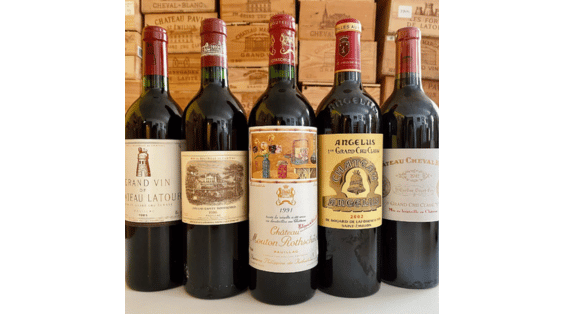
The 2022 edition was marked by an unprecedented event. The celebrated Château Cheval Blanc and Château Ausone, which had always featured at the top of the classification since its creation as Premiers Grands Crus Classés A, had announced in January 2022 that they would not be submitting their candidacy. They were followed a few months later by Château Angélus and Château La Gaffelière.
Cheval Blanc cited "a marketing drift involving the importance of product placement, the frequency of media appearances including press relations and social media, as well as wine tourism infrastructure" among the reasons for its withdrawal.
These withdrawals do not call into question the quality of these châteaux: Ausone, Cheval Blanc and Angélus remain among the most sought-after wines in Bordeaux, but they do highlight the tensions between commercial prestige and institutional recognition.
The 2 current Premiers Grands Crus Classés A: Pavie and Figeac
Château Pavie: The power of the hillside
Château Pavie stands out as one of the most emblematic estates on the Bordeaux right bank. Located in Saint-Émilion and classified Premier Grand Cru Classé A, it embodies viticultural excellence through its history, its terroir and the vision of its owner, Gérard Perse. The vineyard extends over 37 hectares with an ideal full south-facing exposure, benefiting from optimal sunshine that promotes perfect ripeness of the grapes.
In 1998, the château was acquired by Gérard Perse, with the ambition of raising it to the very highest level. Gradually, its cuvées climbed the ranks, reaching the top rung in 2012: Premier Grand Cru Classé A.
Château Pavie fact sheet:
|
Criterion |
Detail |
|
Area |
37 hectares |
|
Grape variety blend |
Merlot 65%, Cabernet Franc 25%, Cabernet Sauvignon 10% |
|
Soils |
Clay-limestone (Merlot), clay-limestone (CF), sandy-clay (CS) |
|
Aging |
18 to 32 months in new oak barrels |
|
Aging potential |
20 to 30 years |
|
Guide price |
€150–400 depending on vintage |
|
Second wine |
Pavie aromas |
On tasting, Château Pavie impresses with its deep, brilliant purple colour. The nose is of remarkable intensity, combining aromas of jammy dark fruits, liquorice, cedar, dark chocolate and soft spices. The aging potential is immense: depending on the vintage, Château Pavie can evolve admirably in the cellar for 20 to 30 years, or even longer, revealing over time notes of leather, truffle and undergrowth.
Best vintages of Château Pavie: 2000, 2005, 2009, 2010, 2015, 2016, 2018, 2019, 2022.
Château Figeac: The Médoc-style elegance of Saint-Émilion
The history of the estate is forever linked to that of another great growth: in the 1830s, Figeac had separated off a 30-hectare parcel which, 20 years later, gave birth to Cheval Blanc.
Unlike most other classified growths in the appellation, which sit on clay-limestone soils, Château Figeac benefits from a gravelly soil of flint and quartz with a subsoil of blue clays — an atypical geological condition from which Figeac draws an uncommon elegance.
Château Figeac fact sheet:
|
Criterion |
Detail |
|
Area |
41 hectares of vines (within a single 54 ha block) |
|
Grape variety blend |
Cabernet Sauvignon 35%, Cabernet Franc 30%, Merlot 35% |
|
Soils |
Gravel, flint, quartz, subsoil of blue clays |
|
Aging |
15 to 20 months in new oak barrels (100%) |
|
Aging potential |
20 years and more |
|
Guide price |
€200–400 depending on vintage |
|
Status |
Promoted to Premier Grand Cru Classé A in 2022 |
The blend of Château Figeac is a masterful combination of Bordeaux grape varieties. Cabernet Sauvignon brings structure and minerality, Cabernet Franc lends elegance and finesse, while Merlot seduces with its roundness and fruitiness. On tasting, this wine shows tannic yet seductive character from its early youth, evolving toward a concentrated, rich, refined and silky whole, with delicate aromas of cedar, dark fruits and mint, and above all a graphite note that adds depth.
Following its promotion in 2022, the average market price of Château Figeac subsequently increased considerably.
Best vintages of Château Figeac: 2005, 2008, 2013, 2015, 2016, 2018, 2019, 2020, 2022.
Pavie vs. Figeac: two visions of excellence
|
Château Pavie |
Château Figeac |
|
|
Style |
Powerful, opulent, rich |
Elegant, taut, "Médoc-style" |
|
Dominant grape variety |
Merlot (65%) |
Cabernet Sauvignon (35%) + CF (30%) |
|
Terroir |
Clay-limestone, south-facing hillside |
Gravel, flint, blue clays |
|
Approachability when young |
After 8–10 years |
After 6–8 years |
|
Maximum aging potential |
30 years+ |
25 years+ |
|
Average price |
200 – 300 € |
250 – 400 € |
|
Owner |
Gérard et Chantal Perse |
Manoncourt family / Castel Group |
The complete hierarchy of the 2022 classification
The 2 Premiers Grands Crus Classés A
- Château Figeac (promoted 2022)
- Château Pavie (since 2012)
Please note: Château Ausone, Château Cheval Blanc and Château Angélus, historically classified A, voluntarily withdrew from the classification in 2022. Their quality remains uncontested on the world market.
The 12 Premiers Grands Crus Classés B (2022 classification)
The 12 Premiers Grands Crus Classés B are: Château Beauséjour Duffau, Château Beau-Séjour Bécot, Château Belair-Monange, Château Canon, Château Canon-La-Gaffelière, Clos Fourtet, Château Larcis-Ducasse, Château La Mondotte, Château Pavie-Macquin, Château Troplong-Mondot, Château Trottevieille and Château Valandraud.
The 4 levels of the hierarchy
|
Category |
Number of châteaux (2022) |
Prestige level |
|
Premier Grand Cru Classé A |
2 |
The absolute pinnacle of Saint-Émilion |
|
Premier Grand Cru Classé B |
12 |
Elite, rivals the 1ers Crus of the Médoc |
|
Grand Cru Classé |
71 |
Recognized quality, excellent consistency |
|
Grand Cru |
200+ |
Appellation designation, not officially classified |
Important: The "A" and "B" tiers do not systematically appear on bottle labels. Always check the exact designation on the label and the vintage in question, as the classification is valid only for the 2022 to 2031 harvests.
The terroir of Saint-Émilion: diversity of soils and grape varieties
The Saint-Émilion Grand Cru appellation sits on a wide variety of high-quality soils, predominantly limestone in composition, notably on a large plateau bordering the medieval town, where alluvial deposits of gravel and sand as well as clay subsoils are also found. The limestone soils allow the vines to draw an active water supply through capillary action.
The vineyard is divided into two main zones:
- The limestone plateau and the hillsides: clay-limestone, dominant Merlot, silky tannins, mineral depth, the zone of the finest terroirs of Pavie, Canon and Troplong-Mondot
- The hillside foothills and the gravel beds: sandy and gravelly, more suited to Cabernet Franc, the historic zone of Figeac, Cheval Blanc and La Conseillante
The best vintages for the Premiers Grands Crus Classés A
|
Vintage |
Overall quality |
Style |
Aging potential |
|
2022 |
★★★★★ Exceptional |
Ideal ripeness, perfect balance |
20–30 years |
|
2020 |
★★★★★ Exceptional |
Concentration, purity, freshness |
20–25 years |
|
2019 |
★★★★★ Exceptional |
Elegance, tension, great classic |
20–25 years |
|
2018 |
★★★★☆ Very great |
Generosity, volume, controlled warmth |
15–20 years |
|
2016 |
★★★★☆ Very great |
Freshness, length, fine acidity |
15–20 years |
|
2015 |
★★★★★ Legendary |
Richness, balance, exceptional aging potential |
20–30 years |
|
2010 |
★★★★★ Legendary |
Power, structure, absolute longevity |
25–35 years |
|
2009 |
★★★★★ Legendary |
Opulence, candied fruits, accessible |
20–30 years |
|
2005 |
★★★★★ Legendary |
Classicism, balance, extreme aging potential |
30 years+ |
|
2000 |
★★★★☆ Very great |
Ripeness, dark fruits, fine elegance |
20–25 years |
Tasting and cellaring: how to get the best from a Premier Grand Cru Classé A
Aromatic profile
On tasting, these exceptional wines are distinguished by:
- Colour: deep purple with garnet highlights, dense and brilliant
- Nose: ripe dark fruits (blackcurrant, blackberry, blueberry), liquorice, cedar, cocoa, soft spices; with age: truffle, leather, undergrowth, tobacco
- Palate: velvety yet structured tannins, generous texture, a persistent finish of 30 to 60 seconds on the greatest vintages
- Distinctive note: a mineral freshness and a graphite note unique to Figeac; a concentrated richness and aromas of cedar for Pavie
Serving and storage tips
- Serving temperature: 17°C, with a slight progression in the glass
- Decanting: recommended for vintages under 10 years old (1 to 2 hours)
- Glass: wide and open, Burgundy-style, to release the complex bouquet
- Storage: dark cellar at 12–14°C, humidity 70–80%, bottles stored on their side, away from vibrations
- Cellaring potential: 15 to 30 years depending on the vintage and the château
Food pairings
|
Wine style |
Recommended pairing |
|
Young, fruity (5–10 years) |
Aged côte de bœuf, herb-crusted lamb, duck breast |
|
Maturity (10–20 years) |
Feathered game (woodcock, pheasant), black truffle, beef Wellington |
|
Great age (20 years+) |
Jugged hare, aged cheeses (old Comté, Saint-Nectaire) |
Frequently asked questions about the Premiers Grands Crus Classés A of Saint-Émilion
What characteristics define the tasting of a Premier Grand Cru Classé A from Saint-Émilion?
- Deep colour, often dark.
- Intense bouquet: dark fruits, spices, floral notes.
- Balanced palate: fine tannins, generous structure, long finish.
These wines offer a rich aromatic palette that evolves over time toward tertiary aromas such as undergrowth and leather. They are also distinguished by a remarkable persistence on the palate.
Can a Premier Grand Cru Classé A be kept in the cellar for a long time?
Yes, these wines are designed for aging. Depending on the vintage and the estate, they develop their full potential after 15 to 30 years, or even longer. Proper storage preserves their balance, freshness and aromatic intensity.
- Dark, humid and temperature-controlled cellar (12–14°C recommended).
- Bottles stored on their side to prevent the cork from drying out.
What is the difference between Premier Grand Cru Classé A, B and Grand Cru Classé?
|
Category |
2022 count |
Requirements |
Average price |
|
Premier Grand Cru Classé A |
2 |
20 vintages evaluated, 50% tasting, exceptional terroir |
150 - 400 €+ |
|
Premier Grand Cru Classé B |
12 |
15 vintages evaluated, strict criteria |
50 – 200 € |
|
Grand Cru Classé |
71 |
Complete application file, consistent quality |
25 – 80 € |
|
Grand Cru |
200+ |
Basic appellation criteria |
15 – 40 € |



COLLECTION NEAR PARIS & VAT REFUND FOR TOURISTS
Free collection in our warehouse near central Paris (92)