Personalise your experience
Change your country, language and currency here whenever you wish.
|
|
|
Must-See Châteaux |
|
|
|
|
|
|
Biodynamic viticulture in Saint-Émilion - Premier Grand Cru Classé B de Saint-Émilion
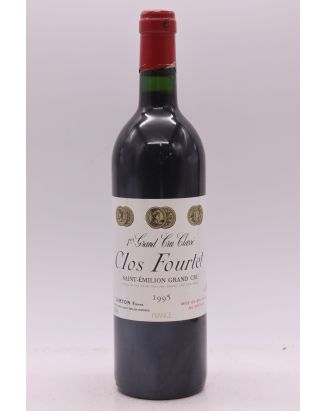
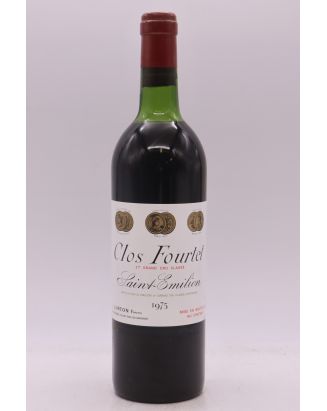
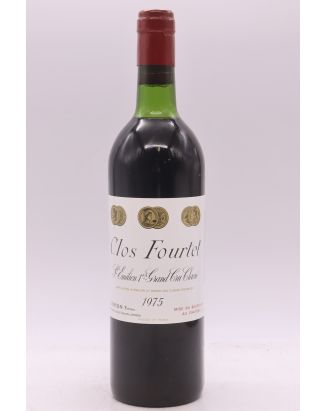
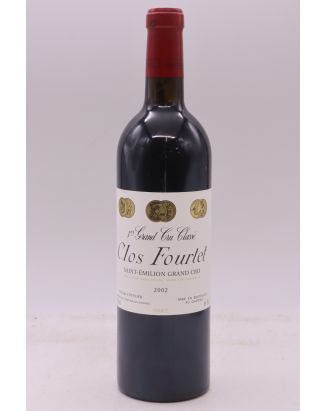
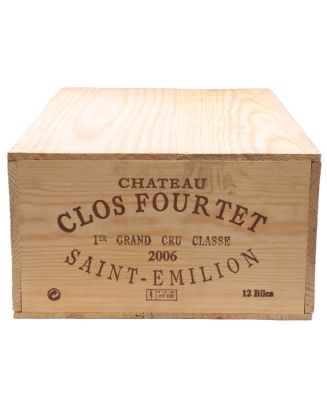
Clos Fourtet, a viticultural jewel of Saint-Émilion, is a historic estate that embodies the excellence of Bordeaux wines. Located at the gates of the medieval city, this Premier Grand Cru Classé B captivates with wines that are both refined and powerful, renowned for their elegance, complexity and ageing potential. This estate, managed by the Cuvelier family since 2001, is a model of innovation and tradition, in harmony with nature and the unique terroir of the region.
Clos Fourtet is an emblematic estate in Saint-Émilion, located on the limestone plateau that immediately adjoins the medieval ramparts of the village. It is part of the Saint-Émilion Grand Cru Classé appellation and benefits from an exceptional geological position: its vines rest on a clay-limestone soil that is particularly well-suited to Merlot, the dominant grape variety in the blend. This location on the edge of the village gives it a unique identity among the great names of the Bordeaux Right Bank.
Among the most remarkable historical vintages of Clos Fourtet, enthusiasts readily mention 1959, considered one of the greatest of the post-war era, as well as 1964, which produced wines of rare concentration on the Right Bank. The 1982 marks a renaissance for Saint-Émilion as a whole, and Clos Fourtet is a fine illustration of this. The years 1989, 1990 and 2000 are also highly sought after for their balance between power and finesse, testament to the estate's exceptional ageing potential.
Patience is an indispensable virtue with Clos Fourtet wines. In great vintages, the wine generally requires a minimum of 8 to 12 years of cellaring after the harvest before it begins to express its full complexity. Bottles from the finest years can be kept and continue to evolve favourably for 25 to 30 years. In its youth, the wine can appear closed and austere; it is with time that it reveals its notes of truffle, candied black fruits, and that chalky minerality which has made its reputation.
Merlot forms the backbone of Clos Fourtet's wines, representing the vast majority of the estate's plantings. It is complemented by Cabernet Franc and, to a lesser extent, Cabernet Sauvignon. This dominance of Merlot on limestone soils gives the estate's wines their characteristic aromatic signature: a velvety texture, silky tannins, and a fruity depth that expresses itself fully with a few years of ageing.
Clos Fourtet stands out above all for its unique underground terroir: beneath the vines lies a network of historic limestone quarries that today serve as natural cellars for ageing the wines. This distinctive feature ensures ideal temperature and humidity conditions, without the need for artificial climate control. The resulting wine style is recognisable for its mineral precision, its tension, and its ability to age with elegance over several decades, which sets it apart from the more opulent profiles of certain neighbouring estates in the appellation.
Yes, Clos Fourtet is among the highest-ranked estates in Saint-Émilion. It is recognised as a Premier Grand Cru Classé B in the official classification of Saint-Émilion wines, a ranking revised periodically that serves as the reference for the appellation. This recognition reflects the estate's consistent quality over the long term as well as the remarkable typicity of its terroir. The classification places Clos Fourtet within the select elite of the Bordeaux right bank, alongside only a handful of properties.
Clos Fourtet, with its evocative name, traces its origins to an ancient fort, the "Camp Fourtet", which protected the town of Saint-Émilion in the Middle Ages. As early as the 18th century, this site was transformed into a wine estate under the impetus of the Rulleau family. The vineyard was then enclosed by walls, hence its current name "Clos", meaning a delimited and cultivated plot of land. During this period, Clos Fourtet quickly acquired a reputation for excellence, driven by the quality of its clay-limestone terroir and its commanding position on the Saint-Émilion plateau.
In 1919, the celebrated Ginestet family, owners of several renowned estates, acquired Clos Fourtet, further enhancing its prestige. Later, in 2001, Philippe Cuvelier purchased the property and, together with his son Matthieu, ushered in a new era of modernisation while respecting the estate's traditions. Through strategic investments and a commitment to organic and biodynamic viticulture, the Cuvelier family enabled Clos Fourtet to once again become one of the region's essential references.
The terroir of Clos Fourtet is one of the most prestigious in Saint-Émilion, anchored on the famous limestone plateau with astéries, a rocky formation that imparts an unrivalled freshness and minerality to the wines. This shallow clay-limestone soil benefits from excellent natural drainage, ideal for vine cultivation. The vineyard, covering 20 hectares, is planted predominantly with merlot (85%), a grape variety that brings roundness and suppleness to the wines. The 10% cabernet sauvignon and 5% cabernet franc complete this blend, adding aromatic complexity and ageing potential.
The vineyard is characterised by a high planting density of 6,000 to 9,000 vines per hectare, in order to maximise fruit quality. The average age of the vines is 35 years, with a constant renewal of the plots to preserve the youth and vigour of the vineyard. This particular attention paid to vineyard management allows for controlled yields of under 40 hectolitres per hectare, thereby guaranteeing an optimal concentration of aromas in each grape.
The winemaking at Clos Fourtet combines tradition and innovation to produce wines of exceptional quality. The process begins with meticulous hand-harvesting, ensuring that only the finest fruit is selected. The grapes are then vinified in small temperature-controlled stainless steel vats, which allow for precise control of fermentation temperature and thus better extraction of aromas and tannins.
Malolactic fermentation, essential for softening the acidity of the wines, takes place in French oak barrels, of which 60 to 80% are new. This choice allows the wine to benefit from an elegant tannic structure and aromatic subtlety while respecting the fruit. The ageing lasts from 14 to 18 months, an optimal duration for refining the wines and imparting to them a velvety texture and a great capacity for ageing.
The estate is in full transition towards biodynamics, an environmentally respectful approach that is reflected in the quality of the wines. This farming method promotes the natural balance of the soils and vines, while enhancing the purity of the aromas and the finesse of the tannins. The work in the vineyards and the cellars is supervised by a team of renowned oenologists, notably Stéphane Derenoncourt, celebrated for his expertise in expressing terroirs, and Jean-Claude Berrouet, known for his work at Château Pétrus.
Clos Fourtet
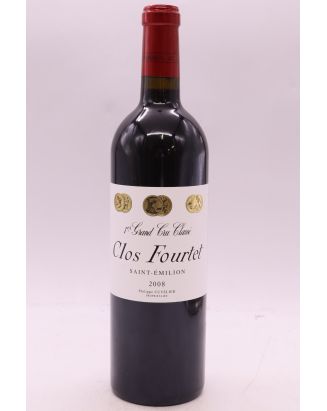
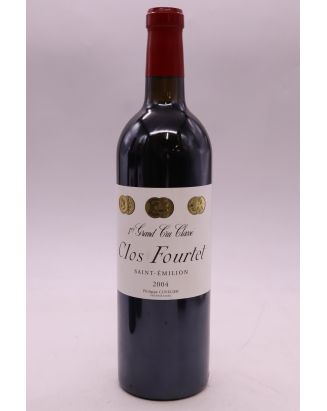
The fine wine of Clos Fourtet is the quintessence of this unique terroir. Predominantly composed of merlot, it is distinguished by its deep colour, its complex nose blending ripe dark fruits, gentle spices, and a hint of minerality characteristic of the limestone. On the palate, it is a powerful yet silky wine, with melted tannins and a balanced acidity, imparting a great freshness. This wine evolves magnificently with time, developing more subtle notes of undergrowth, cocoa, and truffle.
Closerie de Fourtet
The estate's second wine, Closerie de Fourtet, comes from the estate's young vines and its less prestigious plots. It offers a more accessible expression of the Clos Fourtet terroir, with indulgent aromas of red fruits, a more supple structure, and a round and elegant palate. This lighter wine is ideal for earlier drinking while retaining the estate's distinctive style.
Château Les Grandes Murailles
In 2013, the Cuvelier family acquired Château Les Grandes Murailles, a vineyard of only 2 hectares located in the immediate vicinity of Clos Fourtet. This micro-terroir, also planted predominantly with merlot, produces wines of great aromatic intensity, with firm tannins and a lively acidity, giving it an excellent ageing potential. Integrated since the 2022 vintage into the cuvées of Clos Fourtet, this wine brings an additional dimension to the estate's entire range of wines.
Château Côte de Baleau
Acquired in 2013, Château Côte de Baleau completes the range of cuvées produced by the Cuvelier family. This domaine de 18 hectares, also located on the Saint-Émilion plateau, is recognised for its fine and elegant wines, with a marked tannic structure and aromas of dark fruits and spices. As with Clos Fourtet, particular attention is paid to biodynamics and plot-by-plot winemaking.
Saint-Émilion, a jewel of the Bordeaux wine region, has produced over the years vintages of exceptional quality, delighting lovers of great wines. Among the legendary vintages, one can cite 1947, 1959, and 1961, true icons that have marked the history of Bordeaux wines. The famous 1982 remains an undisputable reference as well. The following decades were no less remarkable, with outstanding vintages such as 1990, 1995, 1998, 2000, 2001, 2003, and 2005, all acclaimed for their richness and ageing potential. More recently, the vintages 2008, 2009, 2010, 2012, 2014, 2015, 2016, 2018, 2019, and 2020 have shone for their balance and depth, reaffirming Saint-Émilion's reputation as one of the most sought-after appellations in Bordeaux, where each new year continues to captivate lovers of great wines with its consistent quality and elegance.
The classification of Premiers Grands Crus Classés B of Saint-Émilion, revised every 10 years, brings to light exceptional châteaux from the right bank vineyard. Among those that continue to feature in this prestigious category, one finds iconic names such as Château Beau-Séjour Bécot, Château Beauséjour Héritiers Duffau Lagarrosse, Château Bélair-Monange, Château Canon, Château Pavie-Macquin, Château Troplong-Mondot, Château Trottevieille, and Clos Fourtet. Others, promoted in 2012, such as Château Canon-La-Gaffelière, Château Larcis-Ducasse, Château La Mondotte, and Château Valandraud, also illustrate the ever-rising quality of the region's wines. On the other hand, certain châteaux are no longer classified, such as La Gaffelière (since 2022) and Magdelaine (since 2006). This constant renewal guarantees the excellence and evolution of the Saint-Émilion vineyard, where tradition and innovation blend harmoniously.
Clos Fourtet embodies the perfect harmony between tradition and modernity, respect for the terroir and innovation. With elegant and complex wines, produced through environmentally respectful viticulture, the estate ranks among the greatest in Saint-Émilion. The Cuvelier family's constant efforts to elevate the quality of the wines to the highest level result in cuvées that combine power, finesse, and an exceptional ageing potential.
COLLECTION NEAR PARIS & VAT REFUND FOR TOURISTS
Free collection in our warehouse near central Paris (92)