Pegau

Pegau, a flagship estate of Châteauneuf-du-Pape

Wines from Domaine Pégau: buy at the best price

Domaine Pégau is located in Châteauneuf-du-Pape and is one of the flagship estates of this appellation. It was Laurence Féraud, daughter of Paul Féraud, who proposed to her parents in 1987 to create a domaine du name Pégau by separating 7 ha of vineyard from the Domaine Féraud et Fils. Today, the estate has 21 ha of vines in the AOC Châteauneuf-du-Pape as well as 41 ha of vineyard in the AOC Côtes du Rhône (though the Côtes du Rhône wines are produced under the Château Pégau label). 

Read more
See more
Filters

Price

€120.00 - €880.00

Appellation

No choice available on this group

Color

Parker WA rating

89 - 100

Burghound rating

No choice available on this group

Revue du Vin de France rating

No choice available on this group

Bettane & Desseauve rating

18 - 19

Prices drop

No choice available on this group

Download this list
There are 2 products.
Download this list
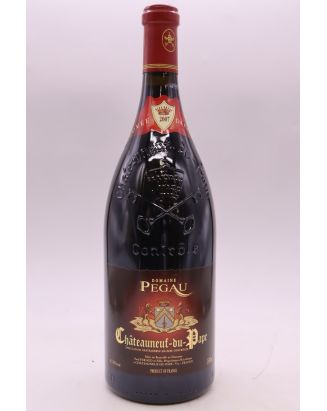
Pegau Châteauneuf du Pape Cuvée da Capo 2007
Last one !
1 in stock
124359
Red
150cl
100/100
96/100
18.5/20
Add to cart
Rhône | Châteauneuf du Pape

Pegau Châteauneuf du Pape Cuvée da Capo 2007 Magnum

€864.00 inc-VAT per bottle
€720.00 ex-VAT
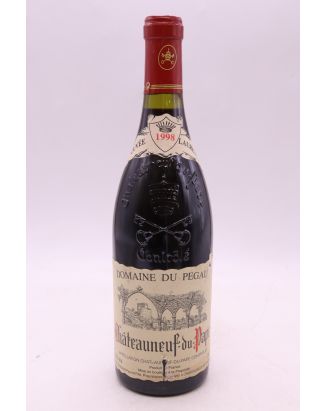
Pegau Châteauneuf du Pape Cuvée Laurence 1998
2 in stock
128853
Red
75cl
Very slightly damaged
93/100
18/20
Add to cart
Rhône | Châteauneuf du Pape

Pegau Châteauneuf du Pape Cuvée Laurence 1998

€120.00 inc-VAT per bottle
€100.00 ex-VAT

The History of Domaine du Pégau

The Féraud family has grown vines in Châteauneuf-du-Pape since 1670, alongside cherry and olive trees, as was customary in the mixed farming of old Provence. The current generation’s great-grandparents and then grandparents, Elvire and Léon Féraud, expanded the estate. Paul Féraud, the youngest of four children, began working in the family vineyards at fourteen. For many years, most of the production was sold in bulk to the region’s major wine merchants, including Jaboulet Aîné and Guigal. In 1964, Paul took a decisive first step, bottling five thousand bottles under his own name.

The real turning point came twenty years later. Laurence, the only child of Paul and Odette, studied business and marketing in Paris before holding various wine-sales positions. Full of ideas, she returned to Châteauneuf and proposed that she and her father create a family estate with a name and label of their own. Domaine du Pégau was born in 1987 from vineyards previously farmed under the Féraud Fils name. At the time, the property had just seven hectares, and much of the harvest was still sold in bulk. Laurence gradually took on more responsibility, bought the best parcels of old vines as they became available, built a new winery and developed exports. The entire 1990 vintage was sold in bottle, and the 1992 vintage then won considerable critical acclaim, firmly establishing Pégau among the greats.

Terroirs and Vineyards of Domaine du Pégau

The estate’s vineyards are spread across some of the appellation’s finest areas, with a finely detailed approach to individual parcels. Three terroirs underpin its most ambitious cuvées. La Crau’s sandy soils bring finesse and elegance. Les Escondudes lies on a bed of large rounded stones that release the day’s heat at night. Montpertuis offers a mix of stones and red clay that lends structure and depth.

Most of the vines used for the top cuvées are a century old. Grenache Noir dominates the blends, accounting for 70 to 90% depending on the cuvée, alongside Syrah, Mourvèdre, Counoise and several of the thirteen grape varieties permitted in the appellation, in keeping with Châteauneuf tradition. The whites feature Clairette, Grenache Blanc, Roussanne and Bourboulenc. The vineyards are farmed using a biodynamic approach, with naturally low yields due to the age of the vines. Harvesting is entirely by hand, with rigorous sorting and staggered picking dates: grapes destined for Da Capo are always picked last, at full ripeness.

Winemaking at Domaine du Pégau

Pégau’s methods are thoroughly traditional and have changed very little over generations. The grapes are fermented as whole clusters, without destemming, in old concrete vats. Fermentation begins spontaneously with native yeasts alone, without additions, and maceration is lengthy, with no attempt at excessive extraction.

Aging takes place entirely in large, old oak casks, never new oak, allowing the terroir to speak without embellishment. Its duration varies by cuvée and helps define each one: around eighteen months for Cuvée Réservée, up to thirty-six months for Cuvée Laurence, and a full two years for Da Capo. The wines are bottled without excessive filtration. The resulting style is immediately recognizable: full-bodied, firmly structured Châteauneuf wines with aromas of lightly cooked red and black fruit, licorice, dried herbs, tobacco, smoked meat and white pepper, along with the noble rusticity and garrigue minerality that give the estate its distinctive character. Built to age, these wines can develop greater complexity over thirty or forty years.

The Cuvées of Domaine du Pégau

Châteauneuf-du-Pape Cuvée Réservée Rouge: the estate’s historic, emblematic cuvée, a blend of approximately 85% Grenache, 9% Syrah and 4% Mourvèdre, rounded out by other local varieties. Fermented as whole clusters and aged for eighteen months in large oak casks, it has a ruby color that develops brick hues, aromas of cedar, leather, dried flowers and cherry, and a palate combining red currant, raspberry, forest floor and leathery notes. Persistent minerality, fine acidity and exceptional length make it a benchmark for traditional Châteauneuf.

Châteauneuf-du-Pape Cuvée Réservée Blanc: the estate’s white wine, produced in small quantities from the appellation’s classic grape varieties. Rich and full-bodied, with notes of candied pineapple, yellow fruit and flowers, and a deep, precisely defined palate where richness is balanced by a fine tannic structure.

Châteauneuf-du-Pape Cuvée Laurence: made from the same initial selection as Réservée but aged for roughly twice as long—thirty-six months in large oak casks. According to Laurence Féraud herself, this cuvée aims to recreate what Réservée becomes after about ten years in the cellar. The result is a more integrated, mellow wine with already polished tannins. Only around six hundred and fifty cases are produced each vintage.

Châteauneuf-du-Pape Cuvée Da Capo: the estate’s ultimate icon and one of the appellation’s most expensive and sought-after wines. First made in the 1998 vintage, it has been produced only a handful of times since, exclusively in years deemed exceptional. Its name, borrowed from musical terminology, evokes the opera of grape varieties that is Châteauneuf-du-Pape and literally means “back to the beginning.” It comes from a selection of the estate’s oldest vines, often a century old, across the three terroirs of La Crau, Les Escondudes and Montpertuis, with 70 to 90% Grenache depending on the year. Two years in large oak casks yield a wine of extraordinary concentration, with notes of dried rose petals, cooked black fruit, licorice, tobacco and smoked meat. Built like a brick wall, it demands—and rewards—patience.

Châteauneuf-du-Pape A Tempo Rouge: a more recent estate cuvée whose name continues the musical nod of Da Capo. It offers a more approachable, supple expression of the Pégau style while retaining traditional whole-cluster fermentation and aging in large oak casks.

Châteauneuf-du-Pape A Tempo Blanc: the white counterpart to this cuvée, broad and generous, with ripe white fruit, flowers and a hint of candied citrus, plus a saline finish that gives it lift.

Châteauneuf-du-Pape Cuvée Inspiration: an exceptional cuvée produced in tiny quantities and regularly awarded 97 points by international critics. A collector’s bottle for the most dedicated enthusiasts.

Châteauneuf-du-Pape Cuvée Ella: another of the estate’s great rarities, one of the world’s highest-rated Châteauneuf wines, reaching 99 points. An ultimate selection of the finest lots, in the tradition of the one-off cuvées Laurence Féraud favors.

Châteauneuf-du-Pape Cuvée P.O.L: a rare, occasional cuvée born of a distinctive parcel selection, in the spirit of the tribute bottlings the estate produces from time to time.

Cuvées Maxime et Justine: two one-off bottlings made in honor of the family’s children, from the 1995 and 1997 vintages respectively. Made from a selection of the finest lots, they were, in a sense, precursors to Da Capo.

Châteauneuf-du-Pape Sélection Laurence Féraud: the estate’s négociant label, made from grapes or wines carefully selected by Laurence Féraud. It offers the Pégau style at a more accessible price.

Plan Pégau Rouge: a generous, appealing Vin de France conceived as an introduction to the estate. Ripe fruit, gentle spice and immediate suppleness offer excellent value.

Château Pégau Côtes du Rhône Cuvée Maclura: sourced from the forty-one hectares acquired by the family, this cuvée offers a classic Rhône profile of red fruit, garrigue and pepper, with supple tannins and plenty of appeal.

Château Pégau Côtes du Rhône Villages Cuvée Setier: a step up in the Château Pégau range, denser and more structured, with real substance and good aging potential at an approachable price.

Château Pégau Côtes du Rhône Cuvée Lône: a lively, fruit-forward cuvée made for the everyday table, offering the estate’s signature aromas in a lighter style.

Pink Pégau Rosé: the family’s rosé, a fresh, crisp Vin de France with tart red-fruit flavors. A convivial summer wine that rounds out the range perfectly.

WHAT THEY SAY ABOUT US

5 good reasons to buy wines on V&M

...

EXPRESS DELIVERY

In a secure polystyrene packaging

...

INTERNATIONAL SHIPPING

Find out more about VAT-EX sale for outside EU deliveries

...

COLLECTION NEAR PARIS & VAT REFUND FOR TOURISTS

Free collection in our warehouse near central Paris (92)

...