Domaine de la Pinte

La Pinte wines in the Jura: beautiful wines biodynamic in Arbois

Wines from the domaine de la Pinte: purchase at the best price

Located at the lieu-dit La Pinte à la Capitaine, a few kilometers from Arbois, the domaine de la Pinte is one of the great names of the Jura vineyard. Founded in 1953 by Roger Martin, who planted fourteen hectares of savagnin and made it the largest estate dedicated to this grape variety, it now extends over thirty-four hectares between Arbois and Pupillin. A pioneer of organic farming from 1999 and then of Demeter-certified biodynamic farming since 2009, it showcases the full range of Jura wines on the blue Lias marls.

Read more
See more
Filters

Price

€0.00 - €40.00

Region

Appellation

Volume

Parker WA rating

No choice available on this group

Burghound rating

No choice available on this group

Revue du Vin de France rating

No choice available on this group

Bettane & Desseauve rating

No choice available on this group

Prices drop

No choice available on this group

Download this list
There are 3 products.
Download this list
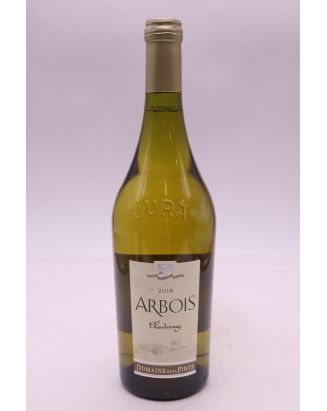
La Pinte Arbois Chardonnay 2018
6 in stock
127738
White
75cl
Add to cart
Jura | Arbois

La Pinte Arbois Chardonnay 2018

€21.60 inc-VAT per bottle
€18.00 ex-VAT
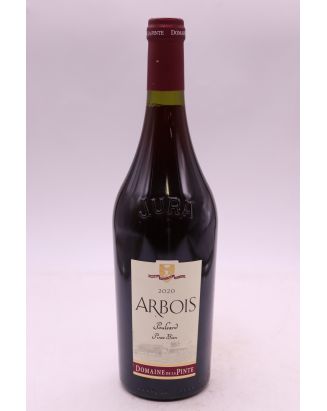
La Pinte Arbois Poulsard Pinte Bien 2020
2 in stock
127782
Red
75cl
Add to cart
Jura | Arbois

La Pinte Arbois Poulsard Pinte Bien 2020

€19.80 inc-VAT per bottle
€16.50 ex-VAT
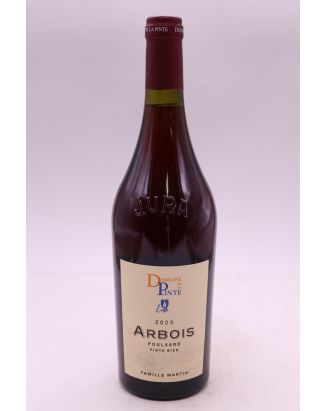
La Pinte Arbois Poulsard Pinte Bien 2023
2 in stock
127739
Red
75cl
Add to cart
Jura | Arbois

La Pinte Arbois Poulsard Pinte Bien 2023

€16.80 inc-VAT per bottle
€14.00 ex-VAT

History of Domaine de la Pinte

In 1953, Roger Martin wrote a chapter in the history of vin jaune. At the La Pinte à la Capitaine vineyard site, on the blue Lias marl in the heart of the Arbois appellation, he planted fourteen hectares of Savagnin, making his property the Jura's largest vineyard devoted to the grape at the time. As the region struggled to recover from phylloxera and two wars, this commitment to its most demanding grape took vision as well as courage. Yet Arbois, whose name comes from the Celtic roots ar and bos, meaning fertile land, had been the first French AOC to be recognized, in 1936.

His son Pierre Martin succeeded him and continued his work, expanding the estate to thirty-four hectares while retaining the seventeen hectares of Savagnin that are its hallmark. In 1999, the property made the bold decision to convert its entire vineyard to organic farming, well before the movement became widespread in the region. Another milestone followed in 2009 with a full transition to biodynamic farming, certified by Demeter. Working first with his estate manager Samuel Berger and later with a team that today includes a director and cellar master, Pierre Martin has made La Pinte an essential reference for understanding the richness and depth of great Jura wines. The estate also keeps a few older vintages in its seventy-meter-long vaulted cellars, much to the delight of enthusiasts.

Terroirs and Vineyards of Domaine de la Pinte

The vineyard extends across the terroirs of Arbois and Pupillin, at an altitude of around four hundred meters, on the band of blue Lias marl that runs from Arbois to Château-Chalon and forms Savagnin's natural home. These deep, cool clay soils retain water and give the grape its acidic structure and legendary ability to withstand years of aging under a veil of yeast. The estate devotes seventeen hectares to it, half its total area.

The other grape varieties each have their preferred soils. The Jura reds—Poulsard on seven hectares, and Trousseau and Pinot Noir on four hectares—are planted on red Triassic marl, which gives them body and color while preserving their freshness. Chardonnay, on six hectares, and the rare Melon à Queue Rouge, an old variety related to Chardonnay that has almost disappeared from the vineyards, grow on Pupillin's lighter clay-limestone soils, notably at the Fontenelle vineyard site, a plateau crossed by a few seams of blue marl. Tillage is deliberately shallow to avoid disrupting the soils, and the estate uses compost, horn manure and horn silica to foster harmony among microorganisms, minerals, trace elements and soil fauna. The grapes are, of course, harvested entirely by hand.

Winemaking at Domaine de la Pinte

Biodynamics does not stop at the cellar door: by encouraging native yeasts to develop on the grape skins, it allows fermentation to begin spontaneously, without added yeast or adjustments. Sulfur is kept to the strict minimum, and winemaking remains gentle, with light extraction for the reds to preserve the finesse characteristic of Poulsard and Trousseau.

The wines are aged in tanks or previously used oak vessels—large casks, demi-muids and barrels—in the estate's historic vaulted cellars, which provide ideal cool, humid conditions. This variety of vessels allows each cuvée to be refined according to its character, yielding wines that can be described as elegant and fresh. In keeping with Jura tradition, two approaches coexist: topped-up wines, whose barrels are regularly replenished to preserve the fruit's vibrancy, and oxidative wines, left untopped beneath a protective veil of yeast that lends aromas of walnut, almond and spice. Vin jaune is aged for the required six years and three months before bottling in clavelins.

The cuvées of Domaine de la Pinte

Arbois Chardonnay is the ideal introduction to the range. Pale, bright yellow in color, it has an expressive nose of ripe white fruit, pear, pineapple and a floral touch. The palate opens broad and structured, with lovely freshness and fine minerality. A balance of tension and roundness highlights its generous, pure character, leading to a long, saline and slightly spicy finish. Chardonnay Fonteneille, from the Arbois-Pupillin appellation, comes from the clay-limestone plateau of the Fontenelle vineyard site, crossed by seams of blue marl. Aged in demi-muids, it gains complexity and elegance, with a long, mineral and slightly saline finish, and will age well for several years. Melon à Queue Rouge, an exceptionally rare wine made from an old grape variety that has almost disappeared, offers a distinctive expression, broader and spicier than classic Chardonnay.

Savagnin Ouillé 36 mois reveals the Jura's signature grape in its non-oxidative form. Aged for three years in barrels that are regularly topped up, it combines vibrant acidity with a silky texture, aromas of candied citrus, stone fruit and sweet spices, and a remarkable saline finish. Cuvée d'Automne, made from eighty percent Savagnin with Chardonnay and vinified oxidatively, is rich, full-bodied and generous in both texture and flavor. The nose offers lovely complexity centered on fresh, candied and dried fruit; the palate opens silky, while an acidic finish brings welcome freshness. Cuvée Pierre, pure Savagnin aged for thirty-six months under a veil of yeast, takes the oxidative style further, with fresh walnut, curry and almond set against a strikingly precise structure.

Among the reds, Poulsard Pinte Bien showcases the grape's pale color and great aromatic delicacy, with small red berries and thirst-quenching freshness. Perfect as an aperitif with cured meats or with grilled food in summer, it can be enjoyed now or kept for up to eight years. Poulsard L'ami Karl offers a rarer, deeper expression. Trousseau, from old vines planted on red marl, reveals a firmer structure, powerful red-fruit aromas and a complex, generous palate, with excellent aging potential. La Capitaine, a blend of Pinot Noir, Poulsard and Trousseau, pays tribute to the estate's historic vineyard site and offers a balanced, fruity and appealing red.

Wines aged under a veil of yeast are the pinnacle of production. Arbois Vin Jaune, pure Savagnin aged in barrel for six years and three months without topping up or racking, then bottled in a 62-centiliter clavelin, offers a rarely matched intensity of aromas: walnut, curry, baked apple, spices and dried fruit, carried by lively acidity and an exceptionally long finish. The estate also makes Château-Chalon, the premier appellation reserved exclusively for vin jaune, an even denser, more powerful wine that can age for decades. Both are magnificent with aged Comté, morels or chicken in cream sauce.

The range also includes many specialties. Crémant du Jura, made using the traditional method, charms with its fine bubbles and freshness. Sav'Or is a skin-contact wine inspired by Georgian methods dating back nearly eight thousand years: white grapes macerate with their skins and seeds for fifteen days, producing an amber wine with a distinctive texture and great aromatic richness, a link between one of winemaking's oldest traditions and contemporary Jura expression. Macvin du Jura, a fortified wine made by adding the estate's marc brandy to grape must, offers notes of candied fruit, honey and spice. Vin de Liqueur continues in the same indulgent vein. Vin de Paille, made from grapes dried for several months on racks and then aged for an extended period, concentrates dried apricot, quince and candied fruit in a lusciously sweet wine with remarkable freshness. Finally, Vieux Marc du Jura, distilled from the property's grape pomace and patiently barrel-aged, rounds out the range with a warm, fragrant eau-de-vie.

WHAT THEY SAY ABOUT US

5 good reasons to buy wines on V&M

...

EXPRESS DELIVERY

In a secure polystyrene packaging

...

INTERNATIONAL SHIPPING

Find out more about VAT-EX sale for outside EU deliveries

...

COLLECTION NEAR PARIS & VAT REFUND FOR TOURISTS

Free collection in our warehouse near central Paris (92)

...