Pignier Côtes du Jura GPS Vin Blanc d'Antan 2022
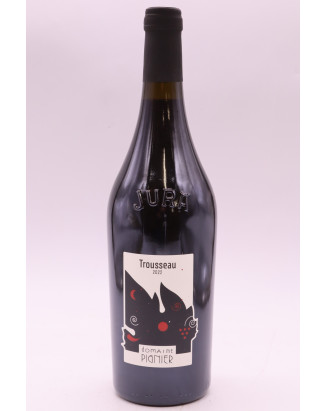
Pignier Côtes du Jura Trousseau 2022
Personalise your experience
Change your country, language and currency here whenever you wish.
|
|
|
Must-See Châteaux |
|
|
|
|
|
|
|
|
Domaine Pignier in Montaigu: a historic estate in the Jura
Perched on the heights of Montaigu, above Lons-le-Saunier, Domaine Pignier is one of the great names of the Jura vineyard and one of France's historic references in biodynamic viticulture. Housed in the cellier des Chartreux, a former monastery whose vaulted cellars date back to the 13th century, the Pignier family has been working this estate since 1794, now in its seventh and eighth generation. Across some twelve hectares under the Côtes du Jura appellation, certified Demeter, they produce the full range of Jura wines.
It all began in the 13th century with Carthusian monks, the first to plant vines on the slopes of Montaigu, near Lons-le-Saunier in the foothills of the Jura’s Revermont region. They built a wine cellar and vaulted Gothic cellars that remain intact today and are a source of pride for the estate. Secularized during the Revolution, the property was sold as national property and passed briefly through the hands of Rouget de Lisle before the Pignier family acquired it in 1794. It has remained in the family ever since. The village of Montaigu, once a stronghold protecting the saltworks of Lons-le-Saunier, now has just one commercial winegrowing estate: the Pigniers’.
The children of Paulette and François Pignier, Marie-Florence, Antoine and Jean-Étienne took over the estate together in the early 1990s. They then made a radical change, rethinking vineyard practices, winemaking and the style of the wines. The first organic trials began in 1998, the entire vineyard converted to biodynamics in 2002, and Demeter certification followed in 2003, at a time when the approach was still viewed with skepticism in the region. Thibaut, Antoine’s son, joined the siblings in 2022 and represents the eighth generation. Awarded two stars by the Guide de la Revue du Vin de France and multiple accolades by the Guide Hachette, the estate has established itself as one of the Jura’s finest ambassadors.
The vineyard covers about twelve hectares in the Côtes du Jura AOC, spread across the slopes of two steep-sided limestone valleys flanking Montaigu: the Val de Vallière and the Val de Sorne. Two blocks form the core of the estate. East- and northeast-facing En Boivin comprises 5.5 hectares of vines on micaceous clay marls of the Lias and sandstone-bearing limestone, within a fourteen-hectare property dotted with ponds, groves and animal enclosures. South- and southwest-facing Les Gauthières has 6 hectares planted on variegated Keuper marls and Gryphaea-bearing limestone, with embankments, fruit-bearing shrubs and a stream crossing the parcel. A small 55-are parcel, Derrière la Ville, on limestone scree, is reserved for Trousseau.
Biodynamics shapes every aspect of work in the vineyard: horn manure, silica, herbal infusions, fava beans sown between the rows and grown on the estate, and the gradual restoration of old dry-stone retaining walls. Apple, mirabelle plum and pear trees have been replanted among the vines to restore the biodiversity of a century ago. Alongside Chardonnay, Savagnin, Trousseau (in four different massal selections) and Poulsard, the estate preserves a valuable collection of old grape varieties that predate the appellations: Argant, Petit Béclan, Enfariné, Gamay Blanc and Melon à Queue Rouge. Harvesting is exclusively by hand, with sorting in the vineyard and transport in small crates.
The estate categorically rejects purchased grapes: every cuvée is made solely from its own harvest. Pressing is slow, and fermentation starts with native yeasts from the parcels, with no commercial yeast, chaptalization or winemaking additives. For the reds, the grapes are destemmed but never pumped; a starter culture is prepared with the estate’s own yeasts, and maceration follows a twenty-eight-day lunar cycle. Yields are deliberately low, around 30 hectoliters per hectare for Trousseau, a grape variety that has become a house specialty.
The 13th-century cellars house a remarkable range of vessels: large oak casks, 228-liter oak barrels, 500-liter demi-muids, concrete eggs and ovoid vats, diamond-shaped tanks, and terracotta jars and amphorae. Aging lasts from twelve to forty months depending on the cuvée, with the floral whites topped up and the traditional wines left untopped beneath a veil of yeast. Sulfur levels are very low, around 15 to 20 mg/L in the reds and 20 to 50 mg/L in the dry whites, with several cuvées vinified without any added sulfites. Bottling takes place on a flower day according to the lunar calendar, using natural corks branded with a hot iron.
GPS: the estate’s old-fashioned white wine, from a traditionally mixed-planted parcel in the steep-sided Val de Sorne valley. It brings together about 40% Gamay Blanc (the local name for Chardonnay), 40% Poulsard and 20% Savagnin, supplemented by a collection of old grape varieties. The three main varieties are pressed together, aged in barrels without added sulfur and bottled seven months after harvest. Pale gold in color, with a floral, fruity nose and a savory, crystalline palate.
Chardonnay de la Reculée: from the steep-sided valley of the Val de Vallière, on fossil-rich, dark blue micaceous marls, and made from a massal selection of melon à queue rouge. Slowly pressed and transferred to barrels without settling or racking, then stirred and regularly topped up for twelve to eighteen months. A floral, full-bodied yet fresh white, perfect with shellfish and grilled fish.
Gamay Blanc: a tribute to the traditional Jura name for Chardonnay, this cuvée, made from the estate’s old local vine selections, stands out for its pure fruit and tension. Aged in the cool cellars of the Carthusian monks, it offers a direct, luminous expression of Montaigu’s marls.
Sauvageon: the house’s topped-up Savagnin, grown on Liassic marls in the En Boivin parcel. After slow pressing, it ferments and ages for twelve months in a concrete egg, where the constant movement of the lees nourishes the wine and heightens its mineral expression. Pale gold in color, with a generous, intense nose and a palate of remarkable finesse and purity.
Cellier des Chartreux: Chardonnay from the En Boivin vines, aged for four years under a veil of yeast in the purest Jura tradition. Rich and expansive, it reveals notes of fresh walnut, apple and spice, with remarkable length. A white built for long aging that has impressed wine guide tasters on several occasions.
Savagnin: a traditional Savagnin aged for several years without topping up, under a veil of yeast in the vaulted cellars. Powerful, with notes of green walnut and curry and a vibrant salinity, it is an ideal match for aged Comté, fish in sauce and morel dishes.
Poulsard: gently vinified without extraction, this very pale red is all about finesse and freshness. Red berries, gentle spices and dried flowers come together in a light, easy-drinking wine with very little added sulfur, best served slightly chilled.
Trousseau: the house specialty, sourced in part from the south-facing Derrière la Ville parcel on limestone scree. A long maceration timed to the lunar cycle is followed by ten months of aging in oak barrels and demi-muids. Garnet in color, with aromas of ripe red fruit, spices and animal notes, present but silky tannins, and lovely freshness on the finish.
Trousseau Les Gauthières: a single-parcel wine from Trousseau vines planted on Gryphaea-bearing limestone on the southwest-facing slope, aged in terracotta jars. Deeper and more complex than the classic Trousseau, it gains tension and mineral precision and can age for several years.
À Table avec Léandre: a surprising, limited-production cuvée blending old red grape varieties preserved by the estate, including Argant, Petit Béclan and Enfariné, all predating phylloxera and the appellations. A distinctive, fresh wine that preserves the memory of the Jura before the AOCs.
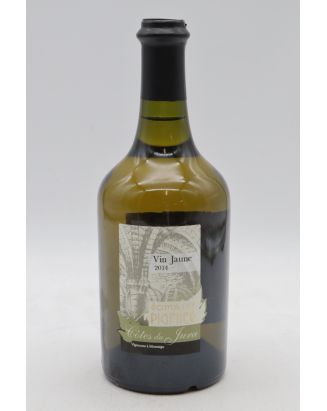
Vin Jaune: made from Savagnin grown in En Boivin, it ages for more than six years under a veil of yeast, without topping up or racking, before being bottled in 62 cl clavelins. Green walnut, curry, saffron and dried fruit create a wine of rare intensity, capable of aging for decades. The estate’s cellars even hold bottles dating back to the 19th century.
COLLECTION NEAR PARIS & VAT REFUND FOR TOURISTS
Free collection in our warehouse near central Paris (92)