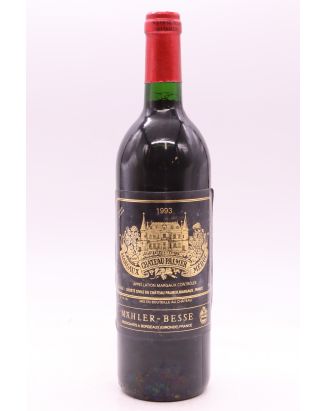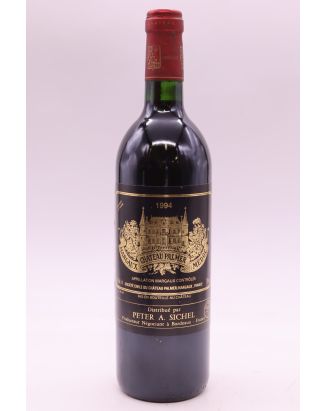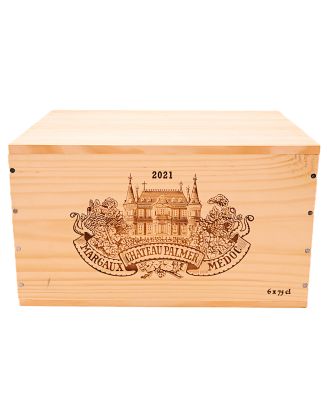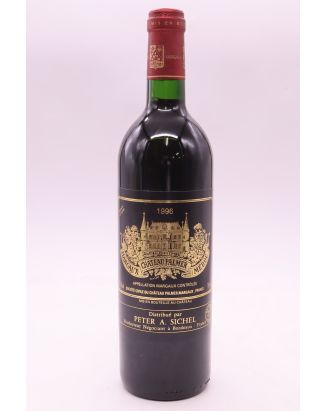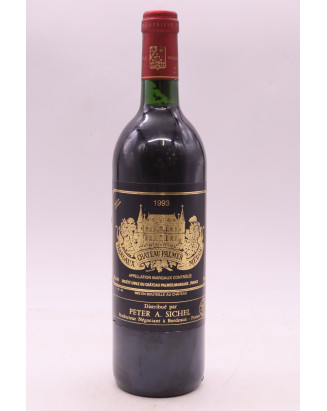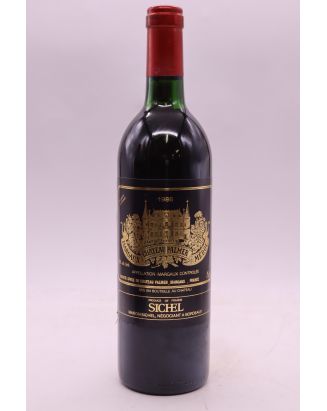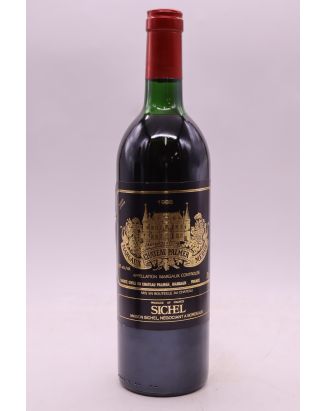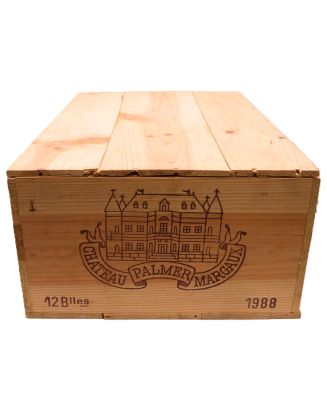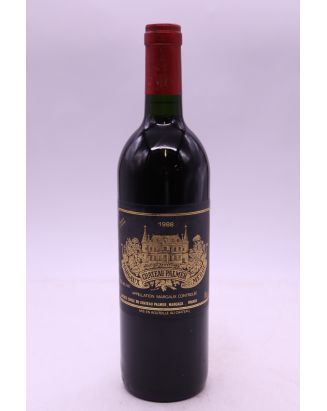
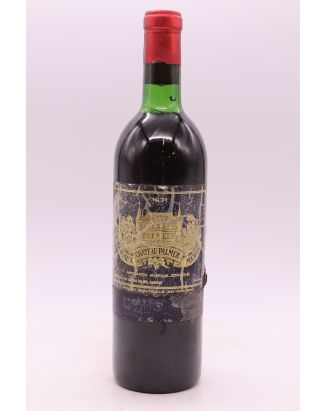
Château Palmer holds a unique place in the Bordeaux wine landscape. Classified as a Third Grand Cru Classé in 1855, it regularly surpasses this classification thanks to an exceptional terroir located in Margaux, composed of deep gravels and a remarkable proportion of clay that gives its wines a unique richness and complexity. The grape variety composition, with a significant share of Merlot alongside Cabernet Sauvignon, brings a silky roundness and an aromatic depth that distinguish Château Palmer from its neighbours. Vintage after vintage, the estate demonstrates a consistency and qualitative ambition that earn it a worldwide reputation far beyond its official ranking.
Alter Ego de Palmer is the estate's second wine, created in 1998 not as a simple declassification, but as a fully-fledged cuvée with its own identity. Where Château Palmer focuses on depth, concentration and extended cellaring, Alter Ego de Palmer favours freshness, accessibility and a more immediate fruitiness. Its blend often incorporates a higher proportion of Merlot, which gives it a velvety texture and a seductive character from its earliest years. Alter Ego is thus an excellent introduction to the world of the estate, offering the aromatic signature of Château Palmer at a more accessible price point.
Patience is an essential virtue with Château Palmer wines. In great years, it is generally advisable to wait a minimum of 10 to 15 years after bottling before opening a first bottle, as the wines need this time to integrate their tannins and allow their aromatic complexity to blossom. Character vintages, such as 1955, 1975 or 1995, may require even more time. On the other hand, in more supple vintages, a drinking window opens earlier, around 8 to 10 years. The ideal cellar for storing a Château Palmer should maintain a stable temperature of around 12 to 14°C, away from light and vibrations.
Among the most celebrated vintages of Château Palmer, the 1961 remains an absolute reference, unanimously acclaimed by the greatest critics as one of the Bordeaux wines of the 20th century. The 1966 and 1970 are also anthology vintages, combining power and elegance with great ageing potential. More approachable for drinking, the 1983, 1989 and 1999 offer a remarkable balance between generosity and finesse. To give a memorable bottle for a special occasion, the 2000 represents a prestigious choice: an iconic vintage, at the peak of its maturity, that perfectly embodies the identity of Château Palmer.
The style of Château Palmer is immediately recognisable by its enveloping texture and its bouquet of great complexity. On the nose, one generally perceives notes of ripe black fruits, blackcurrant, blackberry, plum, intertwined with violet, dried rose and a subtle oriental touch, a characteristic signature of the estate. On the palate, the tannins are silky and of remarkable finesse for a Médoc, supported by a fresh acidity that ensures the overall structure. With age, the wines of Château Palmer develop complex tertiary aromas of undergrowth, truffle, cedar and blonde tobacco, revealing the full dimension of this exceptional terroir of the Margaux appellation.
A Château Palmer calls for gastronomic pairings worthy of its standing. Its generous texture and silky tannins make it an ideal companion for noble red meats: a herb-crusted rack of lamb, a beef tenderloin in wine sauce, or a aged côte de bœuf will reveal the full richness of the wine. Game lovers will also appreciate the pairing with roasted pigeon or a saddle of venison with wild mushrooms, whose earthy aromas will echo the woodland notes of a Palmer at fine maturity. For older vintages, with their melted tannins and complex bouquet, a duck with black truffle or a hard aged cheese such as 36-month Comté make for pairings of great elegance.
The history of Château Palmer begins in 1814 when British Major Charles Palmer acquired the property from Marie de Gasq. This visionary military man, captivated by the beauty of the place and the promise of exceptional wines, decided to give his name to the estate, thus setting it on its path to fame. Although he contributed to enlarging and modernizing the vineyard, his excessive expenditure forced him to sell the estate in 1843.
The Pereire brothers, influential bankers of the era, then took over Château Palmer. These two major figures of the French economy, famous for their role in the Haussmannian transformation of Paris, invested in the estate, notably constructing the magnificent château with its iconic turrets. However, despite their efforts, they were unable to have Château Palmer listed among the first classified growths in the celebrated 1855 classification, where it was awarded the position of 3rd Grand Cru Classé.
It was in 1938 that Château Palmer entered a new chapter with its acquisition by four influential families from the Bordeaux wine trade: the Ginestets, Miailhes, Mähler-Besses and Sichels. These families, who still head the estate today, have managed to keep Château Palmer at the summit, under the enlightened leadership of Thomas Duroux since 2004. He has elevated the reputation of this grand cru to unparalleled heights, thanks to innovative winemaking methods and a conversion to biodynamics that is today a source of great pride for the estate.
The legendary 1961 vintage of Château Palmer received a score of 100/100 from Robert Parker, while 2016, 2009, 2018 and 2015 are rated at 98/100. The years 2017, 2005, 2020 and 1989, with 97/100, confirm the reputation of this cru among the finest in Margaux.
The terroir of Château Palmer, situated on the left bank, is exceptional, and it is this unique soil that gives the wines their inimitable character. The vineyard, spanning 66 hectares, is composed primarily of Pyrenean gravel, these stony soils that ensure perfect natural drainage, essential for vine cultivation. This first layer of 30 cm of sandy gravel is followed by a layer of clayey gravel, itself resting on further sandy gravel. This subsoil acts as a natural drip-feed, allowing the vines never to suffer from drought, a crucial element in the consistency of production.
The vineyard is divided into two main zones: one, close to the Gironde estuary, brings finesse and elegance; the other, rich in clay, confers power and depth to the wines. This skilful blending of terroirs is the key to the balance and complexity of Château Palmer's wines.
The estate's grape varieties are dominated by Merlot (47%) and Cabernet Sauvignon (47%), with a touch of Petit Verdot (6%). This significant proportion of Merlot is rare in the Margaux appellation, but it is precisely this grape variety that gives Château Palmer wines their opulence and silky texture.
The winemaking process at Château Palmer is a perfect alliance between modernity and respect for tradition. Each plot is vinified separately, allowing for optimal precision in the expression of the terroirs. After the harvest, the grapes are transported in small crates to avoid crushing. They then go through several sorting stages, including optical sorting, to guarantee impeccable berry quality.
The grapes are then conveyed by gravity into truncated cone-shaped stainless steel vats, where fermentations take place between 26 and 30°C. A robot is used to irrigate the marc cap homogeneously, in order to guarantee a delicate extraction of the tannins. This phase is essential to give the wine its muscular structure and fine tannins, the hallmarks of Palmer wines.
Château Palmer also places great importance on aging. The wines are aged for 20 to 21 months in new oak barrels at a rate of 50 to 70% for the grand vin, and 25 to 40% for Alter Ego, the second wine. An egg-white fining is carried out before bottling to provide a final clarification.
Finally, the biodynamic certification obtained in 2018 reflects the estate's commitment to sustainable and environmentally respectful viticulture. This conversion, initiated in 2009, has allowed Château Palmer to explore new dimensions in the quality and expression of its wines.
Château Palmer
The fine wine of Château Palmer embodies the elegance and complexity of the great Margaux wines. Rich in Merlot, this wine is distinguished by its opulence, roundness and velvety texture. Aromas of black fruits, spices and violets unfold over time to reveal more complex notes of leather, truffle and flowers. The vintages of 1961, 1983 and 1989 remain absolute references for collectors and lovers of grands crus. As it ages, Château Palmer develops exceptional depth and length on the palate, with perfectly integrated tannins.
Alter Ego de Palmer
Alter Ego is not a second wine in the strict sense of the term, but rather a fully-fledged cuvée in its own right, sourced from specific plots of the vineyard. This wine is more approachable when young, with vibrant red fruit aromas, supple tannins and remarkable freshness. It is distinguished by its more relaxed style, yet retains the elegant signature of Château Palmer. It is a wine of immediate pleasure, full of finesse and balance.
The finest vintages of Margaux, one of the most prestigious wines of Bordeaux, are renowned for their finesse and elegance. Among the most remarkable years, one finds 1959, 1983, 1986, 1990, 1995, 1996 and 1999, celebrated for their complexity and longevity. Recent vintages such as 2000, 2005, 2008, 2009, 2010, 2014, 2015, and 2016 are also highly regarded for their structure and richness. Other years such as 2017, 2018, 2019, and 2020 confirm Margaux's consistency in producing exceptional wines, a symbol of Bordeaux excellence.
We invite you to discover the various Third Grands Crus Classés, true treasures of the Bordeaux region. Set out to explore the great terroirs of Margaux with the prestigious Château Boyd-Cantenac, Château Cantenac Brown, Château Desmirail, Château Ferrière, Château Giscours, Château d'Issan, Château Kirwan, Château Malescot Saint Exupéry, Château Marquis d'Alesme and Château Palmer. Continue your journey with the wines of Château Calon-Ségur in Saint-Estèphe, Château Lagrange and Château Langoa Barton in Saint-Julien, not forgetting the refinement of Château La Lagune in the Haut-Médoc. Each estate promises an unforgettable experience, reflecting the art of the wines of the Médoc.
Château Palmer is an iconic estate of the Margaux appellation, combining ancestral expertise with bold innovations. Thanks to its exceptional terroirs and unique grape variety composition, it produces wines of incomparable quality, recognized for their opulence, complexity and finesse. Under the leadership of Thomas Duroux, the estate has renewed its commitment to excellence, notably through its conversion to biodynamics, while remaining faithful to its heritage.
Whether you are a lover of great wines for ageing or in search of a Margaux ready to drink, Château Palmer offers cuvées that will seduce even the most discerning palates. Through its respect for the terroir and its meticulous winemaking methods, Château Palmer continues to establish itself as an essential reference in the world of great Bordeaux crus.
COLLECTION NEAR PARIS & VAT REFUND FOR TOURISTS
Free collection in our warehouse near central Paris (92)