Leroy

A legendary Burgundy estate with a reputation for excellence

Domaine Leroy wines: buy at the best price

Lalou Bize Leroy is a living legend. Fiercely criticized early on, her vision of Burgundy viticulture is nevertheless unparalleled. As early as 1988, she chose to farm her various climats biodynamically. She is a strong advocate of low yields in the vineyard and whole-cluster fermentation in the winery. These three elements underpin the success of this exceptional winemaker, respected by critics. Today she oversees 22 hectares—including 18 devoted to red Burgundy—and owns no fewer than nine grands crus, all in the Côte de Nuits except for her Corton Charlemagne and Corton Renardes, which are in the Côte de Beaune. Among them are Richebourg, Romanée Saint Vivant, Musigny and Chambertin. Domaine Leroy also owns several outstanding Premiers Crus in the Vosne-Romanée appellation: Aux Brûlés and Les Beaux-Monts.

Read more
See more
Filters

Price

€5,880.00 - €5,900.00

Color

Vintage

Volume

Parker WA rating

87 - 98

Burghound rating

88 - 98

Revue du Vin de France rating

No choice available on this group

Bettane & Desseauve rating

18 - 20

Prices drop

No choice available on this group

Download this list
There is 1 product.
Download this list
Domaine Leroy Savigny Les Beaune 1er cru Les Narbantons 2010
3 in stock
124091
Red
75cl
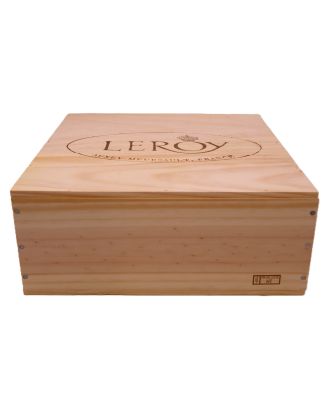
Original wood case - Sold by 3
95/100
92/100
Add to cart
Burgundy | Savigny Les Beaune 1er cru

Domaine Leroy Savigny Les Beaune 1er cru Les Narbantons 2010

€5,880.00 inc-VAT per bottle
€4,900.00 ex-VAT
History of Domaine Leroy

The story begins in 1868, when François Leroy founded a wine merchant house in Auxey-Duresses devoted to Burgundy’s finest terroirs. His son Joseph expanded the business, and in 1942 Henri Leroy, a major figure in French wine, acquired half of Domaine de la Romanée-Conti. In 1955, his daughter Marcelle, known as Lalou, joined the family business before taking charge of it and becoming co-director of Romanée-Conti in the 1970s. An exceptional taster, she built the worldwide reputation of Maison Leroy by selecting the region’s finest wines to exacting standards.

Domaine Leroy itself was established in 1988, when Lalou Bize-Leroy acquired Domaine Charles Noëllat in Vosne-Romanée, followed in 1989 by Domaine Philippe Rémy in Gevrey-Chambertin. In just a few months, she assembled vineyard holdings considered among the most prestigious in the world and immediately converted the entire vineyard to biodynamics, at a time when the practice remained uncommon in Burgundy. Ousted from Romanée-Conti in 1992, she thereafter devoted all her energy to her estate and her personal property, Domaine d'Auvenay. Within a decade, the wines of Domaine Leroy became benchmarks, regularly acclaimed by international critics and sought after by collectors.

Terroirs and Vineyards of Domaine Leroy

The vineyards of Domaine Leroy cover 21 hectares, 99 ares and 66 centiares, spread across the finest terroirs of the Côte de Nuits and Côte de Beaune. Seven Grands Crus lie in the Côte de Nuits (Chambertin, Latricières-Chambertin, Clos de la Roche, Musigny, Clos de Vougeot, Richebourg and Romanée-Saint-Vivant) and two in the Côte de Beaune (Corton-Renardes and Corton-Charlemagne). The holdings also include eight Premiers Crus, nine village appellations, often represented by individual parcels, and a few regional wines. Pinot Noir predominates, complemented by Chardonnay and an exceptional Aligoté planted in a historic parcel.

Vineyard management is an exercise in genuine austerity. Certified biodynamic practices go hand in hand with horse-drawn plowing, plant-based preparations, meticulous soil cultivation and an absolute refusal to use synthetic inputs. Yields are deliberately kept extremely low, sometimes around 15 to 25 hectoliters per hectare, concentrating the grapes and amplifying the expression of the terroir. The old vines, some well over half a century old, send their roots deep into the clay-limestone soils and give the wines the mineral dimension and length that define the estate’s style.

Winemaking at Domaine Leroy

Lalou Bize-Leroy’s winemaking philosophy can be summed up in one phrase: the wine makes itself. The winemaker’s role, above all, is to provide impeccable grapes. Harvesting is done by hand at full ripeness, with rigorous sorting in the vineyard and again at the winery. Whole clusters, stems included, go into the vat without destemming, bringing structure, freshness and considerable aging potential. Fermentation begins at a low temperature with native yeasts, and gentle punch-downs extract gradually rather than forcing the fruit.

Aging then continues in new oak barrels made from staves seasoned for an extended period, for fifteen to twenty months depending on the vintage and appellation. Sulfur is used very sparingly, racking is infrequent, and the wines are bottled without fining or filtration. Another distinctive practice is that the wines are released only when the estate considers them ready, regardless of the chronological order of the vintages. This restrained approach to winemaking accounts for the silky texture, aromatic depth and aging potential—often exceeding thirty years—of the estate’s finest wines.

The Wines of Domaine Leroy

Chambertin Grand Cru represents the pinnacle of power in Gevrey: deep color, notes of dark fruit, licorice and spice, majestic tannins and a seemingly endless finish, with the potential to age for several decades. Latricières-Chambertin Grand Cru takes a more graceful approach, with a saline mineral backbone and floral elegance that gain complexity after ten years in the cellar. Clos de la Roche Grand Cru, in Morey-Saint-Denis, combines breadth with noble rusticity, offering aromas of forest floor, truffle and black cherry.

Musigny Grand Cru, produced from a tiny vineyard area, ranks among the world’s most expensive wines: a delicate tapestry of violet, rose and red-fruit aromas supported by tannins of almost unreal finesse. Clos de Vougeot Grand Cru offers a dense, fleshy expression marked by dark fruit, cocoa and a firm tannic foundation. Richebourg Grand Cru unfolds with sumptuous opulence, combining candied fruit, sweet spices and musk with an exceptional velvety texture. Romanée-Saint-Vivant Grand Cru favors grace and refinement, with floral and spicy notes of rare delicacy.

In the Côte de Beaune, Corton-Renardes Grand Cru combines robustness with a controlled wildness, showing notes of dark fruit, pepper and smoke, along with impressive aging potential. Corton-Charlemagne Grand Cru, the estate’s only white Grand Cru, is a Chardonnay of crystalline purity, given tension by saline minerality and enriched by a creamy texture with accents of citrus, hazelnut and flint.

Among the Premiers Crus, Gevrey-Chambertin 1er Cru Les Combottes captivates with its spicy depth and firm structure. Chambolle-Musigny 1er Cru Les Charmes illustrates the finesse of Chambolle, brimming with fresh red fruit and floral aromas. Vosne-Romanée 1er Cru Les Beaux Monts combines the freshness of its elevated site with aromatic complexity, while Vosne-Romanée 1er Cru Aux Brûlées, planted on a warm site, yields a dense, spicy wine with a sun-drenched character.

Nuits-Saint-Georges 1er Cru Aux Boudots, immediately adjacent to Vosne-Romanée, marries the power of Nuits-Saint-Georges with refined elegance. Nuits-Saint-Georges 1er Cru Aux Vignerondes is more tannic and mineral, with excellent aging potential. Savigny-lès-Beaune 1er Cru Les Narbantons offers a generous, fruity Pinot Noir that is more approachable in its youth. Volnay 1er Cru Santenots du Milieu, meanwhile, offers Volnay’s signature silkiness, vivid red fruit and a remarkably pure saline finish.

The estate’s village wines, often sourced from a single parcel, rival many Premiers Crus. Village-level Gevrey-Chambertin shows a firm, spicy backbone. Chambolle-Musigny Les Fremières emphasizes floral delicacy and crisp red fruit. Vosne-Romanée Les Genaivrières reveals a bouquet of cherry, raspberry and forest floor over a silky palate. The three Nuits-Saint-Georges wines—Bas de Combe (elegant and fragrant), Aux Lavières (fresh and mineral) and Aux Allots (fleshy and spicy)—offer a fascinating parcel-by-parcel interpretation of the appellation.

In the Côte de Beaune, Pommard Les Vignots expresses the village’s tannic power through dark fruit and a firm foundation, while Pommard Les Trois Follots stands out for its finer, more floral profile. Auxey-Duresses Les Lavières, from the family’s historic home, offers a flavorful Pinot Noir with precise tannins and vivid red fruit, representing rare value for money among Leroy wines.

The regional wines round out the range with the same exacting standards. Bourgogne Aligoté, from a parcel of old vines, is considered Burgundy’s most sought-after Aligoté: hazelnut, almond, hawthorn, lemon and peach, with vibrant acidity and the ability to age for ten years or more. Bourgogne Blanc is a taut, mineral Chardonnay with a creamy texture. Bourgogne Rouge offers a Pinot Noir of impressive density, fruit and structure that far exceeds the expectations of its appellation. Finally, the red and white Coteaux Bourguignons, produced in very small quantities, offer the most accessible introduction to the world of Domaine Leroy.

WHAT THEY SAY ABOUT US

5 good reasons to buy wines on V&M

...

EXPRESS DELIVERY

In a secure polystyrene packaging

...

INTERNATIONAL SHIPPING

Find out more about VAT-EX sale for outside EU deliveries

...

COLLECTION NEAR PARIS & VAT REFUND FOR TOURISTS

Free collection in our warehouse near central Paris (92)

...