Jacques Prieur

Domaine Prieur in Meursault since 1956

Wines from Domaine Jacques Prieur: buy at the best price

Domaine Jacques Prieur took its name in 1956, but it already existed in the 19th century. After the Prieur couple died, their six children inherited Domaine Prieur and decided to keep it intact by placing the La Bruyère family at the helm of Domaine Jacques Prieur. Located in Meursault, Domaine Prieur is close to the estates of Coche Dury, Boisson, Pierre Morey, Comtes Lafon and Rémi Jobard. Its vineyards cover 21 hectares, including 8 hectares planted with white grapes. Domaine Jacques Prieur has eight grand cru appellations, including Chambertin, Clos de Vougeot, Corton Bressandes, Echezeaux, Musigny, Corton Charlemagne, Chevalier Montrachet and Montrachet, as well as eight premier cru appellations, including Chambolle Musigny 1er cru Les Charmes, Gevrey Chambertin 1er cru Combottes, Nuits Saint Georges 1er cru Boudots, Volnay 1er cru Santenots du Milieu and Meursault 1er cru Perrières, plus Beaune 1er cru Clos de la Féguine, a monopole. 

Read more
See more
Filters

Price

€160.00 - €720.00

Color

Volume

Parker WA rating

87 - 99

Burghound rating

86 - 97

Revue du Vin de France rating

No choice available on this group

Bettane & Desseauve rating

15 - 19

Prices drop

No choice available on this group

Download this list
There are 6 products.
Download this list
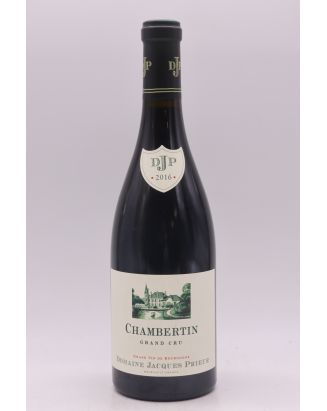
Jacques Prieur Chambertin 2016
Last one !
1 in stock
96055
Red
75cl
92-95/100
Add to cart
Burgundy | Chambertin

Jacques Prieur Chambertin 2016

€564.00 inc-VAT per bottle
€470.00 ex-VAT
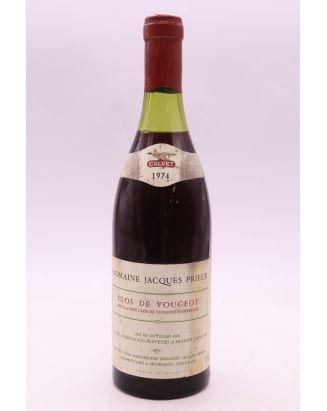
Jacques Prieur Clos Vougeot 1974
Last one !
1 in stock
124749
Red
75cl
Add to cart
Burgundy | Clos Vougeot

Jacques Prieur Clos Vougeot 1974

€170.00 inc-VAT per bottle
€141.67 ex-VAT
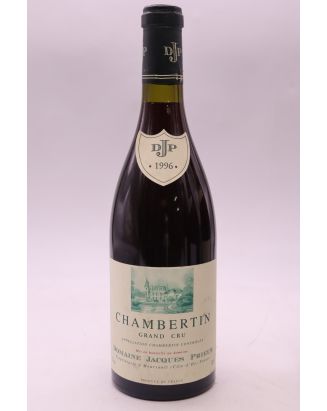
Jacques Prieur Chambertin 1996
1 in stock
125094
Red
75cl
89-91/100
90/100
89/100
Add to cart
Burgundy | Chambertin

Jacques Prieur Chambertin 1996

€588.00 inc-VAT per bottle
€490.00 ex-VAT
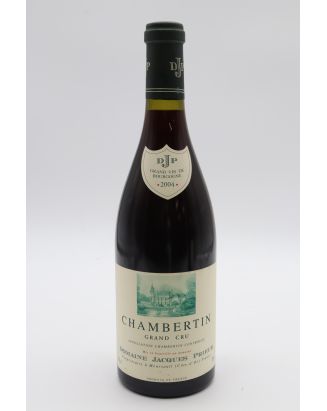
Jacques Prieur Chambertin 2004
2 in stock
128583
Red
75cl
88-91/100
Add to cart
Burgundy | Chambertin

Jacques Prieur Chambertin 2004

€486.00 inc-VAT per bottle
€405.00 ex-VAT
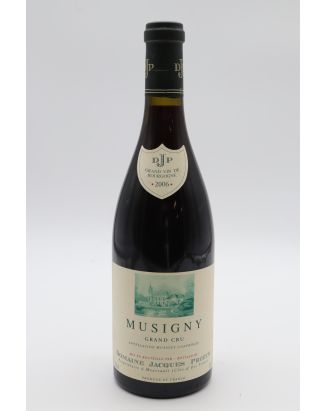
Jacques Prieur Musigny 2006
3 in stock
128586
Red
75cl
91/100
92-94/100
18/20
18.5/20
Add to cart
Burgundy | Musigny

Jacques Prieur Musigny 2006

€708.00 inc-VAT per bottle
€590.00 ex-VAT
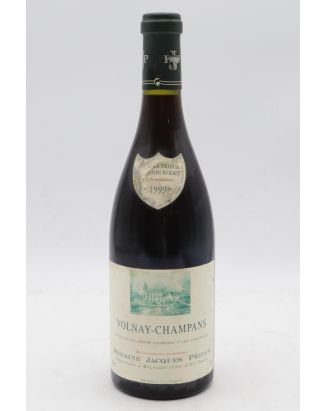
Jacques Prieur Volnay 1er cru Champans 1999
1 in stock
130865
Red
75cl
Very slightly damaged
91-92/100
92/100
88/100
18/20
Add to cart
Burgundy | Volnay 1er cru

Jacques Prieur Volnay 1er Cru Champans 1999

€162.00 inc-VAT per bottle
€135.00 ex-VAT

History of Domaine Jacques Prieur

It all began on February 24, 1868, with the marriage in Bligny-lès-Beaune of Claude Duvergey and Marie Taboureau, both from winegrowing families. Claude founded Maison Duvergey-Taboureau and prospered in the wine and brandy trade before turning to viticulture. In 1879, he acquired the Herbeux property in Meursault, now the heart of the estate. It was a risky wager as phylloxera reached the Côte d’Or, but the arrival of a remedy in 1886 would turn it into a stroke of genius. Acquisitions then followed at a remarkable pace: in 1889, Clos de Mazeray, a plot in Volnay Santenots, 4.5 hectares of the legendary Clos Vougeot and two parcels in Chambolle-Musigny; in 1890, the entirety of Clos des Santenots in Volnay, 1.5 hectares of Puligny-Montrachet Les Combettes and 0.45 hectares of the fabled Montrachet, expanded further in 1891 and 1892 with the Dent de Chien plots.

With no direct heir, the couple arranged the marriage in 1891 of Marie’s niece Hélène Taboureau to Henri Prieur, a young man from a well-to-do Beaune family. Their son, Jacques Prieur, was born in Meursault on January 31, 1893. Expansion continued: another acquisition in Musigny in 1895; the exchange of a Clos Vougeot plot for vines in Chambertin and Chambertin Clos de Bèze; then the Les Champans lieu-dit in Volnay in 1899 and Chevalier-Montrachet in 1907. When Claude Duvergey died in 1920, Jacques Prieur inherited the entire holding. In 1924, together with Count Jules Lafon, he established the celebrated Paulée de Meursault to mark the end of the harvest with all Meursault’s winegrowers. Also a co-founder of the Chevaliers du Tastevin, he gave the estate his name in 1956.

Jacques Prieur died in 1965 and his wife in 1974, leaving the company in equal shares to their six children. In 1988, to prevent the estate from passing to outside shareholders, five prominent families joined forces. Among them were the Labruyères, entrepreneurs and winegrowers from the Mâconnais, who gradually bought out their partners’ shares until they held 75% of the company. The 1990s brought two new grands crus, Corton-Bressandes and Corton-Charlemagne. Édouard Labruyère took charge of the estate in 2008, supported by Martin Prieur, the founder’s grandson, who has lived and worked on the property since 1990 and embodies the link between past and present.

Terroirs and Vineyards of Domaine Jacques Prieur

The vineyard is a true mosaic, made up almost entirely of grands crus and premiers crus—a rare distinction in Burgundy. Nine grands crus are spread across the Côte de Beaune and Côte de Nuits: Montrachet, Chevalier-Montrachet and Corton-Charlemagne for whites; Corton-Bressandes, Clos Vougeot, Échézeaux, Musigny, Chambertin and Chambertin Clos de Bèze for reds. Fourteen premiers crus complete the collection in Puligny-Montrachet, Meursault, Volnay, Pommard, Beaune and Chambolle-Musigny, along with an emblematic village-level appellation wine, Meursault Clos de Mazeray, an estate monopole at the southern entrance to the village.

Three monopoles punctuate this collection: Meursault Clos de Mazeray, Volnay Clos des Santenots and Beaune Clos de la Féguine, the last of which is made from both chardonnay and pinot noir. Under the guidance of Christophe Humbert, who joined the estate in 2006 and has been vineyard manager since 2020, vineyard practices have been thoroughly rethought: inputs have been drastically reduced, soils are worked mechanically rather than chemically, certain tasks follow the lunar calendar, and the estate obtained organic certification in 2023. The Labruyère family’s desire to pass healthy terroirs on to future generations, together with respect for the unique expression of each plot, has shaped this meticulous, sustainable approach to viticulture.

Winemaking at Domaine Jacques Prieur

Harvesting is always done by hand, using small crates to avoid crushing the berries. The clusters then pass over a double sorting table so that only perfectly healthy fruit is retained. Nadine Gublin, the estate’s enologist since 1990 and technical director since 2009, was named Winemaker of the Year 1998 by the Revue du vin de France. She advocates measured, precise intervention and harvesting grapes at full ripeness.

For pinot noir, complete destemming remains the rule, but the proportion of whole clusters increases year by year according to the plot and vintage. Maceration lasts around twenty days on average in temperature-controlled open-top vats, generally with two punch-downs a day during alcoholic fermentation. All the wines undergo malolactic fermentation. Aging takes place in oak barrels, with 50 to 80% new oak for the grands crus and often 30% for the premiers crus; 25- or 35-hectoliter vats are also sometimes used. Barrels are selected from several artisan coopers to suit the terroir and vintage, and aging lasts around twenty months.

For chardonnay, whole clusters are pressed in a pneumatic press, then the juice is settled for twelve to fourteen hours. Alcoholic fermentation and aging take place entirely in oak barrels, with malolactic fermentation as standard and aging likewise lasting close to twenty months. The result is a range of rich, complex whites with an enveloping savory quality, and powerful, flavorful reds built for long aging.

The Wines of Domaine Jacques Prieur

The Meursault Clos de Mazeray blanc, a monopole acquired in 1889 at the southern entrance to the village, is the estate’s only village-level appellation. This rich, inviting chardonnay offers notes of white fruit, almond and fresh butter, with appealing savory character and a saline finish. A superb introduction to the house’s wines.

The Meursault Clos de Mazeray rouge is exceptionally rare: a pinot noir planted in the heart of Meursault, a village devoted almost exclusively to white wine. Supple, fruity and fragrant, it offers an original expression of Meursault’s terroir.

The Meursault 1er Cru Charmes embodies the village’s roundness and generosity, with a creamy texture and aromas of ripe yellow fruit, hazelnut and honey, balanced by fine acidity.

The Meursault 1er Cru Perrières, often considered the appellation’s finest climat, stands out for its stony minerality, density and magnificent, grand cru-worthy length. A wine with exceptional aging potential.

The Meursault 1er Cru Santenots, situated on the border with Volnay, yields a more structured, firmer white, marked by pronounced salinity and impressive depth.

The Puligny-Montrachet 1er Cru Les Combettes, acquired as early as 1890, occupies one of the village’s finest climats, adjoining Meursault. It combines Puligny’s tautness and floral finesse with the richness of its neighbor, creating a wine of great elegance.

The Beaune 1er Cru Champs-Pimont blanc and Beaune 1er Cru Grèves blanc showcase the rarity of Beaune chardonnays, with notes of white fruit and acacia blossom and taut, chalky minerality.

The Beaune 1er Cru Clos de la Féguine blanc, an estate monopole, offers a more intimate, refined wine with a silky texture and a lingering saline finish.

The Corton-Charlemagne Grand Cru, added to the estate in the 1990s, has intense minerality and a powerful structure, with notes of candied citrus, honey and toasted hazelnut, and considerable aging potential.

The Chevalier-Montrachet Grand Cru, acquired in 1907, combines crystalline purity, vibrant tension and breathtaking length. One of the world’s finest chardonnays.

The Montrachet Grand Cru, in the family’s holdings since 1890 and supplemented by the Dent de Chien plots in 1891 and 1892, is the estate’s crowning jewel. Richness, seemingly endless complexity, a silky texture and an almost infinite finish: a legendary wine produced in minute quantities.

The Volnay 1er Cru Santenots offers a full-bodied, fragrant pinot noir with red fruit and fine tannins, true to Volnay’s elegance.

The Volnay 1er Cru Clos des Santenots, a monopole of which the estate became the sole owner in 1890, offers another level of density and depth, with a velvety texture and a remarkably persistent finish.

The Volnay 1er Cru Champans, acquired in 1899, comes from one of the village’s most complete climats: restrained power, aromas of black cherry, violet and spice, silky tannins and excellent aging potential.

The Pommard 1er Cru Les Charmots brings the appellation’s structure and earthy character, with black fruit, licorice and a firm tannic framework that calls for several years in the cellar.

The Beaune 1er Cru Champs-Pimont rouge and Beaune 1er Cru Grèves rouge offer vibrant fruit and a supple texture, with the spicy freshness typical of great hillside Beaune wines.

The Beaune 1er Cru Clos de la Féguine rouge, the other expression of this monopole, charms with its aromatic finesse, integrated tannins and immediate balance.

The village-level Gevrey-Chambertin is the estate’s only red village appellation wine from the Côte de Nuits. Dense and well-structured, it offers intense black fruit and a lively thread of spice.

The Chambolle-Musigny 1er Cru Combe d'Orveau, planted at altitude very close to Musigny, combines floral notes, saline tension and a delicate, lace-like texture characteristic of the village.

The Corton-Bressandes Grand Cru, added to the estate in the 1990s, offers a warm, structured pinot noir with aromas of black fruit, spice and forest floor, underpinned by noble tannins.

The Clos Vougeot Grand Cru, in the family since 1889, combines breadth and density with an imposing structure and a bouquet that evolves over time toward leather, truffle and forest floor.

The Échézeaux Grand Cru embodies the aromatic sensuality of Vosne-Romanée: rose, sweet spice, vibrant red fruit, a velvety texture and a long, fragrant finish.

The Musigny Grand Cru, acquired as early as 1895, is produced in minute quantities. It combines Chambolle’s delicacy with striking, ethereal depth, exceptionally fine tannins and an endless finish.

The Chambertin Grand Cru and Chambertin Clos de Bèze Grand Cru, obtained in exchange for part of Clos Vougeot, bring this collection to a close at the pinnacle of Gevrey-Chambertin. Imposing structure, seemingly endless aromatic complexity spanning black fruit, spice, leather and forest floor, and longevity measured in decades.

WHAT THEY SAY ABOUT US

5 good reasons to buy wines on V&M

...

EXPRESS DELIVERY

In a secure polystyrene packaging

...

INTERNATIONAL SHIPPING

Find out more about VAT-EX sale for outside EU deliveries

...

COLLECTION NEAR PARIS & VAT REFUND FOR TOURISTS

Free collection in our warehouse near central Paris (92)

...