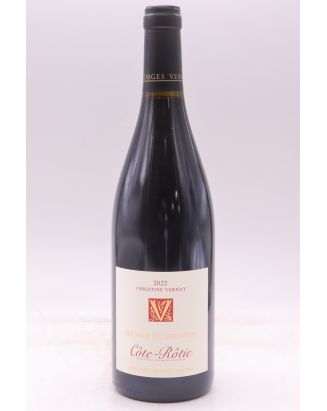
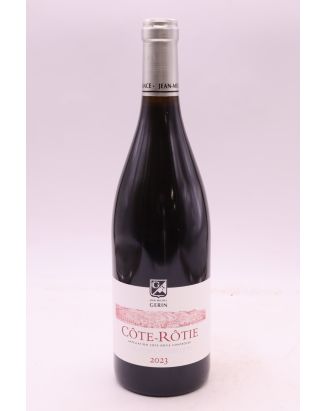
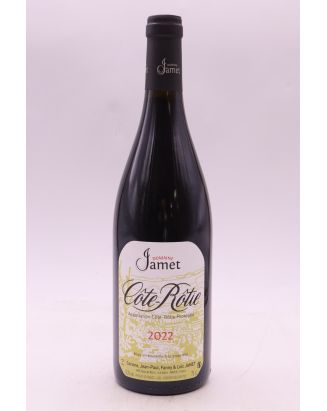
Best Côte-Rôtie wines: ranking of exceptional estates, cuvées and vintages
For discerning lovers of the northern Rhône , tasting a fine Côte-Rôtie wine is a special experience. This Syrah country produces intense, refined red wines, carefully made by passionate winemakers. Finding the best Côte-Rôtie wine to add to your cellar or grace your table becomes a quest in which every bottle tells its own story.
Key takeaways:
- The Rhône’s oldest vineyard, cultivated since Roman antiquity, nearly lost after the war (40 ha in 1945) and revived in the 1970s by Guigal and other winemakers
- 2 contrasting terroirs: Côte Brune (mica schist + iron → power, ages 20–30 years) vs Côte Blonde (gneiss + sands → elegance, approachable sooner)
- 73 classified named vineyards; the most prestigious: La Landonne, La Mouline, La Turque (Guigal’s "Lala" wines), Les Grandes Places, La Viaillère
- Top estates: Guigal, Jamet, Gérin, Rostaing, Ogier, Chapoutier, Burgaud
- Recent legendary vintages: 2009, 2010, 2015, 2016, 2019, 2020
- Aging: generally 18 months in oak barrels; 42 months for Guigal’s "Lala" wines
- Value for money: Burgaud, Corps de Loup and Rostaing Ampodium offer the best introductions to the appellation (€35–80)
Côte-Rôtie AOC: the Rhône’s oldest vineyard
History: from near-extinction to worldwide revival
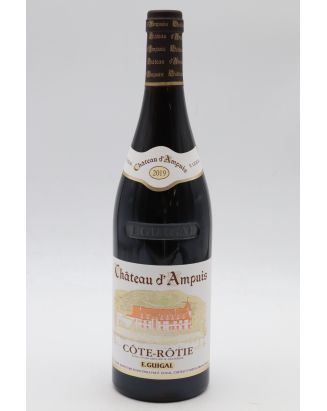
The Côte-Rôtie vineyards are undoubtedly among the oldest in France, a legacy of the Romans, who discovered the exceptional qualities of this terroir more than 2,000 years ago. Côte-Rôtie wine has been prestigious for centuries: French kings such as Henry III regularly spent time at Château d’Ampuis to taste a red wine they particularly enjoyed.
The two world wars and the heavy loss of life they caused nearly spelled the end of this historic appellation. By the late 1940s, for example, only 40 hectares remained under cultivation, tended by a handful of winemaking families. It was not until the 1970s, through the efforts of leading local names including Guigal, Gérin and Vidal-Fleury, that Côte-Rôtie began to regain some of its former glory.
Côte-Rôtie was recognized as an AOC in 1940 and today has just over 100 producers, including around 60 estates that bottle their own wines.
Geography: 3 communes, 73 named vineyards, 348 hectares
The Côte-Rôtie vineyards extend for 3 km across the communes of Ampuis, Saint-Cyr-sur-le-Rhône and Tupin-et-Semons. The appellation has 73 classified named vineyards and more than 100 producers, resulting in a wonderful diversity of wines.
Since Roman antiquity, vines have been cultivated on narrow, steep terraces and hillsides rising to elevations of 140 to 320 m. The extreme slopes require dry-stone walls, called “cheyrouts,” to hold the soil in place. This terrain makes mechanization impossible: harvesting is done entirely by hand, cluster by cluster.
The grape varieties of Côte-Rôtie
Côte-Rôtie wine contains at least 80% Syrah. Viognier is limited to a maximum of 20%. The two grape varieties are co-fermented to make Côte-Rôtie red wine. Adding Viognier, a white grape, brings floral and exotic notes that soften Syrah’s natural power—a distinctive feature among French vineyards.
The great Côte-Rôtie estates traditionally age their wines in oak barrels, often for 18 months.
Côte Blonde vs. Côte Brune: the appellation’s two souls
The appellation’s defining distinction lies in the contrast between two terroirs:
The Côte Brune in the north produces powerful wines with great aging potential, thanks to its clay- and iron-oxide-rich terroir. Farther south, the Côte Blonde produces wines that become approachable sooner, thanks to its gneiss and clay-rich sandy soils.
Côte-Rôtie wines from the Côte Brune are known for their power, substantial tannins and aging potential. Those from the Côte Blonde are exceptionally fine and elegant, often described as "more feminine", and can be enjoyed from two years of age.
|
Côte Brune
|
Côte Blonde
|
|
Soils
|
Iron-rich mica schist, clay
|
Gneiss, clay-rich sands (arzels)
|
|
Style
|
Powerful, tannic, great aging potential
|
Delicate, floral, approachable sooner
|
|
Aging potential
|
15 to 30 years
|
8 to 20 years
|
|
Leading named vineyards
|
La Landonne, La Viaillère, Grandes Places, La Turque
|
La Mouline, Champon
|
Ranking of the best Côte-Rôtie estates
The definitive benchmark estates
Côte-Rôtie wines enjoy the greatest prestige among the vineyards of the Northern Rhône Valley. Here is a ranking of the essential estates, based on Parker and Wine Advocate scores:
|
Rank
|
Estate
|
Flagship cuvées
|
Style
|
|
1
|
E. Guigal
|
La Mouline, La Turque, La Landonne, Château d’Ampuis
|
Global icons, power and elegance
|
|
2
|
Jamet
|
Côte-Rôtie (single cuvée)
|
Purity, minerality, a great classic
|
|
3
|
Jean-Michel Gérin
|
Les Grandes Places, La Landonne
|
Depth, exceptional aging potential
|
|
4
|
René Rostaing
|
Ampodium, La Viaillère, La Landonne
|
Finesse, elegance, consistency
|
|
5
|
Stéphane Ogier
|
Belle Hélène, But de Mont, L’Âme Soeur
|
Single-vineyard precision, modernity
|
|
6
|
Chapoutier
|
La Mordorée, Les Bécasses
|
Biodynamics, pure expression of terroir
|
|
7
|
Clusel-Roch
|
Les Grandes Places, Viallière
|
Tradition, aromatic finesse
|
|
8
|
Bernard Burgaud
|
Côte-Rôtie (single cuvée)
|
Old vines, depth
|
|
9
|
Pierre Gaillard
|
Rose Pourpre, Côte Rozier
|
Natural, precise fruit, excellent aging potential
|
|
10
|
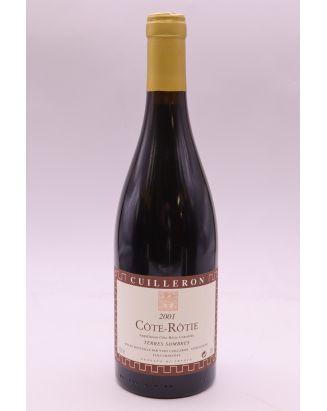
Yves Cuilleron
|
Bassenon, Madinière
|
Approachable, fruity, versatile
|
Introducing the iconic estates
E. Guigal: Côte-Rôtie’s global icon
Founded in 1946 by Étienne Guigal in Ampuis, an ancient village and the birthplace of the appellation, the estate has vineyards where vines and wine have been celebrated for 2,400 years. Guigal is renowned for its Côte-Rôtie wines, especially the famous La Turque, La Mouline and La Landonne cuvées. These three single-vineyard cuvées, aged in new barrels for at least 42 months, are among the world’s most sought-after wines. The La Turque plot lies on siliceous limestone soil with mica schist rich in iron oxides and yields 35 hl per hectare. The cuvée is made from 93% Syrah and 7% Viognier.
Jamet: The benchmark for purity
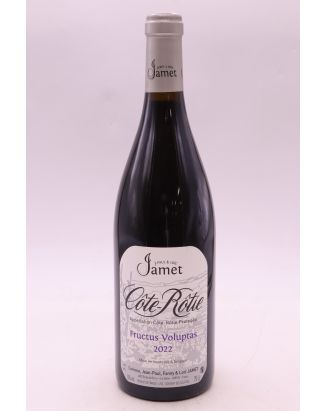
Domaine Jamet is widely considered the stylistic benchmark for Côte-Rôtie. It makes a single cuvée, blended from several Côte Brune plots and vinified with exceptional precision. Limited production makes these bottles very hard to find, but great vintages (2009, 2010, 2015, 2019) regularly rank among the finest Côte-Rôtie wines ever produced.
Jean-Michel Gérin: Master of Les Grandes Places
The Gérin family has been based in Ampuis, the "capital" of the Côte-Rôtie appellation, for six generations. Jean-Michel Gérin’s talent is especially evident in his Grandes Places cuvée, a substantial wine built for long aging, and, of course, La Landonne, which established his international reputation.
René Rostaing: Elegance at its finest
René Rostaing is best known for his outstanding Côte-Rôtie wines. Like all internationally successful winemakers, he cannot meet every request in every vintage. A small team and limited production make his wines highly sought-after and consistently dependable. His entry-level cuvée, Ampodium, already offers a remarkable introduction to the character of the appellation.
Stéphane Ogier: The new generation
Stéphane Ogier’s ambition is evident both in the quality of his wines and in his new winery on the southern edge of Ampuis, a magnificent facility for vinifying each of his Côte-Rôtie terroirs separately. His Belle Hélène cuvée, from old vines on the Côte Blonde, has become a benchmark for the new generation.
Chapoutier: Biodynamics in the service of terroir
Beginning in 1980, Michel Chapoutier, true to his philosophy and exacting standards, introduced biodynamic practices at the estate to produce wines that more authentically express and respect its remarkable terroir. His La Mordorée cuvée, from the Côte Brune, is considered one of the purest expressions of the appellation’s clay and iron-oxide terroir.
Côte-Rôtie’s essential named vineyards
La Côte Blonde, La Côte Brune, Les Grandes Places and Les Rochins are among the appellation’s best-known named vineyards. Here are the plots behind Côte-Rôtie’s worldwide reputation:
|
Named vineyard
|
Terroir
|
Associated producers
|
Style
|
|
La Landonne
|
Iron-rich mica schist, Côte Brune
|
Guigal, Gérin, Rostaing
|
The most powerful; ages for 25–40 years
|
|
La Mouline
|
Côte Blonde, clay-rich sands
|
Guigal
|
Floral, velvety, the most approachable of Guigal’s three
|
|
La Turque
|
Siliceous limestone, iron oxide
|
Guigal
|
Perfect balance of power and elegance
|
|
Les Grandes Places
|
Mica schist, northern Côte Brune
|
Gérin, Clusel-Roch
|
Deep, mineral, exceptional aging potential
|
|
La Viaillère
|
Iron-rich mica schist
|
Rostaing
|
Finesse, elegance, distinction
|
|
Champon
|
Côte Blonde
|
Ogier (Belle Hélène)
|
Vibrancy, floral freshness
|
|
Maison Rouge
|
Côte Blonde
|
Vernay, Cuilleron
|
Approachable, fruity, beautifully supple
|
The best Côte-Rôtie vintages
|
Vintage
|
Quality
|
Character
|
Aging potential
|
|
2022
|
★★★★☆ Very fine
|
Structure, aging potential, well-balanced warmth
|
15–20 years
|
|
2020
|
★★★★★ Exceptional
|
Concentration, intense dark fruit
|
20–30 years
|
|
2019
|
★★★★★ Exceptional
|
Precise fruit, freshness, perfect balance
|
15–25 years
|
|
2017
|
★★★★☆ Very fine
|
Elegance, floral notes, fine tannins
|
12–20 years
|
|
2016
|
★★★★☆ Very fine
|
Balance, freshness, remarkable consistency
|
15 years
|
|
2015
|
★★★★★ Legendary
|
Perfect ripeness, richness, complexity
|
15–25 years
|
|
2013
|
★★★☆☆ Good
|
Finesse, vibrancy, immediate pleasure
|
8–12 years
|
|
2012
|
★★★★☆ Very fine
|
Minerality, northern Rhône elegance
|
12–18 years
|
|
2011
|
★★★☆☆ Good
|
Bright fruit, approachable
|
8–10 years
|
|
2010
|
★★★★★ Legendary
|
Intense, deep, tannic
|
20 years or more
|
|
2009
|
★★★★★ Legendary
|
Opulent, rich, immediately enjoyable
|
15–25 years
|
|
2005
|
★★★★★ Legendary
|
Classic, perfectly balanced, exceptional aging potential
|
25+ years
|
Robert Parker’s "cult" vintages: 1991, 1999, 2003 (atypical but intense), 2009 and 2010 remain definitive benchmarks for the great single-vineyard cuvées of Guigal and Jamet.
Frequently asked questions about Côte-Rôtie wines
Why does Syrah dominate the Côte-Rôtie appellation?
Syrah is perfectly suited to the soils and climate of the northern Rhône, where the Côte-Rôtie appellation thrives. Under these ideal conditions, the grape reveals its tannic structure, aromatic richness and aging potential. Some winemakers choose to add up to a maximum of 20% Viognier, enhancing the complexity of the red wines produced here.
- Typical aromas: dark fruit, spices, violet
- Pronounced yet elegant tannins
- Well suited to aging
How can you identify the best Côte-Rôtie vintages?
The best vintages are distinguished by conditions that allowed the Syrah to ripen fully. Warm years produce generous, powerful wines (e.g., 2015), while milder years bring out finesse (e.g., 2010). Consult specialist guides or compare the opinions of experienced wine enthusiasts.
|
Year
|
Style
|
Ability to age
|
|
2010
|
Structured
|
Excellent
|
|
2015
|
Opulent
|
Very good
|
|
2016
|
Balanced
|
Good
|
What are the key steps to a successful Côte-Rôtie tasting?
- Let the wine open up for an hour before tasting.
- Observe the wine’s deep color.
- Smell the wine to detect aromas of fruit, violet and spices.
- Sip slowly to appreciate how the tannins develop and how long the finish lasts.
Pair a fine Côte-Rôtie with an elegant dish, such as duck breast, to bring out all its nuances.
How long can you cellar a Côte-Rôtie red wine?
A Côte-Rôtie red wine can easily be cellared for 10 to 20 years, or even longer for the best vintages, provided it is stored at a constant temperature with controlled humidity. With age, these wines develop complex bouquets that reflect the passage of time.
- Robust vintages: cellar for up to 20 years
- Wines from a good but less concentrated vintage: drink within 10–12 years

 Personalise your experience