Ladoix

All wines from the Ladoix appellation in Burgundy

The wines of Ladoix open the Côte de Beaune, in Burgundy, at the foot of the Corton hill, in the commune of Ladoix-Serrigny. This village AOC produces roughly three-quarters red wines from pinot noir and one quarter whites led by chardonnay, with eleven climat classified as premier cru. The flavour signature stems from this pivotal position between the Côte de Nuits and the Côte de Beaune: the reds combine crunchy raspberry and cherry fruit, fine tannins and a discreet firmness that calls for a few years of cellaring, while the whites, initially rather austere, round out on ripe apple, quince, fig and gentle spice. Long sold under the name of their neighbour Aloxe-Corton, these wines now rank among the best value-for-money offerings on the Côte d'Or.

Read more
See more
Filters

Price

€20.00 - €280.00

Parker WA rating

87 - 90

Burghound rating

88 - 89

Revue du Vin de France rating

No choice available on this group

Bettane & Desseauve rating

No choice available on this group

Prices drop

No choice available on this group

Download this list
There are 13 products.
Download this list
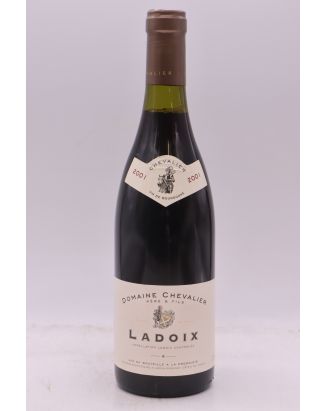
Chevalier Ladoix 2001
22 in stock
111116
Red
75cl
Add to cart
Burgundy | Ladoix

Chevalier Ladoix 2001

€30.00 inc-VAT per bottle
€25.00 ex-VAT
Cachat Ocquidant Ladoix 1999
Last one !
1 in stock
113392
Red
75cl
Add to cart
Burgundy | Ladoix

Cachat Ocquidant Ladoix 1999

€30.00 inc-VAT per bottle
€25.00 ex-VAT
Michel Mallard Ladoix Le Clos Royer 1996 -10% DISCOUNT !
1 in stock
113394
Red
75cl
Slightly Damaged
-2cm
Add to cart
Burgundy | Ladoix

Michel Mallard Ladoix Le Clos Royer 1996

€30.00 inc-VAT per bottle
€25.00 ex-VAT
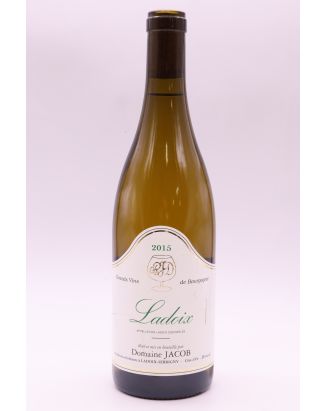
Jacob Ladoix 2015
Last one !
1 in stock
118916
Red
75cl
Add to cart
Burgundy | Ladoix

Jacob Ladoix 2015

€30.00 inc-VAT per bottle
€25.00 ex-VAT
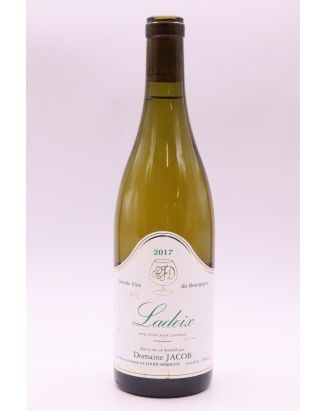
Jacob Ladoix 2017
1 in stock
118917
Red
75cl
Add to cart
Burgundy | Ladoix

Jacob Ladoix 2017

€24.00 inc-VAT per bottle
€20.00 ex-VAT
Jacob Ladoix Les Carrières 2021
Last one !
1 in stock
118919
White
75cl
Add to cart
Burgundy | Ladoix

Jacob Ladoix Les Carrières 2021

€24.00 inc-VAT per bottle
€20.00 ex-VAT
Jacob Ladoix Les Carrières 2023
2 in stock
118920
White
75cl
Add to cart
Burgundy | Ladoix

Jacob Ladoix Les Carrières 2023

€42.00 inc-VAT per bottle
€35.00 ex-VAT
Antonio Quari Ladoix Les Briquottes 2024
Bio
1 in stock
122024
Red
75cl
Add to cart
Burgundy | Ladoix

Antonio Quari Ladoix Les Briquottes 2024

€264.00 inc-VAT per bottle
€220.00 ex-VAT
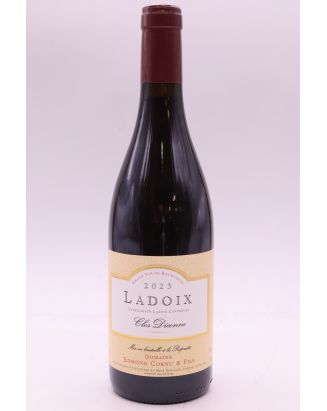
Edmond Cornu Ladoix Clos Diconne 2023
3 in stock
123354
Red
75cl
Add to cart
Burgundy | Ladoix

Edmond Cornu Ladoix Clos Diconne 2023

€24.00 inc-VAT per bottle
€20.00 ex-VAT
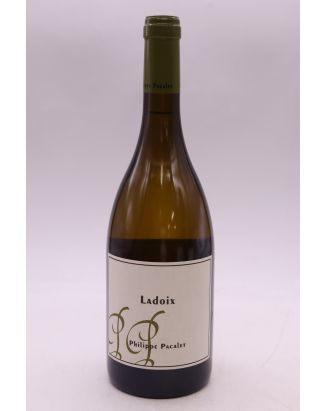
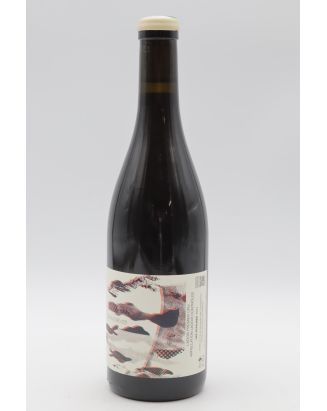
Philippe Pacalet Ladoix 2022 white
Bio
1 in stock
124021
White
75cl
88/100
Add to cart
Burgundy | Ladoix

Philippe Pacalet Ladoix 2022 white

€78.00 inc-VAT per bottle
€65.00 ex-VAT
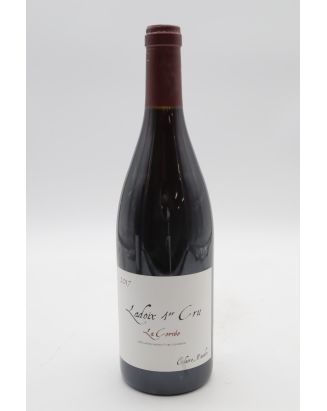
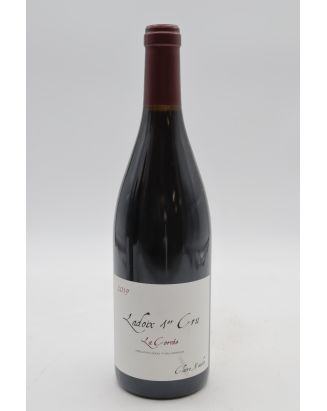
Claire Naudin Ladoix 1er cru La Corvée 2020
2 in stock
127271
Red
75cl
Add to cart
Burgundy | Ladoix 1er cru

Claire Naudin Ladoix 1er Cru La Corvée 2020

€102.00 inc-VAT per bottle
€85.00 ex-VAT
Chanterêves Ladoix 1er Cru Les Joyeuses 2023
New
12 in stock
130897
Red
75cl
Add to cart
Burgundy | Ladoix 1er cru

Chanterêves Ladoix 1er Cru Les Joyeuses 2023

€102.00 inc-VAT per bottle
€85.00 ex-VAT
Claire Naudin Ladoix 1er cru La Corvée 2023
New
0 in stock
131061
Red
75cl
Out of stock
Burgundy | Ladoix 1er cru

Claire Naudin Ladoix 1er Cru La Corvée 2023

€84.00 inc-VAT per bottle
€70.00 ex-VAT

Where is the Ladoix appellation located?

The appellation is located in the Côte-d'Or, a few kilometers north of Beaune, in the commune of Ladoix-Serrigny, the first village of the Côte de Beaune when traveling south from Dijon. The wine-growing area encompasses the village of Serrigny and the hamlets of Ladoix and Buisson, situated on either side of the road that runs along the northeastern flank of the Corton mountain. The vineyard covers just over one hundred hectares in production, of which approximately twenty-five hectares are classified as premier cru, at altitudes ranging from roughly 230 to 360 meters.

This vineyard directly borders Aloxe-Corton and Pernand-Vergelesses to the south and west, Chorey-lès-Beaune toward the plain, and Corgoloin and Comblanchien to the north, where the Côte de Nuits begins. A local particularity: part of the grand cru vineyards of Corton and Corton-Charlemagne lies within the communal territory, as do several premier crus sold, however, under the Aloxe-Corton label.

History of the Ladoix appellation

The history of this cru is that of a vineyard long overshadowed by its illustrious neighbors. Ladoix and Buisson are mentioned as early as 1305, and the Hôtel-Dieu de Beaune, founded in 1441 by chancellor Nicolas Rolin, held a substantial estate there. The name comes from the old Burgundian word for a spring, referring to the karstic resurgence that wells up at the foot of the hill. Before the nineteenth century, the village was best known for its stone quarries, and Doctor Lavalle, in 1855, merely cited the place without detailing its crus.

The classification by the Comité de viticulture de l'arrondissement de Beaune nonetheless recorded, in 1860, twenty-six hectares producing fine wines, a distinction confirmed in 1892 by Danguy and Aubertin, who recognized the dual red and white vocation of the terroir. The growers formed a federation in 1921, and the appellation d'origine contrôlée was recognized by the decree of July 31, 1937, putting an end to the practice of selling these bottles under the name Aloxe-Corton. The list of climates classified as premier cru was approved in 1943, the current specifications having been ratified by decree in November 2011, with a revision aimed notably at extending the area toward Magny-lès-Villers currently under consideration.

What are the terroirs of the Ladoix appellation?

The terroirs rest on the marly-limestone bedrock of the Jurassic period that forms the Corton mountain. To the south of the valley, the relief reaches 380 meters: middle Jurassic limestone at the base, a thick layer of marl above, crowned by a band of hard limestone, the whole facing east. To the north of the valley, the slope, gentler, faces south. These substrates are frequently masked by scree and colluvium, very stony and thin at the top of the slope, more clayey and deep at the foot, which explains the mosaic of styles observed from one climat to the next.

The cool oceanic climate, tempered by continental influences, brings approximately 750 millimeters of rain per year and an annual average close to 10.5 °C, in a sheltered area that benefits from a notable thermal advantage. The eleven climates classified as premier cru occupy the middle section of the slope: Basses Mourottes, Hautes Mourottes, Le Rognet et Corton, Les Joyeuses, Bois Roussot and Les Grêchons et Foutrières on the southern side, La Corvée, Le Clou d'Orge, Les Buis, La Micaude and En Naget to the north, behind Buisson. The marliest soils, at altitude, are reserved for chardonnay.

What grape varieties are permitted in the Ladoix appellation?

The permitted grape varieties are those of the heart of Burgundy: pinot noir as the principal variety for reds, chardonnay and pinot blanc for whites, supplemented by pinot gris in an accessory role. In practice, the vast majority of reds are pure pinot noir, the accessory varieties being tolerated only in field blends, within a limit of 15% per parcel. For whites, pinot gris remains limited to 10% of the encépagement and 30% of the blend, with chardonnay dominating by a wide margin.

On this terroir, pinot noir yields a precise fruit of raspberry and black cherry, with a fine tannic structure and a saline finish. Chardonnay, planted on the upper-slope marls, gains a lemony tension and a firm texture that integrate with aging. The mention of the grape variety is moreover prohibited on the label, in keeping with the Burgundian logic that places the climat front and center.

What are the different styles of Ladoix wines?

Two colors are produced, with approximately three-quarters red and one quarter white, the latter share steadily increasing. The village-level reds seduce with their suppleness, their garnet color and their aromas of fresh red fruits enhanced by spices and undergrowth with age; the premier crus, more tannic and more concentrated, assert a true character of a wine for aging, La Corvée offering for example an almost Nuits-like power while Bois Roussot plays the elegance card. The whites, initially firm and mineral, open up onto ripe apple, quince, fig and soft spices.

Winemaking follows Burgundian custom: measured maceration and vatting for the reds, gentle pressing and barrel fermentation for the whites, with regulated aging until at least June 15th following the harvest, often twelve to eighteen months in barrels, with a moderate proportion of new oak. In terms of food pairings, the reds accompany jambon persillé, coq au vin, beef bourguignon, roast duck or feathered game; the whites pair well with escargots, a chicken dish in cream sauce, a river fish in sauce, gougères or a well-aged comté.

What are the best vintages of Ladoix?

The reference vintages of the past thirty years follow the Burgundian hierarchy, with a few nuances tied to the coolness of the area. In red, 1999, 2005, 2009, 2010, 2015, 2019, 2020 and 2022 rank among the great successes — sunny or perfectly ripe years that yielded dense, structured wines. 1996 and 2002 remain benchmarks for lovers of acid balance, while 2016, 2017 and 2021, marked by frost and reduced volumes, delivered wines that are more tense and elegant. In white, 2014, 2017, 2020 and 2023 offer fine balance, with 2023 also standing out for generous yields.

The more modest years — 2004, 2011 and 2013 — call for careful selection of the estate and are best drunk today without waiting. 2024, tested by April frost, hail and heavy mildew pressure, produced few grapes but yielded flavorful wines from rigorous growers. In practical terms, the village wines of 2017, 2018, 2021 and 2023 are ready to open now, while the premier crus of 2019, 2020 and 2022 still merit several more years in the cellar.

What are the best estates of the Ladoix appellation?

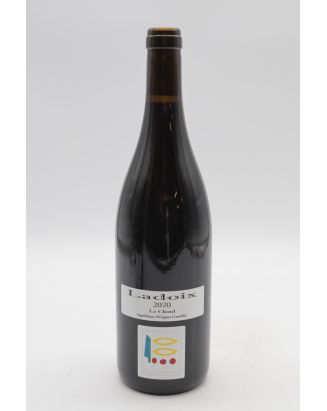
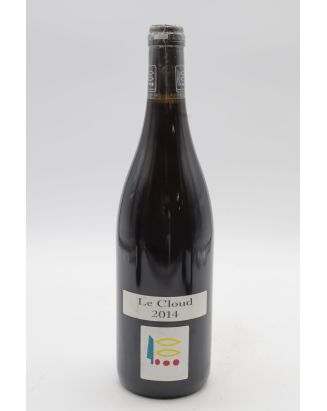
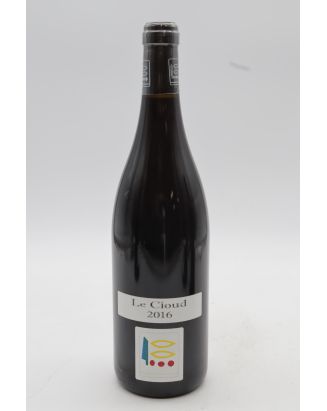
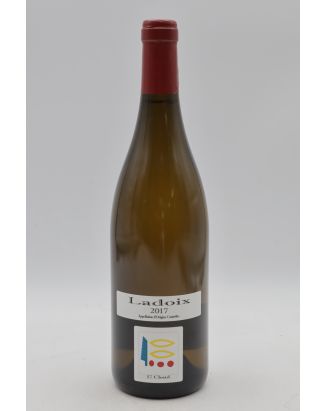
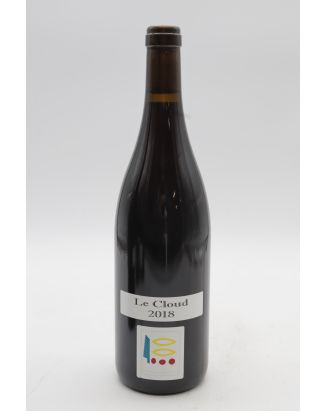
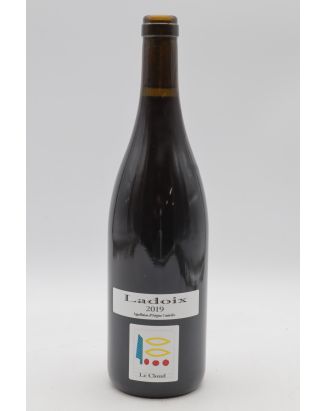
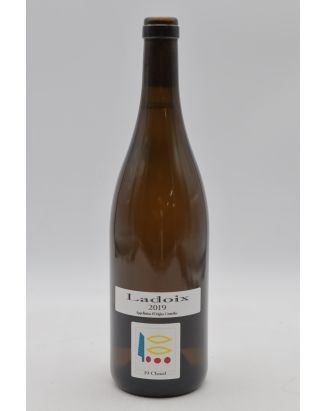
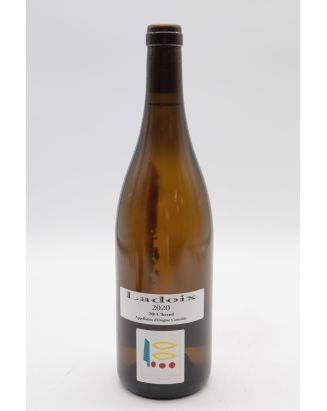
The most sought-after estate among collectors is Domaine Prieuré-Roch, founded in 1988 by Henry-Frédéric Roch, co-manager of Domaine de la Romanée-Conti and grandson of Henri Leroy. In 2010 he took over the lieu-dit Le Clou, renamed Le Cloud, comprising just over two hectares of pinot noir and one hectare of chardonnay at the foot of the hill. Whole-cluster harvesting, no added sulfur and patient aging yield floral, pure and highly aromatic wines whose rarity has pushed prices well beyond those of the appellation. Maison Capitain-Gagnerot, founded in 1802 and now run by the eighth generation, embodies by contrast the spirit of family continuity: fifteen hectares, an estate now certified organic, and above all the monopoly of the premier cru La Micaude, reconstituted in 1995, alongside very fine whites from Hautes Mourottes.

Domaine Michel Mallard et Fils, established in 1952 and taken over in 2005, has established itself as the technical benchmark of the village, its owner also crafting the wines of Domaine d'Eugénie in Vosne-Romanée. Its eleven hectares cover Le Clos Royer (rare in white), Les Joyeuses, Les Grêchons and several Corton parcels, with a precision praised by international critics. Domaine Chevalier Père et Fils, based in the hamlet of Buisson, owns two complementary premier crus, La Corvée and Le Clou d'Orge, the latter from sixty-year-old vines, as well as a parcel of Corton Le Rognet: a straight, fruity, unadulterated style. Domaine Edmond Cornu et Fils, another local pillar, has made itself known to Anglo-Saxon enthusiasts for its Les Carrières cuvées and its old-vine wines, perfect examples of the quality-to-price ratio that has built the reputation of this area.

Domaine d'Ardhuy, based at the Clos des Langres in Corgoloin, farms nearly forty hectares and holds two monopolies here: Clos des Chagnots in red (2.36 hectares of old massal selections) and the premier cru Le Rognet et Corton in white, both regularly recognized by the Guide Hachette. Maison Louis Jadot, through its Domaine Gagey, has helped bring these bottles to international attention with its Clou d'Orge produced in both red and white, a reliable reference vintage after vintage. Finally, Domaine Nudant, the owner within the tiny premier cru Les Buis — less than a hectare enclosed by La Corvée — offers more understated wines but ones faithful to the limestone and cool style of the northern end of the appellation.

How long should a Ladoix wine be cellared?

The aging potential depends on the color and the appellation level. A village-level red is ideally enjoyed between 4 and 10 years, a premier cru between 8 and 15 years, up to 20 years in the sunniest or most tannic vintages such as 2005, 2010, 2015 or 2022. Village-level whites are best appreciated between 3 and 8 years, while premier crus from the upper-slope marls (Les Grêchons et Foutrières, En Naget) readily hold for 10 to 12 years, giving their initial firmness time to yield to notes of quince, fig and hazelnut.

For optimal cellaring, a stable cellar between 10 and 14 °C, at approximately 70% humidity, away from light and vibrations, with bottles lying on their sides, remains the best insurance. When opening, a young red benefits from being decanted for 30 to 45 minutes to release its fruit, whereas a bottle more than ten years old is served directly, stood upright the day before, and enjoyed at around 15 to 16 °C. Whites are served between 11 and 13 °C, a brief passage through a decanter being sufficient to reveal their texture in recent vintages.

WHAT THEY SAY ABOUT US

5 good reasons to buy wines on V&M

...

EXPRESS DELIVERY

In a secure polystyrene packaging

...

INTERNATIONAL SHIPPING

Find out more about VAT-EX sale for outside EU deliveries

...

COLLECTION NEAR PARIS & VAT REFUND FOR TOURISTS

Free collection in our warehouse near central Paris (92)

...