Monthélie

All wines from the Monthelie appellation in Burgundy

The Monthelie appellation, nestled in the Côte de Beaune in Burgundy, is a prized AOC for its red and white wines, crafted from Pinot Noir and Chardonnay grape varieties. It covers an area of approximately 130 hectares, of which nearly 40 hectares are classified as premiers crus. With 15 premier cru climats, such as "Les Champs Fulliot" or "Le Clos Gauthey", Monthelie benefits from clay-limestone terroirs situated on hillsides between 230 and 370 meters altitude, offering ideal exposure. The red wines, which dominate with 90% of production, are distinguished by their finesse, red fruit aromas, and elegant structure. The white wines, rarer, captivate with their floral and mineral notes. Less famous than Meursault or Volnay, the Monthelie appellation offers quality Burgundy wines at attractive prices, perfect for lovers of fine wines.

Read more
See more
Filters

Price

€20.00 - €120.00

Parker WA rating

86 - 92

Burghound rating

87 - 90

Revue du Vin de France rating

No choice available on this group

Bettane & Desseauve rating

No choice available on this group

Prices drop

No choice available on this group

Download this list
There are 14 products.
Download this list
Eric De Suremain Monthélie 1er cru Sur La Velle 2004
1 in stock
102327
Red
75cl
Add to cart
Burgundy | Monthélie 1er cru

Eric De Suremain Monthélie 1er cru Sur La Velle 2004

€39.00 inc-VAT per bottle
€32.50 ex-VAT
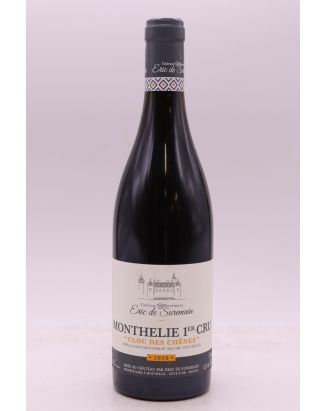
Eric de Suremain Monthélie Clou des Chênes 2020
Last one !
1 in stock
118488
Red
75cl
Add to cart
Burgundy | Monthélie

Eric de Suremain Monthélie Clou des Chênes 2020

€42.00 inc-VAT per bottle
€35.00 ex-VAT
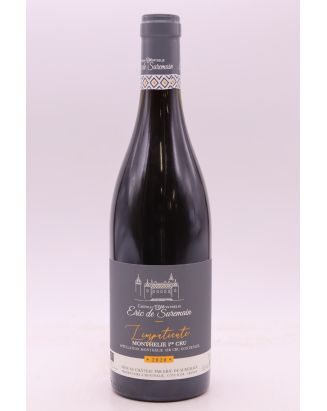
Eric de Suremain Monthélie Impatiente 2020
2 in stock
118487
Red
75cl
Add to cart
Burgundy | Monthélie

Eric de Suremain Monthélie Impatiente 2020

€30.00 inc-VAT per bottle
€25.00 ex-VAT
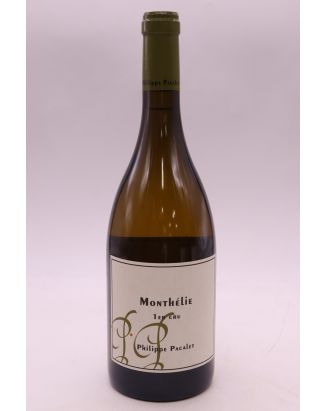
Philippe Pacalet Monthélie 1er cru 2021 white
Bio
3 in stock
124035
White
75cl
Add to cart
Burgundy | Monthélie 1er cru

Philippe Pacalet Monthélie 1er cru 2021 blanc

€108.00 inc-VAT per bottle
€90.00 ex-VAT
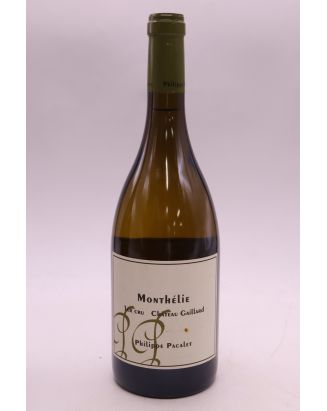
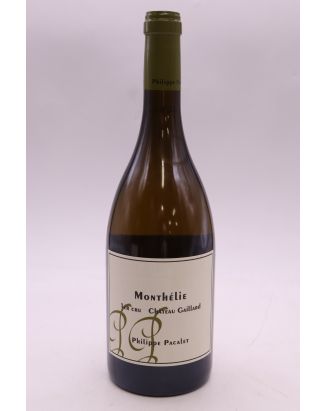
Philippe Pacalet Monthélie 1er cru Château Gaillard 2019 white
Bio
2 in stock
124036
White
75cl
Add to cart
Burgundy | Monthélie 1er cru

Philippe Pacalet Monthélie 1er cru Château Gaillard 2019 blanc

€96.00 inc-VAT per bottle
€80.00 ex-VAT
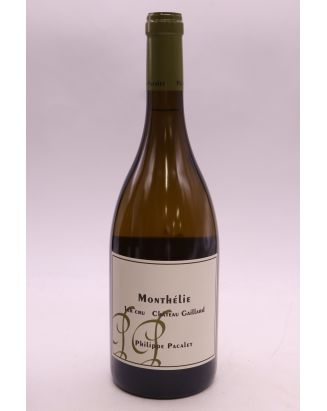
Philippe Pacalet Monthélie 1er cru Château Gaillard 2020 white
Bio
2 in stock
124037
White
75cl
Add to cart
Burgundy | Monthélie 1er cru

Philippe Pacalet Monthélie 1er cru Château Gaillard 2020 blanc

€90.00 inc-VAT per bottle
€75.00 ex-VAT
Philippe Pacalet Monthélie 1er cru Château Gaillard 2022 white
Bio
3 in stock
124038
White
75cl
Add to cart
Burgundy | Monthélie 1er cru

Philippe Pacalet Monthélie 1er cru Château Gaillard 2022 blanc

€96.00 inc-VAT per bottle
€80.00 ex-VAT
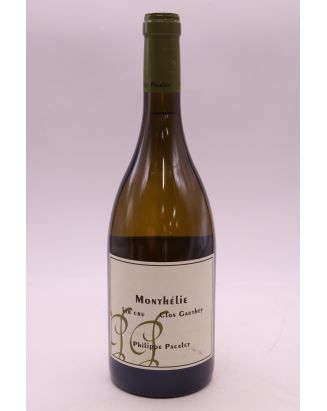
Philippe Pacalet Monthélie 1er cru Clos Gauthey 2019 white
Bio
2 in stock
124041
White
75cl
Add to cart
Burgundy | Monthélie 1er cru

Philippe Pacalet Monthélie 1er cru Clos Gauthey 2019 blanc

€84.00 inc-VAT per bottle
€70.00 ex-VAT
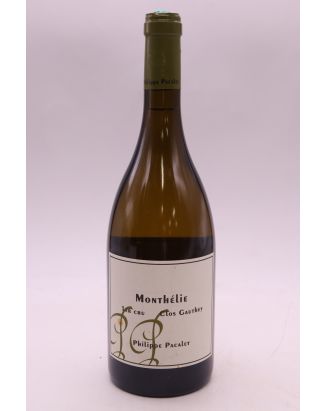
Philippe Pacalet Monthélie 1er cru Clos Gauthey 2022 white
Bio
3 in stock
124043
White
75cl
Add to cart
Burgundy | Monthélie 1er cru

Philippe Pacalet Monthélie 1er cru Clos Gauthey 2022 blanc

€84.00 inc-VAT per bottle
€70.00 ex-VAT
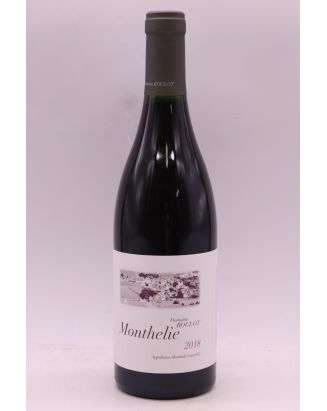
Domaine Roulot Monthélie 2018
6 in stock
125981
Red
75cl
Add to cart
Burgundy | Monthélie

Domaine Roulot Monthélie 2018

€90.00 inc-VAT per bottle
€75.00 ex-VAT
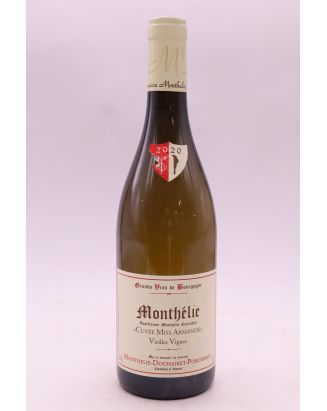
Monthélie Douhairet Porcheret Monthélie Miss Armande Vieilles Vignes 2020 Blanc
2 in stock
126130
White
75cl
Add to cart
Burgundy | Monthélie

Monthélie Douhairet Porcheret Monthélie Miss Armande Vieilles Vignes 2020 White

€42.00 inc-VAT per bottle
€35.00 ex-VAT
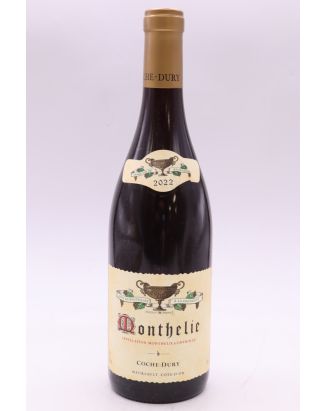
Rougeot Monthélie Les Toisières 2022
Bio
2 in stock
126880
White
75cl
Add to cart
Burgundy | Monthélie

Rougeot Monthélie Les Toisières 2022

€48.00 inc-VAT per bottle
€40.00 ex-VAT
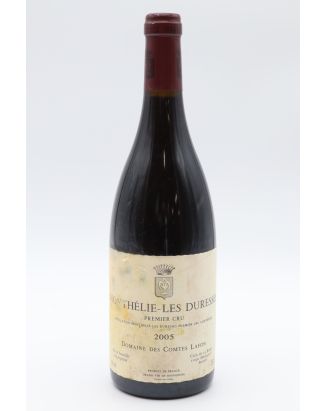
Comtes Lafon Monthélie 1er cru Les Duresses 2005
1 in stock
128528
Red
75cl
Very slightly damaged
90-91/100
88-90/100
Add to cart
Burgundy | Monthélie 1er cru

Comtes Lafon Monthélie 1er Cru Les Duresses 2005

€102.00 inc-VAT per bottle
€85.00 ex-VAT
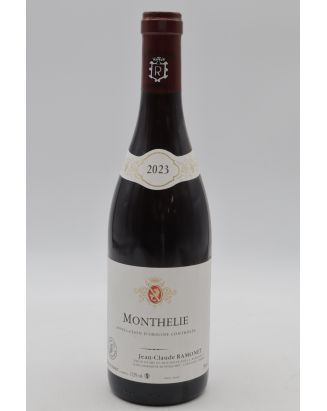
Ramonet Monthélie 2023
New
6 in stock
130888
Red
75cl
Add to cart
Burgundy | Monthélie

Ramonet Monthélie 2023

€60.00 inc-VAT per bottle
€50.00 ex-VAT

Where is the Monthélie appellation located?

The Monthélie appellation is located in Burgundy, in the Côte-d'Or, at the heart of the Côte de Beaune, approximately eight kilometres south-west of Beaune. It occupies the sole territory of the commune of Monthélie, perched on a promontory at the precise point where the hillside curves to give way to the valley of Auxey-Duresses. The vineyard covers approximately 120 hectares in production, of which around thirty are classified as premier cru, planted between 230 and 370 metres in altitude. Volnay borders it immediately to the north-east, Meursault to the south, Auxey-Duresses to the west, and Saint-Romain and the Hautes-Côtes de Beaune a little further away. This balcony position, overlooking the plain and the bell tower of Meursault, makes this village one of the most beautiful viewpoints on the hillside.

History of the Monthélie Appellation

The history of this vineyard mirrors that of the Côte de Beaune, shaped from the Middle Ages onwards by the Dukes of Burgundy and monastic establishments, which owned vines on the hillside. The village, whose Romanesque church dates back to the twelfth century, retains a three-hundred-year-old château and old vaulted cellars that bear witness to this long tradition. For generations, lacking a reputation of its own, the commune's wines were sold under the name of its neighbour Volnay, whose hillside they geologically extend — a common practice on the côte before the appellations system was established. The law of 1919 on appellations of origin and the delimitation work of the 1930s brought this to an end, and the decree of 31 July 1937 established the Monthélie appellation d'origine contrôlée, with fifteen climates recognised as premier cru. Since the 1990s, the arrival of a new generation of winegrowers, the conversion of several estates to organic and biodynamic farming, and the interest of great names from Meursault and Volnay have brought about a spectacular qualitative leap for this long-discreet village.

What are the terroirs of the Monthélie appellation?

The terroirs are divided into three clearly distinct groups, which explains the diversity of styles produced. The first extends directly from the Volnay hillside, facing south and south-east, on gravelly Bathonian limestone covered with red clay and marl: it is here that the finest and most complete reds are born, notably Sur la Velle and Les Champs Fulliot. The second opens onto the valley of Auxey-Duresses, on Oxfordian limestone, with east- or west-facing exposures depending on the slope and a cooler microclimate that yields more tensile wines, including Les Duresses and Le Cas Rougeot. The third corresponds to the alluvial fan at the mouth of the combe, with deeper soils, reserved for village-level cuvées. Among the fifteen premier crus are also Le Meix Bataille, Les Riottes, La Taupine, Le Clos Gauthey, Le Château Gaillard, Les Vignes Rondes, Le Clou des Chênes and Clos des Toisières.

What grape varieties are permitted in the Monthélie appellation?

The permitted grape varieties are pinot noir for the reds and chardonnay for the whites, as throughout the Côte de Beaune, with no blending between the two colours. Pinot noir, locally known as noirien, occupies the vast majority of the vineyard, with over 110 hectares compared to barely ten for chardonnay. On the red clays and limestone of the hillside, it produces wines with precise fruit and a firm structure, with aromas of black cherry, redcurrant, raspberry and violet, followed by spices and ripe fruit after a few years. Chardonnay, historically known in the region as aubaine, produces whites here that are straw-coloured, floral, both lively and rounded, with notes of almond, citrus and hazelnut. Pinot blanc and pinot gris, known locally as beurot, remain permitted on an accessory basis in keeping with Burgundian custom, but survive only in marginal quantities.

What are the different wine styles of Monthélie?

The appellation produces still reds and whites, with a very clear dominance of red. Two styles coexist: village-level cuvées, supple and fruity, made for immediate pleasure and everyday dining, and premier crus, denser, more tannic and built for ageing, especially on the slope that extends Volnay. The whites, produced in small quantities, offer an intermediate profile between the roundness of Meursault and the tension of Saint-Romain, making them a fine alternative for those seeking an affordable Burgundian chardonnay. Winemaking follows the practices of the hillside, with partial or total destemming, measured macerations and ageing in barrel for nine to fifteen months depending on the cuvée, with new oak used sparingly so as not to mask the aromatic finesse.

In terms of food and wine pairings, the reds accompany beef bourguignon, coq au vin, jambon persillé, roast poultry, lamb, mushrooms and medium-aged cheeses. The more structured premier crus support feathered game and meat in sauce. The whites pair well with fish, Burgundy snails, seafood and goat's cheese. Serve the reds between 14 and 16 °C, the whites between 11 and 13 °C.

What are the finest vintages of Monthélie?

The reference vintages of the past thirty years are 1999, 2002, 2005, 2009, 2010, 2015, 2017, 2018, 2019, 2020, 2022 and 2023. 2005 and 2010 remain the pinnacles of balance and ageing potential for reds, 2015 and 2018 were opulent, sun-drenched years, while 2017 and 2023 are more supple and aromatic vintages to open without delay. The whites were particularly successful in 2014, 2017, 2020 and 2023. On the other hand, 2003 yielded heavy wines, 2004, 2011, 2012 and 2013 produced uneven results that require careful selection of the estate, and 2016, 2021 and 2024 were affected by frost or mildew, resulting in very small harvests but some lovely bottles from the finest producers. Today, vintages from 2010 to 2019 are in their prime drinking window, while 2020, 2022 and 2023 still merit a few more years in the cellar for the premier crus. For older whites, bear in mind that Burgundian vintages from the late 1990s and early 2000s have been affected by premature oxidation.

What are the finest estates of the Monthélie appellation?

The finest estates bring together a number of historic properties from the village and great names from Meursault or Volnay. Domaine Éric de Suremain, established at the Château de Monthélie, is the benchmark. The family has farmed around ten hectares of Monthélie, Monthélie premier cru and Rully premier cru for four generations, practising organic and biodynamic viticulture since 1996, today with Gwendoline de Suremain alongside her parents. Its cuvée Sur la Velle, grown on one of the village's finest terroirs, and the monopole of Clos des Toisières are among the most sought-after bottles in the appellation.

Domaine des Comtes Lafon, a world-renowned reference estate based in Meursault, also owns vines in Monthélie and produces one of the village's most sought-after cuvées, on the climat Les Duresses. Farmed biodynamically, the estate applies here the same exacting standards as in Meursault, yielding wines of evident class that remain accessible relative to the prices commanded by its flagship appellations.

Domaine Rémi Jobard, based in Meursault and converted to organic farming, has established itself as one of the most reliable producers in the area. Its Monthélie premier cru Les Champs Fulliots regularly features among the appellation's highest-scoring wines, with vibrant fruit, marked tension and perfectly judged élevage.

Philippe Pacalet, a Burgundian winemaker renowned for his natural approach — without added yeasts or excessive sulphur — also produces a Monthélie premier cru Château Gaillard that has become rare and highly sought-after among enthusiasts. It should also be noted that the great négociant houses of Beaune — Bouchard Père et Fils, Louis Jadot and Joseph Drouhin — regularly offer a Monthélie premier cru in their range, often based on Les Champs Fulliot, providing a reliable entry point into the appellation.

How long should a Monthélie wine be kept?

A Monthélie wine generally keeps between four and fifteen years depending on the colour and the level of the appellation. Village-level reds are ideally enjoyed between four and eight years, when the fruit remains vibrant and the tannins have already softened. The premier crus, notably Sur la Velle, Les Champs Fulliot and Les Duresses, require five years of patience and easily hold for ten to fifteen years in good vintages, developing notes of spice, undergrowth and candied fruit. The whites are best enjoyed between three and eight years, with the finest cuvées capable of lasting up to ten years. The ideal cellar is kept between 11 and 14 °C, with good humidity, away from light and vibrations, with bottles stored on their sides. Decanting for thirty minutes usefully softens young premier crus, while bottles of more than ten years simply need to be opened shortly before serving.

WHAT THEY SAY ABOUT US

5 good reasons to buy wines on V&M

...

EXPRESS DELIVERY

In a secure polystyrene packaging

...

INTERNATIONAL SHIPPING

Find out more about VAT-EX sale for outside EU deliveries

...

COLLECTION NEAR PARIS & VAT REFUND FOR TOURISTS

Free collection in our warehouse near central Paris (92)

...