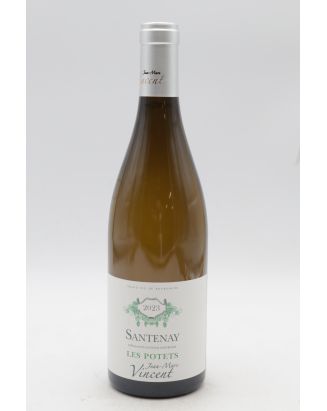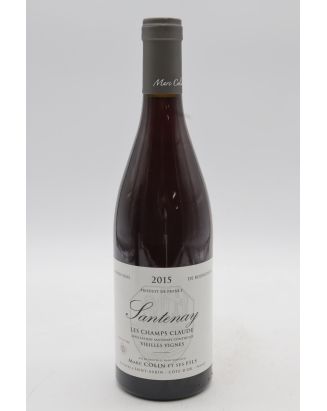
Santenay

All wines from the Santenay appellation in Burgundy

The wines of Santenay come from Burgundy, at the southern end of the Côte de Beaune, where the Côte d'Or bends before giving way to the Maranges and the Côte Chalonnaise. This village appellation produces a large majority of red wines from Pinot Noir, complemented by an ever-growing share of Chardonnay whites, and boasts twelve classified premier cru vineyards. The signature of this wine region lies in the firmness of its structure: a deep purple robe, aromas of cherry, strawberry and violet, a palate that is both structured and supple, evolving over time towards brandied cherry, forest floor and tobacco. The whites, rarer, captivate with their clarity and notes of hazelnut and fern. 

Read more
See more
Filters

Price

€20.00 - €160.00

Parker WA rating

88 - 95

Burghound rating

87 - 87

Revue du Vin de France rating

No choice available on this group

Bettane & Desseauve rating

15 - 16

Prices drop

Download this list
There are 16 products.
Download this list
Laurence Santenay Gravières 1964
Last one !
1 in stock
101345
Red
75cl
Damaged
-4cm
Add to cart
Burgundy | Santenay

Laurence Santenay Gravières 1964

€156.00 inc-VAT per bottle
€130.00 ex-VAT
Maison en Belles Lies Santenay 2020 blanc
Last one !
Bio
1 in stock
105731
White
75cl
Add to cart
Burgundy | Santenay

Maison en Belles Lies Santenay 2020 blanc

€54.00 inc-VAT per bottle
€45.00 ex-VAT
Bardollet Bravard Santenay 1966 -15% DISCOUNT !
-15%
1 in stock
111593
Red
75cl
Damaged
Level : -3.5cm
Add to cart
Burgundy | Santenay

Bardollet Bravard Santenay 1966 -15% DISCOUNT !

€102.00 inc-VAT per bottle €120.00 inc-VAT -15%
€85.00 ex-VAT
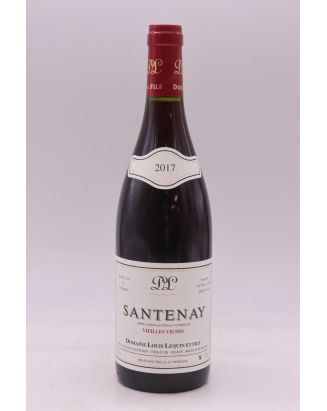
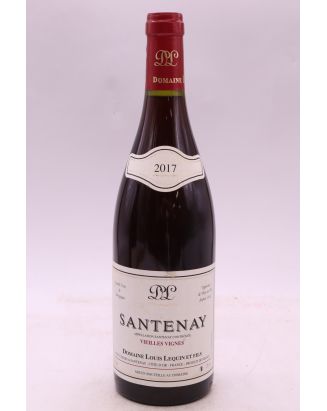
Louis Lequin & Fils Santenay Vieilles Vignes 2017
2 in stock
112127
Red
75cl
Add to cart
Burgundy | Santenay

Louis Lequin & Fils Santenay Vieilles Vignes 2017

€42.00 inc-VAT per bottle
€35.00 ex-VAT
Icy Liu Santenay Mulan 2024
Bio
5 in stock
121264
Red
75cl
Add to cart
Burgundy | Santenay

Icy Liu Santenay Mulan 2024

€72.00 inc-VAT per bottle
€60.00 ex-VAT
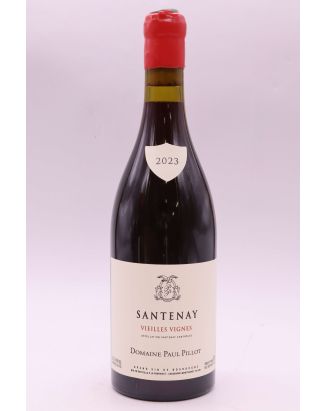
Paul Pillot Santenay Vieilles Vignes 2023
3 in stock
122663
Red
75cl
Add to cart
Burgundy | Santenay

Paul Pillot Santenay Vieilles Vignes 2023

€48.00 inc-VAT per bottle
€40.00 ex-VAT
Marthe Henry Santenay Le Bievaux 2020
Last one !
Bio
1 in stock
122968
White
75cl
Add to cart
Burgundy | Santenay

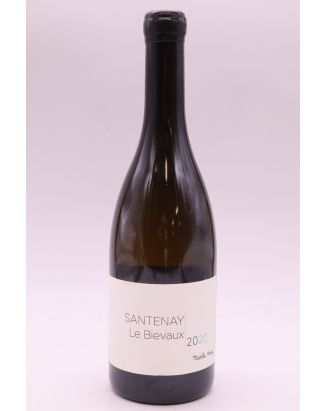
Marthe Henry Santenay Le Bievaux 2020

€54.00 inc-VAT per bottle
€45.00 ex-VAT
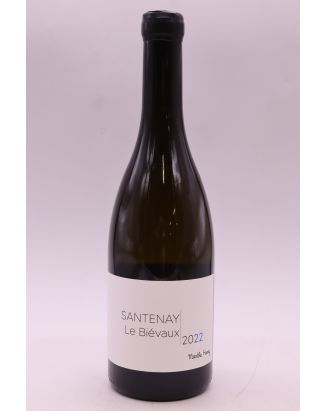
Marthe Henry Santenay Le Biévaux 2022
Bio
12 in stock
123451
White
75cl
Add to cart
Burgundy | Santenay

Marthe Henry Santenay Le Biévaux 2022

€48.00 inc-VAT per bottle
€40.00 ex-VAT
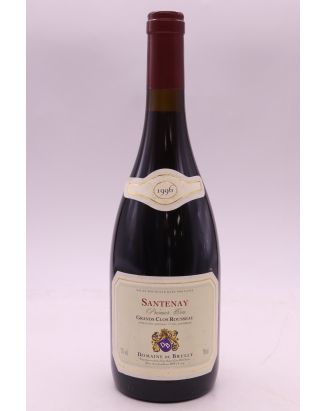
La Croix de Brully Santenay 1er cru Grand Clos Rousseau 1996
3 in stock
125308
Red
75cl
Add to cart
Burgundy | Santenay 1er cru

La Croix de Brully Santenay 1er cru Grand Clos Rousseau 1996

€66.00 inc-VAT per bottle
€55.00 ex-VAT
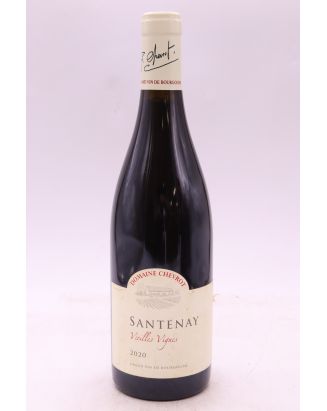
Chevrot Santenay Vieilles Vignes 2020
1 in stock
127939
Red
75cl
Add to cart
Burgundy | Santenay

Chevrot Santenay Vieilles Vignes 2020

€36.00 inc-VAT per bottle
€30.00 ex-VAT
Lequin Santenay Vieilles Vignes 2017
1 in stock
128048
Red
75cl
Add to cart
Burgundy | Santenay

Lequin Santenay Old Vines 2017

€36.00 inc-VAT per bottle
€30.00 ex-VAT
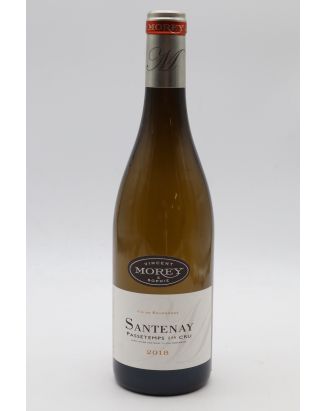
Vincent Morey Santenay 1er Cru Passetemps 2018 White
6 in stock
129257
White
75cl
90/100
87/100
Add to cart
Burgundy | Santenay 1er cru

Vincent Morey Santenay 1er cru Passetemps 2018 white

€66.00 inc-VAT per bottle
€55.00 ex-VAT
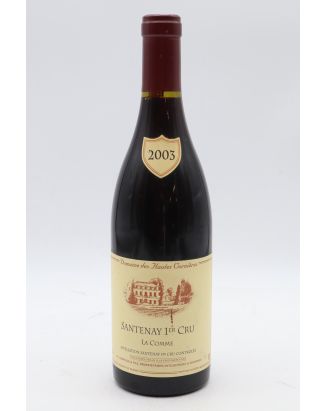
Des Hautes Cornières Santenay 1er cru La Comme 2003
8 in stock
129418
Red
75cl
Add to cart
Burgundy | Santenay 1er cru

Des Hautes Cornières Santenay 1er Cru La Comme 2003

€48.00 inc-VAT per bottle
€40.00 ex-VAT
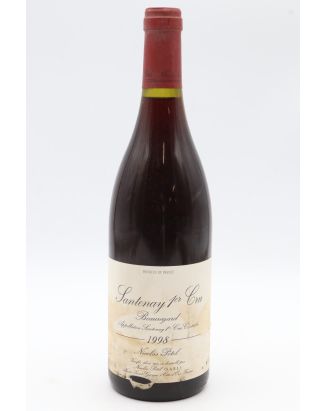
Nicolas Potel Santenay 1er cru Beauregard 1998 - PROMO -5% !
-5%
1 in stock
129600
Red
75cl
Slightly Damaged
Add to cart
Burgundy | Santenay 1er cru

Nicolas Potel Santenay 1er Cru Beauregard 1998 - PROMO -5% !

€68.40 inc-VAT per bottle €72.00 inc-VAT -5%
€57.00 ex-VAT
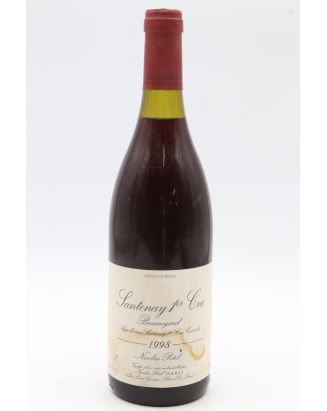
Nicolas Potel Santenay 1er cru Beauregard 1998
5 in stock
129601
Red
75cl
Very slightly damaged
Add to cart
Burgundy | Santenay 1er cru

Nicolas Potel Santenay 1er Cru Beauregard 1998

€72.00 inc-VAT per bottle
€60.00 ex-VAT
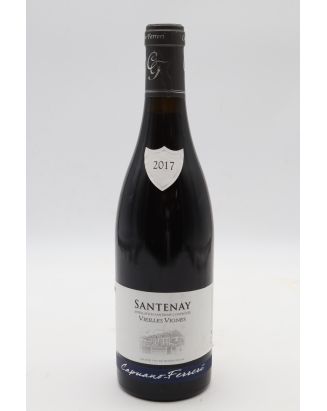
Capuano Ferreri Santenay Vieilles Vignes 2017
2 in stock
129611
Red
75cl
Add to cart
Burgundy | Santenay

Capuano Ferreri Santenay Vieilles Vignes 2017

€30.00 inc-VAT per bottle
€25.00 ex-VAT

Where is the Santenay appellation located?

The Santenay appellation is located in Burgundy, at the very southern end of the Côte de Beaune, around twenty kilometres from Beaune. It straddles two départements: the commune of Santenay, in the Côte-d'Or, which makes up the bulk of it, and a small part of Remigny, in Saône-et-Loire. The vineyard sits between the calcareous plateaux of the Hautes-Côtes to the west and the Bresse plain to the east, on slopes with a general easterly and southerly exposure. The area declared in production is around 330 hectares, of which approximately 125 are premier cru, for a production of around 14,000 hectolitres, with nearly 80% reds. This appellation extends Chassagne-Montrachet to the north and precedes Les Maranges to the south-west, in a village also known for its thermal spa and its casino.

History of the Santenay appellation

The history of the Santenay appellation is rooted in that of the Côte d'Or vineyard, described as early as the beginning of the fourth century and developed from the sixth century onwards by the great monastic estates, then by the Abbey of Cîteaux, founded in 1098. The village, dominated by the Mont de Sène and its three crosses, long belonged to the Dukes of Burgundy: the Château de Santenay, today known as Château Philippe le Hardi, recalls this direct link with the duke who, in 1395, banned gamay in favour of pinot noir on his lands — a founding decision for the quality of Burgundian reds. In 1416, Charles VI fixed by edict the production boundaries of Burgundy wine.

The nineteenth century brought its share of scourges, from the vine moth to powdery mildew, then downy mildew and phylloxera, which forced the reconstruction of the vineyard through grafting. Village cohesion played a decisive role at that time: a mutual aid society brought together producers and craftsmen as early as 1856, and a syndicate to defend viticultural interests took shape in the 1920s. The appellation d'origine contrôlée was recognised by the decree of 8 December 1936, as part of the broad movement creating Burgundian AOCs, with the hierarchy of premier crus being specified at the beginning of the 1940s and then revised in 1970. Since the 2000s, the rise of whites and the conversion to organic farming have significantly changed the face of this vineyard.

What are the terroirs of the Santenay appellation?

The terroirs of the Santenay appellation owe their diversity to a major geological event — the Santenay fault — which disrupts the regular layout of the Côte and multiplies the exposures. On the upper slopes, the greyish limestone yields taut wines with a marked structure. On the descending slope, the oolitic limestones mixed with marls and scree produce more complete and more rounded wines. Towards the west, in the direction of Les Maranges, the soils become enriched with clay and iron oxide, giving more deeply coloured and firmer reds. The climate, temperate with a slight continental tendency, benefits from cool nights that preserve aromatic freshness.

Twelve climates are classified as premier cru, all situated mid-slope on the best exposures; the appellation has no grand cru. The northern sector, in the continuation of Chassagne-Montrachet, brings together the most reputed climates: Les Gravières, Clos de Tavannes, La Comme, Beauregard, La Maladière, Passetemps, Beaurepaire, Clos Faubard and Clos des Mouches. The western sector, facing towards Dezize and Les Maranges, groups together Clos Rousseau, Grand Clos Rousseau and Les Fourneaux, on heavier soils. The village itself is divided between Santenay-le-Bas and Santenay-le-Haut, the latter backed up against the finest slopes.

What grape varieties are authorised in the Santenay appellation?

Two grape varieties structure the Santenay appellation, following the classic rule of the Côte d'Or. Pinot noir, known locally as pinot noirien, makes up the red wines: a delicate variety, susceptible to disease and demanding in terms of shoot removal, it ripens in the first period and yields here wines with good colour, firm and often velvety tannins, with notes of cherry, strawberry and violet. Chardonnay, formerly known as aubaine, produces the white wines: it combines fine ripeness with preserved acidity, resulting in ample, precise wines with aromas of hazelnut and fern. As elsewhere in Burgundy, the specifications tolerate an accessory presence of chardonnay, pinot blanc and pinot gris — the latter known as pinot beurot — in the red wine blend, a practice that has become very rare. Yields are capped at around 50 hectolitres per hectare for reds and 57 for whites, with slightly lower thresholds for premier cru.

What are the different styles of Santenay wines?

Santenay wines are produced in two colours and two complementary registers. The reds, which are the great majority, are hand-harvested at the finest producers, sorted, fully or partially destemmed, then extracted with restraint through pigeage and pumping-over before ageing for twelve to eighteen months in barrel, generally with little new wood. The cuvées from the northern sector, notably Les Gravières and Clos de Tavannes, combine finesse and depth, while those of Clos Rousseau are more robust and require more time. The whites, more discreet but showing strong qualitative progress, are gently pressed, fermented in barrel and then aged on the lees with bâtonnage: they offer a fresh and vigorous palate, fine substance and a saline finish.

As for food and wine pairings, the reds accompany côte de bœuf, beef bourguignon, roast poultry, small game, mushrooms and aged cheeses such as époisses, brie de Meaux or a mountain tomme. The most structured premier cru cuvées pair well with meat dishes in sauce and slow-cooked preparations. The whites are suited to freshwater fish, cream-braised poultry, Burgundy snails, risottos and pressed cooked-curd cheeses such as comté or beaufort.

What are the best vintages of Santenay?

The best Santenay vintages of the past thirty years follow the rhythm of the Côte de Beaune. Among the great years are 1999, 2002 and 2005, then the remarkable duo of 2009 and 2010 — the first generous, the second of very classical rigour. 2015 produced dense and sun-drenched reds, 2016 yielded fine wines despite the frost that reduced volumes, and 2017 gave balanced and approachable bottles, particularly successful in white. 2018, 2019 and 2020 delivered concentrated and ripe reds, 2022 stands out for its balance and generosity, and 2023 marks a return to vibrant fruit with more comfortable volumes.

Conversely, 2004, 2011, 2012 and 2013 require careful selection, 2021 suffered a severe spring frost followed by a cool summer, yielding light and acidic wines produced in very small quantities, and 2024 will be remembered as a challenging vintage, marked by heavy downy mildew pressure. Today, the village appellation cuvées from 2019 to 2022 drink with pleasure, the premier crus from 2014 to 2018 are reaching maturity, while 2019, 2020 and 2022 still merit several more years of cellaring.

What are the best estates of the Santenay appellation?

The finest estates of the Santenay appellation have profoundly transformed its reputation within a generation, abandoning high yields in favour of plot-by-plot work. Domaine Jean-Marc Vincent, taken over in the late 1990s by Anne-Marie and Jean-Marc Vincent, has become a cult benchmark today: just a few hectares, an extremely meticulous approach to viticulture, rigorously sorted harvests, and cuvées of Beaurepaire, Passetemps and Les Gravières that have become near-impossible to find, at the highest prices in the village. Vincent Girardin, a native of Santenay, built the modern reputation of the appellation from the 1980s onwards before developing a house in Meursault: his Gravières remains a benchmark entry point.

Domaine Lucien Muzard et Fils, run by brothers Claude and Hervé, has established itself as one of the best value-for-money producers in the entire Côte de Beaune: organic viticulture, old vines and a complete range spanning from Clos de Tavannes to Clos Faubard via La Maladière, with wines that are precise, spiced and flavoursome. Domaine Bachey-Legros, led by Christiane Bachey-Legros and her sons, draws on a heritage of very old vines, notably in Les Fourneaux, Clos Rousseau and La Comme, from which it produces deep and generous old-vine cuvées.

The appellation also attracts growers from neighbouring villages — a clear sign of the quality of its climates: Hubert Lamy, from Saint-Aubin, produces a highly sought-after Clos des Hâtes there, Thomas and Caroline Morey, from Chassagne-Montrachet, vinify excellent Grand Clos Rousseau and La Comme, and the legendary Domaine Leroy produces a Comme that has become a collector's item. The major Beaune négociant houses such as Louis Jadot and Joseph Drouhin also offer regular and well-distributed cuvées there.

How long should a Santenay wine be kept?

How long a Santenay wine should be kept depends on its colour, its climate of origin and the producer's style. Village appellation reds are ideally enjoyed between five and ten years, the period when fruit and suppleness are best expressed. Premier crus from the northern sector, such as Les Gravières or the Clos de Tavannes, open up after five to six years and evolve superbly over twelve to fifteen years. The firmer cuvées from Clos Rousseau and Les Fourneaux, as well as old-vine wines, demand more patience and can exceed twenty years in great vintages. The whites are best drunk between three and eight years, with the finest premier crus easily reaching ten to twelve years.

To preserve this potential, store bottles on their sides, in darkness and away from vibrations, between 11 and 13 degrees, with humidity of 70 to 75%. Serve the reds between 14 and 16 degrees and the whites between 11 and 13 degrees. Thirty minutes to one hour of decanting benefits young premier cru reds that are still closed, softening their tannic structure, while older vintages — more fragile — require only a gentle opening just before serving or a simple pour into a wide glass.

WHAT THEY SAY ABOUT US

5 good reasons to buy wines on V&M

...

EXPRESS DELIVERY

In a secure polystyrene packaging

...

INTERNATIONAL SHIPPING

Find out more about VAT-EX sale for outside EU deliveries

...

COLLECTION NEAR PARIS & VAT REFUND FOR TOURISTS

Free collection in our warehouse near central Paris (92)

...