Ruppert Leroy Fosse Grely Brut Nature R22
Ruppert Leroy Martin Fontaine Brut Nature R22
Personalise your experience
Change your country, language and currency here whenever you wish.
|
|
|
Must-See Châteaux |
|
|
|
|
|
|
|
|
The four-hectare Ruppert Leroy family estate in the Aube, in southern Champagne (Côte des Bar), continues to draw attention for its exceptionally precise single-plot champagnes. Bénédicte Ruppert and Emmanuel Leroy have enjoyed a spectacular rise since Domaine Ruppert Leroy began producing champagnes under the name Champagne Ruppert Leroy in 2010, after taking over the vines from Bénédicte’s parents in 2009. The couple obtained organic certification in 2013, then completed their conversion to biodynamic farming in 2014 with Demeter certification.
The estate’s story begins in 1970, far from the great houses of Reims and Épernay. Gérard Ruppert, a trained philosopher and sheep farmer, bought just over half a hectare of Chardonnay on the outskirts of Essoyes, a village known as the site of Auguste Renoir’s country home. Captivated by the beauty of this Kimmeridgian terroir and its ideal exposure, he gradually expanded the plot, planting Pinot Noir from massal selection, and adopted organic practices long before they became fashionable in Champagne. He and his partner gradually gave up raising sheep to devote themselves entirely to the vines.
The reputation of his grapes quickly drew buyers’ attention, from small growers to major Marne houses, and for many years the harvest went elsewhere. As he approached retirement and refused to sell his land, Gérard Ruppert persuaded his daughter Bénédicte to leave her job and join him. She settled there in 2009 with her partner Emmanuel Leroy, and the estate took its present name. The first two vintages made under the family label, 2010 and 2011, immediately offered three distinct expressions of the property’s terroirs and established the house as a benchmark for terroir-driven Champagne. Certified organic and biodynamic, the estate remains tiny and deliberately low-profile.
The vineyard covers four hectares divided among three plots on southeast-facing hillsides. This is the Côte des Bar, at the southern edge of the appellation, where Kimmeridgian marl and limestone soils are far closer to those of the Chablis area than to the chalk of the Côte des Blancs. This geological kinship explains the wines’ characteristic tension and salinity.
La Fosse-Grely is the estate’s largest plot, at 2.13 hectares, and the only one planted with both Chardonnay and Pinot Noir. Its name combines fosse, meaning hollow, and grely, an old local word for gravel. Red clay dominates its soils. Les Cognaux, 1.32 hectares of Pinot Noir whose name means “little corner” in the local dialect, occupies a steep hillside of gray marl studded with fossilized shells and hard limestone. Martin Fontaine, 0.55 hectares of Chardonnay, is the steepest and most limestone-rich plot, with the thinnest layer of clay. The vineyard practices are a statement of principle: light tractors to avoid compacting the soil; compost and horn manure produced on the farm; horn silica; herbal infusions and decoctions; weaving shoots rather than trimming them to avoid stressing the vines; rigorous shoot thinning to reduce yields; and hand harvesting, with sorting directly in the rows.
The philosophy can be summed up in one sentence: make wine before making Champagne. Each plot is vinified separately every year to bring out its terroir as fully as possible. Fermentation begins solely with the native yeasts on the grapes, without added yeast or adjustments. The cuvée from La Fosse-Grely is vinified in stainless steel to preserve the fruit’s brightness, while Les Cognaux and Martin Fontaine ferment and age in barrels and 600-liter casks, gaining texture and complexity.
The list of steps they avoid is as telling as the list of those they take: no fining, no filtration, no added sulfur for several vintages now, and no dosage, as the entire range is brut nature. Even tartrate stabilization occurs naturally, making use of winter frosts to preserve the wines’ character as faithfully as possible. Bottles are released only after at least 18 to 22 months on the lees, often longer. The house recommends refrigerating the bottle for an hour before serving and enjoying the wine at around 11°C, while avoiding the freezer altogether, so it can reveal its full substance.
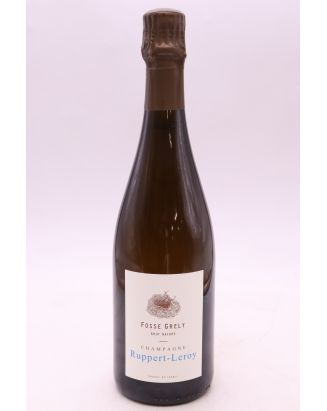
Fosse-Grely Brut Nature: the estate’s original cuvée, born of the founding plot Gérard Ruppert bought in 1970 and its later extensions planted from massal selections. It blends Pinot Noir and Chardonnay from the property’s only plot containing both varieties, grown on red clay and gravel. Vinified in stainless steel, it is lively and floral, with a sharp minerality that clearly expresses the soil’s kinship with that of Chablis. Vintage-dated and with no dosage, it is the ideal introduction to the estate’s wines.
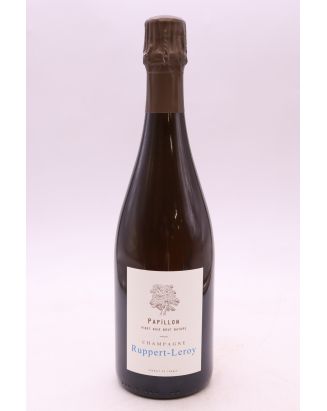
Papillon Brut Nature: since the 2014 vintage, Gérard Ruppert’s original planting of massal-selection Pinot Noir, an extension of the La Fosse-Grely vineyard, has been vinified and bottled separately. Its name comes from the butterflies that inhabit these rows, a testament to the biodiversity nurtured on the estate. The wine displays remarkable fruit definition and finesse, in a more delicate, airy style than the other cuvées. Produced in tiny quantities.
Les Cognaux Brut Nature: a single-plot blanc de noirs made from 100% Pinot Noir grown on a steep hillside of Kimmeridgian gray marl dotted with fossilized shells. Fermented and aged in wood, this wine seamlessly combines incisive minerality, fleshy red fruit with an almost meaty quality, and notes of dried fruit and lees. It is the estate’s most vinous and profound cuvée, a Champagne for the table, best served in a wine glass rather than a flute.
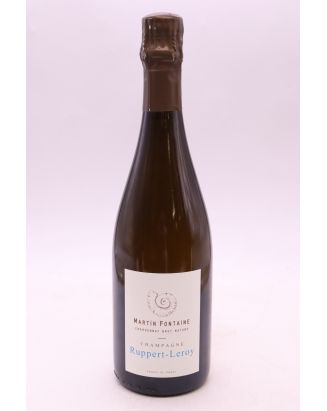
Martin Fontaine Brut Nature: the white counterpart to Les Cognaux, made from 100% Chardonnay grown on the estate’s steepest, most limestone-rich plot, where the clay layer is thinnest. Made using the same approach—fermentation and aging in barrels—it offers an exciting combination of richness and creamy texture, lifted by bright, high-toned citrus freshness. A Côte des Bar blanc de blancs of striking precision.
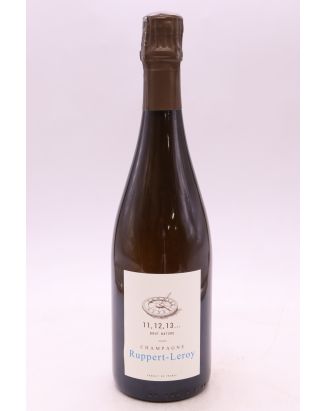
11, 12, 13... Brut Nature: the estate’s only non-vintage cuvée, drawn from a perpetual reserve of wines from every plot, with the oldest dating back to 2011. It fully captures the house style: a fresh, lively Champagne with clear-cut fruit on opening, whose complexity emerges gradually with air, followed by a full, vibrant, perfectly balanced palate. Its beautifully complex finish makes it one of the estate’s most admired cuvées.
Puzzle: a one-off cuvée born of a spring devastated by frost. With too little fruit of their own, Bénédicte and Emmanuel blended grapes from their plots with grapes offered by their organic winegrower friends in the Côte des Bar. Made according to the same principles, with no added sulfur or dosage, it symbolizes the solidarity and resilience of a community of winegrowers. A rare bottle, rich in story as well as flavor.
COLLECTION NEAR PARIS & VAT REFUND FOR TOURISTS
Free collection in our warehouse near central Paris (92)