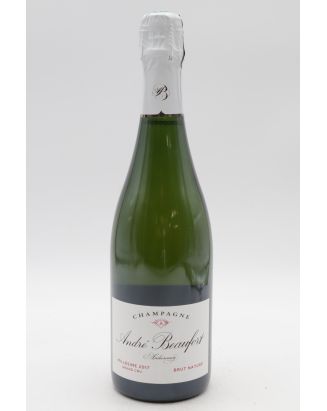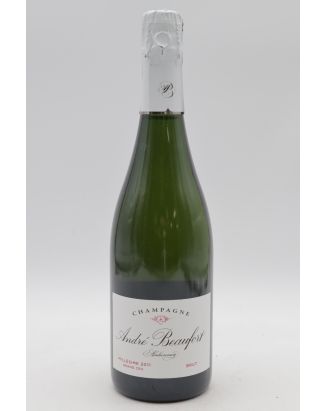
André Beaufort

A pioneer of organic Champagne: André Beaufort

The wines of Domaine André Beaufort: buy at the best price

The Domaine André Beaufort is located in Ambonnay, one of the 17 villages classified as Grand Cru in the Champagne region. André Beaufort, who took over from his father in 2007, has a vineyard of 6.5 hectares of vines in Ambonnay (classified Grand Cru) on the Montagne de Reims, as well as in Polisy in the Aube. Champagne André Beaufort remains a pioneer in ecology and organic viticulture, as his father Jacques Beaufort began working in organic farming as early as 1971, following an allergy to synthetic products.

Read more
See more
Filters

Price

€40.00 - €260.00

Bottle size

Parker WA rating

No options available for this group

Burghound rating

No options available for this group

Revue du Vin de France rating

No options available for this group

Bettane & Desseauve rating

No options available for this group

Prices drop

No options available for this group

Download this list
There are 12 products.
Download this list
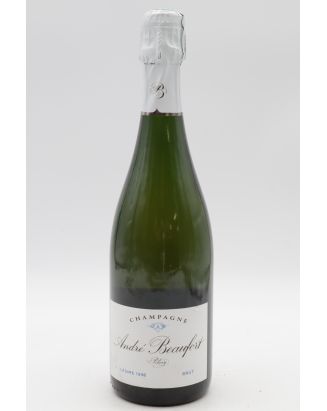
André Beaufort Polisy Brut 1996
Bio
Biodynamie
1 in stock
105495
White
75cl
Disgorged 2023
Add to cart
Champagne | Champagne

André Beaufort Polisy Brut 1996

€192.00 inc-VAT per bottle
€160.00 ex-VAT
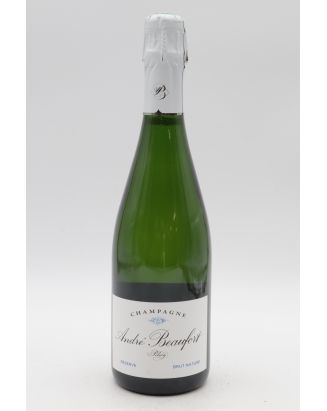
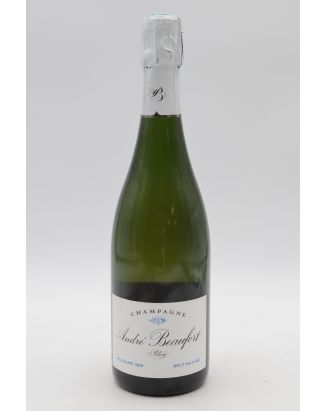
André Beaufort Polisy Brut Nature Réserve
24 in stock
131372
White
75cl
Disgorged in 07/26
Add to cart
Champagne | Champagne

André Beaufort Polisy Brut Nature Réserve

€46.00 inc-VAT per bottle
€38.33 ex-VAT
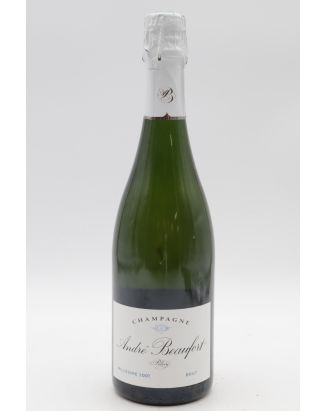
André Beaufort Polisy Brut 2007
3 in stock
131373
White
75cl
Disgorged in 06/17
Add to cart
Champagne | Champagne

André Beaufort Polisy Brut 2007

€71.00 inc-VAT per bottle
€59.17 ex-VAT
André Beaufort Polisy Brut 2001
4 in stock
131375
White
75cl
Disgorged in 03/17
Add to cart
Champagne | Champagne

André Beaufort Polisy Brut 2001

€102.00 inc-VAT per bottle
€85.00 ex-VAT
André Beaufort Polisy Brut 1996
4 in stock
131376
White
75cl
Disgorged in 12/25
Add to cart
Champagne | Champagne

André Beaufort Polisy Brut 1996

€192.00 inc-VAT per bottle
€160.00 ex-VAT
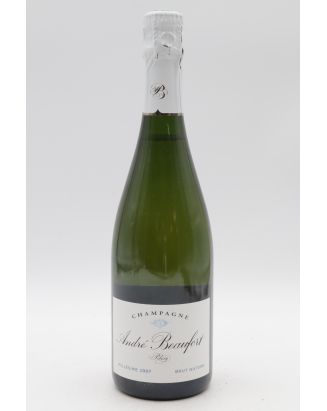
André Beaufort Polisy Brut 1989
Last one !
1 in stock
131377
White
75cl
Disgorged in 07/23
Add to cart
Champagne | Champagne

André Beaufort Polisy Brut 1989

€253.00 inc-VAT per bottle
€210.83 ex-VAT
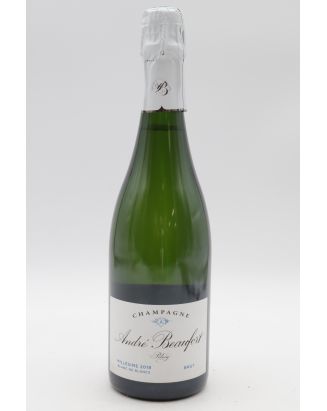
André Beaufort Polisy Blanc de Blancs Brut 2018
Last one !
1 in stock
131378
White
75cl
Disgorged in 01/25
Add to cart
Champagne | Champagne

André Beaufort Polisy Blanc de Blancs Brut 2018

€63.00 inc-VAT per bottle
€52.50 ex-VAT
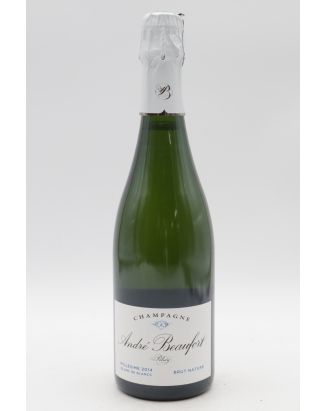
André Beaufort Polisy Blanc de Blancs Brut 2014
6 in stock
131379
White
75cl
Disgorged in 01/24
Add to cart
Champagne | Champagne

André Beaufort Polisy Blanc de Blancs Brut 2014

€71.00 inc-VAT per bottle
€59.17 ex-VAT
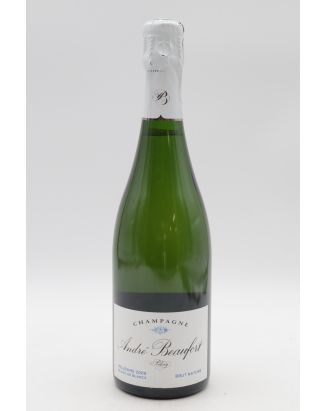
André Beaufort Polisy Blanc de Blancs Brut 2009
3 in stock
131380
White
75cl
Disgorged in 12/25
Add to cart
Champagne | Champagne

André Beaufort Polisy Blanc de Blancs Brut 2009

€76.00 inc-VAT per bottle
€63.33 ex-VAT
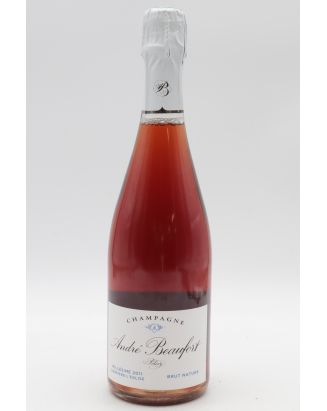
André Beaufort Polisy Derrière l'Eglise Brut 2011 Rosé
4 in stock
131382
Rosé
75cl
Disgorged in 01/24
Add to cart
Champagne | Champagne

André Beaufort Polisy Derrière l'Eglise Brut 2011 Rosé

€96.00 inc-VAT per bottle
€80.00 ex-VAT
André Beaufort Ambonnay Grand Cru Brut 2017
4 in stock
131383
White
75cl
Disgorged in 10/24
Add to cart
Champagne | Champagne Grand cru

André Beaufort Ambonnay Grand Cru Brut 2017

€77.00 inc-VAT per bottle
€64.17 ex-VAT
André Beaufort Ambonnay Grand Cru Brut 2011
5 in stock
131384
White
75cl
Disgorged in 01/24
Add to cart
Champagne | Champagne Grand cru

André Beaufort Ambonnay Grand Cru Brut 2011

€96.00 inc-VAT per bottle
€80.00 ex-VAT

History of Champagne André Beaufort

The house’s history is intertwined with that of a winemaking family based in Ambonnay, one of Champagne’s seventeen Grand Cru villages. Established under the name André Beaufort, the estate took a decisive turn in the late 1960s under Jacques Beaufort. In 1969, faced with severe allergies caused by synthetic chemicals, he decided to seek other ways to treat his vines while protecting his health. By 1971, he was growing grapes without chemical fertilizers, herbicides, insecticides or synthetic fungicides, making him one of the region’s earliest organic winegrowers.

Around the same time, the family acquired a vineyard in Polisy, in the Aube, which would give rise to a second range of cuvées. Jacques Beaufort’s fight extended beyond the vines: he challenged helicopter spraying that threatened the balance of his plots and won his case before the Reims Court of Appeal in 1988. The estate began certified organic conversion in 1994 and harvested its first certified organic crop in 1997. Since 2007, the next generation, including André and Réol Beaufort, has run the estate with the same spirit of independence and deliberate patience.

Terroirs and vineyards of Champagne André Beaufort

The vineyard, about seven hectares certified organic, is divided between two very different terroirs. In Ambonnay, on the Montagne de Reims, the vines grow on chalky soils in a village rated 100% Grand Cru, historically renowned for its black-grape wines. Pinot noir accounts for more than three-quarters of the vineyard area, complemented by chardonnay. This explains the cuvées’ powerful, full-bodied character, with touches of finesse from the white grape. Several named sites are now bottled separately, including Les Clos and La Bouteille.

About a hundred kilometers to the south, in Polisy in the Côte des Bar southeast of Troyes, the plots lie on clay-limestone soils shaped by Kimmeridgian geology. They are influenced by the Langres plateau, whose cold, damp air currents pass through the small valleys. The Derrière l’Église site produces a notable single-vineyard cuvée. Throughout the vineyards, shallow hoeing replaces herbicides, while plant-based compost made on the estate is supplemented with bone meal and blood meal. This compost maintains humus, limits erosion and retains moisture during drought. Since 1974, the house has experimented with essential oils and, since 1980, homeopathy, seeking to reduce the use of copper and sulfur and preserve the balance of wildlife.

Winemaking at Champagne André Beaufort

Harvest begins about a hundred days after full flowering, when the grapes are truly ripe rather than on a prescribed date. Pressing takes place immediately after picking to prevent any skin maceration, with the first-press juice and later pressings kept strictly separate. The must settles for at least twelve hours in a tank, often followed by a second, finer settling, before being transferred to barrels or tanks. The first alcoholic fermentation relies exclusively on native yeasts, with no products prohibited under organic standards.

In spring, malolactic fermentation occurs naturally, stabilizing the wine, reducing the need for SO2 and slightly lowering its acidity. Unlike the practice at many houses, no acid is added later. The wines spend around ten months in old barrels, which give them the richness and texture that are hallmarks of the estate. Secondary fermentation in bottle uses unrefined cane sugar or concentrated grape sugar. The bottles then rest horizontally on racks for months, often years, well beyond the legal minimums; the estate considers that a vintage wine only comes into its own after five years on its lees. Riddling is done by hand on racks and disgorgement by hand without freezing the neck, just before release. The dosage, made with concentrated grape sugar, then determines whether the wine is Brut, Demi-Sec or Doux. The disgorgement date appears on the label within the lot number.

The cuvées of Champagne André Beaufort

Ambonnay Grand Cru Brut Réserve: the core Ambonnay cuvée, a blend dominated by pinot noir (around 80%) with chardonnay, made exclusively from Grand Cru vineyards. Structured, full-bodied and highly aromatic, it expresses the strength of pinot noir tempered by the finesse of chardonnay. A vinous, long and generous champagne, almost a wine for contemplation.

Ambonnay Grand Cru Brut Millésime: the vintage Grand Cru, aged for many years on its lees before a recent disgorgement. The nose develops notes of ripe fruit, candied citrus, brioche and honey; the palate is both creamy and taut, underpinned by chalky minerality. The estate’s older vintages are among the most sought-after wines of organic Champagne.

Ambonnay Grand Cru Blanc de Blancs Brut: a rare 100% chardonnay expression of the Grand Cru, made from the small share of white grapes grown in the Ambonnay vineyard. More slender and crystalline than the pinot noir-led cuvées, it combines citrus, white flowers and salinity while retaining the fullness characteristic of the house’s oak aging.

Ambonnay Grand Cru Brut lieu-dit Les Clos: a single-vineyard cuvée from one Ambonnay climat, vinified separately to reveal its distinctive character. The chalk comes through clearly, with a dense texture and a saline finish. This is a food-friendly wine that calls for a few more years in the cellar.

Ambonnay Grand Cru Brut lieu-dit La Bouteille: Ambonnay’s second single-vineyard cuvée, produced in very small quantities. The wine emphasizes depth and ripe fruit, with an almost perceptible tannic structure inherited from Grand Cru pinot noir and remarkable length. A collector’s bottle.

Ambonnay Grand Cru Brut Rosé: a Grand Cru rosé made from Ambonnay pinot noir in the estate’s characteristic vinous style. Ripe red berries, cherry and a hint of spice lead into a broad, flavorful palate. A rosé for the table rather than the aperitif, to serve with white meats or poultry.

Ambonnay Grand Cru Demi-Sec Millésime: the house is one of the few in Champagne to champion its demi-sec wines openly, a historic success for the estate. In older vintages, the wine takes on an old-gold hue and develops notes of honey, macerated raisins, apricot and spice in a rich, mellow, compote-like whole. Ideal with foie gras and raisins or a pear with Roquefort.

Ambonnay Grand Cru Doux Rosé: the most generous wine in the range, a Grand Cru rosé with a higher dosage of concentrated grape sugar. Jammy, luscious and surprisingly fresh thanks to the acidity retained by the old vines, it pairs with red-fruit desserts and sweet-and-savory dishes. Produced in very limited quantities.

Polisy Brut Réserve: the entry-level cuvée from the Aube vineyard, combining predominantly pinot noir with chardonnay grown on the clay-limestone soils of the Côte des Bar. The nose offers yellow fruit, herbal notes and pastry; the palate is creamy, fruity and mineral, with good length. Often offered as Brut Nature, with no dosage.

Polisy Brut Millésime: a vintage expression of the Polisy terroir, aged for an extended period on its lees. Sunnier and fruitier than the Ambonnay range, it retains firm acidity thanks to the cool air currents from the Langres plateau. Recently disgorged vintages from the 1990s and 2000s rank among the estate’s most delightful surprises.

Polisy Blanc de Blancs Brut Millésime: pure chardonnay from the Côte des Bar, grown on Kimmeridgian soils similar to those of Chablis. The wine offers tautness, citrus and stony minerality, rounded out by time in old barrels and malolactic fermentation. Perfect with oysters, shellfish and delicate fish.

Polisy Blanc de Noirs Brut Millésime: by contrast, this cuvée showcases pinot noir alone. A golden color, a nose of ripe red fruit and undergrowth, and a broad, vinous, fleshy palate. A food-friendly champagne that pairs easily with white meat and mushrooms.

Polisy Brut Derrière l’Église Millésime: the single-vineyard Polisy cuvée, introduced with the 2010 and 2014 vintages, from a single named site in the heart of the village. More precise and more focused than the Réserve cuvée, it is often offered as Brut Nature, without any dosage, to let the soil speak. A rosé from the same site is also made in very small quantities.

Polisy Brut Rosé and Demi-Sec: the Polisy range also includes a vintage rosé full of fresh red fruit and energy, as well as Demi-Sec styles (Réserve, vintage or Doux). These dosaged cuvées, a house specialty, develop aromas of candied fruit, honey and gentle spice with age while retaining a lively acidity that keeps them easy to drink.

Potion Non Dosé: a limited-production, zero-dosage cuvée and the most unadorned expression of the estate’s work, sought after by lovers of natural champagnes. It conveys the fruit, chalk and texture imparted by extended lees aging without a filter.

Coteaux Champenois Ambonnay Blanc Grand Cru, Ambonnay Rouge and Polisy Rouge: the house’s still wines, with the reds made in the Burgundy style. The Ambonnay white offers a direct expression of the Grand Cru’s chalk, while the pinot noir reds—light, easy-drinking and scented with red fruit and spice—recall that Champagne was first a region of still wines. Rare bottles, produced only in favorable vintages.

WHAT THEY SAY ABOUT US

5 good reasons to buy wines on V&M

...

EXPRESS DELIVERY

In a secure polystyrene packaging

...

INTERNATIONAL SHIPPING

Find out more about VAT-EX sale for outside EU deliveries

...

COLLECTION NEAR PARIS & VAT REFUND FOR TOURISTS

Free collection in our warehouse near central Paris (92)

...