La Closerie - Jérôme Prévost

Champagne La Closerie – Jérôme Prévost: buy at the best price

In the landscape of grower Champagnes, few estates have managed, in the space of just a few decades, to establish a name as an absolute reference. Champagne La Closerie is the creation of Jérôme Prévost, disciple of the legendary Champagne artisan Anselme Selosse. Nestled in the village of Gueux, at the gateway to the Petite Montagne de Reims, this tiny estate embodies on its own a radical philosophy: letting the land speak, without artifice, without compromise. La Closerie belongs to the lineage of a small but powerful group of producers crafting intense Champagnes, transparent in their expression of terroir, vinous and deeply singular. 

Read more
See more
Filters

Price

€220.00 - €380.00

Appellation

Vintage

Volume

Parker WA rating

94 - 95

Burghound rating

No choice available on this group

Revue du Vin de France rating

No choice available on this group

Bettane & Desseauve rating

No choice available on this group

Prices drop

No choice available on this group

Download this list
There are 2 products.
Download this list
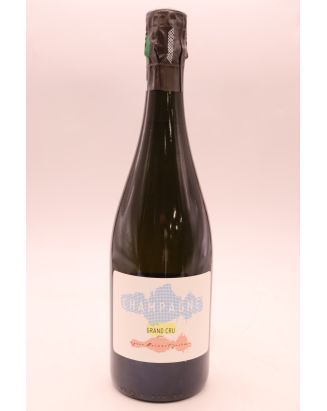
Jérôme Prévost La Closerie Grand Cru L23
11 in stock
124591
White
75cl
Add to cart
Champagne | Champagne

Jérôme Prévost La Closerie Grand Cru L23

€372.00 inc-VAT per bottle
€310.00 ex-VAT
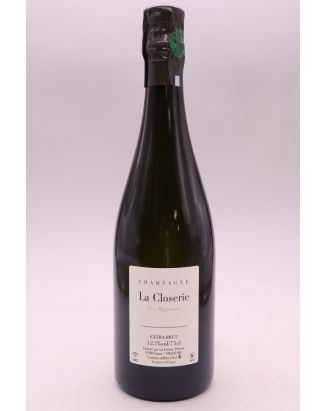
Jérôme Prévost La Closerie Les Béguines L23
4 in stock
124590
White
75cl
Add to cart
Champagne | Champagne

Jérôme Prévost La Closerie Les Béguines L23

€222.00 inc-VAT per bottle
€185.00 ex-VAT

History of Champagne La Closerie – Jérôme Prévost

Jérôme Prévost began in Gueux in 1987, taking over the single plot of Les Béguines, inherited from his mother, a single-block old-vine vineyard co-planted together. It was his mother herself who, doubting he could succeed as a winemaker, spurred him on to take the plunge. During the first decade, Jérôme sold his grapes to négociants, as he had no winery of his own.

In the mid-1990s, he began working at Jacques Selosse; it was Anselme Selosse who encouraged him to vinify his own grapes. His first cuvées, from the 1998 vintage, were produced in the Selosse cellars in Avize until 2001, when production was brought back to Gueux.

An artist at heart, Jérôme Prévost began as a painter, then became a sculptor and photographer. He enjoys browsing flea markets, writes poetry, and regularly organizes literary celebrations. This artistic sensibility permeates each of his cuvées, conceived as works of art in their own right. In 2018, he moved into a bespoke eco-responsible winery built adjacent to his "closerie" des Béguines.

Although his first vintage dates only from 1998, Jérôme Prévost is today one of the grower-producers whose champagnes are among the most sought-after on the global market. Above all, he has accomplished something historic: restoring the reputation of Pinot Meunier, long looked down upon by the grandes maisons.

Terroirs and Vines of Champagne La Closerie

The terroir of La Closerie is above all a single plot: Les Béguines, in Gueux. This lieu-dit is characterised by a Palaeocene geology dating from 59 to 55 million years ago, composed of Thanetian calcareous sands, a substratum of fossil limestones and marine sands, resting on the pure chalk that defines the region. This geological configuration, rare in Champagne, gives the wines a minerality of absolute singularity.

The vineyard stands apart through a topography unique in the Marne: twenty metres of fossil calcareous sands and fossilised marine shells above the bedrock of pure chalk that defines the region. This deep, well-draining soil, shaped over millions of years, allows the vine's roots to explore deep underground in search of the essential nutrients that give the grapes their aromatic complexity.

The Béguines vineyard, planted by massal selection, was established in the late 1950s, before the era of super-clones, using original cuttings. This choice of massal selection, specific to each vine and non-standardised, guarantees an irreplaceable genetic diversity, a faithful reflection of the place through time.

The king grape here is Pinot Meunier, representing 94% of the plantings, complemented by 2% Pinot Gris and 2% Chardonnay, both planted by massal selection. Yields are deliberately kept at extremely low levels, approximately half the legally permitted ceiling, in order to concentrate the expression of the terroir in every bunch. No chemical inputs are used in the vineyard, in full respect for the vine and its environment.

Winemaking at Champagne La Closerie

Jérôme Prévost's winemaking philosophy can be summed up in a few words: non-intervention, respect for the fruit, expression of the terroir. Every technical decision is guided by the desire not to alter the natural expression of the grape.

Jérôme Prévost harvests all his grapes by hand and conducts fermentations with indigenous yeasts in a blend of used barrels and 600-litre demi-muids. The barrels used for ageing are of different wood types and different capacities: 225, 228, 400, 500 and 600 litres. This diversity of containers enriches the aromatic palette of the wines without imposing a homogeneous oaky character.

The base wines are aged in these same barrels for approximately ten months, before bottling for the second fermentation, without fining, without filtration and without cold stabilisation, with a minimum of sulphur. Malolactic fermentation is not systematic; it follows the natural course of each vintage.

The champagnes are disgorged between 14 and 17 months after bottling. This deliberately short period on lees, for a Champagne, rests on a firmly held conviction of Jérôme Prévost: it is after disgorgement, during the evolution in bottle, that the most interesting developments occur, in the manner of a great Fine Wine rather than a classic champagne. He recommends waiting approximately six years after the base vintage for his wines to fully blossom.

The dosage is consistently very low, classifying the cuvées as Extra Brut, preserving all the purity and tension of the terroir.

The Cuvées of Champagne La Closerie – Jérôme Prévost

Esperluette (&) Extra Brut

The Closerie & (Esperluette) cuvée was created to offset losses caused by increasingly frequent climatic hazards: hail, frost, and storms. The grapes may come from different parts of Champagne depending on the year, some managed by Jérôme and his team, others by partner growers, always in close collaboration. The soils of the plots entering this cuvée are notably sandier than those of Prévost's own vineyard in Gueux. The blend also incorporates grapes from the village of Janvry, whose cooler microclimate brings tension, as well as a small proportion from Les Béguines, forming a "bridge" to the signature cuvée. This generous and immediately expressive extra brut champagne opens on aromas of ripe stone fruits, toasted brioche and white flowers. The palate is full, carried by a fresh acidity and a beautiful salinity on the finish. 

Les Béguines Extra Brut (flagship cuvée)

First brought to market in 1998, Les Béguines has become one of the most iconic cuvées in all of Champagne. It forms the heart of the estate's identity. The blend is composed of approximately 90% Pinot Meunier, with the remainder made up of the other grape varieties cultivated in the vineyard, Pinot Gris and Chardonnay. The base wine is aged for ten months in oak barrels, then bottled without filtration or fining, with a minimum of sulphur. The dosage is around 2.5 grams per litre. On the nose, Les Béguines opens on notes of ripe orchard fruits, light brioche, gentle spices and chalky minerality. On the palate, the texture is silky, the structure broad and precise, carried by a lively and persistent acidity. The long, saline finish reveals the full silent power of Pinot Meunier when raised with care. 

Fac-Similé Extra Brut Rosé

Jérôme Prévost crafts this rosé with an exceptionally delicate colour by adding a still red wine made from Pinot Meunier (13%) to the white base wine of Les Béguines (87%). The red wine is produced exclusively from small-berry Pinot Meunier, an intra-plot selection of tiny, concentrated berries, vinified without SO2 and aged for ten months in a single 228-litre barrel. First produced in 2007, the Fac-Similé embodies the pursuit of substance over colour. The dosage ranges between 2 and 3 grams per bottle, maintaining the Extra Brut status of the cuvée. The texture is remarkable: creamy, deep, woven with delicately spiced red fruits, dried flowers and a hint of citrus zest. The Fac-Similé is one of the most discreet and sought-after rosés on the grower Champagne market.

Grand Cru Extra Brut

The Grand Cru Extra Brut cuvée comes from vines located on Grand Cru terroirs of Champagne, characterised by chalky limestone soils that impart a distinctive minerality to the wines. This cuvée originates from massal-selection Pinot Meunier vines planted in the 1950s, with approximately 18 months on lees, followed by further evolution primarily in bottle after disgorgement. The Grand Cru cuvée develops a generous nose of browned orchard fruits, apple pastries, roasted dried fruits and chamomile. On the palate, it reveals apple tart, ripe stone fruits, toasted almonds, gentle spices, a beautiful salinity and a persistent minerality on the finish. The winemaking follows the same principles as for Les Béguines: spontaneous fermentation with indigenous yeasts, ageing in used oak barrels, without filtration, with a minimum of sulphur.

WHAT THEY SAY ABOUT US

5 good reasons to buy wines on V&M

...

EXPRESS DELIVERY

In a secure polystyrene packaging

...

INTERNATIONAL SHIPPING

Find out more about VAT-EX sale for outside EU deliveries

...

COLLECTION NEAR PARIS & VAT REFUND FOR TOURISTS

Free collection in our warehouse near central Paris (92)

...