Personalise your experience
Change your country, language and currency here whenever you wish.
|
|
|
Must-See Châteaux |
|
|
|
|
|
|
Ferdinando Principiano is one of the most respected winemakers in Piedmont and a leading figure in natural Barolo. Based in Monforte d'Alba, at the heart of the Barolo appellation, this family wine estate cultivates nebbiolo on exceptional terroirs such as Boscareto and Ravera di Monforte, as well as barbera, dolcetto, freisa and the rare timorasso. A proponent of organic viticulture and minimal-intervention winemaking, Ferdinando Principiano produces pure, elegant wines, deeply rooted in their terroir, aged in large oak casks and bottled without filtration.
The Principiano family has been cultivating the vine in the Langhe for several generations. The estate was founded in the 1950s by Americo Principiano, who at the time sold his grapes from Ravera and Serralunga to the winemakers of the region. In 1993, Ferdinando took over the family estate in Monforte d'Alba, following studies at the oenology school of Alba and an apprenticeship under two great names of Barolo — the traditionalist Giacomo Conterno and the modernist Roberto Voerzio.
Initially seduced by the fashion of the 1990s — characterised by powerful extractions, new oak and the pursuit of top scores — Ferdinando radically changed course at the beginning of the 2000s. Following a tasting in which all the wines seemed to him to resemble one another, he chose a more authentic path, faithful to the terroir. From 2003, he converted his estate to organic viticulture and natural winemaking, giving birth to Barolos that today rank among the most moving in Piedmont.
The vineyard extends over around twenty hectares spread between Monforte d'Alba, Serralunga d'Alba and the Alta Langa. The key plots are Boscareto, a historic vineyard in Serralunga with complex soils of marl and limestone, and Ravera di Monforte, a jewel planted with old nebbiolo vines, some dating back to the 1930s. So steep that it prevents the passage of a tractor, this hillside surrounded by woodland brings a rare biodiversity to the region. Other plots, such as Le Coste, Pian Romualdo, Montagliato and Santa Anna, round out this heritage.
The high altitude — up to around seven hundred and fifty metres for certain vines — and the proximity of the Alta Langa forests promote freshness and the natural balance of the grapes. Farming is organic and inspired by biodynamics, with no synthetic chemicals and minimal use of copper and sulphur. Ferdinando has even acquired wooded land and created a pond to support local wildlife and preserve the ecosystem.
In the cellar, Ferdinando Principiano favours a minimal-intervention approach that allows the terroir to speak. Fermentations take place exclusively with indigenous yeasts, followed by long and gentle macerations that can last up to a month. The great nebbiolos are aged in traditional oak casks, most often from Slavonia, for approximately two years, followed by bottle ageing.
Sulphur is added sparingly, sometimes not at all, generally only at the moment of bottling, and the wines are neither fined nor filtered. This philosophy yields vibrant, aromatic wines, often with a moderate alcohol level, that express their origin with sincerity. The lighter cuvées, such as the dolcetto, are vinified in stainless steel tanks to preserve their freshness and fruitiness.
Barolo Boscareto: the estate's flagship cuvée, this grand cru from old vines in Serralunga stands out for its structure, its savoury depth and its floral freshness. Aged two years in large traditional oak casks, it offers superb ageing potential.
Barolo Ravera di Monforte: a rare and niche Barolo from some of the estate's oldest nebbiolo vines, produced in very small quantities. Floral and mineral, it reveals aromas of wild herbs, liquorice and ripe red fruits, with fine tannins and great ageing potential.
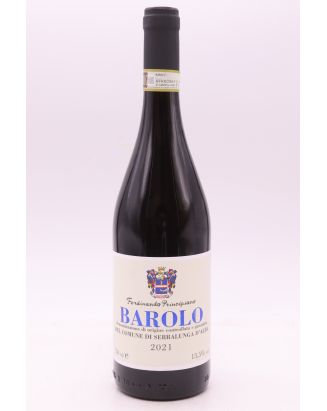
Barolo di Serralunga: sourced primarily from the young vines of Boscareto, this more supple and approachable Barolo captivates from an early age with its notes of violet, rose, tar and spices, while retaining the classic structure of the cru.
Langhe Nebbiolo: a blend of plots such as Le Coste, Montagliato and Boscareto, vinified in stainless steel tanks. Brilliant, pure and youthful, it provides an excellent entry point into the world of nebbiolo and the estate.
Barbera d'Alba Laura: from a century-old vineyard, this intense and floral barbera stands out for its mineral tension and long maceration. Deeply coloured, dense and fleshy, it pairs deliciously with everyday cuisine.
Dolcetto d'Alba Sant'Anna: a richer dolcetto, aged in four-hundred-litre barrels, which develops notes of cherry, blackberry and spices, in a more structured and concentrated style.
Dosset: dolcetto harvested early, at around ten and a half degrees of alcohol and with no added sulphur. Its Piedmontese name recalls the wines of yesteryear and the tradition of easy-drinking wines. Lively, juicy and energetic, it embodies everyday pleasure.
Langhe Bianco: an original white wine crafted from timorasso, a rare Piedmontese grape variety, which brings freshness, tension and diversity to a range dominated by reds.
Langhe Rosso: a red wine made notably from the indigenous slarina grape variety, a more niche cuvée that illustrates the estate's attachment to local varieties and immediate pleasure.
Langhe Freisa: produced from the freisa grape, a relative of nebbiolo, this fresh and aromatic wine with notes of red fruits and flowers offers a convivial and typical expression of the Langhe.
COLLECTION NEAR PARIS & VAT REFUND FOR TOURISTS
Free collection in our warehouse near central Paris (92)