Personalise your experience
Change your country, language and currency here whenever you wish.
|
|
|
Must-See Châteaux |
|
|
|
|
|
|
Domaine Vincent Paindavoine represents a remarkable new voice in the prestigious village of Vosne-Romanée. Established at the heart of one of Burgundy's most renowned terroirs, this young family estate cultivates plots acquired by Vincent's parents and grandparents, former employees of the Domaine de la Romanée-Conti. Drawing on his experience as head of viticulture at the Hospices de Beaune, where he oversees prestigious Grand Crus, Vincent Paindavoine now crafts his own wines with a respectful and meticulous approach to the Burgundian terroir.
The history of Domaine Vincent Paindavoine is that of a family determined to build a viticultural heritage in one of the most coveted terroirs in the world. Vincent's parents and grandparents worked for a long time at the Domaine de la Romanée-Conti, tending the most prestigious vines in Burgundy. From the late 1960s and again in the 1980s, they began acquiring tiny parcels in Vosne-Romanée, working by day for the DRC and devoting their evenings and weekends to their own vines. Aubert de Villaine even lent them a tractor to cultivate these precious family parcels.
This patient quest made it possible to build up a 1.5-hectare family vineyard spread across some fifteen parcels. After an initial career in theatre, Vincent trained in viticulture at the CFPPA in Beaune in 2005. He then gained solid experience with renowned winegrowers such as Rapet and Bruno Clavelier, before also working in South Africa.
Since 2012, Vincent Paindavoine has held the position of head of cultivation for the Grands Crus of the Côte de Nuits at the Hospices de Beaune, where he oversees exceptional parcels such as Clos de la Roche, Mazis-Chambertin and Echézeaux. This day-to-day experience in contact with the greatest Burgundian terroirs forges his expertise and nurtures his vision of winemaking.
In 2022, Vincent officially launched his own domaine by vinifying part of the family parcels. He also took over Domaine Rayard and acquired 0.15 hectares in Gevrey-Chambertin through the SAFER. His uncle Jean-Louis Raillard, mayor of Vosne-Romanée, progressively entrusted him with the entire family vineyard, allowing the domaine to enrich its range with the prestigious appellations Vosne-Romanée Village and Vosne-Romanée Premier Cru Les Beaux Monts from the 2025 vintage onwards.
Domaine Vincent Paindavoine cultivates fewer than 3 hectares spread across some fifteen parcels, working with Aligoté, Chardonnay and Pinot Noir vines. This mosaic of terroirs spans several appellations of the Côte de Nuits and the Côte de Beaune, offering a varied palette of expressions from the Burgundian soil.
The domaine's parcels benefit from the characteristic geology of the Côte d'Or. The soils are composed primarily of grey-blue clay of the Marne de Bresse type mixed with calcareous scree, ensuring excellent natural drainage. This combination imparts a distinctive minerality and fine ageing potential to the wines. The vines are east-facing, benefiting from optimal sunshine on the calcareous slopes of the Côte.
The domaine cultivates vines by mass selection inherited from previous generations, ensuring the preservation of authentic plants perfectly adapted to the terroir. Some parcels are home to century-old vines, notably an Aligoté of more than 90 years old planted in the lieu-dit Les Paquiers. The age of these vines brings aromatic concentration and complexity to the wines produced.
Viticulture at the domaine follows the principles of organic farming, with an official conversion whose certification is expected in 2025. Vincent also practises biodynamics, respecting natural rhythms and favouring plant-based preparations to strengthen soil vitality. Manual work predominates, limiting tractor use to spraying and ploughing between May and July.
Pruning methods vary according to the parcels: simple Guyot, Guyot-Poussard or gobelet. Trellising is adapted individually, with some vines being trimmed while others are tied. This personalised attention to each vine reflects a respectful viticultural philosophy in which observation takes precedence over standardisation. The goal is to produce healthy, well-balanced grapes that faithfully express their geographical origin without artifice.
Vinifications at Domaine Vincent Paindavoine are characterised by a gentle approach that respects the fruit. The white wines are pressed delicately, while the reds are almost exclusively destemmed. All fermentations proceed naturally with indigenous yeasts. This minimalist winemaking philosophy allows the grapes to fully express their terroir identity.
For the white wines, vinification is carried out without any initial addition of sulphur. The grapes are pressed directly, then cold-settled before spontaneous fermentation. Ageing takes place over 12 months in oak barrels. New wood is used up to a maximum of 30% and only for cuvées representing more than two barrels, thus preserving the finesse and natural aromatic purity of the wine. Occasional lees stirring enriches the texture without weighing down the structure.
The red wines benefit from a 5-day cold maceration without sulphur, followed by vinification of one to two weeks in stainless steel tanks with daily pump-overs and some punch-downs. This moderate extraction preserves the characteristic tannic elegance of Pinot Noir from Vosne-Romanée. Winemaking choices evolve according to the vintage: in 2022, the entire harvest was destemmed, whereas from 2024 onwards, a greater proportion of whole-cluster harvest is favoured, making it possible to adapt techniques to the climatic conditions of each year.
After pressing, the wines are left to settle for one week before beginning their 12-month ageing in barrels. Sulphur is added only after malolactic fermentation or before bottling, with very moderate total doses of between 40 and 80 ppm. A light filtration precedes bottling, ensuring stability while preserving the organoleptic richness of the wines.
This low-intervention approach, the fruit of experience gained on the greatest Burgundian terroirs, yields wines of remarkable purity, combining elegance, freshness and ageing potential.
Bourgogne Aligoté "Les Paquiers"
Produced from Aligoté vines of more than 90 years old planted in the lieu-dit Les Paquiers, to the north of Vosne-Romanée, this dry white wine offers a rare expression of this Burgundian grape variety. The clay-limestone soils with marl and calcareous scree impart a fine minerality to the wine. Fermented and aged in old oak barrels, this Bourgogne Aligoté develops a lemony freshness underpinned by a fine saline tension.
Produced from Chardonnay planted in 1984 in the lieu-dit Les Chassagnes, to the north of Vosne-Romanée, this white wine reveals the classic elegance of the Burgundian grape variety. Fermented and aged in barrels with 20% new wood, it displays a fine mineral tension accompanied by refreshing citrus notes. The palate shows a remarkable salinity, lending dynamism and length to the tasting.
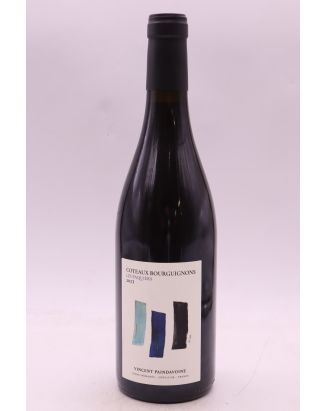
Coteaux Bourguignons "Les Paquiers"
Produced from 100% Pinot Noir from the same lieu-dit Les Paquiers, this red wine comes from vines planted 70% in 1968 and 30% in 2014 on clay-limestone soils with marl. Entirely destemmed, it undergoes a 5-day cold maceration followed by vinification of one to two weeks in stainless steel tanks with daily pump-overs. Aged in old barrels, this Coteaux Bourguignons offers a light and delicate interpretation of Pinot Noir from Vosne.
Nuits-Saint-Georges "Les Fleurières"
This cuvée comes from Pinot Noir vines of more than 80 years old planted in the Les Fleurières climat, situated at the foot of the slope just below the Premier Cru Pruliers, to the south of Nuits-Saint-Georges. The iron-rich soils impart structure and depth to this characterful red wine. Entirely destemmed and aged partly in new barrels, this Nuits-Saint-Georges reveals an elegant floral nose enhanced by subtle toasted notes.
Gevrey-Chambertin "Les Crais"
Added to the range in 2023, this Gevrey-Chambertin comes from a 0.15-hectare parcel acquired through the SAFER in the Les Crais climat. Located on the plains with a gravelly terroir, this climat generally produces more elegant and mineral wines.
Vosne-Romanée Village
From the 2025 vintage onwards, Vincent Paindavoine will vinify under his own name a Vosne-Romanée Village from the family parcels. He plans to create two distinct cuvées: one from the Champs Perdrix climat, the other blending the Ravioles and Maizières climates. These wines will form the flagship of the domaine, offering the most accomplished expression of the mythical terroir of Vosne-Romanée.
Vosne-Romanée Premier Cru "Les Beaux Monts"
From 2025, the range will also be enhanced by a Vosne-Romanée Premier Cru Les Beaux Monts, a prestigious climat recognised for producing some of the greatest Pinot Noirs in Burgundy. This top-of-the-range cuvée will represent the culmination of the patient work of Vincent and his family over several decades. Located at the top of the slope, this Premier Cru combines structured power with aromatic finesse, requiring several years of ageing to reveal its full complexity.
COLLECTION NEAR PARIS & VAT REFUND FOR TOURISTS
Free collection in our warehouse near central Paris (92)