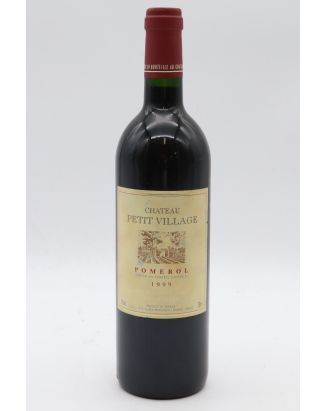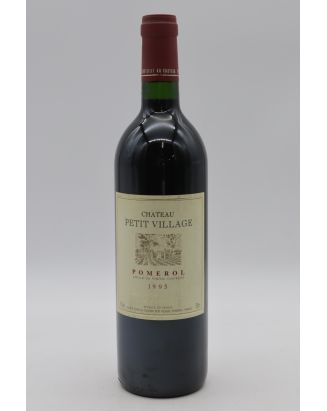
Le Jardin de Petit Village 2014
Personalise your experience
Change your country, language and currency here whenever you wish.
|
|
|
Must-See Châteaux |
|
|
|
|
|
|
At the heart of the Pomerol plateau - Pomerol
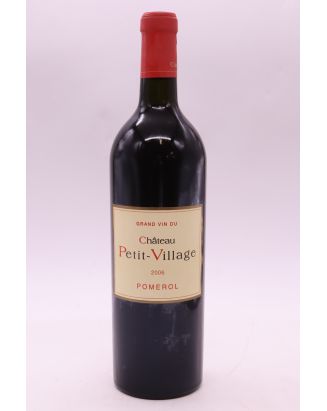
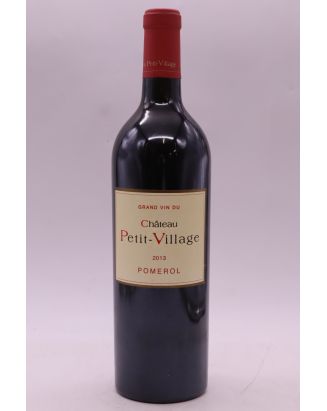
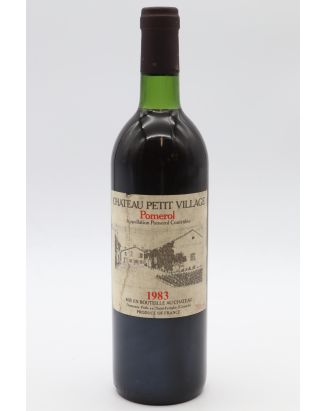
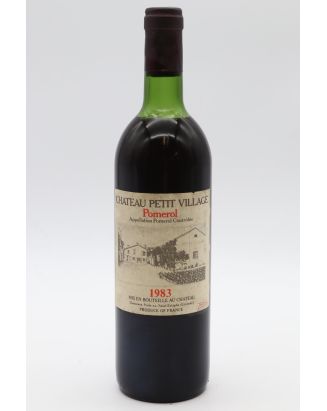
Located at the heart of the Pomerol plateau, Château Petit-Village benefits from an exceptional terroir that allows it to produce rich, supple wines of incomparable finesse. Owned by the Moulin family since 2020, this historic estate is in the midst of a renaissance, reconnecting with its origins while integrating modern techniques to bring out the best in each vintage. Through meticulous work in the vineyard and the cellar, the wines of Château Petit-Village offer a perfect expression of the Pomerol terroir, an emblematic appellation on the right bank of Bordeaux.
The history of Château Petit-Village dates back several centuries, although few documents survive from before the French Revolution. The name of the estate is said to come from the layout of its buildings, which recalls the shape of a small village. It was in 1919, after the First World War, that the estate entered a new era under the ownership of Bordeaux négociant Fernand Ginestet, marking the first acquisition of a château in the Libournais by a négociant.
Over the years, several families and companies have shaped the identity of Château Petit-Village. In the 1950s, following the terrible frost of 1956, a significant portion of the vineyards was replanted. Unfortunately, too great a proportion of Cabernet Sauvignon had been chosen, affecting the quality of the wines. It was not until the 1970s, under the management of Bruno Prats, that the vineyard was restructured and the Cabernet Sauvignon replaced by Merlot, the emblematic grape variety of Pomerol.
In 1989, the estate was acquired by AXA Millésimes, under the direction of Jean-Michel Cazes. This insurance group invested in the modernisation of the château, notably with the renovation of the cellars and the replanting of vines. However, it was in 2020 that Château Petit-Village embarked on a true renaissance with its acquisition by the Moulin family, also owners of Château Beauregard. Under the direction of Vincent Priou, and with the support of Augustin Belloy, the Moulin family aspires to elevate Château Petit-Village to the level of the greatest estates in Pomerol, such as Trotanoy or Le Pin.
Château Petit-Village benefits from a privileged location at the summit of the Pomerol plateau, at an altitude ranging between 35 and 38 metres. Its 10.5-hectare vineyard is composed of a single contiguous block, forming almost an equilateral triangle. This terroir, the true heart of the appellation, is characterised by deep gravel covered with clay and light sand, resting on a subsoil of clay and iron-rich crasse de fer, typical of the great wines of Pomerol. This gravel, mixed with quartz and flint, gives the wine a unique structure and exceptional ageing capacity.
The estate's grape varieties consist primarily of Merlot (75%), which contributes roundness, velvety texture and generosity to the wines. Alongside it, Cabernet Franc (18%) and Cabernet Sauvignon (7%) add complexity, structure and depth. Each plot of the vineyard is carefully planted with the grape variety best suited to its characteristics, ensuring perfect harmony between vine and terroir.
The average age of the vines is 30 years, and since 2020, a large part of the vineyard has been replanted in order to improve the quality and consistency of the vintages. Furthermore, Château Petit-Village is in the process of obtaining organic certification, marking a strong commitment to sustainable and environmentally responsible viticulture.
The winemaking process at Château Petit-Village is both traditional and innovative, combining ancestral methods with modern techniques to optimise the potential of the terroir. Each harvest is carried out by hand, ensuring a meticulous selection of the finest grapes at optimal ripeness. The estate has a modern winery, renovated in 2006, equipped with temperature-controlled concrete vats of various sizes, ranging from 35 to 80 hectolitres, allowing bespoke fermentation tailored to the characteristics of each plot.
Malolactic fermentation takes place in barrels, adding finesse and complexity to the wine. The ageing, for its part, is carried out in French oak barrels for approximately 15 months, with a proportion of new wood varying between 60 and 70% depending on the vintage. The estate also uses clay amphorae and glass globes to refine certain batches, in a constant pursuit of balance and aromatic precision.
Château Petit-Village produces several cuvées that reflect the richness and diversity of its terroir.
Château Petit-Village - Fine Wine
The estate's flagship cuvée, the fine wine of Château Petit-Village, is a true expression of the expertise and unique terroir of Pomerol. With a predominance of Merlot (around 60%) and a significant proportion of Cabernet Franc (40%), this wine displays a deep colour and intense aromas of dark fruit, violet and spice. On the palate, it stands out for its silky structure, exceptional length and remarkable ageing capacity. Great vintages can be kept for at least 25 years, offering increasing complexity over time.
The recent improvements made to the vineyard and winemaking methods have allowed this cuvée to reconnect with the elite of the great wines of Pomerol. The 2020 vintage is moreover considered one of the finest ever produced by the estate, confirming the exceptional potential of Château Petit-Village.
Le Jardin de Petit-Village
Created in 1996, Le Jardin de Petit-Village is the estate's second wine. Unlike certain second wines produced from lesser-quality plots, this cuvée is crafted from vines planted on the Pomerol plateau, benefiting from the same care and the same terroir as the fine wine. This wine offers beautiful complexity, with a supple and harmonious palate. It is often considered one of the best value-for-money offerings in the appellation, approachable from its earliest years while retaining an honourable ageing potential.
Pomerol, one of the most prestigious appellations of Bordeaux, has produced some of the finest wines over the decades. The most remarkable vintages include 1970, 1975, 1982, 1983, 1989, and 1990, recognised for their complexity and longevity. Other exceptional years such as 1995, 1998, 2000, 2001, 2005, 2006, 2008, 2009 and 2010 continue to enchant lovers of great wines. More recently, the vintages 2012, 2014, 2015, 2016, 2017, 2018, 2019, and 2020 have confirmed Pomerol's ability to offer wines of exceptional quality, consolidating the reputation of this appellation among the greatest of Bordeaux.
Discover the other great châteaux of Pomerol, true treasures of the Right Bank, where each estate vies for excellence. Beyond the mythical Pétrus, explore prestigious names such as Beauregard, Bon Pasteur, Clinet, Gazin, Haut Trochaud, L'Eglise Clinet, La Conseillante, La Fleur Pétrus, Lafleur, Le Pin, Latour à Pomerol, Nénin, Trotanoy, or Vieux Château Certan. These estates, often compared to the grands crus classés of Saint-Émilion, offer a unique experience, rich in finesse and character, sure to delight lovers of great wines.
Château Petit-Village is today an essential property in the Pomerol appellation, combining tradition and modernity to produce exceptional wines. Under the direction of the Moulin family and with the expertise of Vincent Priou, this estate is in full renaissance, promising increasingly refined and complex vintages. Whether for the fine wine or the Jardin de Petit-Village, Pomerol enthusiasts will find here cuvées that live up to their expectations, combining elegance, power and longevity. With a strong commitment to sustainable and organic viticulture, Château Petit-Village is also part of a responsible and environmentally conscious approach.
COLLECTION NEAR PARIS & VAT REFUND FOR TOURISTS
Free collection in our warehouse near central Paris (92)