Personalise your experience

Change your country, language and currency here whenever you wish.
|
|
|
Must-See Châteaux |
|
|
|
|
|
|
|
|
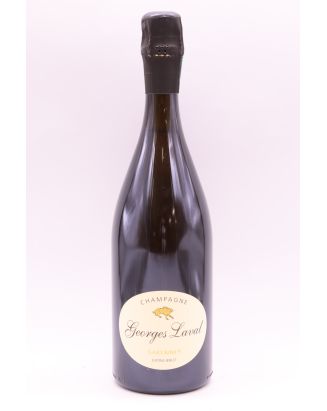
Champagne Georges Laval in Cumières
In 1996, Vincent Laval took over the family estate in Cumières, on the right bank of the Marne, 4 km from Épernay. His father had introduced organic viticulture to the estate in 1971, and Vincent Laval continues that approach. At Domaine Georges Laval, the three Champagne grape varieties—Pinot Noir, Pinot Meunier, and Chardonnay—ripen well on Cumières’ warm, south-facing chalk slopes. The blends vary from cuvée to cuvée, each with a distinctive character. The estate has just 2.5 hectares of vines, with its plots gradually consolidated over time. Half the vineyard is more than 30 years old, and some vines are over 80; older vines generally yield better-quality grapes.
The Lavals are among Cumières’ oldest winegrowing families, with roots in the village dating back to 1694. For generations, they cultivated vines on the amphitheater-shaped slopes overlooking the Marne, passing down their artisanal skills and intimate knowledge of each plot from father to son. The turning point came in 1971, when Georges Laval decided to bottle his own wines and, above all, to stop using herbicides and synthetic pesticides.
This choice, radical at the time, grew out of a realization: after learning that pesticide residues had been found even in Arctic ice, far from any cultivated land, Georges Laval drew an unequivocal conclusion and converted his vineyards to organic farming. At the time, only a handful of estates in Champagne had taken this path, making the house a true pioneer. Since 1996, his son Vincent Laval has continued this work with the same exacting standards, supported by two colleagues at the estate, producing only around twenty thousand bottles each year. Organic certification is provided by the independent body Ecocert.
Cumières owes its Premier Cru classification to a rare combination: amphitheater-shaped, fully south-facing slopes, a chalk subsoil, a distinct soil character, and a warm microclimate that makes the village one of the first to be harvested in all of Champagne. This early ripening and abundant sunshine yield ripe grapes capable of making champagnes with no added sugar. The estate farms around three and a half hectares, mostly in Cumières, with additional plots in Chambrecy in the Ardre Valley, as well as in Damery and Hautvillers.
All three Champagne grape varieties are planted: Pinot Noir, Meunier, and Chardonnay. Half the vineyard is over thirty years old, and some vines are more than eighty years old; the old vines produce grapes of superior quality. The named vineyard sites are identified and vinified separately: Les Chênes, halfway up the slope east of the village between the roads to Aÿ and Hautvillers, below the abbey, on a thin layer of clay and silt over chalk; Les Hautes Chèvres, on the upper part of the slope above the village, on clay-limestone soil, where most of the estate’s plots are located; and finally Les Longues Violes, a historic family plot whose soil has never received synthetic pesticides, herbicides, or chemical fertilizers and was not fertilized at all between 2003 and 2020. The soils are plowed, grass growth is controlled by mowing, compost provides fertilizer, and all work, from pruning to harvest, is done by hand to prevent soil compaction.
The grapes are harvested by hand at full ripeness, then pressed in the estate’s traditional Champagne presses, which hold 2,000 and 3,200 kilograms, at a slow, gentle pace that preserves the delicacy of the juice. After settling, alcoholic fermentation begins naturally, driven solely by indigenous yeasts, in oak barrels kept cool in the cellar, with no chaptalization. The small barrel size and the quality of the grapes allow for natural clarification: no decolorizing agents, fining, filtration, or cold stabilization.
From harvest to bottling, the barrels are topped up weekly to protect the wines from oxidation. The grape varieties and named vineyard sites, vinified separately, are blended just before bottling for secondary fermentation. The champagne then develops its bubbles in the bottle and ages on the lees for sixteen to one hundred months, depending on the cuvée, before being riddled entirely by hand on racks for around thirty days. Total sulfur levels remain very low, generally below twenty milligrams per liter, and almost the entire range is presented as brut nature, with no dosage liqueur; only the blended cuvée receives a touch of organic grape sugar.
Garennes Extra Brut: the estate’s blended cuvée, bringing together the three grape varieties—Meunier, Pinot Noir, and Chardonnay—from the terroirs of Chambrecy, Damery, Cumières, and Hautvillers. It combines wines from several vintages aged in barrels between one and twenty years old and receives a minimal dosage of one gram of organic grape sugar per liter. A balance of body, structure, freshness, and delicious fruit in an immediately appealing style.
Garennes Demi-Sec: the same blend and aging as the Extra Brut version, but with a dosage of forty grams per liter, again using organic grape sugar. A winegrower’s demi-sec, precise and easy to drink, in which the wines’ natural vinosity and acidity balance the sweetness. It pairs equally well with lightly sweet desserts, certain spicy dishes, and blue cheeses.
Cumières Premier Cru Brut Nature: the truest expression of the Cumières terroir and an introduction to the estate’s wines. Tailored care for each vine, exacting standards of ripeness, and eight months of natural aging in oak barrels shape a champagne with no added sugar and no artifice. Ripe fruit, chalky notes, saline tension, and exceptional purity; also available in magnums and jeroboams.
Cumières Premier Cru Rosé Brut Nature: one of the most distinctive rosés in all of Champagne, made from whole-cluster Pinot Noir and Meunier grapes crushed by foot. Powerful, dense, and vinous, it reveals red cherry, strawberry, plum, and floral notes against a deep mineral backdrop. A food-friendly rosé that evolves at length in the glass, produced in very small quantities.
Les Chênes: a Blanc de Blancs Brut Nature from a south-facing Chardonnay plot halfway up the slope on the eastern side of Cumières, below Hautvillers Abbey. Low yields, natural ripeness, and six months of aging in oak barrels produce a great champagne of remarkable concentration, distinguished by its finesse, complex structure, and unusually persistent mineral and saline notes.
Les Hautes Chèvres: a Brut Nature cuvée from the estate’s most important named vineyard site, on the upper part of the slope above the village, on clay-limestone soil. Depending on the vintage, it brings together the three Champagne grape varieties, with yields sometimes exceptionally low, giving it outstanding density and aromatic range. A lively, mineral wine of great purity, renowned for its aging potential.
Les Longues Violes: the house’s rarest cuvée, a tribute to the long path charted by generations of attentive winegrowers. It comes from a storied plot that has always belonged to the family, whose soil has never been treated with synthetic products, and from massal selections of Meunier planted in 1947 and Pinot Noir planted in 1964 and 1984. A deep, sun-filled, chalky blanc de noirs, aged on the lees for up to nine years and produced in a run of around a thousand bottles.
COLLECTION NEAR PARIS & VAT REFUND FOR TOURISTS
Free collection in our warehouse near central Paris (92)