Personalise your experience
Change your country, language and currency here whenever you wish.
|
|
|
Must-See Châteaux |
|
|
|
|
|
|
|
|
A unique style in Champagne : Dhondt Grellet
Located in Flavigny on the Côte des Blancs, Domaine Dhondt Grellet is run by Adrien Dhondt. A young winemaker, he has brought innovative ideas to the estate and created his own style of Champagne. Strongly inspired by Burgundian winemaking, Adrien Dhondt produces a small range of Champagnes dominated by Chardonnay. With around six hectares of vines farmed using sustainable and biodynamic practices, Champagne Dhondt-Grellet offers cuvées combining mineral finesse, vibrant tension and aromatic complexity.
The estate’s history brings together two families and two origins. The Dhondts, farmers from Belgium, acquired vineyards in the Sézannais in the 1960s, while the Grellets had long been rooted in Cuis and Cramant, in the heart of the Côte des Blancs. In 1986, Éric Dhondt and Édith Grellet made a bold decision for the time: to stop selling their harvest to Champagne houses and make wine from their own grapes under their own label. The estate began with just two hectares and established a perpetual reserve that very first year, which would become one of the house’s hallmarks.
A new chapter began in 2012 when their son Adrien, then 22, took over winemaking. Inspired by Burgundy’s great winemakers—he readily cites Coche-Dury, Vincent Dancer and Jean-Yves Bizot—and advised early on by Anselme Selosse, he steered the estate toward a parcel-by-parcel approach and extensive use of oak. Recognition came quickly: Adrien Dhondt was named Winemaker of the Year at the 2017 Trophées Champenois. Joined by his sister Alice, he now oversees a property of approximately six hectares and, since 2018, has developed a small négociant project under his own name, focused on neighboring villages such as Oger and Le Mesnil-sur-Oger.
The vineyards are concentrated in a few key Côte des Blancs terroirs. The vines average 40 to 45 years old, with some parcels dating back to 1951. In Grand Cru Cramant, they follow the slopes of the Butte de Saran, an east- and south-facing chalky amphitheater. Thin soils with clay over chalk close to the surface produce wines of remarkable precision and salinity. The predominantly south-facing, well-drained Le Bateau is its jewel, complemented by Les Longues Verges on a more clay-rich western slope and La Garenne, whose deeper soils lend breadth.
In nearby Premier Cru Cuis, the same chalk lies beneath deeper soils: the wines gain generosity while retaining freshness and mineral clarity, particularly in the gently sloping Les Nogers lieu-dit. In Chouilly, at the northern edge of the Côte des Blancs, the Les Longues Verges parcel faces Cramant on more clay-rich chalk. Naturally low yields caused by fanleaf degeneration concentrate the grapes. Finally, the Coteaux du Sézannais, home to vines planted by Adrien’s grandfather in the 1960s and 1970s, bring a sunnier dimension from south-facing soils of clay, limestone and flint. The vineyards are farmed in a hands-on, traditional manner, without synthetic products, using homemade compost, infusions of willow and horsetail, seaweed, soil cultivation and horse plowing since 2021, along with short pruning and rigorous shoot thinning to control yields.
The winery follows a low-intervention philosophy tailored to each parcel. After a very brief settling period of just six hours or so, the juice goes straight into barrel, with minimal sulfur additions. Fermentation begins only with native yeasts. Since 2020, Adrien Dhondt has worked almost exclusively with Burgundy barrels made by Damy and François Frères, except for the blended cuvée, which uses both oak and stainless steel tanks.
The still base wines spend around eight to nine months on the lees in barrel before bottling for secondary fermentation, without fining, filtration or cold stabilization. Topping up and lees stirring are decided solely by tasting, batch by batch. There is no fixed rule for malolactic fermentation: it is allowed to finish in some cuvées to add roundness, and partially or completely blocked in others to preserve tension. Aging on the lees in bottle lasts from 24 to 48 months, up to 60 months for the most ambitious single-parcel wines, often followed by another year under cork after disgorgement. Total sulfur remains low, at around 40 milligrams per liter, and dosage never exceeds a few grams; several cuvées are bottled with no dosage at all.
Dans un Premier Temps Extra Brut: the estate’s introductory cuvée and the only one to use all three Champagne grape varieties, with approximately 50% Chardonnay, 30% Pinot Noir and 20% Meunier. It brings together all the property’s terroirs and draws on the perpetual reserve started in 1986. Fermented in barrel and stainless steel tanks, it offers an elegant, easy-drinking profile of crisp fruit and chalky salinity. The ideal introduction to the house style.
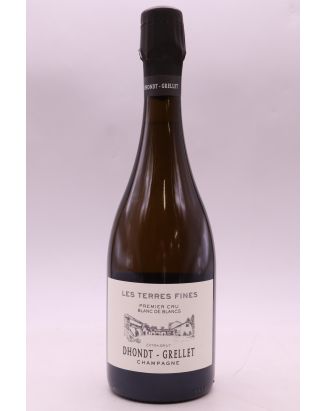
Les Terres Fines Premier Cru Blanc de Blancs Extra Brut: 100% Chardonnay from numerous small parcels around Cuis and Chouilly, fermented in barrel and made with approximately 70% wine from the base harvest, complemented by the perpetual reserve. With a dosage of less than one gram per liter, it is the most finely etched cuvée in the range, a true snapshot of the northern Côte des Blancs. A nose of chalk, white flowers and vivid citrus leads to a dense, creamy palate lifted by vibrant acidity.
Roc Solaire Extra Brut: a new direction for the estate, this cuvée comes entirely from the Coteaux du Sézannais, including parcels planted by Adrien’s grandfather in the 1960s and 1970s. Made mainly from Chardonnay with a small proportion of Pinot Noir, blended with the perpetual reserve and fermented in barrel with full malolactic fermentation, it offers a sunnier, more generous expression while retaining a saline backbone and mineral tension.
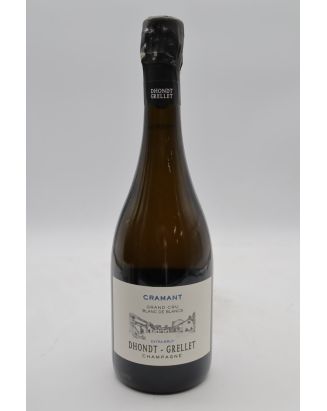
Cramant Grand Cru Extra Brut: now made exclusively from Cramant Chardonnay, primarily from the La Garenne lieu-dit, a former garden site with sandier, more clay-rich soils that lend breadth without sacrificing the village’s chalky finesse. Previously blended with grapes from Chouilly, it has been refocused for greater precision. Fermented and aged in oak, with full malolactic fermentation and extended aging on the lees, it charms with its layered texture and saline finish.
Les Nogers Cuis Premier Cru Extra Brut: a single-parcel wine bottled under its lieu-dit name since the 2012 vintage. The vines, more than 50 years old, occupy the same hillside as Le Bateau but on the Cuis side, where soils shift from sandy clay at the foot of the slope to pure chalk higher up. The result is a textured champagne with delicate notes of almond, brioche and ripe fruit, balancing tension and generosity.
Le Bateau Cramant Grand Cru Blanc de Blancs: the estate’s signature cuvée, from one of Cramant’s finest lieux-dits and some of the property’s oldest vines, planted in 1951 by Adrien’s great-grandfather. The parcel follows the curve of the hillside, with approximately 70% southern exposure. Fermented entirely in barrel with native yeasts alone and aged eight months on the lees in barrel, without filtration or fining, it then rests three to four years in the cellar and another year under cork. Dosage is below 3 grams per liter, sometimes zero. Exceptional complexity, depth and creamy texture.
La Côte aux Vents Cuis Premier Cru: a recent and unusual single-parcel cuvée made from old Meunier vines planted in 1954 on one of the northernmost slopes of the Côte des Blancs. The vines face southeast and grow in thin, silty chalk soils. Fermented entirely in barrel, with full malolactic fermentation and eight months on the lees without filtration, this blanc de noirs favors freshness, finesse and clarity over power. Dosage: 2.5 grams per liter.
La Brute Chouilly Grand Cru: Chardonnay from old vines planted in 1974 in the Les Longues Verges lieu-dit, a Grand Cru parcel in Chouilly facing Cramant. Very low yields caused by fanleaf degeneration produce grapes of rare concentration, while the chalk preserves tension. Fermented entirely in barrel, with full malolactic fermentation and a portion of perpetual reserve, it offers a champagne that is both rich and precise, balancing power, controlled reduction and minerality. No dosage.
Les Plantes d'Oger Grand Cru Blanc de Blancs: a cuvée released under the Adrien Dhondt label, part of the small-scale négociant project launched in 2018. It comes from old vines planted in 1950 halfway up the slope in Oger, on exceptionally chalky soils near Le Mesnil-sur-Oger. Fermented in barrel, with full malolactic fermentation and eight months on the lees, without fining or filtration, it offers a pure, mineral expression of Chardonnay. Dosage: 1 gram per liter.
Les Chétillons de Haut Grand Cru: another cuvée in the Adrien Dhondt range, from the celebrated Le Mesnil-sur-Oger vineyard site, a pinnacle of Champagne Chardonnay. Made in the same spirit as the estate’s single-parcel wines, it belongs to a series of one-off releases whose terroirs may change from year to year, bottled at slightly lower pressure to emphasize texture.
Les Pensées Premier Cru Blanc de Blancs and Prestige du Moulin: historic house cuvées still available from past vintages. Les Pensées charms with a rich nose of chalk, white flowers and citrus, and an impressively dense palate supported by lively acidity and a remarkably long finish. Prestige du Moulin, sourced from Cramant Grand Cru and built around the perpetual reserve, is fresh, vibrant and elegant, with notes of white fruit, hazelnut and citrus.
COLLECTION NEAR PARIS & VAT REFUND FOR TOURISTS
Free collection in our warehouse near central Paris (92)